2027 Online BA in Psychology - General Psychology vs. a BA in Applied Psychology: Compare Curriculum, Cost, and Career Fit
Audited and Verified:
Our Editorial and Data Verification Process
Research.com uses government datasets, official education statistics and primary institutional information to support its career and degree guides. Our review process checks factual accuracy, occupational definitions, source dates and the requirements associated with the credentials discussed.
How This Article Was Fact-Checked
Our editorial team verifies salary estimates, employment projections, education requirements and program information against original data providers and official organizations. Salary figures are checked against the relevant occupational definitions and reporting periods. Information about licensure, accreditation and required in-person training is reviewed separately.
Fact-checked and verified on:

Co-Founder and Chief Data Scientist
Choosing between an online BA in general psychology and a BA in applied psychology is less about which title sounds more employable than what each program lets you study and demonstrate. That distinction matters if you are paying for a degree to change careers, advance in a nonclinical role, or prepare for graduate school. This comparison shows how to examine coursework, applied experiences, total cost, and career outcomes - so you can choose the program that fits your next step rather than its marketing description.
Key Things You Should Know
- Choose general psychology for broad electives and research preparation; choose applied psychology when its specific projects or placements match the work you want to do.
- Many bachelor's programs require about 120 semester credits, but accepted transfer credits may not satisfy major requirements. Compare the credits and costs remaining, not just advertised tuition.
- Neither BA grants clinical licensure. As one occupational benchmark, the U.S. Bureau of Labor Statistics reported a $41,410 median annual wage for social and human service assistants in May 2023 - not a salary for psychology graduates.
What is the difference between a general psychology BA and an applied psychology BA?
A general psychology BA typically surveys psychological science across areas such as development, cognition, social behavior, and research. An applied psychology BA typically emphasizes using that knowledge in settings such as organizations, community programs, or human services. Neither label guarantees a particular course, internship, or professional credential.
The distinction is best treated as a question about required work: Does the applied program require a supervised project relevant to your goal? Does the general program offer the same experience through electives? Compare degree maps alongside broader psychology degree planning for prospective online students, then ask each school for its current catalog and a sample degree audit.
Which psychology bachelor's degree has the stronger career fit?
General psychology is often the better fit when you want room for statistics, laboratory work, or prerequisites for several possible graduate paths. Applied psychology may fit better when its required projects develop evidence you can show an employer - for example, a supervised program-evaluation brief or a training-needs analysis. An applied label alone does not establish job readiness.
Start with your target job description and existing experience. Someone already coordinating nonprofit services may gain more from research methods or data-analysis coursework than from another introductory placement. Someone entering the field may benefit from a well-supervised applied project and career services. If the goal is psychotherapy, compare both BAs against the admission requirements of a qualifying graduate program; shortening the path through a clinical counseling master's is a separate decision from choosing an undergraduate major.
How do general and applied psychology curricula compare?
The following comparison describes common emphases, not requirements shared by every school. It helps identify differences worth confirming in the actual catalogs.
| Feature | General psychology BA | Applied psychology BA |
| Psychology breadth | Often leaves more room to explore subfields | Often connects core topics to selected settings |
| Research preparation | May offer flexible methods electives or faculty research | May emphasize evaluation or practice-based projects |
| Experiential work | May be optional or available through electives | May be built into a capstone or placement |
| Potential limitation | Students may need to arrange applied experience themselves | Required applied courses may reduce elective flexibility |
Compare required statistics, research methods, and capstone courses before counting a concentration as an advantage. For instance, distance learning bachelor's degrees in addiction psychology illustrate how a focused curriculum can add relevant subject matter without becoming a substance-use counseling license. Ask whether an applied experience is supervised, available near you, and possible outside standard working hours.
Most programs combine general education, psychology foundations, research methods, and upper-level electives. Common psychology subjects include introductory psychology, statistics, developmental psychology, social psychology, biological or cognitive psychology, and a research or capstone course. The catalog - not the degree title - determines what is compulsory and when prerequisites must be completed.
If graduate study is possible, compare the BA with the prerequisites of your intended programs before filling elective slots. A research-oriented applicant may need stronger quantitative work and faculty-supervised research; someone considering intensive forensic psychology master's admissions and study plans should check each graduate program's actual preparation requirements rather than assume that a forensic elective is required or sufficient. Online courses about disorders or assessment teach academic content; they do not authorize clinical work.
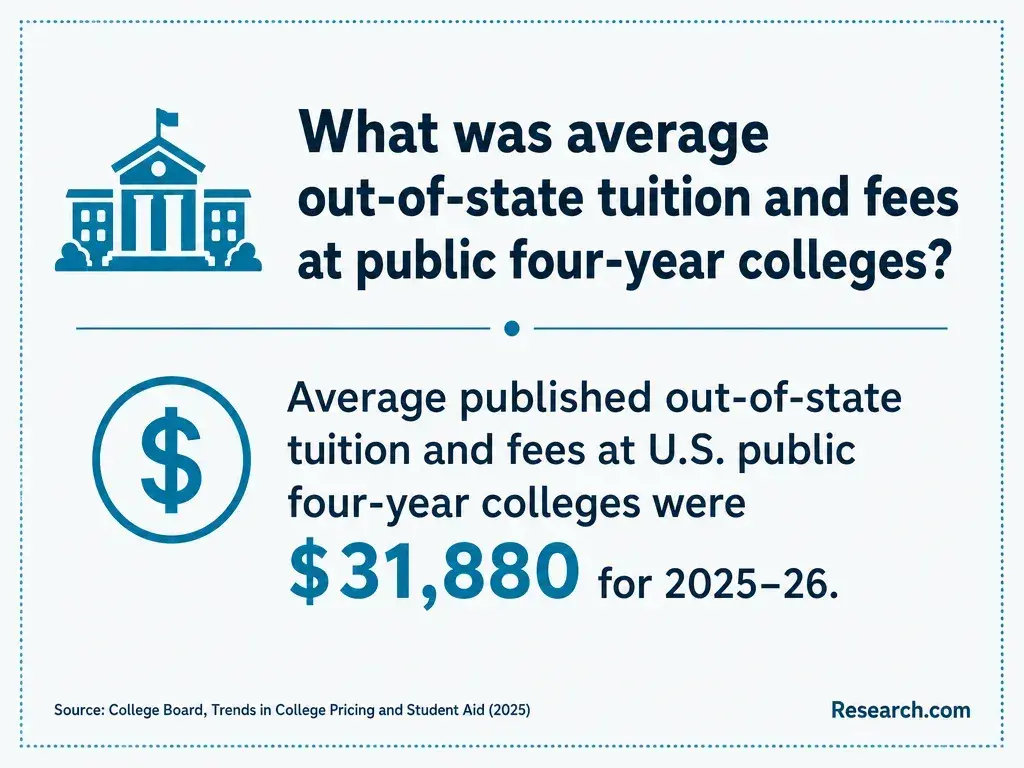
There is no reliable single price for either BA. Compare each school's tuition per credit multiplied by credits still required, then add mandatory fees, books, technology, and any travel or placement expenses. Residency pricing, course load, and transfer-credit decisions can change that total substantially. An applied program may cost more in practice if required fieldwork is unpaid or difficult to schedule, even when its tuition rate matches a general BA.
Request a written remaining-credit estimate and itemized charges from each school. Compare aid eligibility with the financial aid office rather than assuming the lowest advertised tuition produces the lowest out-of-pocket cost. For a focused degree, financial aid planning for a substance use counseling bachelor's can help frame questions about grants and scholarships, but aid and program eligibility must be confirmed with the institution.
Many bachelor's degrees require about 120 semester credits; your completion time depends on how many credits apply to the degree, your course load, and when required classes run. A school may accept a transferred course as an elective without allowing it to replace psychology statistics or research methods. An internship available only in certain terms can also extend an applied pathway.
Ask for a term-by-term plan showing prerequisites, course availability, and any placement deadlines. If speed matters, accelerated psychology study for returning students is worth comparing against a standard schedule - but a shorter calendar is useful only if you can meet its weekly workload and complete every remaining requirement.
Check whether the institution is accredited by an agency recognized by the U.S. Department of Education or the Council for Higher Education Accreditation, and confirm that the accreditation covers the school offering the online degree. Institutional accreditation matters for considerations such as federal aid eligibility and credit recognition, although another school retains authority over transfer and graduate admission decisions.
Do not expect an ordinary psychology BA to have American Psychological Association accreditation: APA's professional accreditation does not serve as a general approval system for bachelor's psychology majors. When comparing a cost-conscious psychology degree program, verify the institution's accreditation status directly and separately check the program's curriculum and any claims about career preparation. Accreditation alone does not make a BA licensure-qualifying.
First-year applicants generally need evidence of secondary-school completion; transfer applicants are typically asked for transcripts from prior colleges. Schools may set additional GPA, prerequisite, or major-entry rules. Admission to the university is not the same as approval of transfer equivalents or admission to a restricted major.
If you have prior college, military, or professional learning, request an official degree audit showing which credits satisfy general education, psychology requirements, electives, and residency rules. If your goal is recovery-support work, review addiction recovery occupations and education before selecting electives: employers and states may require a specific credential or experience that college admission does not address.
Possible nonclinical directions include human-services support, program coordination, research support, and workplace training support. Duties and qualifications vary: an employer may value documentation, data handling, community experience, or a supervised project more than the distinction between "general" and "applied" on a diploma.
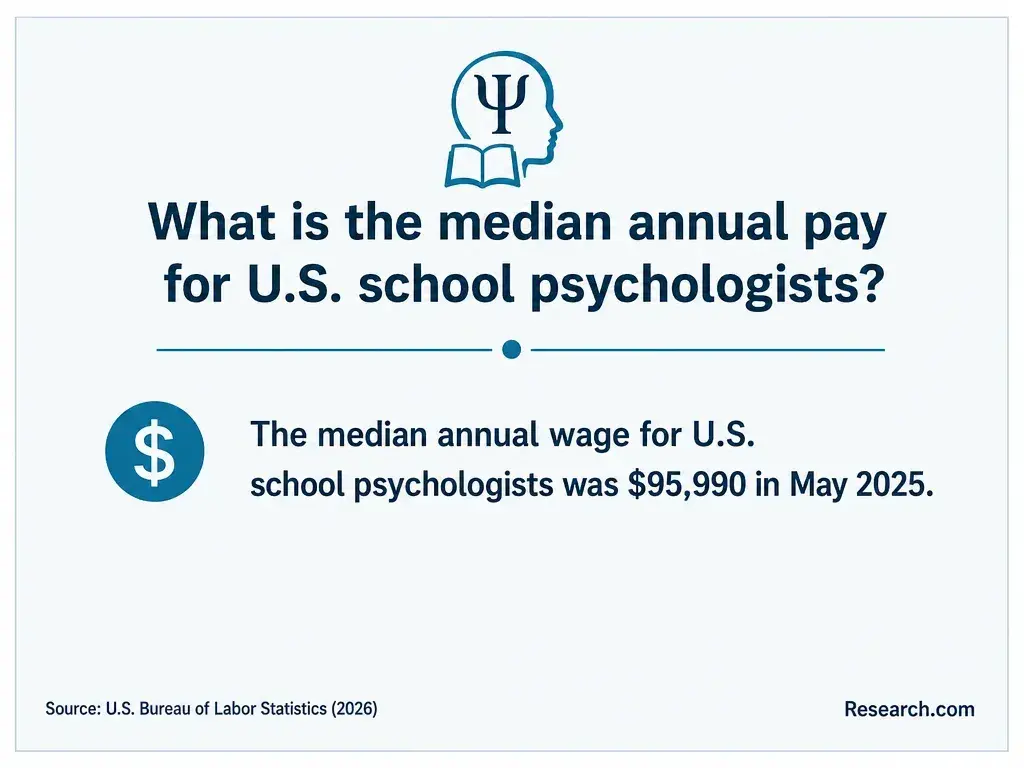
For context, the U.S. Bureau of Labor Statistics reported a $41,410 median annual wage in May 2023 for social and human service assistants. That occupation includes workers with different educational backgrounds, and its historical median is neither a starting offer nor an outcome measure for either BA. Use local job postings and verified program outcomes when weighing tuition against likely opportunities. Comparisons of budget-friendly substance abuse counseling bachelor's study also require care: a degree focused on addiction does not, by itself, establish eligibility for a counseling title.
Does a psychology bachelor's degree qualify graduates for licensure?
No general or applied psychology BA, by itself, qualifies someone to practice independently as a licensed psychologist or provide psychotherapy. Clinical licensure routes require additional education and other jurisdiction-specific steps. Requirements differ for psychologists, counselors, social workers, and addiction counselors; an undergraduate internship is not interchangeable with a license-supervised clinical placement.
If your intended work includes diagnosis or treatment, identify the exact licensed occupation and check its state board's education rules before choosing either BA. For prospective counselors, evaluating shorter mental health counseling graduate pathways can inform the later degree comparison, but speed must be weighed against the program's suitability for the state where you plan to practice.
Other Things You Should Know About Psychology
No. Applied psychology is a broad degree label; applied behavior analysis is a specific field with its own coursework and credential requirements. Check the exact curriculum if that is your goal.
Not necessarily. Ask the registrar whether the school formally awards and records an applied concentration; taking related electives alone may not create one.
Possibly, if the program approves the site, supervision, duties, and any necessary data permissions. Employment alone does not satisfy an academic placement requirement.
No. Programs may require live classes, group meetings, scheduled supervision, or in-person experiences. Check the course schedule and placement rules before enrolling.
- Frequently Asked Questions for Mental Health Counselors | nysed.gov https://www.op.nysed.gov/professions/mental-health-counselors/faqs-education-requirements
- Post-Secondary Employment Outcomes Tool Shows What You Might Earn Depending on the College You Attend | Census.gov https://www.census.gov/library/stories/2022/06/job-and-earnings-prospects-by-college-and-degree.html
- Accreditation in the U.S. | ed.gov http://www.ed.gov/laws-and-policy/higher-education-laws-and-policy/college-accreditation/accreditation-in-the-us
- Psychology | Coastline College https://www.coastline.edu/programs/psychology.php
- Cost of Attendance - Texas One Stop https://onestop.utexas.edu/managing-costs/cost-tuition-rates/cost-of-attendance/
- Finish the degree you started (without starting over) | Newman Today https://news.newmanu.edu/finish-the-degree-you-started-without-starting-over/
- Differences Between BA and BS in Psychology | ASU Online https://asuonline.asu.edu/newsroom/online-learning-tips/online-psychology-degree-bachelor-arts-or-bachelor-science/
- How Do Transfer Credits Work When You Go Back to School? | Whitworth Online https://online.whitworth.edu/news-articles/how-do-transfer-credits-work-when-you-go-back-to-school/
- Psychology careers guide | apa.org https://www.apa.org/education-career/guide/careers
- My Major Requires Fieldwork: What to Expect - ETSU News https://news.etsu.edu/articles/fieldwork-what-to-expect