2027 Online MS in Psychology - Forensic Psychology: How to Compare a School Psychology Route Versus a Forensic Research Route
Audited and Verified:
Our Editorial and Data Verification Process
Research.com uses government datasets, official education statistics and primary institutional information to support its career and degree guides. Our review process checks factual accuracy, occupational definitions, source dates and the requirements associated with the credentials discussed.
How This Article Was Fact-Checked
Our editorial team verifies salary estimates, employment projections, education requirements and program information against original data providers and official organizations. Salary figures are checked against the relevant occupational definitions and reporting periods. Information about licensure, accreditation and required in-person training is reviewed separately.
Fact-checked and verified on:

Co-Founder and Chief Data Scientist
An online MS in forensic psychology can look like a flexible way to work with people in schools or the justice system, but those goals require different training. For a future school psychologist, the decisive issue is whether a program meets school credential requirements - not whether it teaches psychology. For a future forensic researcher, the decisive issue is whether it provides rigorous methods training and meaningful research supervision.
This guide helps prospective master's students compare those routes, identify credentials a forensic MS does not provide, and check the practical commitments behind an online program before enrolling.
Key Things You Should Know
- Choose a school psychology specialist or other state-accepted professional program for school psychologist roles; a nonclinical forensic psychology MS is not a substitute for its supervised training.
- Choose a forensic research route for study of behavior in legal settings, but verify access to methods courses, a thesis or comparable project, faculty mentorship, and usable data.
- School psychology training commonly involves substantial supervised school-based fieldwork; NASP's national certification standard includes a 1,200-hour internship. Check the applicable state and program requirements before treating any online option as flexible.
What is the difference between school psychology and forensic research routes?
School psychology is a professional preparation route centered on supporting students' learning, behavior, and well-being in educational settings. Forensic research is an academic and analytical route centered on questions involving psychology and legal systems, such as eyewitness memory, jury decision-making, or service outcomes in corrections. Studying either subject does not confer the other route's qualifications.
The comparison below identifies the feature that should control your program choice. An online label describes delivery, not the professional purpose of a degree.
| Decision point | School psychology route | Forensic research route |
| Primary goal | Prepare for a state school psychologist credential | Build research skills for legal or justice-related questions |
| Training emphasis | School consultation, assessment, intervention, and supervised practice | Research design, statistics, measurement, ethics, and a substantive project |
| Experience to verify | Approved school placements and qualified supervision | Faculty mentorship, research responsibilities, and lawful data access |
| Likely next step | Apply for the relevant state credential | Seek research work or assess fit for further graduate study |
A forensic master's can be worthwhile for someone already working in justice services who needs stronger analytical skills. It is a weaker investment if the intended job specifically requires a school credential. Likewise, a school psychology program is not necessarily the most direct way to study forensic research. Compare likely duties and hiring requirements, not just degree titles; forensic psychology master's degree career return considerations can help frame that employment decision.
Can an online master's in forensic psychology lead to licensure?
Many forensic psychology master's programs are nonclinical. Coursework on psychopathology, interviewing, or psychological assessment does not itself satisfy the educational, examination, and supervised-practice requirements for a licensed psychologist. Licensed forensic evaluation is a specialized use of professional qualifications, not a license awarded for completing a forensic concentration.
Some states license or certify other mental health professionals at the master's level, but eligibility depends on the specific qualifying degree, its curriculum and fieldwork, and that jurisdiction's rules. If your goal is psychotherapy rather than research, compare qualifying counseling or social work programs instead. Even an accelerated master's program in clinical mental health counseling must be checked against the state where you intend to practice; a shorter schedule does not waive supervised training or licensing steps.
Before applying, send the exact program curriculum and fieldwork description to the relevant state licensing board and ask which requirements, if any, the degree could meet. Obtain the program's written licensure disclosure as well. Neither a general assurance about "career preparation" nor eligibility in another state answers that question.
Which degree pathway prepares you for school psychology careers?
For a school psychologist position, seek a state-accepted school psychology preparation program, commonly a specialist-level program, or another pathway expressly accepted by the state education agency. The program must provide the required graduate study and supervised school experience. NASP approval and eligibility for its Nationally Certified School Psychologist credential can be useful signals, but state certification or licensure rules control employment in a particular state.
If you have not completed a bachelor's degree, finish that foundation first and check the prerequisites of your intended school psychology programs. Psychology is relevant, but programs may also consider applicants from education or related fields. Faster psychology degree timelines online may be worth comparing if you still need an undergraduate degree; verify that an accelerated schedule leaves room for required statistics, developmental psychology, and other prerequisites.
If your aim is to counsel students as a therapist rather than work as a school psychologist, investigate the separately regulated counseling or social work route appropriate to that job. Overlapping work with children does not make those credentials interchangeable.
Online study can reduce commuting and make coursework easier to combine with employment. Campus programs may offer more routine access to laboratories, research teams, and in-person mentoring. Neither format guarantees those advantages: a remote student may join an active research group, while a campus student may find few opportunities in the intended topic.
For a working adult, inspect the weekly timetable rather than relying on "online" or "accelerated" in a program description. Ask which classes are asynchronous, when live research meetings occur, whether campus visits are required, how often a thesis adviser meets with students, and whether a project can be completed using approved remote data access. Accelerated psychology master's study for working adults is most useful when the pace still permits substantive methods training and supervised work.
A campus-based option may be preferable when a particular laboratory, dataset, or mentor is central to your research goal. An online option may be preferable when equivalent supervision is available remotely and its scheduled obligations genuinely fit your work and caregiving commitments.
Forensic psychology master's curricula may cover psychology and the law, research methods, statistics, psychological measurement, ethics, and topics such as eyewitness evidence or behavior in correctional settings. School psychology preparation places greater weight on child development, learning, school-based assessment, consultation, intervention, and supervised practice. Exact requirements vary; a course title alone does not establish the depth of training or permission to use restricted tests professionally.
For a forensic research goal, look beyond the subject-matter electives. Determine whether advanced methods and measurement courses lead to a thesis, substantial capstone, or documented research contribution. Ask who supervises that work and how students obtain authorized data. For a school credential goal, compare the program's course and fieldwork map with the requirements of the state education agency.
If your interests actually center on substance-use services, compare that curriculum separately rather than assuming forensic electives provide it. Online addiction counseling coursework and admissions may be more relevant to that goal, subject to the credential rules for the intended role.
Programs generally evaluate a completed bachelor's degree and academic readiness, but they set their own rules for GPA, prerequisite courses, tests, writing samples, and recommendations. A psychology major is not universally required. Applicants from criminal justice, education, sociology, or other fields should distinguish mandatory prerequisites from courses the admissions office merely recommends.
Research-oriented applicants should show that they can frame a question, evaluate evidence, and work with quantitative or qualitative methods. Relevant employment can strengthen an application, but it does not replace a required statistics course. Applicants with a bachelor's-level addiction psychology background, for example, should still check whether their transcript includes the particular methods preparation the forensic program expects.
Request the current admissions checklist, identify any gaps, and ask whether missing courses may be completed before enrollment or under a conditional offer. If you may later pursue a school psychology credential or a research doctorate, check those programs' entry expectations independently; admission to a forensic MS does not establish eligibility for the next degree.
Time to completion depends on required credits, course availability, enrollment pace, and whether a thesis or project can be finished on schedule. An accelerated course calendar may shorten classwork without shortening the time needed to secure an adviser, obtain data permissions, and revise a research project.
For a defensible cost comparison, request each program's required credit total and current per-credit or per-term charges. Add mandatory fees, books or software, possible travel, and charges for any extra thesis or continuation term. Then compare the resulting total against the earnings or advancement realistically available for your target role - not against an advertised occupational salary. Aid eligibility and employer reimbursement should be confirmed rather than assumed.
Published comparisons of tuition and eligibility for forensic psychology programs can help build a shortlist. Obtain a current, individualized estimate from each school before deciding, especially if part-time enrollment could extend your costs.
A qualified school psychology graduate may pursue school psychologist positions after meeting the state's credential requirements. The work can include consultation with educators and families, student assessment within professional scope, and support for school-based interventions. It is not an automatic outcome of a forensic psychology MS.
A forensic research graduate might seek research assistant, program evaluation, policy support, or data-focused roles with universities, justice agencies, or community organizations. Actual eligibility depends on technical skills, experience, hiring rules, and sometimes a more advanced degree. Victim services and corrections support are related possibilities, but their duties and hiring criteria differ from research - and neither grants authority to perform forensic psychological evaluations.
Compare job postings for tasks you would want to perform: statistical analysis, interviewing for research, documentation, school assessment, or direct service. If the goal is service work rather than legal-system research, careers in addiction treatment and support settings illustrate adjacent roles that may call for a different credential or more direct experience.
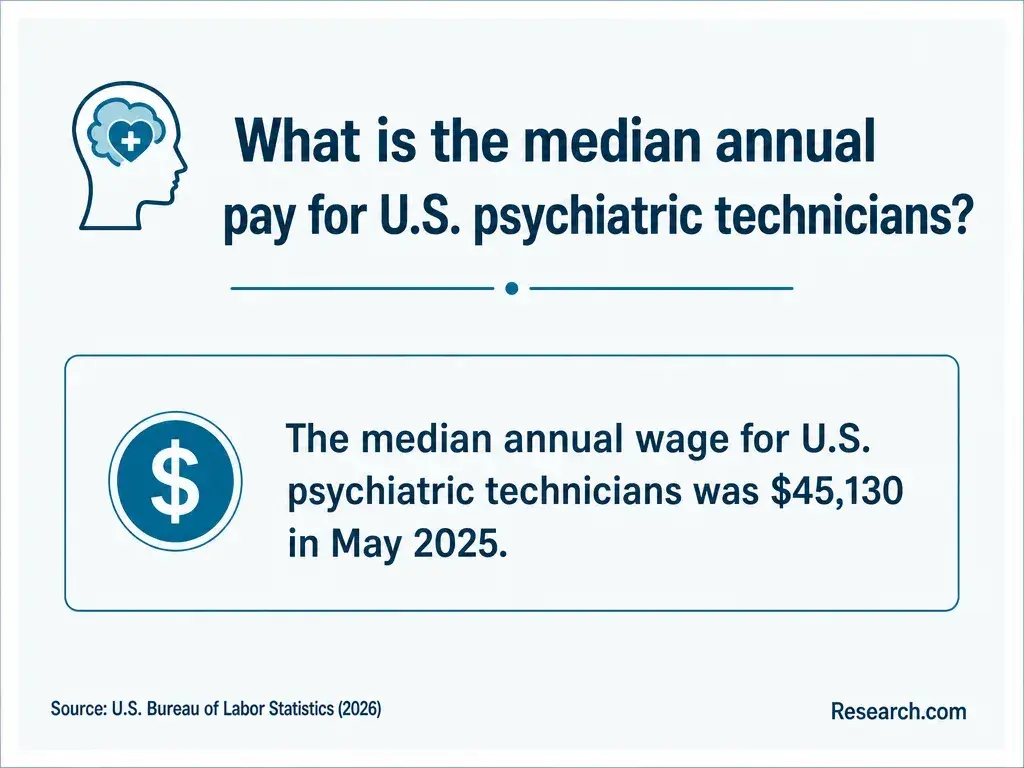
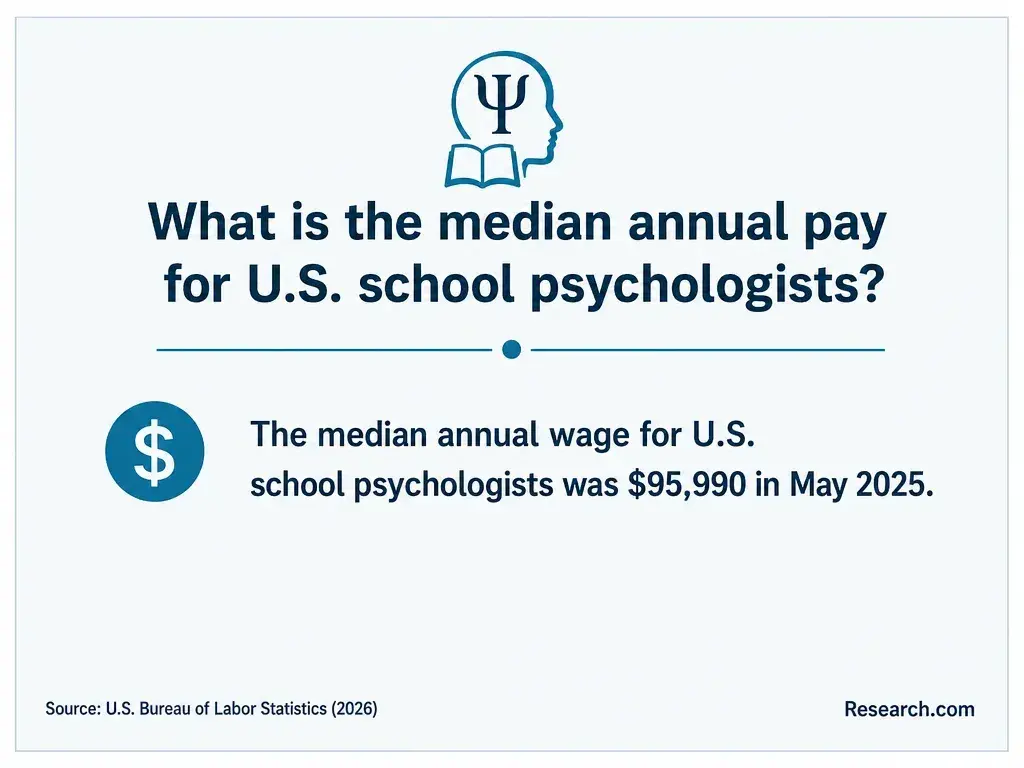
There is no reliable occupation-wide salary for "forensic psychology master's graduates": they enter different jobs with different qualifications. For school psychologist pay, use the U.S. Bureau of Labor Statistics occupation school psychologists and then check district salary schedules in the state where you intend to work. For a proposed research role, compare the BLS category that matches its actual duties with local university or agency postings. Occupational medians describe workers across experience levels, not what a new graduate will earn.
Apply the same distinction to outlook figures. A projection for psychologists does not predict openings for nonlicensed forensic researchers, and a national school psychologist projection cannot replace local hiring evidence. If you are weighing research against a regulated therapy career, comparisons of clinical counseling master's time-to-degree and salary outlook can clarify the alternative - but compare the full qualifying pathway, not degree titles alone.
How can you evaluate accreditation, practicum training, and program quality?
First, verify the institution's recognized accreditation and the exact name and purpose of the degree. Institutional accreditation does not mean a nonclinical forensic MS is APA-accredited or licensure-qualifying. For school psychology, investigate relevant program approval or recognition and ask the state education agency whether graduates of that specific program can pursue its credential. Professional accreditation has different scopes across fields; guidance on counseling degree affordability and accreditation concerns a distinct professional pathway, not a substitute for school psychology approval.
Next, separate three experiences that advertisements may group together: a school psychology practicum or internship, a research assistantship, and a nonclinical agency placement. Each needs different supervision and approval. A justice-agency internship involving referrals or administrative work does not become school psychology fieldwork, and access to clients does not authorize assessment or therapy.
Before paying a deposit, ask the program for its current curriculum and completion policies, the process for securing placements or research supervision, any in-person requirements, and outcomes reported for comparable students. Ask a prospective research adviser about feasible projects and data access; ask a school program who arranges approved sites and verifies supervisors. The stronger choice is the one that can document a workable path to your intended outcome.
Other Things You Should Know About Psychology
Potentially. A project on school disciplinary processes or students' experiences of legal-system involvement could connect the fields. It still needs an appropriate supervisor, feasible data access, and any required institutional and participant protections.
Do not assume so. Review the actual syllabus and research opportunities. Media portrayals of profiling are not a dependable guide to a program's curriculum or to justice-agency hiring requirements.
Public availability alone does not settle the question. Confirm the university's review process, the records' use restrictions, and privacy risks before collecting or publishing information about identifiable people.
No. Requirements vary by employer. A thesis can demonstrate independent research ability, but well-supervised projects, analytical work, and clear writing may also provide relevant evidence of skill.
- Accreditation in the U.S. | ed.gov http://www.ed.gov/laws-and-policy/higher-education-laws-and-policy/college-accreditation/accreditation-in-the-us
- Specialty guidelines for forensic psychology | apa.org https://www.apa.org/practice/guidelines/forensic-psychology
- SCHOOL PSYCHOLOGY CERTIFICATION | Mercy University https://www.mercy.edu/media/school-psychology-licensure-sara
- Career Options for Forensic Psychology Students | LSU Online https://online.lsu.edu/newsroom/articles/what-can-you-do-forensic-psychology-degree/
- Online MSW vs On-Campus: Which Is Better? | University of Saint Mary https://stmary.edu/msw/msw-online-vs-oncampus-msw
- How to become a forensic psychologist: steps and skills | Capella University https://www.capella.edu/blog/psychology/how-to-become-a-forensic-psychologist-steps-and-skills/
- Understanding BCBA fieldwork requirements | Ohio State Online https://online.osu.edu/content-hub/blogs/understanding-bcba-fieldwork-requirements/
- Requirements - Graduate School of Professional Psychology https://psychology.du.edu/admission-aid/requirements
- Are Online Degrees Worth It? Key Factors to Consider | Chatham University https://www.chatham.edu/news-and-stories/blog/are-online-degrees-worth-it-how-to-decide-for-your-field.html
- How to Become a Forensic Psychologist in California (2026) | Touro University Worldwide https://www.tuw.edu/psychology/how-to-become-a-forensic-psychologist-in-california/