2027 AI Bachelor's Degree Programs That Include Google Cloud AI Training

Co-Founder and Chief Data Scientist
Many individuals with undergraduate degrees in unrelated fields face challenges when seeking to enter the rapidly evolving field of artificial intelligence. Traditional programs often lack integrated training with leading industry platforms, leaving students underprepared for modern AI applications. This gap creates obstacles for career changers aiming to gain relevant skills efficiently while managing work and personal commitments. Google Cloud AI training has become a valuable addition to AI education, providing practical, hands-on experience with cutting-edge tools.
This article explores bachelor's degree programs that incorporate Google Cloud AI training, helping readers identify flexible, accredited pathways to transition successfully into the AI industry.
Key Things You Should Know
- Several U.S. universities now offer AI bachelor's degrees integrating Google Cloud AI training to provide hands-on experience with scalable machine learning tools and cloud infrastructure.
- Programs featuring Google Cloud components report 20% higher internship placement rates, reflecting strong industry demand for cloud-based AI expertise in 2025-2026.
- Curricula emphasize applied skills including TensorFlow, AutoML, and natural language processing on Google Cloud, preparing graduates for roles in diverse AI development and deployment sectors.
What are AI bachelor's programs that include Google Cloud AI training?
AI bachelor's degree programs with integrated Google Cloud AI training combine foundational artificial intelligence education with practical experience using Google Cloud's infrastructure. Universities like the University of Texas at Austin and Northeastern University offer AI or data science majors that include dedicated coursework or certifications on Google Cloud, featuring its AI APIs and machine learning platforms.
Some undergraduate artificial intelligence courses featuring Google Cloud platform include official training modules and certification paths such as the Google Cloud Professional Data Engineer or Professional Machine Learning Engineer, providing hands-on experience with cloud-based AI technologies. For instance, the Rochester Institute of Technology offers an AI bachelor's degree with cloud computing tracks leveraging Google Cloud platforms to prepare students for real-world challenges.
The latest Stack Overflow Developer Survey shows that 17.1% of developers use Google Cloud, highlighting strong industry demand that complements the 48.0% using AWS. Gaining proficiency with Google Cloud AI tools offers students a competitive edge as employers increasingly seek professionals skilled in integrating AI and cloud services.
Prospective students should verify if programs offer official Google Cloud certification prep or hands-on projects involving Google Cloud AI APIs. Features like these provide measurable outcomes and technical proficiency essential for career readiness. Some programs embed Google Cloud training deeply within the curriculum, while others offer optional specialized tracks to ensure graduates become cloud-competent AI practitioners.
Those considering a degree in AI will find that programs incorporating Google Cloud create valuable pathways to in-demand careers.
How does Google Cloud AI training fit into an AI bachelor's degree?
Google Cloud AI training is now a key component of many AI bachelor degree programs with Google Cloud integration, providing students with hands-on experience using leading cloud technologies. This practical approach bridges theoretical AI concepts with real-world application, enabling learners to deploy machine learning models, manage AI workflows, and analyze large datasets using Google Cloud's advanced tools.
Courses typically incorporate Google Cloud AI modules that cover machine learning, data engineering, and AI infrastructure. Students gain familiarity with Vertex AI for scalable model training and deployment, BigQuery ML for data analysis at scale, and AutoML tools that simplify building AI solutions without deep coding skills. These skills align closely with industry demands, preparing graduates for careers in data science, AI product development, and machine learning engineering.
The Google Cloud AI training in undergraduate AI curriculum also emphasizes cloud-based projects simulating real enterprise environments. Earning practical Google Cloud credentials during study enhances resumes and improves job prospects in competitive technology sectors. Additionally, the 2024 DORA "Accelerate State of DevOps" report highlights how AI-powered cloud delivery drives higher software throughput and operational efficiency.
For those interested in affordable education pathways, exploring data science degrees can be a strategic step toward entering this evolving field.
Are these AI bachelor's programs regionally accredited and reputable?
Most AI bachelor's degree programs with regional accreditation maintain high academic standards, making them reputable choices for students seeking quality education and career prospects. Regional accreditation assures that institutions meet rigorous criteria recognized by employers and graduate schools. Prospective students should verify this accreditation through the U.S. Department of Education or the Council for Higher Education Accreditation databases before enrolling.
Reputable AI bachelor degrees in North America often come from institutions accredited by agencies such as the Middle States Commission on Higher Education, the Higher Learning Commission, or the Southern Association of Colleges and Schools Commission on Colleges. These programs typically blend strong theoretical foundations with practical skills in Google Cloud AI, preparing graduates well for industry demands.
The U.S. Department of Education's College Scorecard offers transparent data on graduation rates, median earnings, and student debt, helping students compare accredited programs effectively. Programs with over 60% graduation rates and median earnings exceeding $60,000 are generally considered solid options.
Nationally accredited or unaccredited technical schools may provide Google Cloud training but often lack the broad academic recognition needed for federal aid or competitive employment. Students focused on long-term success should prioritize regionally accredited bachelor's degrees integrated with Google Cloud AI curricula.
For those interested in further studies, exploring an online masters in ai can be a viable next step to deepen expertise and improve career growth.
What AI and cloud coursework is typically included in these programs?
Bachelor's degree programs that integrate Google Cloud AI training focus on a comprehensive curriculum covering machine learning, data engineering, and cloud deployment. Core courses typically include foundational topics such as supervised and unsupervised learning, neural networks, and natural language processing, combined with practical skills in cloud computing. Students gain hands-on experience deploying AI models on Google Cloud Platform (GCP) using tools like BigQuery for analytics and TensorFlow for model development.
Programming in Python is emphasized as essential for AI workflows and interfacing with cloud APIs. Cloud infrastructure courses cover resource provisioning, containerization with Kubernetes, and serverless computing, enabling scalable AI applications. Data engineering aspects focus on building pipelines, ETL processes, and integrating large datasets for optimized AI system performance and reflect typical AI and cloud computing coursework requirements.
Hands-on labs explore Google Cloud's AI tools such as AutoML and AI Platform, enhancing skills in model optimization and deployment. Some programs also include comparative cloud training with AWS or Azure alongside GCP to meet workforce demands. Lightcast's labor-market analytics highlight that job postings often combine machine learning with cloud skills like Python and major cloud platforms.
For students exploring related fields, programs in cyber security degrees can complement AI expertise with critical security knowledge. The integration of Google Cloud AI in bachelor's degree programs prepares students for roles involving end-to-end AI solution development aligned with current hiring trends.
Can you complete a Google Cloud-aligned AI bachelor's degree online?
Many accredited institutions offer fully online bachelor's degrees aligned with Google Cloud AI training, designed for remote learners across the U.S. These programs blend foundational artificial intelligence courses with hands-on experience using Google Cloud Platform (GCP) tools, helping students develop skills in cloud-based AI development and deployment.
Online delivery of technical programs, including AI and cloud computing, is well-established and scalable. Data from the National Center for Education Statistics' Integrated Postsecondary Education Data System (IPEDS) confirms millions of students enroll exclusively in distance education, demonstrating that universities effectively manage remote instruction for complex topics like AI algorithms and cloud infrastructure.
Typical program components include:
- Hands-on labs using Google Cloud AI services such as AutoML, Vertex AI, and TensorFlow on GCP
- Courses covering machine learning, data engineering, and distributed computing tailored to cloud environments
- Capstone projects and internships completed remotely with cloud collaboration tools
- Access to Google Cloud certification preparation aligned with bachelor's coursework
Prospective students should confirm that online programs provide sufficient cloud resource access and virtual lab support to fully engage in practical AI tasks remotely. Programs often combine asynchronous lectures with live Q&A sessions adapted to diverse time zones, accommodating working professionals. Careful review of curriculum details and Google Cloud partnership disclosures helps ensure the degree meets current industry demands.
What are the admissions requirements and prerequisites for AI bachelor's programs?
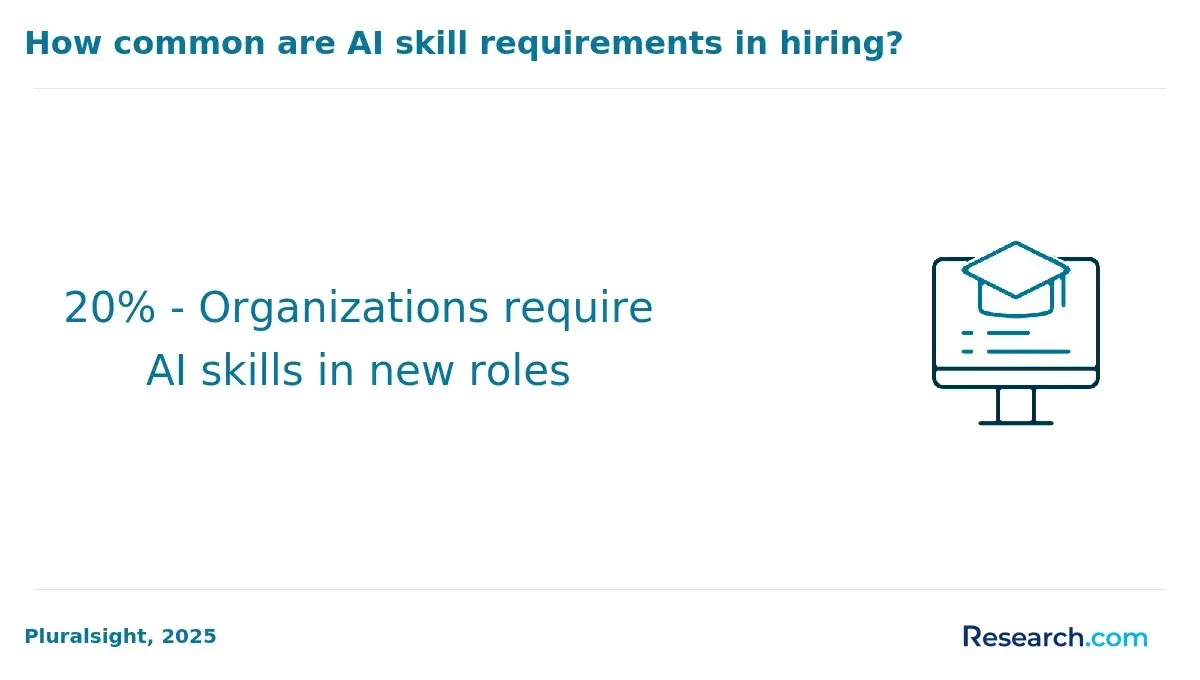
Admissions for AI bachelor's degree programs with Google Cloud AI training often require a solid background in mathematics and computer science. Applicants are expected to have completed high school courses in calculus, algebra, and programming languages like Python or Java. Many programs stipulate at least one year of calculus and an introductory computer science course as a baseline. AP exam scores in relevant subjects are also considered, with significant numbers of students taking AP Calculus and AP Computer Science, highlighting these subjects as key preparation routes.
Competitive applications typically include:
- Strong standardized test scores in math (SAT Math 650+ or ACT equivalent)
- Relevant projects or coding experience shown through portfolios or extracurricular activities
- Letters of recommendation emphasizing analytical skills or computational thinking
- Personal statements detailing interest in AI and cloud computing concepts
Some programs offer conditional acceptance or require bridge courses in programming or discrete math. Transfer students usually need college-level credits in math and computer science. Since AI coursework frequently integrates Google Cloud AI tools, demonstrating proficiency or interest in cloud environments can strengthen an application. Early understanding of these requirements enables candidates to better focus their preparation and improve their chances of admission.
How long do these AI bachelor's programs take, and what do they cost?
AI bachelor's degree programs generally span four years of full-time study, consistent with most undergraduate degrees in the U.S. Some schools offer accelerated or part-time tracks extending to five or six years to accommodate working students. Many programs include Google Cloud AI training, embedding specialized labs and coursework to build cloud-specific skills alongside core AI knowledge within this timeframe.
In-state tuition and fees at public four-year institutions average about $11,000 per year, based on the College Board's 2024 report on college pricing. This cost does not cover additional fees tied to Google Cloud training, such as technology or lab charges, which vary by institution. Tuition at private colleges or out-of-state public universities can surpass $40,000 annually.
Students should also plan for expenses related to cloud computing, including Google Cloud Platform credits. These costs may range from a few hundred to over a thousand dollars per year, depending on program support and usage. Financial aid, scholarships, and institutional assistance for these cloud training elements differ widely, so early research and preparation are essential.
- Standard program length: 4 years full-time
- In-state public tuition average: $11,000/year (baseline)
- Additional Google Cloud training fees vary by institution
- Private and out-of-state tuition can exceed $40,000/year
- Cloud platform credit costs may add $300-$1,000+ annually
Which Google Cloud certifications can you earn alongside an AI bachelor's degree?
Students pursuing an AI bachelor's degree can boost their career prospects by earning Google Cloud certifications. The Google Cloud Certified - Professional Machine Learning Engineer credential is highly relevant, validating expertise in designing and deploying machine learning models on Google Cloud platforms, which aligns closely with AI coursework.
The Google Cloud Professional Data Engineer certification is another valuable option, emphasizing skills in data processing, analysis, and building scalable pipelines-critical for handling the large datasets AI professionals often work with. Many programs also recommend the Associate Cloud Engineer certification as a foundational step to mastering cloud infrastructure, essential for deploying AI systems.
These certifications complement academic training by meeting employer demands for practical cloud-based AI skills. According to Pearson VUE's Global Candidate Survey (2024), most certification candidates aim for career advancement and higher pay, underscoring the market value of Google Cloud expertise.
Many institutions offer specialized courses or tracks aligned with these certifications, making it possible to gain certified knowledge while completing a degree. For example, combining classes on machine learning algorithms with Google Cloud's ML Engineer certification creates an effective pathway.
Graduates with these credentials demonstrate readiness for competitive roles in data science, AI development, and cloud engineering. This integration of certifications with an AI degree enhances employability in today's tech-driven job market.
What jobs can you get with an AI bachelor's and Google Cloud AI skills?
Graduates holding a bachelor's degree in Artificial Intelligence combined with Google Cloud AI training are well-positioned for technical and strategic roles across various industries. They develop, deploy, and maintain scalable AI models in cloud environments, preparing them for jobs such as AI engineer, machine learning engineer, data scientist, and cloud solutions architect.
AI engineers focus on designing algorithms for perception, reasoning, and language understanding, while machine learning engineers implement these models using platforms like Google Cloud AI. Data scientists analyze large datasets with big data tools integrated in cloud services to extract actionable insights. Cloud solutions architects strategize and oversee AI system deployments, ensuring efficiency and reliability in Google Cloud environments.
These roles are highly sought after in healthcare, finance, retail, and technology sectors where cloud-based AI drives automation, predictive analytics, and customer personalization. According to the World Economic Forum's Future of Jobs Report (2025), AI and big data represent some of the fastest-growing job families globally, underscoring the link between AI skills combined with cloud expertise and expanding career opportunities.
Additional roles include AI product managers bridging technical and business goals, AI consultants optimizing enterprise AI strategy, and AI operations specialists supporting cloud infrastructure. Graduates with Google Cloud AI certification often start with salaries ranging from $85,000 to $120,000 in the U.S.
Mastering cloud deployment tools also opens paths in MLOps and AI security, covering the AI lifecycle from development to monitoring and compliance. This blend of AI theory, practical machine learning, and cloud knowledge equips professionals to adapt to evolving demands in AI-driven workplaces.
What salary and job outlook can graduates expect in AI and cloud roles?
Graduates holding AI bachelor's degrees combined with Google Cloud AI training enjoy promising salary prospects and a robust job outlook in AI and cloud computing. According to the U.S. Bureau of Labor Statistics' Occupational Outlook Handbook 2024-2025, data science and related occupations are expected to grow much faster than average over the coming decade.
Median salaries for these roles frequently surpass the national median, typically ranging from $90,000 to over $130,000 based on experience and job function. Entry-level careers, such as cloud support specialists or junior AI engineers, start around $85,000, while seasoned data scientists and AI architects proficient in Google Cloud platforms can earn $120,000 or more. Specialized certifications and practical experience with cloud AI tools notably boost earning potential.
The rapid adoption of AI in sectors like healthcare, finance, and retail fuels demand for candidates skilled both in AI methodologies and cloud infrastructure. Key roles include machine learning engineer, cloud data engineer, and AI solutions architect, all requiring the ability to deploy scalable AI models and manage cloud resources efficiently for enterprise needs.
Prospective job seekers should weigh geographic and sector-specific salary variations. Technology hubs such as San Francisco, Seattle, and New York offer higher pay but face stiffer competition. Increasing remote opportunities broaden access to these roles nationwide, supporting long-term career growth and significant financial rewards for those mastering AI and cloud computing.
Other Things You Should Know About Artificial Intelligence
Many programs align coursework with Google Cloud’s Associate Cloud Engineer and Professional Machine Learning Engineer certifications. Students usually complete 120 to 128 credits for the bachelor’s degree, with cloud modules built into AI, data engineering, and deployment courses before sitting the certification exams.
Courses like introductory programming, mathematics including calculus and linear algebra, and basic statistics are generally required prerequisites. These foundational courses help prepare students for more advanced AI topics, ensuring they're ready for specialized Google Cloud AI training components within the program.
Programs often feature projects like developing machine learning models using Google Cloud tools, analyzing big data sets, or creating AI-driven applications. These real-world projects help students gain practical experience, essential for industry readiness, especially in roles leveraging cloud technologies.
In 2027, AI bachelor's degree programs with Google Cloud training address ethical considerations like algorithmic bias, data privacy, and transparent AI design. They emphasize responsible AI practices, preparing students to tackle ethical dilemmas in AI technology deployment.
References
- Explore Google Cloud's subject areas | edX https://www.edx.org/googlecloud/subject-areas
- How Long Does It Take to Complete an AI Course https://www.epw.com/blog/courses/how-long-is-ai-course
- Using explainable AI to align pre-university profiles with bachelor’s degree success - Scientific Reports https://www.nature.com/articles/s41598-025-28179-z
- What Can Students Expect to Learn in AI Courses? | University of Bridgeport https://www.bridgeport.edu/news/ai-course-expectations/
- Best Online AI Degrees: 2025 Rankings & Program Directory - MastersInAI.org https://www.mastersinai.org/degrees/online-artificial-intelligence-degrees/
- AI Bachelor's Degree Guide | Top Online Programs https://www.itcareerfinder.com/program-rankings/best-artificial-intelligence-bachelors-degrees.html
- Artificial Intelligence and Cloud Computing Program https://www.harpercollege.edu/academics/business/ai-cloud-computing/index.php
- Cost to Study Artificial Intelligence in 2026 https://checkmateittech.com/cost-to-study-artificial-intelligence-usa/
- Artificial Intelligence (procedure for non-EU students) https://apply.unipv.eu/enter/295
- AI and Cloud Computing Training Program | Advance Your Skills https://www.infoprolearning.com/ai-and-cloud-computing/