2027 AI Doctorate Degrees for University Faculty Careers

Co-Founder and Chief Data Scientist
Many professionals with unrelated undergraduate degrees face challenges when seeking faculty roles that require expertise in artificial intelligence. Traditional doctoral programs often demand extensive prior experience, limiting opportunities for career changers. This gap can prevent talented individuals from entering academia despite strong interests and potential.
Navigating flexible and accredited doctoral options becomes essential for these candidates. This article explores current artificial intelligence doctorate degrees tailored for university faculty careers, highlighting pathways designed to accommodate diverse academic backgrounds and facilitate successful transitions into the field.
Key Things You Should Know
- In 2026, AI doctorate programs increasingly emphasize interdisciplinary research, combining computer science, ethics, and domain-specific knowledge to meet university faculty demands.
- Enrollment in AI PhD programs has grown by over 20% since 2024, reflecting strong academic and industry demand for AI expertise.
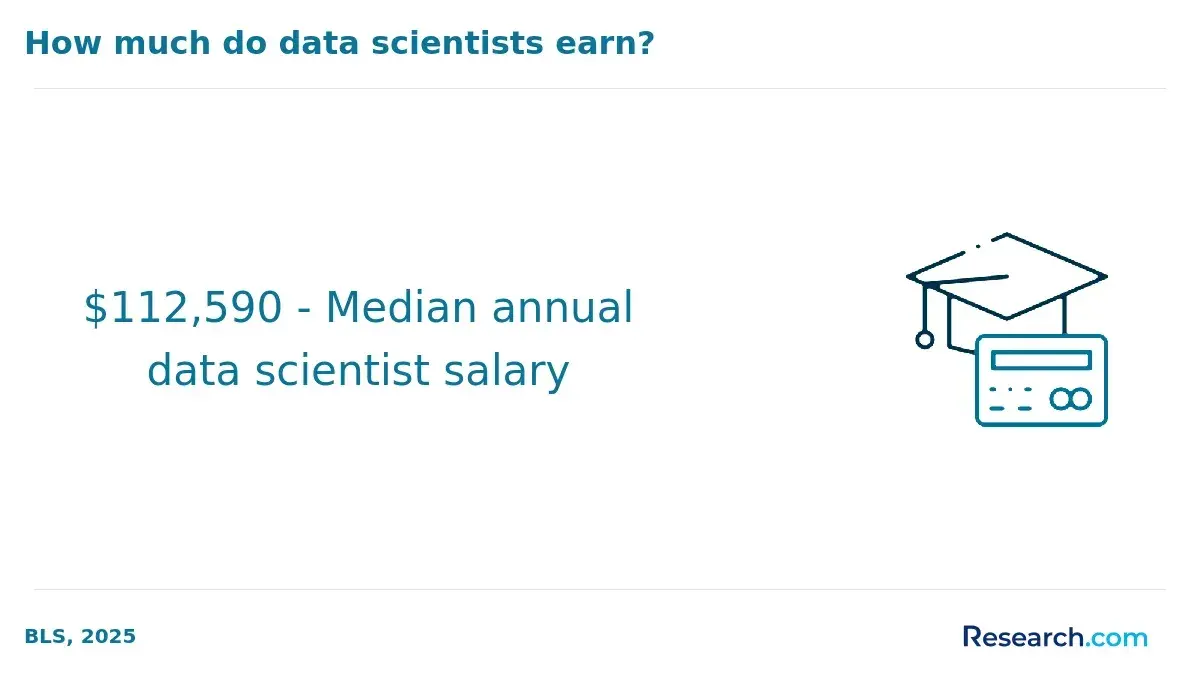
- Graduates with AI doctorates typically secure faculty roles in research-driven institutions, where median starting salaries exceed $110,000 annually, highlighting competitive academic career prospects.
What is an AI doctorate, and how does it differ from computer science?
An AI doctorate focuses deeply on the theory, development, and practical application of artificial intelligence techniques, distinguishing it from a broader computer science doctorate. While computer science PhDs cover various computing topics like algorithms and networking, AI doctorates specialize in areas such as machine learning, natural language processing, robotics, and computer vision.
This focus enables candidates to develop expertise in designing intelligent systems that mimic cognitive functions.
Differences between AI doctorate and computer science careers become clear in curriculum and research emphasis. AI doctoral students work with rapidly evolving methodologies addressing perception, reasoning, and autonomous decision-making.
For instance, AI dissertations may involve speech recognition models or advanced reinforcement learning algorithms, whereas general computer science research might focus on computational theory or network security.
Data from the Stanford AI Index Report 2025 shows AI conference publications growing three times faster than overall computer science publications, signaling rapid growth and specialization in AI research. This trend positions graduates with AI doctorates at the forefront of this expanding field.
For students weighing AI doctorate programs versus computer science degrees, it's crucial to consider program strengths in AI subfields and faculty expertise. Prospective university faculty should prepare for roles in cutting-edge labs and interdisciplinary AI applications.
Additionally, those interested might explore pathways like a 2 year computer science degree online to build foundational skills before advancing.
What doctorate degree is required to become university AI faculty?
Doctorate degrees for university AI faculty positions predominantly require a PhD in computer science, electrical engineering, statistics, or information systems. U.S. business schools report significant shortages of doctoral-qualified faculty in analytics, AI, and related fields, reflecting the high demand for candidates with these qualifications.
This need underscores the requirement that AI university faculty hold rigorous, research-focused doctorates in these technical or quantitative domains.
Specific requirements for AI doctorate degree in academia may vary by subfield. Commonly, candidates hold PhDs in machine learning or data science within computer science departments.
Some roles are also filled by those with doctorates in applied mathematics or operations research, especially if their work strongly aligns with AI methodologies.
Prospective faculty should seek PhD programs emphasizing original AI research, peer-reviewed publications, and interdisciplinary expertise combining statistics, programming, and algorithm theory. Demonstrating strong teaching skills and experience in grant writing is also essential to remain competitive.
Key challenges include limited open positions and increased demand for expertise in AI ethics and societal impacts, often requiring additional fellowships or postdoctoral training.
Additional advice for prospective students is to explore affordable doctoral options, as degree costs can vary widely-consider programs like the mechanical engineering degree programs, which can sometimes offer interdisciplinary pathways relevant to AI faculty preparation.
- PhD in computer science, electrical engineering, statistics, or information systems is essential.
- Focus on AI research, analytics, or related quantitative fields.
- Strong publication and teaching records enhance hiring prospects.
How do accreditation and research reputation affect AI PhD program credibility?
Accreditation impact on AI doctorate credibility remains a decisive factor for advancing university faculty careers. Regional accreditation signals that a program meets rigorous academic standards recognized across the U.S., influencing eligibility for federal funding, professional licensing, and faculty job placements.
Lack of proper accreditation often raises doubts among hiring committees and can hinder graduates' career progression.
Research reputation in AI PhD programs strongly affects how these programs and their graduates are perceived. Top U.S. universities consistently rank highly for research output in areas like machine learning, natural language processing, and computer vision, according to CSRankings' latest data.
This prominence helps graduates gain visibility and credibility in academia.
Prospective students should consider multiple factors when evaluating programs, including:
- Verifying accreditation status through recognized regional or national bodies approved by the U.S. Department of Education.
- Reviewing faculty research records and departmental standings listed in respected sources such as CSRankings.
- Assessing access to advanced labs, research funding, and strategic collaborations that enhance scholarly opportunities.
Faculty recruitment committees prioritize candidates from accredited programs with proven research reputations, which correlate with increased publication opportunities and participation in leading AI conferences. Those credentials are vital for navigating competition in academic hiring.
For those considering flexible educational paths or budget constraints, exploring options like a cheap online engineering degree can provide affordable access without compromising quality, as long as accreditation and research standards are maintained.
Can you earn an AI doctorate online, and what are the limitations?
Yes, you can earn a doctorate in artificial intelligence online, but options remain very limited and challenging. According to the Council of Graduate Schools (CGS) Graduate Enrollment & Degrees report, fully online doctoral enrollment is a small segment compared to master's programs, reflecting the difficulties in delivering comprehensive online PhD paths in AI.
Key limitations of online artificial intelligence doctorate programs include:
- Limited program options: Only a few universities offer fully online AI PhDs, with many requiring on-campus presence for residencies or research.
- Research resources: Access to specialized labs, high-performance computing, and close faculty mentorship is often harder to secure remotely.
- Faculty collaboration: Building relationships and engaging in collaborative research can be more difficult without face-to-face interaction.
- Accreditation and recognition: Some academic and employer settings still prioritize traditional, in-person doctorate credentials.
Many students explore hybrid programs combining remote coursework with on-campus components, or flexible STEM PhD programs featuring an AI specialization. It's essential to carefully review each program's delivery, research support, and faculty expertise before enrolling.
For those considering related fields, an accelerated cyber security degree online could provide a complementary path. The limited availability of online AI doctorates calls for a clear assessment of professional goals and readiness for remote doctoral research.
What courses and research areas are typical in AI doctoral programs?
Doctoral programs in artificial intelligence integrate advanced coursework and research across several key areas, with machine learning as the foundational discipline. This reflects ongoing trends in academic output and industry demand, as confirmed by the Stanford AI Index Report 2025, which ranked machine learning highest in publication volume in 2024, ahead of computer vision and natural language processing (NLP).
Students gain expertise in algorithms, statistical models, and neural networks, focusing on supervised, unsupervised, and reinforcement learning. Programs also offer specialization in fields such as computer vision, covering image recognition and 3D reconstruction, and NLP, which includes language models and sentiment analysis.
Foundational subjects like probability theory, optimization, and statistical inference support theoretical depth, while practical training addresses large-scale data processing, cloud computing, and AI ethics. This combination prepares students for responsible AI deployment in diverse industries.
Research tracks often involve:
- Developing novel machine learning models with enhanced accuracy and efficiency
- Applying AI solutions to healthcare, finance, or autonomous systems
- Improving algorithmic fairness, transparency, and interpretability
- Building AI systems resilient to adversarial attacks and real-world variability
Prospective students should assess faculty research interests and lab resources, prioritizing programs with strong publication pathways to support academic career goals.
What admission requirements matter most for competitive AI PhD applicants?
Research experience and relevant publications are crucial for competitive AI PhD applicants. Top programs prioritize demonstrated ability to conduct innovative research over standardized test scores. The ETS GRE Program reports that GRE test volume remains significantly below pre-pandemic levels, reflecting that many leading AI and computer science PhD programs have de-emphasized or removed GRE requirements altogether.
This change underscores the growing consensus that GRE scores are less predictive of success in advanced research than tangible research output.
Applicants should aim to contribute to peer-reviewed conferences or journals such as NeurIPS, ICML, or CVPR. Authorship in these venues signals mastery of current methodologies and original ideas. Internships or research assistant positions under established faculty also provide valuable mentorship and practical experience.
Strong letters of recommendation remain essential, ideally from faculty or research supervisors who can attest to the applicant's technical skills, intellectual curiosity, and problem-solving persistence. Admissions committees consider these letters alongside research artifacts to evaluate potential.
Additional requirements include a solid foundation in mathematics, computer science, and programming, demonstrated via coursework or related projects. While some programs still accept GRE scores, they are often optional or secondary metrics rather than strict cutoffs.
International applicants should be prepared to submit English proficiency tests like TOEFL or IELTS, which remain standard prerequisites.
How long does an AI doctorate take, and what does it cost?
An AI doctorate generally takes five to seven years, depending on factors like program structure, research complexity, and student progress. Full-time students often complete it in about five years, while part-time or interdisciplinary candidates might require longer.
The timeframe covers coursework, comprehensive exams, research projects, dissertation writing, and defense.
Costs vary significantly based on institution type. According to NCES NPSAS 2023-24 data, private nonprofit universities typically charge median graduate tuition and fees above $40,000 annually, whereas public universities range from $12,000 to $25,000 per year. Additional expenses such as housing, books, conference travel, and computing resources can add $10,000 to $20,000 yearly, depending on lifestyle and location.
Many AI PhD students secure funding through research or teaching assistantships, fellowships, and grants that help offset tuition and living expenses. Funding availability, however, varies greatly across programs and institutions, so it is essential to research financial support options before committing.
Prospective students should consider key factors when planning:
- Duration: Expect at least five years, with possible extensions.
- Cost: Public universities offer lower tuition but evaluate overall expenses including living costs.
- Funding: Prioritize programs with strong financial aid and research support in AI.
What funding options exist for AI PhD students, including stipends and grants?
Funding for AI PhD students comes from various sources such as fellowships, research assistantships, teaching assistantships, and external grants. The NSF Graduate Research Fellowship Program (GRFP) is among the most prestigious, offering a $37,000 annual stipend plus a $16,000 cost-of-education allowance for three years.
This support provides stability and flexibility throughout doctoral studies.
Research assistantships, typically funded by faculty grants, often cover tuition and provide stipends ranging from $25,000 to $35,000 annually. These roles usually involve working on research projects related to AI fields like machine learning or robotics.
Teaching assistantships offer slightly lower stipends, generally between $20,000 and $30,000 per year, frequently including tuition remission and valuable teaching experience.
Additional external grants from government agencies such as DARPA or private tech firms can supplement funding, sometimes allowing students to balance part-time internships. Many universities assist in identifying such opportunities.
Prospective candidates should carefully review eligibility criteria and deadlines for fellowships and grants. Combining multiple funding sources is common to cover tuition and living expenses fully.
Early applications and strong research proposals greatly enhance the chances of securing competitive awards, vital for sustaining a successful AI PhD journey.
What jobs can an AI doctorate lead to inside and outside academia?
Graduates with a doctorate in artificial intelligence have access to diverse career opportunities across academia and industry. Within universities, common roles include assistant, associate, or full professor positions where specialists focus on advancing AI theory, developing novel algorithms, and mentoring future researchers.
Faculty members also engage in grant writing and cross-department collaborations among areas like computer science, engineering, and data science.
Industry has become a major driver of AI innovation. The Stanford AI Index Report 2025 highlights that most notable AI models were developed by private sector organizations, surpassing academic contributions.
In this environment, PhD holders pursue roles as research scientists, machine learning engineers, or AI specialists in technology, healthcare, finance, and automotive sectors.
Career paths outside academia include:
- Leading AI research labs at major tech companies working on large language models and autonomous systems
- Founding startups focused on applied AI areas such as natural language processing and computer vision
- Working as AI consultants to improve enterprise data strategies and automation
- Joining policy and ethics teams addressing AI governance and societal impact
Government agencies and nonprofit research institutes also offer positions focusing on AI safety and human-centered design. Graduates must balance theoretical research with application demands by honing programming, communication, and interdisciplinary collaboration skills.
What salaries and job outlook can AI doctorate graduates expect in the U.S.?
AI doctorate holders pursuing academic careers in the U.S. command notable salaries and enjoy strong job growth. According to the U.S. Bureau of Labor Statistics, computer and information research scientists-a category often including AI PhDs-earned a median annual wage of $145,080.
This compensation reflects the critical role of advanced expertise in artificial intelligence research within academia and research institutions.
The employment outlook is robust, with BLS forecasting a 23% growth rate from 2023 to 2033, significantly higher than the average for all occupations. This surge is fueled by rising demand for AI innovation across sectors and increased research funding at universities.
Salary ranges vary by institution and position type:
- Tenure-track AI professors at top research universities can earn over $120,000, sometimes reaching $180,000 depending on experience and grants.
- Assistant professor roles at smaller colleges typically start between $80,000 and $100,000.
- Postdoctoral AI researchers make $50,000 to $70,000, serving as transitional roles before full faculty appointments.
Faculty who secure external funding often boost their total earnings significantly. AI doctorate graduates benefit from interdisciplinary collaborations, including partnerships with government and industry sponsors, enhancing both research opportunities and compensation.
These trends highlight AI's appeal as a lucrative and stable field for doctoral scholars entering academia.
Other Things You Should Know About Artificial Intelligence
Emerging specializations within AI doctoral programs in 2027 include Explainable AI, AI Ethics, and AI for Social Good. These areas address current demands for transparency, ethical framework considerations, and practical applications to societal challenges, providing essential knowledge and insight for future university faculty.
Interdisciplinary knowledge is highly valuable in AI doctoral research because AI applications span diverse fields like robotics, healthcare, linguistics, and social sciences. Combining expertise from other domains enhances innovation and broadens research impact. Many successful AI doctorate projects integrate concepts from neuroscience, psychology, or ethics to address complex challenges comprehensively.
AI PhD students often face challenges such as keeping up with the rapid pace of technological advancements and managing extensive datasets effectively. Research complexity can lead to prolonged experimentation phases, requiring persistence and adaptability. Additionally, balancing coursework, teaching responsibilities, and dissertation progress can be demanding for many doctoral candidates.
Graduates with an AI doctorate frequently contribute to university teaching by designing and delivering specialized courses in machine learning, data science, and related AI topics. They also play a key role in updating curricula to reflect the latest research trends and industry practices. Their expertise helps prepare students for careers in a rapidly evolving AI landscape.
References
- How a Doctorate in Computer Science Leads to AI Leadership Careers https://www.euroamerican.eu/how-a-doctorate-in-computer-science-helps-move-into-ai-leadership-roles
- AI PhD Curriculum https://www.i-aida.org/phd-studies/ai-phd-curriculum/
- AI and the PhD student: friend or foe? https://www.nature.com/articles/d41586-026-00843-y
- Is Getting a Ph.D. in Artificial Intelligence Worth It? https://www.computerscience.org/degrees/doctorate/artificial-intelligence/
- Machine Learning (and AI) vs Computer Science | MCS@Rice https://csweb.rice.edu/academics/graduate-programs/online-mcs/blog/computer-science-vs-artificial-intelligence-and-machine-learning
- Should You Apply for a PhD in AI (2025-26)? https://yashbhalgat.github.io/blog/phd-or-not-phd.html
- Amazon launches $68 million AI PhD Fellowship program https://www.amazon.science/news/amazon-launches-68-million-ai-phd-fellowship-program
- Landing Your Dream Job: Career Paths for AI & ML Doctorate Graduates https://snatika.com/single-blog/landing-your-dream-job%3A-career-paths-for-ai-%26-ml-doctorate-graduates
- What AI Can (and Can’t) Do for You During Your PhD - www.aipmo.org https://www.aipmo.org/what-ai-can-and-cant-do-for-you-during-your-phd/
- Artificial intelligence VS computer science: What's the difference? https://www.immerse.education/beyond-syllabus/computer-science/artificial-intelligence-vs-computer-science/