2027 Technical Skills Employers Expect From AI Graduates

Co-Founder and Chief Data Scientist
Many prospective AI graduates encounter a gap between their academic training and the technical skills employers demand in today's competitive market. This disconnect often leads to missed opportunities and challenges in securing roles that require hands-on expertise with current AI tools and frameworks.
Identifying which programming languages, frameworks, and methodologies are essential is crucial for those transitioning from unrelated fields. This article discusses the core technical skills sought by employers and offers a clear roadmap for acquiring them, enabling readers to strategically align their learning paths with industry expectations and improve their job readiness.
Key Things You Should Know
- Proficiency in machine learning frameworks like TensorFlow and PyTorch is expected by 68% of employers hiring AI graduates in 2025.
- Strong programming skills in Python and data preprocessing knowledge are critical, with 75% of job listings requiring these competencies.
- Understanding AI ethics and explainability has become essential, featured in 54% of recent employer surveys focused on AI roles.
What technical skills do AI employers expect from graduates?
Employers in the AI sector highly value graduates with strong machine learning programming skills for AI jobs, with 74% of tech employers prioritizing candidates proficient in AI and machine learning. Key programming languages include Python, favored for its extensive AI libraries like TensorFlow, PyTorch, and scikit-learn. Knowledge of R and Java also supports data analysis and scalable AI solutions.
Graduates must demonstrate expertise in machine learning models-such as supervised, unsupervised, and reinforcement learning-alongside tuning hyperparameters and evaluating metrics like accuracy and F1-score. Experience with neural networks and deep learning frameworks is increasingly important for handling complex data types like images and natural language.
Skills in cloud platforms (AWS, Azure, Google Cloud) are common requirements for deploying AI solutions at scale. Understanding data engineering concepts, including SQL and NoSQL databases and data pipelines, enhances job readiness. Ethical AI practices and bias mitigation are gaining prominence, reflecting industry emphasis on responsible AI development. Proficiency with version control systems like Git and containerization tools such as Docker facilitates collaboration and reproducibility in AI projects.
For those exploring data analysis and AI graduation requirements, familiarity with managing large datasets and using visualization tools to communicate findings effectively is essential. Prospective students seeking to boost their credentials can explore the top data science master's programs in the US to acquire the technical skills demanded by AI employers.
What AI degree programs build the strongest job-ready skills?
Degree programs that build the strongest job-ready skills in AI emphasize a blend of rigorous theory and extensive practical experience. Computer science programs with specialized AI tracks remain the most effective, covering machine learning, data structures, and algorithmic thinking. They often include hands-on projects using frameworks like TensorFlow and PyTorch, coding in Python, and applying AI techniques to real-world datasets. These top AI degree programs for job-ready skills ensure graduates are proficient and employable.
Interdisciplinary programs that combine AI with data science or engineering equip students with valuable skills in data analysis, statistical modeling, and system architecture. Many institutions also emphasize cloud computing, AI ethics, and natural language processing to prepare students for diverse roles in the technology sector. Programs highlighting these best AI graduate skills developed by degree programs enhance career readiness.
Certificate programs and bootcamps focusing on AI and machine learning offer intensive, targeted skill sets over shorter durations. These are ideal for professionals aiming to transition quickly into AI roles but often lack the depth provided by full degree tracks. Employers look for candidates skilled in programming languages such as Python and R, familiar with AI libraries, and capable of developing scalable AI solutions.
In 2024, job postings requiring at least one AI skill numbered over 628,000, a significant increase from earlier years, reflecting strong industry demand. Prospective students should prioritize programs offering experiential learning through internships, capstone projects, and industry collaboration to graduate ready for immediate impact. For those seeking affordable options in engineering fields connected to AI, the cheapest online civil engineering degree programs can also provide a valuable pathway.
How do online and campus AI programs compare?
Campus AI programs offer hands-on access to advanced labs, collaborative projects, and mentorship, enabling students to master complex concepts like neural network design and reinforcement learning. These face-to-face interactions create strong networks and real-time problem-solving skills, crucial in applied fields such as robotics and computer vision.
Conversely, online programs emphasize accessibility and flexibility, catering to students balancing work or unable to relocate. Enhanced with interactive coding environments and virtual labs, these programs support practical skills like machine learning pipelines and algorithm deployment but may lack the immediacy of campus collaboration.
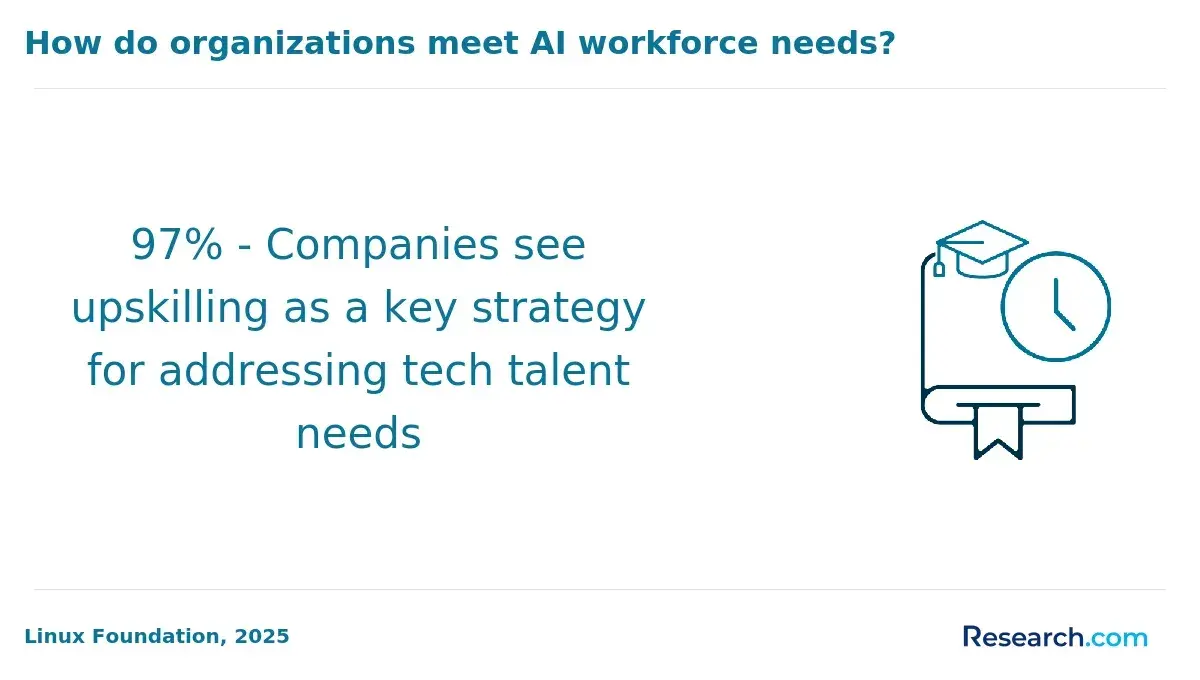
Employer expectations for skills from online and campus AI graduates increasingly include proficiency in fundamentals and popular tools such as TensorFlow, Python, and cloud-based AI services. Job market data shows that 50% of U.S. tech postings required AI skills in September 2025, highlighting the value of programs that focus on industry-relevant tools and real-world applications.
When comparing online versus campus AI programs, prospective students should prioritize project-based learning and exposure to emerging technologies. Online learners should seek courses with active forums, mentorship, and industry partnerships, while campus programs excel in immersive experiences. For those interested in related fields, the best online cybersecurity degree programs of 2025 also offer flexible, career-focused options.
Which AI courses and projects matter most for employers?
Employers highly value AI courses that build hands-on expertise in machine learning, deep learning, natural language processing (NLP), and computer vision. Core coursework should emphasize algorithms, data structures, and advanced mathematics such as linear algebra, probability, and statistics. Proficiency in Python and frameworks like TensorFlow and PyTorch is essential.
Specialized topics like reinforcement learning and ethical AI add further value. Programs emphasizing real-world problem solving through capstone projects and internships help prepare students effectively. Hands-on artificial intelligence projects for job readiness play a crucial role. Examples include developing chatbots capable of complex dialogues, building image recognition systems for real-world datasets, and creating recommendation engines.
Employers seek candidates who demonstrate managing full project lifecycles-from data preprocessing to model deployment. Contributions to open-source AI initiatives or publications in recognized AI conferences enhance credibility. Knowledge of cloud platforms such as AWS, Google Cloud, or Azure is increasingly important for scalable AI model deployment. Graduates who can integrate AI models into production environments effectively address the gap between theory and enterprise application.
According to Bachelors Degree Center citing labor-market data, demand for AI-centric roles rose 25.2% year over year in Q1 2025, with a median salary of $156,998. Prospective students and professionals should consider programs like the MS in data analytics to stay current with the latest tools and research developments. Focusing on top AI courses valued by employers in North America ensures alignment with industry standards and challenges.
What admission requirements do AI programs usually ask for?
Applicants to AI programs typically need a strong foundation in mathematics and computer science. Common prerequisites include courses or skills in linear algebra, calculus, probability, statistics, and programming languages such as Python, Java, or C++. Familiarity with data structures and algorithms is often expected. Most admissions committees prefer candidates holding bachelor's degrees in STEM fields like computer science, engineering, mathematics, or physics.
Many graduate AI programs request GRE scores, although some have eased this requirement recently. Letters of recommendation play a key role, especially from faculty or professionals who can vouch for technical skills and research potential. Personal statements should clearly convey interest and relevant experience in AI, including projects or internships.
Hands-on experience with machine learning frameworks like TensorFlow or PyTorch can strengthen applications. Participation in research, publications, or open-source AI projects is highly valued. For professional or part-time AI master's programs, relevant work experience may replace certain academic prerequisites.
Due to rising demand, over one-third of entry-level jobs now require AI skills-almost triple the share reported in fall 2025 by NACE. This surge heightens competition and raises admission standards. Demonstrating both theoretical knowledge and practical problem-solving abilities, alongside familiarity with emerging AI trends, is essential for applicants.
How long does an AI degree take to finish?
An AI degree generally ranges from two to four years depending on the program level and format. An associate degree in AI or a related field typically requires about two years of full-time study and prepares students for entry-level or technical roles that demand less theoretical background. A bachelor's degree takes around four years, offering a well-rounded curriculum that includes fundamental computer science and specialized AI subjects like machine learning, natural language processing, and robotics.
Graduate degrees such as master's programs usually take an additional one to two years beyond a bachelor's, emphasizing advanced skills and research. PhD studies can extend past four years, focusing on research, academia, or specialized industry roles. Flexible formats such as part-time, online, or hybrid courses can lengthen the duration but allow working professionals to balance study and career.
Some schools provide accelerated or combined bachelor's/master's programs that shorten total completion time. The demand for AI skills in jobs requiring at least an associate degree has grown from 0.4% in 2010 to 1.4% in 2024, according to Atlanta Fed data. This reflects the increasing importance of timely training for career competitiveness in the evolving job market.
How much do AI degrees cost at U.S. schools?
Costs for AI degrees in U.S. universities vary significantly based on the institution and program type. Public universities charge between $10,000 and $25,000 annually for in-state students enrolled in a bachelor's or master's program related to AI or computer science with an AI specialization. Out-of-state tuition can range from $30,000 to $45,000 per year. Private schools generally have higher fees, often between $40,000 and $60,000 annually. Online AI programs provide more affordable and flexible options, typically costing $15,000 to $30,000.
Additional expenses such as fees, textbooks, and living costs can exceed $15,000 annually, depending on the location. Many schools also offer AI bootcamps or certificate programs priced between $5,000 and $12,000, which serve as cost-effective alternatives for skill enhancement.
Financial aid, scholarships, and assistantships can reduce education costs substantially. Many AI programs emphasize practical skills like creativity and communication, identified by QS as crucial for bridging large skills gaps. Graduates with strengths in these areas gain a competitive edge in the job market.
Prospective students should budget carefully and explore funding options to align costs with career objectives. Evaluating quality and outcomes alongside price is essential for a sustainable AI education journey.
What jobs can AI graduates pursue after college?
Opportunities for AI graduates in 2026 span various industries and roles, often going beyond traditional expectations. Although Bachelors Degree Center notes a 15% drop in AI job postings requiring a college degree, specialized roles for degree holders remain prominent. Common positions include machine learning engineer, data scientist, AI research scientist, and AI software developer. These jobs typically demand strong skills in programming languages like Python, R, and Java, along with experience in frameworks such as TensorFlow and PyTorch.
Other career paths include AI product management and AI ethics compliance, where understanding the social and legal implications of AI is essential. Roles like AI operations analyst and AI quality assurance specialist emphasize monitoring systems and ensuring reliability, offering alternatives to coding-intensive positions.
Growth in sectors like healthcare, finance, robotics, and autonomous vehicles presents roles such as bioinformatics specialist, financial quantitative analyst, robotics engineer, and autonomous system designer. These often require expertise with domain-specific tools and knowledge. Interdisciplinary skills that combine AI with cybersecurity, cloud computing, or IoT are increasingly valued in today's job market.
Graduates who develop competencies in data analysis, algorithm design, and ethical AI practices strengthen their employability. Building a project portfolio or completing internships is critical to demonstrate practical experience. Keeping up with shifts in employer demand encourages exploring certifications and alternative credentials alongside traditional degrees, helping AI professionals adapt and thrive.
What salary can AI graduates expect in the United States?
AI graduates in the United States typically see starting salaries between $75,000 and $110,000 annually. Entry-level data science, machine learning engineering, and AI development roles often begin around $80,000, with top positions in major tech hubs exceeding $100,000. Salaries vary based on factors like location, company size, and domain specialization, with finance and healthcare generally offering higher pay than academic or government jobs.
Employers increasingly prioritize candidates with solid skills in machine learning algorithms, proficiency in programming languages such as Python, and hands-on experience with AI frameworks. According to a survey reported by Workplace Journal, 54% of organizations now require AI capabilities for all early-career roles, raising compensation expectations amid growing competition.
Specializations in natural language processing, computer vision, or reinforcement learning can justify higher salaries. Certifications and practical experience with cloud platforms like AWS or Azure further boost employability and earning potential. These insights help prospective AI graduates focus skill development and set realistic salary goals aligned with employer demands.
How do you choose an accredited AI program?
Choosing an accredited artificial intelligence program involves evaluating factors that influence educational quality and career prospects. Key is confirming institutional accreditation recognized by the U.S. Department of Education or the Council for Higher Education Accreditation (CHEA), ensuring academic rigor and credit transferability.
The curriculum should emphasize foundational topics like machine learning, natural language processing, data science, and programming languages such as Python and R. Programs offering practical projects and internships provide valuable hands-on experience. Faculty expertise with industry experience or notable research can align the curriculum with current trends.
Flexibility through online or part-time options benefits those balancing work and study. Graduate outcomes-like employment rates and average salaries-are vital indicators of program success. Accreditation from specialized bodies like ABET or recognition by AI professional organizations adds further trustworthiness.
What to consider:
- Institutional and specialized accreditation for credibility.
- Comprehensive curriculum incorporating both theory and practice.
- Faculty with real-world or research expertise.
- Flexible delivery formats.
- Graduate employment rates and salaries.
- Access to modern AI tools and computing resources.
- Support for career development and employer connections.
According to GMAC data from over 600 recruiters across 39 countries, skills in AI, technology, and data analysis showed the largest year-on-year increase in importance, highlighting the need to select programs that deliver these competencies. Evaluating costs against potential return on investment, including scholarships or employer tuition assistance, remains essential.
Other Things You Should Know About Artificial Intelligence
Continuous learning is critical in an AI career due to the rapid evolution of technologies and techniques. AI professionals need to stay updated with new algorithms, tools, and research findings to remain effective. Engaging in ongoing education through workshops, courses, and conferences is essential to maintain a competitive edge.
Beyond foundational AI education, programming languages such as Python, R, and Java remain highly useful for developing AI solutions. Python is the most popular due to its extensive libraries and community support, while R is favored for statistical analysis. Java's performance and scalability make it suitable for deploying AI in enterprise environments.
AI graduates can showcase practical skills by completing internships, participating in open-source projects, and building portfolios with real-world applications. Demonstrating experience with popular AI frameworks like TensorFlow or PyTorch can also add value. Additionally, publishing papers or contributing to AI competitions helps prove competence to potential employers.
By 2026, graduates should be proficient with AI tools like OpenAI's GPT series and Google Cloud's Vertex AI for model deployment. Familiarity with these can be crucial, especially for students pursuing an AI master’s without a technical background.
References
- Artificial Intelligence Degree Requirements: What Do You Need to Apply? https://aifwd.com/education/artificial-intelligence-degree-requirements/
- Entry-Level AI Engineer Salary Calculator https://tripleten.com/tools/entry-level-ai-engineer-salary/
- Top 10 Careers in Artificial Intelligence and Machine Learning https://apollouniversity.edu.in/blog/building-a-high-flying-career-in-artificial-intelligence-and-machine-learning/
- Essential AI Skills Every Graduate Should Master https://www.ukjobhunters.com/blog/post/essential-ai-skills-every-graduate-should-master/
- The top skills to hire for in the age of AI https://nz.employer.seek.com/hiring-advice/article/top-skills-to-hire-for-in-the-age-of-ai
- The US states rewarding specialist AI skills, revealed https://www.internationalaccountingbulletin.com/news/the-us-states-rewarding-specialist-ai-skills-revealed/
- The Future of Tech Upskilling: Which Skills Will You Need Next? https://www.calmu.edu/the-future-of-tech-upskilling-which-skills-will-you-need-next
- Best AI Certifications to Boost Your Career in 2026 – Dataquest https://www.dataquest.io/blog/best-ai-certifications/
- Professional AI Training: How to Choose the Right Program https://www.strategicaileader.com/professional-ai-training-how-to-choose-the-right-program/
- Online vs Campus Artificial Intelligence Degree Programs: Complete Comparison https://hakia.com/compare/artificial-intelligence-online-vs-campus/