2027 AI Bachelor's Degree Programs With the Best Curriculum Breadth

Co-Founder and Chief Data Scientist
Many students with degrees outside of computer science struggle to find comprehensive bachelor's programs that build strong foundations in artificial intelligence without requiring extensive prior experience. Choosing a program that balances theory, practical skills, and interdisciplinary knowledge is crucial for career transition success. Without this, graduates may face gaps in essential competencies or limited career opportunities in AI-driven fields.
This article explores AI bachelor's degree programs known for their curriculum breadth, highlighting how they equip learners with diverse skills to thrive in evolving technology landscapes and helping readers identify the best pathways for a flexible, accredited AI education.
Key Things You Should Know
- Top AI bachelor's programs in 2027 emphasize multidisciplinary curricula, integrating machine learning, ethics, data science, and robotics to ensure broad technical and contextual understanding.
- Over 65% of leading U.S. universities updated AI courses in 2024-2025 to include emerging technologies like generative AI and explainable AI, reflecting rapid industry advancements.
- Graduates from programs with diverse curricula report 30% higher employment rates in AI fields, underscoring the value of well-rounded foundational knowledge for career readiness.
What is an AI bachelor's degree, and what careers does it prepare you for?
An AI bachelor's degree provides foundational and applied knowledge in artificial intelligence, machine learning, data science, and computer programming. Students develop skills in algorithm design, neural networks, natural language processing, robotics, and data analytics. The curriculum typically includes mathematics, statistics, computer science, and ethics linked to AI deployment. Many programs offer interdisciplinary electives in cognitive science, human-computer interaction, and business to prepare graduates for diverse roles across industries.
Career opportunities in the United States for graduates of undergraduate artificial intelligence programs and job pathways are broad. Common roles include AI engineer, machine learning specialist, data scientist, robotics developer, AI research analyst, software developer using AI tools, and automation consultant. Graduates also apply AI in fields such as healthcare, finance, and marketing to improve decision-making and optimize operations.
According to the World Economic Forum's Future of Jobs Report 2025, AI and machine learning specialists are among the fastest-growing roles globally, with an anticipated employment growth of approximately 40% through 2030. This highlights the increasing demand for skilled professionals in these domains.
Prospective students should seek programs emphasizing hands-on projects, internships, and emerging AI fields. Those interested in ethics and policy may focus on courses addressing AI governance and social impact. Graduates who combine strong programming skills with interdisciplinary knowledge gain a competitive edge. For more details on roles and career paths, see what is applied artificial intelligence.
Which schools offer AI bachelor's programs with the broadest curriculum coverage?
Several U.S. universities lead in offering AI bachelor's programs with extensive curriculum coverage, essential for students aiming to build versatile expertise. Institutions like Carnegie Mellon University, Stanford University, and the University of California, Berkeley provide broad bachelor degrees in AI that cover core techniques alongside complementary fields such as machine learning, robotics, natural language processing, and ethical AI. These programs also include interdisciplinary courses in mathematics, cognitive science, and data analytics to develop well-rounded skills.
Carnegie Mellon's program features hands-on lab work in computer vision and reinforcement learning. Stanford balances theoretical foundations with practical applications, emphasizing deep learning and human-computer interaction. Berkeley includes AI's societal impacts with courses on policy and ethics alongside algorithm design. Such breadth aligns with the Times Higher Education World University Rankings 2025 by subject (Computer Science), showcasing over 1,100 universities competing globally on AI curriculum depth.
Prospective students should look for programs offering:
- Foundational AI areas plus electives in data science, ethics, and systems design
- Opportunities for interdisciplinary collaboration
- Integration of theory and application through projects and research
This kind of comprehensive program prepares graduates for diverse roles in industry and research, meeting employer demand for adaptable AI professionals. For those also interested in engineering fields, exploring an online mechanical engineer degree can complement AI expertise and expand career opportunities.
How can you compare curriculum breadth across AI bachelor's programs?
When comparing curriculum breadth for ai bachelor's degrees, examine how programs cover core foundations alongside applied and interdisciplinary skills. Breadth goes beyond technical depth, including courses in programming, statistics, ethics, human-computer interaction, and domain-specific applications such as healthcare or finance. Strong programs often integrate related disciplines like data science, robotics, and cognitive science.
Evaluate how programs balance theory with practical experience. Look for machine learning courses paired with offerings in AI ethics, legal impacts, or electives outside computer science. This approach fosters adaptability, equipping students with skills such as technical writing or business analytics, crucial for diverse roles. Understanding how to evaluate ai bachelor's degree programs curriculum also means checking for interdisciplinary minors, dual degrees, or collaborations with other departments, which enrich skills beyond narrow expertise.
Consider course sequencing and prerequisites to ensure knowledge builds incrementally across subfields. Verify availability of capstone projects that integrate multiple skill sets, and assess faculty expertise for coverage of emerging AI topics like explainability and social applications. Graduate outcomes reflecting diverse career paths in academia, industry, policy, or entrepreneurship often indicate broader curriculum coverage.
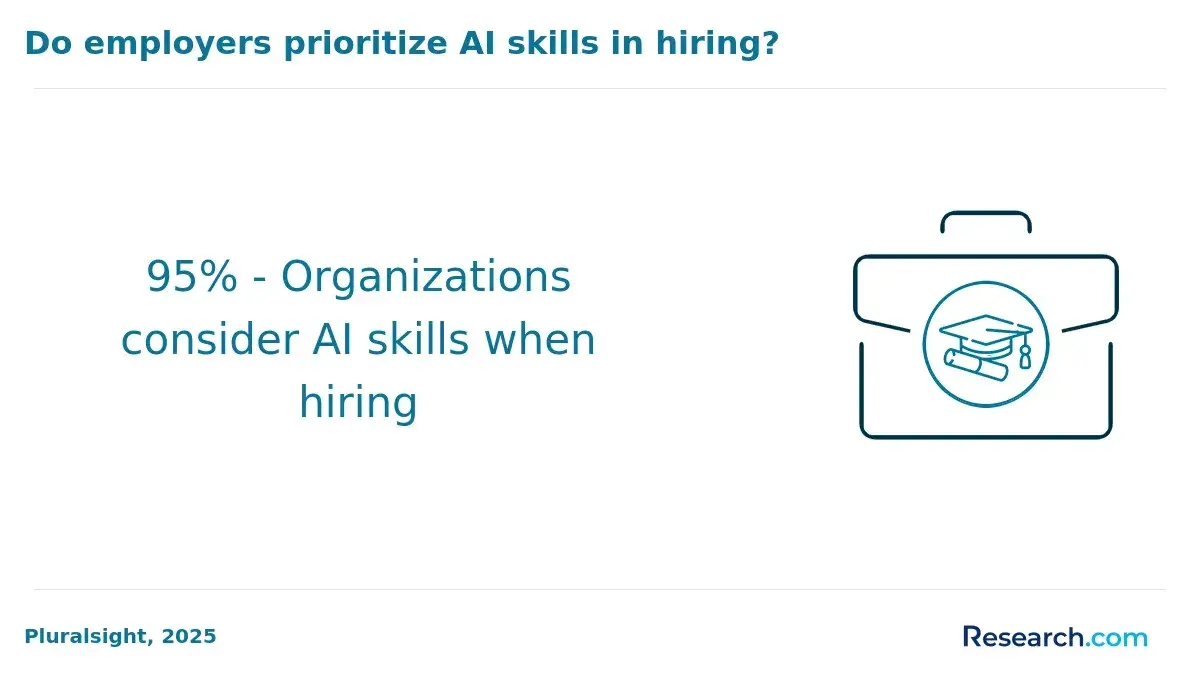
Employers increasingly value multi-skilled graduates. According to the MIT Sloan/BCG survey, 62% of executives prioritize upskilling to keep pace with ai advancements. Prospective students can find detailed comparisons and options by exploring resources such as the online AI degree listings.
What accreditation should an AI bachelor's program and school have?
An AI bachelor's program should have accreditation from ABET, which is recognized as the best accreditation for AI bachelor programs, to ensure its curriculum meets rigorous academic and professional standards. ABET accredits over 4,600 programs across more than 1,000 colleges and universities in 40 countries and confirms the program covers essential competencies such as algorithms, data structures, machine learning, and ethical considerations.
Equally important is the top regional accreditation for AI schools that the university holds, guaranteeing compliance with U.S. Department of Education guidelines. Students must verify both program-level accreditation like ABET and institutional regional accreditation before enrolling to avoid issues with degree recognition, graduate admissions, and credit transferability.
Some AI programs may also hold endorsements from industry groups such as the Association for Computing Machinery (ACM), but these are supplementary and not substitutes for ABET accreditation. Accreditation also impacts eligibility for federal financial aid and overall education quality.
Choosing accredited AI programs ensures smoother career pathways and a reliable education investment. For those interested in related fields, exploring cybersecurity degrees may also be beneficial.
What core courses should a well-rounded AI bachelor's curriculum include?
A well-designed AI bachelor's curriculum integrates foundational mathematics, computer science, and ethics to prepare students for versatile career opportunities. Essential courses include linear algebra, calculus, probability, and statistics, which are critical for understanding algorithms and data analysis. Programming fundamentals and data structures build the skills necessary to implement and optimize AI models effectively.
Core AI-specific classes cover machine learning, deep learning, natural language processing, and computer vision. These subjects focus on algorithm design, model training, and real-world applications. Robotics and autonomous systems courses, when available, expand knowledge from software to embedded AI technologies.
Ethics and governance topics have become increasingly vital. As noted in the Stanford University AI Index Report 2025, responsible AI principles such as fairness, transparency, and privacy are now integral to AI education. These topics prepare graduates to handle societal impacts and regulatory demands often overlooked in traditional curricula.
Additional courses like databases, big data processing, theory of computation, and human-computer interaction enhance students' technical and design capabilities. Practical experience through capstone projects or research synthesizes this knowledge, fostering critical thinking and applied skills.
This comprehensive approach equips students to meet evolving industry standards, balancing technical proficiency with ethical responsibility.
What math, coding, and lab skills are required before starting an AI major?
Students aiming to pursue an AI major need a solid foundation in math, coding, and laboratory skills. Key mathematical areas include calculus, linear algebra, probability, and statistics, which support essential AI concepts like neural networks and optimization algorithms. For instance, linear algebra is vital for matrix operations in machine learning, while calculus aids in gradient-based optimization techniques.
Coding proficiency, especially in Python, is crucial. Python's popularity is backed by its extensive libraries for data manipulation, machine learning, and visualization. The IEEE Spectrum ranking highlights Python as the top programming language, confirming its importance in AI education. Students should be adept at writing Python code, managing data structures, and using libraries such as NumPy, pandas, and TensorFlow. Knowledge of Git and other version control systems is often necessary to collaborate on projects effectively.
Hands-on laboratory experience sharpens problem-solving skills and familiarity with AI workflows. Students learn to implement algorithms, conduct experiments, and troubleshoot code challenges. Tools like Jupyter notebooks facilitate iterative testing and visualization. Some programs may also require experience with cloud platforms to handle large datasets or deploy models in real-world scenarios.
Successful AI majors typically enter programs equipped with:
- Mathematics: Calculus, linear algebra, probability, and statistics
- Coding: Proficiency in Python and essential libraries, along with basic software engineering tools
- Lab skills: Algorithm implementation, experimentation, debugging, and use of computational tools
How do online AI bachelor's programs compare with on-campus options?
Online AI bachelor's programs now match on-campus options in curriculum breadth, often including core courses in machine learning, data science, robotics, and ethical AI. Accredited schools commonly use the same faculty and uphold rigorous standards across both formats, ensuring students receive a thorough theoretical and practical foundation for AI careers.
About 20% of U.S. undergraduates study exclusively online, reflecting the growing acceptance of distance education as a mainstream choice. This shift aligns with findings from the National Center for Education Statistics (NCES) Integrated Postsecondary Education Data System, 2024 release.
Delivery and experiential learning opportunities differ notably between formats:
- On-campus students access labs, AI hardware, and face-to-face collaboration essential for hands-on projects and internships.
- Online students use virtual labs, cloud computing, and synchronous tools, though access quality varies by institution.
- Networking is often more natural on campus; online programs build active virtual communities, mentorships, and scheduled interactions.
Prospective students should weigh their learning preferences, professional demands, and practical training needs. Flexibility makes online programs ideal for working professionals, while immersive research favors on-campus study. Accreditation and employer connectivity remain vital quality signals. Reviewing syllabi and tech platforms helps confirm a program's AI scope and depth.
How long does an AI bachelor's take, and what does it cost?
A bachelor's degree in artificial intelligence usually requires four years of full-time study at a U.S. college or university. This timeframe may vary based on curriculum structure, electives, or participation in internships and co-op programs designed to enhance practical skills.
Tuition costs differ significantly between public and private institutions. According to College Board's Trends in College Pricing 2024, in-state public four-year colleges average about $11,260 per year, totaling around $45,000 for the degree. Private colleges often charge between $35,000 and $55,000 annually.
Additional expenses may include specialized lab fees, software licenses, and access to advanced computing resources necessary for AI coursework. STEM-focused programs, especially those emphasizing artificial intelligence, often have premium tuition rates due to the resource demands of the field.
Financial aid, scholarships, and state residency status can reduce costs considerably. Out-of-state and international students generally pay higher tuition. Online AI programs might offer accelerated paths, some finishing in three years, potentially lowering overall costs.
Students should also consider indirect costs such as potential lost income from full-time study and expenses associated with internships, which are vital for gaining real-world AI experience.
What jobs can you get with an AI bachelor's, and what is the outlook?
Graduates holding a bachelor's degree in artificial intelligence are prepared for various roles in technology, data science, software development, and applied research. Common job titles include data scientist, machine learning engineer, AI software developer, robotics engineer, and AI analyst, each requiring strong programming abilities, algorithm proficiency, and a solid grasp of AI models and systems.
The U.S. Bureau of Labor Statistics projects a 36% growth in data scientist roles from 2023 to 2033, highlighting this field as one of the fastest-growing career paths tied to artificial intelligence. Growth is driven by increased data-driven decision-making across healthcare, finance, marketing, and government sectors. Demand also rises for machine learning engineers and AI developers as organizations adopt automation and intelligent technologies.
Key job responsibilities include:
- Designing experiments, analyzing large datasets, and crafting predictive models to support business strategies for data scientists.
- Developing scalable AI systems and optimizing algorithms for real-time use in machine learning engineering.
- Creating autonomous machines for manufacturing, logistics, or healthcare in robotics engineering.
- Interpreting AI system performance and ensuring ethical application as AI analysts.
Hands-on experience through internships, coding projects, and certificates in AI specializations greatly enhances employment prospects. Knowledge in specialized applications like natural language processing or computer vision can unlock additional opportunities. An artificial intelligence bachelor's degree also serves as a robust foundation for graduate studies in AI or data science, expanding career options and earning potential.
What salaries can AI bachelor's graduates expect in common roles?
Graduates with a bachelor's degree in artificial intelligence often find competitive salary opportunities across diverse roles. Data scientists, a common career path, earn a median annual wage of approximately $108,020 according to the U.S. Bureau of Labor Statistics (Occupational Employment and Wage Statistics, May 2024). Entry-level AI engineers and machine learning specialists typically see salaries between $85,000 and $100,000, influenced by factors like employer and location.
Other positions such as AI research assistants or junior AI-focused software developers usually start slightly lower but progress quickly with experience. Data analysts and business intelligence analysts applying AI techniques earn from $70,000 to $95,000, with tech hubs like Silicon Valley and New York offering higher compensation due to demand and living costs.
Specialized roles including natural language processing and computer vision engineers often command $100,000 to $120,000 early in their careers. Obtaining additional certifications or pursuing graduate studies can enhance earning potential, especially in growing sectors like healthcare AI, autonomous systems, or AI ethics.
Graduates should consider industries with scalable AI applications-such as finance, automotive, and healthcare-to maximize salary growth. Continuous upskilling in leading AI frameworks and tools also improves job prospects and compensation.
Other Things You Should Know About Artificial Intelligence
Ethical considerations are a crucial part of AI bachelor's curricula. Programs typically cover topics like data privacy, algorithmic bias, transparency, and the societal impact of AI technologies. Students learn to design AI systems that promote fairness and accountability in various applications.
Many AI bachelor's programs incorporate internships or hands-on projects as a graduation requirement or an optional component. These experiences provide practical exposure to real-world AI challenges, reinforcing theoretical knowledge with applied skills. They also enhance employability by building industry connections.
Research opportunities allow undergraduates to engage deeply with emerging AI topics under faculty supervision. Participation in research projects can strengthen critical thinking and innovation skills while preparing students for graduate studies or advanced industry roles. Many programs encourage or require at least one research experience during the degree.
AI programs in 2027 effectively integrate interdisciplinary studies by combining courses in computer science, mathematics, ethics, and social sciences. This approach provides students with a holistic understanding of AI technologies and their societal impacts, preparing them for diverse career paths in AI research, development, policy, and ethics.
References
- Bachelor in Management and Artificial Intelligence https://www.kozminski.edu.pl/en/programs/undergraduate-programs-bachelor/bachelor-management-and-artificial-intelligence
- Best AI Bachelor's Degrees - AIDegreeProgams.org https://aidegreeprograms.org/rankings/best-ai-bachelor-degrees/
- Comparative Analysis Vision of Worldwide AI Courses https://arxiv.org/html/2407.16881v1
- What do you learn in a bachelor's in artificial intelligence? | edX https://www.edx.org/resources/what-do-you-learn-in-a-bachelors-in-artificial-intelligence
- These 14 colleges offer bachelor's degrees in AI—including one Ivy League school https://www.cnbc.com/2025/01/22/colleges-that-offer-bachelors-degrees-in-ai.html
- 16 Artificial Intelligence Career Paths https://www.calmu.edu/news/artificial-intelligence-career-paths
- Best Artificial Intelligence Degree Programs 2026 https://hakia.com/degrees/artificial-intelligence/
- Best Colleges for Artificial Intelligence (AI) Majors — Lantern College Counseling https://www.lanterncollegecounseling.com/insights/artificial-intelligence-ai-as-an-undergraduate-major-what-you-need-to-know
- Comparison of Undergraduate Curriculum Systems of Artificial Intelligence Programs in China and the United States—Taking Tsinghua University and Massachusetts Institute of Technology as Examples https://clausiuspress.com/article/14164.html
- How Much is an AI Course? https://www.nobledesktop.com/learn/ai/how-much-is-a-ai-course