2027 AI Master's vs Data Analytics Master's: Which Has Better ROI?

Co-Founder and Chief Data Scientist
Choosing between a master's in artificial intelligence or data analytics in 2027 often presents a critical dilemma for professionals seeking career advancement. Both fields promise growth, yet they differ in skills demand, salary potential, and job market trends.
For those transitioning from unrelated undergraduate backgrounds, deciding which program offers the best return on investment can be daunting. This decision impacts not only future earnings but also long-term career stability. This article explores the financial and professional outcomes of each master's degree, helping readers make an informed choice based on current industry data and educational value.
Key Things You Should Know
- Master's degrees in Artificial Intelligence generally offer higher average starting salaries-approximately 15% more than Data Analytics, with median salaries around $95,000 versus $83,000 in 2025.
- Data analytics programs typically have broader industry applicability, leading to more diverse job roles and a faster employment rate within six months post-graduation.
- Return on investment depends on career goals; AI grads often pursue specialized technical roles, while data analytics graduates benefit from flexible positions across multiple sectors.
What is the difference between an AI Master's degree and a Data Analytics Master's degree in terms of curriculum and focus?
An AI master's degree emphasizes designing, developing, and optimizing intelligent algorithms and systems. Coursework typically covers machine learning, neural networks, natural language processing, robotics, and computer vision. Students work with programming frameworks like TensorFlow and PyTorch and study advanced mathematics, including linear algebra and probability theory.
The focus is to equip students with skills to create autonomous systems and enhance decision-making, such as building recommendation engines or autonomous vehicles. This highlights key curriculum differences between AI master's and data analytics master's programs.
Meanwhile, a data analytics master's degree centers on extracting insights from complex datasets to support business decisions. This program emphasizes statistics, data mining, visualization, predictive analytics, and database management, using tools like SQL, R, and Tableau. The approach leans toward interpreting data patterns, generating reports, and influencing strategy rather than developing AI systems.
For example, data analytics professionals often improve marketing campaigns or optimize supply chains. These focus areas in AI master's versus data analytics master's programs shape distinct career paths.
Industry trends reflect this distinction. According to the LinkedIn Jobs Report 2024, AI-related job postings surged 74% year-over-year, while data analytics roles grew 22%. This surge indicates a faster-growing demand for specialized AI expertise, driven by sectors heavily investing in automation and intelligent systems.
Prospective students should consider their preference for either developing complex AI technologies or applying data techniques to solve practical problems.
AI programs require deeper computer science and math foundations, whereas data analytics degrees often admit candidates with diverse quantitative backgrounds. Both provide strong ROI, but specialization aligns differently with career ambitions in technology versus business strategy.
For those exploring opportunities, additional details about an artificial intelligence major may be insightful.
Which master's degree offers higher average salary potential and job growth in the current job market?
In terms of a master's degree average salary in AI and data analytics, machine learning engineers typically earn about $165,000 annually, compared to $95,000 for data analysts, according to the Glassdoor 2025 Salary Report. This reflects a 73.7% salary premium for AI-focused roles, underscoring the lucrative opportunities in artificial intelligence careers.
The job growth comparison for AI and data analytics graduates shows AI roles expanding rapidly across industries such as healthcare, finance, and autonomous systems. Meanwhile, data analytics positions grow steadily but face increased competition as the field matures.
AI careers usually require advanced programming skills, familiarity with neural networks, and experience with large-scale data systems, leading to higher demand and better pay.
Data analytics graduates often move into business intelligence and reporting roles, which tend to offer slower salary growth and fewer specialized opportunities. Pursuing AI typically involves handling advanced mathematics and stronger coding competencies.
These technical demands correspond with positions like AI research scientist, machine learning engineer, or data scientist focused on predictive modeling.
Students exploring educational options should consider programs that align with their skills and career goals. For instance, those interested in a mechanical engineering degree online may find useful intersections with AI technologies that enhance their prospects in emerging fields.
What are the admission requirements and prerequisites for each type of master's program?
Admission requirements for artificial intelligence master's programs often include advanced mathematics or computer science prerequisites, with approximately 72% emphasizing skills like linear algebra, calculus, algorithms, and programming. Applicants usually need a bachelor's degree in computer science, engineering, mathematics, or related STEM fields.
Relevant work experience in AI or software development may sometimes replace formal prerequisites, although core coding skills remain essential. Strong candidates often present research involvement or projects in machine learning or robotics.
By contrast, prerequisites for data analytics master's degrees tend to be more flexible. Around 41% of programs admit students without extensive technical backgrounds, welcoming degrees in business, social sciences, or humanities, provided candidates show quantitative aptitude and familiarity with programming languages such as Python or R.
Many programs offer foundational modules to help students build necessary technical skills. These degrees focus on practical data-driven decision-making and analytical problem-solving.
Both types of programs typically require GRE scores, letters of recommendation, and a statement of purpose outlining career goals. Prospective students looking to pursue these paths might explore options for affordable education, including those featured among the cheapest engineering degree online.
Preparing strategically by addressing each program's distinct expectations can improve admission chances and academic success in artificial intelligence and data analytics master's degrees.
How do program length, format, and cost compare between AI and Data Analytics master's degrees?
Master's programs in artificial intelligence (AI) and data analytics vary notably in program length and cost comparison for AI and data analytics master's degrees. AI master's degrees generally take 18 to 24 months full-time, often extending due to intensive research and project work.
Data analytics degrees tend to be more flexible, lasting between 12 to 24 months, with part-time and accelerated options available.
Flexible formats and tuition fees of AI versus data analytics master's programs reflect their different demands. AI programs typically rely on on-campus or hybrid formats because of hands-on AI labs, while data analytics degrees are often offered online and part-time, catering to working professionals.
Cost disparities are significant: full-time AI master's average $62,000 in tuition, whereas data analytics master's average $38,000, with part-time online options reducing tuition by about 35% to around $24,700. This makes certain options among the cheapest online data science masters.
Students should consider these differences alongside their career goals. AI's higher tuition aligns with deep technical training and research intensity, while data analytics offers faster, more affordable education with broad industry applicability.
What specific career roles and job titles can graduates pursue with each degree?
Graduates with a master's degree in artificial intelligence typically access a wider range of career roles than those with a data analytics master's. The Bureau of Labor Statistics 2024 Occupational Outlook notes AI master's holders explore an average of 8.3 distinct career paths, compared to 5.1 for data analytics graduates.
Common AI roles include machine learning engineer, AI researcher, robotics specialist, and natural language processing (NLP) engineer, requiring skills in algorithm development, neural networks, and deep learning.
Data analytics graduates often find opportunities as data analysts, business intelligence analysts, data engineers, or statistical modelers, focusing on statistical methods, data management, and visualization techniques. These roles might involve creating dashboards for business decisions or optimizing data pipelines.
AI master's holders also work as computer vision engineers, automation engineers, or AI product managers, developing advanced AI applications for sectors like healthcare, finance, or autonomous systems. Meanwhile, data analytics professionals may pursue marketing analytics, risk management, or customer insights roles, extracting actionable intelligence from complex datasets.
Strong software development skills paired with expertise in mathematics and cognitive science are essential in AI careers. In contrast, data analytics careers typically require proficiency in SQL, Python, and data visualization tools but less AI-specific programming depth.
This difference explains the broader spectrum of career options available to AI master's graduates, contributing to greater flexibility and growth potential.
Are there professional certifications or licensing requirements associated with AI or Data Analytics master's degrees?
Professional certifications are generally not mandatory for graduates with a master's degree in artificial intelligence or data analytics but can significantly improve job prospects, especially in data analytics. According to the Indeed Career Skills Report 2024, only 12% of AI master's graduates pursue additional certifications within two years, whereas 58% of data analytics graduates earn certifications like Google Analytics or Tableau.
AI professionals may benefit from certifications such as Microsoft's Azure AI Engineer or IBM's AI Engineering Professional Certificate, though the field places greater emphasis on advanced degrees and hands-on project experience. Licensing is not required for AI roles.
In contrast, data analytics careers often expect candidates to hold industry-recognized certifications. Credentials like Google Analytics, Tableau Desktop Specialist, and SAS Certified Data Scientist are widely accepted and sometimes preferred by employers.
These certifications validate skills in data visualization, analytical tools, and data management, which are valuable for recent graduates seeking employment or career growth.
Maintaining certifications is important for data analytics professionals to keep pace with evolving technologies and standards, while AI professionals should prioritize portfolio development and experience. Certifications can be advantageous for specific job roles relying on vendor-specific tools.
What is the typical curriculum structure and core coursework for each master's program?
Master's programs in artificial intelligence and data analytics vary notably in their curriculum focus. AI master's allocate around 60% of coursework to specialized technical subjects like deep learning, neural networks, and computer vision, emphasizing mathematics, algorithm design, and programming.
These programs include studies in machine learning theory, natural language processing, robotics, and reinforcement learning, preparing students for technical roles in AI research and development.
Data analytics programs, by contrast, dedicate about 45% of courses to specialized analytics such as statistical modeling, data mining, and predictive analytics. A key difference is the 30% focus on business applications, including data-driven decision-making, marketing analytics, and operational analytics, providing skills to apply insights in diverse corporate settings.
Foundational courses like linear algebra, calculus, and probability are common early requirements in AI programs. Many AI curricula also feature hands-on projects to build models.
Data analytics degrees often allow electives to tailor skills toward industries like healthcare analytics or supply chain management, emphasizing problem solving in real-world scenarios.
Choosing between these pathways depends on career goals: AI master's suit those pursuing deep technical expertise and innovation, while data analytics aligns better with applying data insights to drive business decisions.
How do online versus campus-based options differ for AI and Data Analytics master's programs?
Master's programs in artificial intelligence (AI) and data analytics show notable differences in completion rates and learning experiences when comparing online and campus-based formats. AI online programs have a 34% lower completion rate than their in-person counterparts-76% versus 91%- according to the National Center for Education Statistics.
This gap is influenced by challenges such as reduced student engagement, limited hands-on lab opportunities, and fewer direct interactions with instructors, all essential for understanding complex AI topics like machine learning algorithms and neural networks.
Data analytics master's programs, on the other hand, maintain a consistent 87% completion rate online, closely matching campus-based rates. This suggests that data analytics, with its emphasis on data manipulation, statistical methods, and business intelligence, translates more effectively to remote learning due to the widespread availability of online tools and practical software.
Students should consider their individual learning preferences, field demands, and career objectives when choosing delivery modes. Immersive, collaborative campus AI programs better support mastering intricate concepts and real-world applications.
Meanwhile, online data analytics programs offer flexibility suited for working professionals or those with location constraints, without compromising credential value or outcomes.
Moreover, data analytics often includes virtual labs and access to real datasets online, reducing barriers present in AI programs that require specialized equipment. Program support, mentorship, and networking opportunities, typically stronger on campus, are vital factors impacting long-term success in AI careers.
What accreditation standards should prospective students verify when choosing between these programs?
Verifying accreditation is crucial when selecting AI and data analytics master's programs. Programs accredited by respected agencies like ABET meet high academic and industry standards, which can significantly impact career prospects. The ABET 2024 Program Outcomes Report shows that 94% of graduates from ABET-accredited AI and computer science programs find employment within six months, compared to 81% from non-accredited programs, indicating a clear advantage in job placement.
Students should ensure that the accrediting agency is recognized by either the U.S. Department of Education or the Council for Higher Education Accreditation (CHEA). While AI programs often rely on ABET or regional accreditation, data analytics courses may also pursue accreditation from business-focused bodies such as the Accreditation Council for Business Schools and Programs (ACBSP), depending on their curriculum.
Current accreditation status matters, as programs in candidacy or probationary status may not carry the same weight. Accreditation also influences eligibility for certifications, graduate licenses, and access to federal financial aid.
Additionally, programs that maintain partnerships with industry leaders or offer internships and cooperative education provide valuable employer-driven insights and increase potential return on investment for students.
How does industry demand and labor market outlook compare between AI and Data Analytics roles over the next five years?
The labor market for artificial intelligence and data analytics roles is set for strong growth, with AI specialists experiencing faster demand than data analysts. The U.S. Bureau of Labor Statistics projects a 35% increase in AI jobs through 2032, compared to 23% for data analytics roles, resulting in approximately 28,000 new AI positions versus 17,500 data analytics jobs nationwide.
AI careers often require advanced skills such as machine learning, natural language processing, and robotics, which are critical in industries like technology, healthcare, and finance that are rapidly adopting automation.
Companies investing heavily in AI innovation seek professionals who can build and enhance intelligent systems. AI-related roles like machine learning engineers and AI research scientists typically offer higher starting salaries and broader career opportunities than many data analyst positions.
Nevertheless, data analysts remain vital for tasks including market research, business intelligence, and operational efficiency in sectors less dependent on cutting-edge AI technologies.
For those considering graduate education, AI careers may offer greater advancement potential and earning power due to the complexity and anticipated job growth. Prospective students interested in data analytics should carefully assess if their industries show sufficient data maturity to support career growth.
These market trends help align education decisions with realistic career prospects.
Other Things You Should Know About Artificial Intelligence
The ROI of a Master's degree in AI vs. Data Analytics in 2027 is influenced by several factors, including program costs, salary expectations post-graduation, industry demand, geographic location, and personal career goals. Understanding these elements helps assess the long-term value of each degree.
By 2027, employment for AI professionals is projected to grow by 31%, driven by advances in machine learning and automation. In contrast, the employment growth for data analytics experts is expected to reach 25%, as businesses increasingly rely on data-driven insights.
Students in artificial intelligence master's programs develop a combination of technical and analytical skills such as programming in Python and R, understanding machine learning algorithms, data modeling, and deep learning frameworks. They also learn to design AI systems, apply statistical methods, and handle large datasets, preparing them to solve complex computational problems.
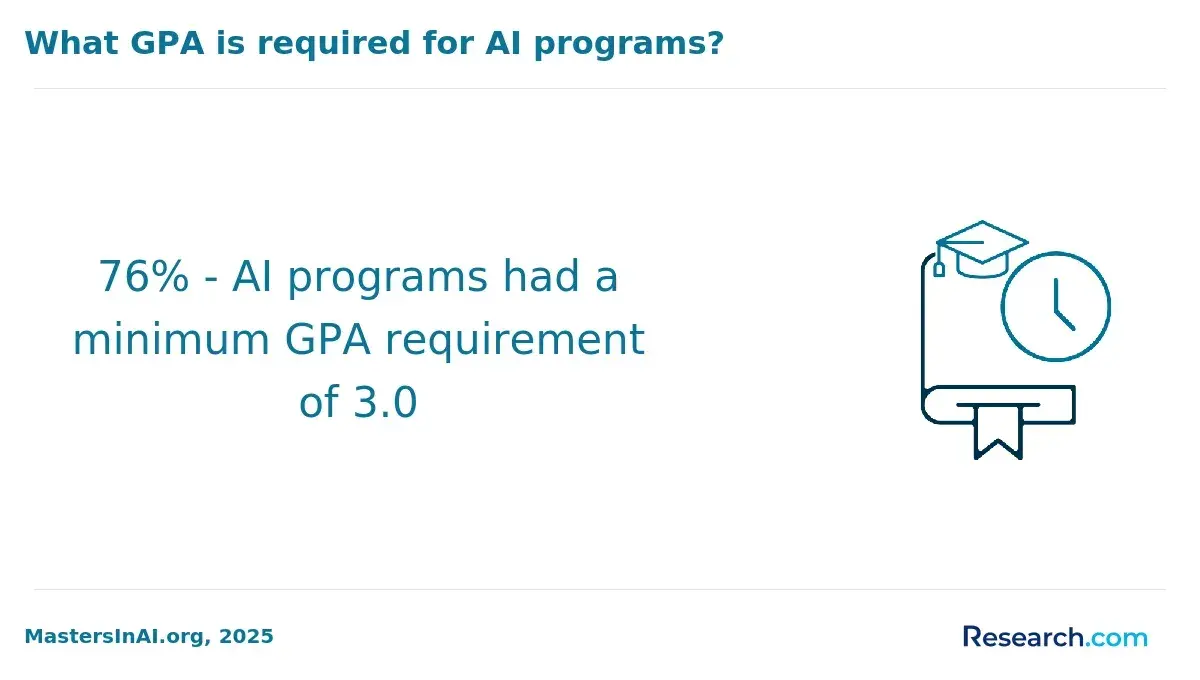
Most programs require college-level statistics, linear algebra, and calculus for AI, while data analytics often asks for statistics, SQL, and basic programming in Python or R. Some universities require a minimum 3.0 GPA and may request GRE scores, but many have waived them.
In 2027, industries like healthcare, finance, and autonomous systems often offer higher salaries for AI Master's graduates due to the demand for advanced machine learning and data processing skills. Data Analytics graduates are typically sought in marketing and retail sectors.
References
- Examining ROI: Is a Master's in Data Science and AI Worth It? https://blog.udallas.edu/tower-thoughts/examining-roi-is-a-masters-in-data-science-and-ai-worth-it
- Why AI Data Analysts Are in Massive Demand in 2026 https://workforceinstitute.io/generative-ai/why-ai-data-analysts-are-in-massive-demand-2026/
- Which Program is Right for You? https://www.eastern.edu/academics/colleges-seminary/college-health-and-sciences/departments/department-mathematical-15
- Standards for Accreditation and Requirements of Affiliation | Fourteenth Edition - Middle States Commission on Higher Education https://www.msche.org/standards/fourteenth-edition/
- Graduate Program Requirements: Your Roadmap to Grad School https://bemoacademicconsulting.com/blog/graduate-program-requirements
- The trends impacting data analytics and AI roles in 2025 https://www.siliconrepublic.com/careers/trends-impacting-data-analytics-ai-roles-2025-working-life
- Online vs Campus Data Science Degree Programs: Complete Comparison https://hakia.com/degrees/data-science/online-vs-campus/
- 11 Brilliant Careers You Can Pursue With Almost Any Degree https://www.oxford-royale.com/articles/careers-any-degree
- Online vs. In-Person Master of Data Science | MDS@Rice https://csweb.rice.edu/academics/graduate-programs/online-mds/blog/online-vs-in-person-master-of-data-science
- The Standards of Accreditation - ACCSC https://www.accsc.org/seeking-accreditation/the-standards-of-accreditation/