2027 AI Bachelor's Degrees for First-Generation Students

Co-Founder and Chief Data Scientist
First-generation students often face unique challenges when attempting to enter the field of artificial intelligence. Limited access to resources, unfamiliarity with academic pathways, and balancing financial responsibilities can hinder their progress. Many struggle to find degree programs that offer both flexibility and strong accreditation, essential for career shifts from unrelated backgrounds.
These obstacles reduce opportunities in an increasingly competitive job market driven by AI innovation. This article explores the top accredited AI bachelor's degrees available in 2027 designed to support first-generation students. It aims to guide readers toward accessible, flexible programs that facilitate successful entry into the artificial intelligence industry.
Key Things You Should Know
- In 2026, over 35% of U.S. universities offer AI bachelor's degrees with tailored support programs for first-generation students to improve retention and success rates.
- First-generation students pursuing AI degrees benefit from scholarships targeting underrepresented groups, with funding increases averaging 20% between 2024 and 2025.
- Employment projections indicate a 40% growth in AI-related jobs by 2030, emphasizing the importance of accessible AI education for first-generation students entering the tech workforce.
What do first-generation students need to know about pursuing an AI bachelor's degree?
First-generation students pursuing AI bachelor's degree programs face notable challenges that heighten attrition risk. Data from the National Center for Education Statistics show these students are four times more likely to drop out than peers with college-educated parents. Contributing factors include limited access to academic advising, financial hardships, and unfamiliarity with higher education systems.
To overcome these hurdles, students should utilize support resources for first-generation students pursuing AI degrees, such as tutoring centers, mentorship programs, and AI student organizations. Early interaction with faculty helps clarify complex subjects like neural networks and machine learning algorithms while guiding research opportunities. Strong time-management skills are essential due to coursework demands in programming languages like Python and Java, alongside mathematics classes such as calculus and linear algebra.
Financial planning plays a vital role. Seeking scholarships aimed at first-generation and STEM students can ease monetary pressure. Part-time work is common but must be carefully balanced to maintain academic performance. Supplementing formal education with online AI courses or boot camps can build practical skills. Networking through internships and AI conferences improves career prospects in areas such as natural language processing and computer vision.
Students interested in what is applied AI engineering can find valuable insight at what is applied AI engineering. Proactive academic support and awareness of challenges reduce dropout risk and help first-generation students successfully complete their AI degrees, often within institutions offering dedicated diversity offices or first-gen support groups.
What are the admission requirements and prerequisites for AI bachelor's programs?
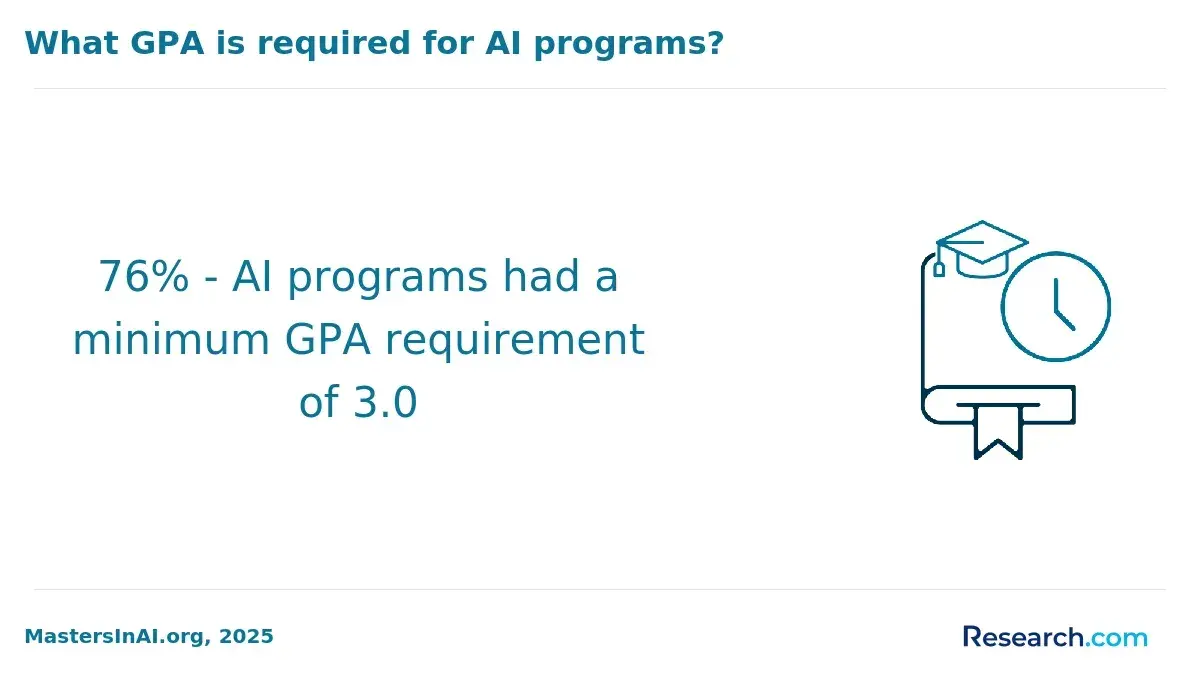
Admission requirements for AI bachelor programs commonly include a high school diploma or its equivalent, emphasizing strong math and science foundations. Coursework in Algebra II, Geometry, and Pre-Calculus is often essential as these subjects support advanced AI topics. Many programs also expect proficiency in programming languages such as Python or Java, proven through coursework or prior experience.
For prospective students exploring prerequisites for enrolling in AI bachelor's degrees, standardized test scores remain a significant factor at many selective colleges, with 68% considering these scores. Competitive programs may look for SAT Math scores above 600 or ACT Math scores higher than 26, reflecting the emphasis on STEM readiness.
Letters of recommendation from math or science instructors enhance applications, while personal statements should focus on problem-solving skills and an interest in AI-related technologies. Some institutions require prerequisite physics or statistics courses. Community colleges offering transfer pathways might accept applicants with lower math scores if foundational courses in math and computer science are completed first. For first-generation students, documents like FAFSA and diversity statements are important, and bridge programs or summer preparatory courses can help close knowledge gaps.
It is crucial to verify each institution's specific requirements, which may also accept coding bootcamp certificates or portfolio work instead of traditional prerequisites. Students looking to save on tuition might consider programs like the cheapest online mechanical engineering degree as an alternative route toward a STEM career.
How do online and campus-based AI bachelor's degrees compare for first-generation students?
Online and campus-based AI bachelor's degrees present different benefits and challenges for first-generation students, particularly in accessibility and support. Online programs offer notable cost savings, with the U.S. Department of Education's 2024 National Postsecondary Student Aid Study indicating that students save $5,000 to $10,000 annually on living expenses. This flexibility helps ease financial burdens, which often weigh heavier on first-generation learners balancing education with work or family obligations.
Campus-based degrees typically provide more direct access to hands-on experiences, faculty mentorship, and networking opportunities critical for tech career development. First-generation students may find on-campus tutoring, career fairs, and student organizations essential for social integration and academic success. Such resources can improve retention and create a sense of belonging.
Programs designed for first-generation students increasingly incorporate virtual labs, synchronous sessions, and interactive projects to replicate hands-on learning online. However, support systems differ: campus students usually benefit from immediate in-person counseling, whereas online learners often depend on virtual advising, requiring strong self-advocacy and digital literacy. Evaluating personal circumstances and learning preferences is vital when choosing between program formats.
Those interested in affordable options can explore the best online AI degree programs that combine cost-effectiveness with quality education tailored to first-generation learners' needs.
What is the typical curriculum and coursework in an accredited AI bachelor's program?
An accredited artificial intelligence bachelor's degree curriculum in the United States typically requires 18-24 credit hours focused on core topics such as machine learning, neural networks, and data science. This represents a 40% increase since 2020, aligning with guidelines from the Computing Curricula 2023 by ACM and the IEEE Computer Society. Foundational coursework includes calculus, linear algebra, probability, and programming languages like Python and Java, which are essential for understanding algorithms and data manipulation.
Core coursework for accredited AI bachelor's programs usually covers supervised and unsupervised learning, deep learning architectures, natural language processing, and computer vision. Students often engage in projects such as image recognition or predictive analytics, blending theory with hands-on application. Software engineering and database classes are also common to equip students with skills to build scalable AI systems.
Ethics and AI governance are increasingly integrated to address algorithmic bias and responsible data use, preparing students for ethical challenges in real-world settings. Electives may include robotics, reinforcement learning, and AI applications in healthcare, allowing specialization based on career interests.
Capstone projects and internships provide crucial hands-on experience. Collaborations with industry or research labs are highly encouraged, especially benefiting first-generation students seeking practical skills and professional networks. For those exploring related fields, exploring affordable cybersecurity degrees can offer complementary opportunities in technology careers.
How long does an AI bachelor's degree take and what is the average cost?
An AI bachelor's degree usually requires four years of full-time study, whether at public or private universities. Some accelerated programs reduce this duration to three years, while part-time students or those balancing work may take five to six years. The curriculum typically begins with foundational courses in computer science, mathematics, and data analysis before advancing to specialized AI topics such as machine learning, robotics, and natural language processing.
According to the College Board's 2024-2025 Trends in College Pricing report, in-state students at public universities face an average total cost of attendance of $104,000 for the entire four years. Out-of-state students pay significantly more, averaging $184,000. These amounts cover tuition, fees, room, board, and other expenses, emphasizing the importance of comprehensive financial planning.
Private university programs often exceed $200,000 for four years. First-generation students and those seeking cost-effective paths should consider in-state public options, which typically offer the best value. Many colleges also provide scholarships, grants, and work-study opportunities aimed at increasing diversity in STEM fields, including AI.
Students should also factor in indirect costs such as textbooks, software, and hardware required for coursework. Early guidance from academic and financial aid counselors can clarify program duration and total costs, helping avoid unexpected financial challenges.
What accreditation standards should first-generation students look for in AI programs?
First-generation students pursuing AI bachelor's degrees should prioritize programs accredited by ABET, the recognized standard in computer science and engineering education. ABET accreditation confirms that a program meets rigorous standards in curriculum content, faculty expertise, and graduate outcomes, which is vital for preparing students for careers in AI. According to ABET's 2024 data, only 23% of computer science and engineering programs with AI specializations hold this specialized accreditation.
ABET evaluates programs based on core areas such as mathematical foundations, programming, machine learning, data structures, ethics, and practical lab experience. This balanced approach ensures graduates develop both theoretical knowledge and hands-on skills, particularly important for first-generation students requiring clear career pathways. Programs lacking ABET accreditation may not cover essential industry-relevant skills, potentially limiting employment opportunities.
In addition to ABET, students should verify regional accreditation recognized by the U.S. Department of Education, which confirms overall institutional quality but does not substitute specialized program accreditation. For instance, a university might have regional accreditation while its AI specialization falls short of ABET standards, resulting in gaps in program quality.
Transparency about accreditation and curriculum details signals a program's commitment to accountability and continuous improvement. Also, check whether AI ethics and current industry tools are integrated into the curriculum, reflecting adherence to evolving professional standards. Prioritizing ABET-accredited AI programs backed by sound institutional accreditation best positions first-generation students for success in competitive AI fields.
What career roles and job titles are available to AI bachelor's degree graduates?
Graduates with a bachelor's degree in artificial intelligence have diverse career options requiring strong analytical and technical skills. Popular job titles include machine learning engineer, AI specialist, data scientist, and AI software developer. These roles vary in focus, from designing predictive algorithms to managing large data sets and creating AI-driven applications.
Machine learning engineers primarily build models that automate decision-making processes, while AI specialists develop customized solutions for industries like healthcare, finance, and robotics. Data scientists use AI techniques to analyze complex data and support strategic decisions. AI software developers focus on integrating AI features into tools and applications.
The U.S. Bureau of Labor Statistics highlights a 36% growth in AI-related jobs since 2021, such as these roles, signaling rapidly expanding opportunities. Additional positions include AI research assistants, product managers, and robotics programmers, reflecting AI's broad, multidisciplinary impact.
First-generation students should pursue internships and certifications in programming languages like Python and R, as well as frameworks such as TensorFlow, to improve employability. Employers value candidates who combine strong AI knowledge with practical software engineering skills. Understanding industry-specific demands-like healthcare compliance and finance data privacy-further strengthens a candidate's profile.
What is the job outlook and salary potential for AI bachelor's degree holders?
Employment prospects for bachelor's degree holders in artificial intelligence are very strong, with roles like AI engineer, machine learning specialist, and data scientist expected to grow much faster than average. The U.S. Bureau of Labor Statistics projects growth rates above 20% in software development and data analysis-fields closely linked to AI-through 2030, reflecting sustained industry demand.
Salary potential is also promising. Glassdoor's 2025 Salary Report shows entry-level AI engineers with a bachelor's degree typically earn base salaries between $95,000 and $110,000. Total compensation, including bonuses and equity, can range from $130,000 to $160,000 annually, especially in major tech hubs and larger cities.
Salary and job opportunities vary by industry, location, and company size. Graduates working in finance, healthcare, or autonomous vehicles often command higher pay due to the specialized nature of AI applications. Many employers supplement starting pay with performance bonuses, profit-sharing, or stock options, particularly in leading technology firms.
Career paths may begin with roles such as AI research assistant or software developer with an AI focus before progressing to AI engineering positions. Continuous learning in programming, data management, and evolving AI technologies is essential to maintaining competitiveness and advancing salary potential over time.
What professional certifications or credentials complement an AI bachelor's degree?
Certifications in cloud computing are highly valuable for graduates with an AI bachelor's degree. Credentials such as AWS Certified Solutions Architect, Google Cloud Professional Data Engineer, and Microsoft Azure AI Engineer Associate showcase skills in deploying and managing scalable AI solutions on cloud platforms. According to LinkedIn's Skills Index, earning these certifications within the first year of employment can increase earning potential by 18-24% compared to peers without certifications.
Machine learning and data science certifications, including the TensorFlow Developer Certificate and IBM Data Science Professional Certificate, enhance hands-on expertise in model building and data analysis. Cybersecurity certifications like Certified Information Systems Security Professional (CISSP) also add important skills for protecting AI systems and maintaining data integrity.
Graduates should align certifications with their career goals. AI researchers benefit from specialized coursework in natural language processing or computer vision available on platforms such as Coursera or edX. Conversely, AI product managers often supplement their technical skills with project management credentials like PMP or Agile methodologies.
Employers favor candidates who demonstrate both theoretical AI knowledge and practical cloud or security skills through reputable certifications. These credentials help address challenges like securely deploying AI models at scale, providing certified graduates with a competitive edge in the job market.
How should first-generation students evaluate and choose a reputable AI bachelor's program?
First-generation students should prioritize AI bachelor's programs that provide structured academic advising and dedicated mentorship. The National Association of Independent Colleges and Universities (NAICU) found that targeted support in the first year improves four-year graduation rates by 31%. Verifying the availability of mentorship initiatives specifically for first-generation learners can offer a significant academic advantage.
Check program accreditation carefully, ensuring the institution holds regional or national recognition. The AI curriculum should cover core areas like machine learning, neural networks, and data ethics, while also including practical components such as labs, internships, or collaborations with technology companies to foster hands-on experience.
Faculty expertise is crucial; review instructors' backgrounds, research contributions, and industry ties. First-generation students especially benefit from mentors who have successfully navigated similar professional paths.
Financial aid can be a pivotal factor. Look for programs offering scholarships, grants, or flexible payment plans, alongside student support services including tutoring, career counseling, and mental health resources that contribute to steady academic progress.
Finally, reliable data on alumni outcomes, such as employment rates or graduate school placements in AI fields, provides valuable insight into a program's effectiveness and value for future career success.
Other Things You Should Know About Artificial Intelligence
In 2027, AI bachelor's students should focus on mastering languages like Python and R for machine learning and data analysis, C++ for performance optimization, and Java for large-scale applications. These languages provide a solid foundation for AI development and research.
Yes, a bachelor's degree in AI provides a solid foundation for graduate studies in AI or related fields like data science and robotics. The interdisciplinary coursework typically covers key concepts in mathematics, programming, and machine learning that are essential for advanced research. Many programs also encourage undergraduate research or capstone projects, which help prepare students for graduate-level work.
Internships play a crucial role in gaining practical experience and enhancing job prospects for AI bachelor's students. They offer hands-on exposure to real-world AI applications and help students build professional networks. Many degree programs encourage or require internships to complement academic learning.
AI bachelor's programs increasingly include coursework on ethics, focusing on issues like algorithmic bias, privacy, and the societal impact of AI technologies. This education aims to prepare students to develop responsible AI systems and consider the broader consequences of AI deployment. Ethical training is becoming a standard part of accredited AI curricula.
First-generation students in 2027 AI bachelor's programs often benefit from dedicated mentoring, workshops, and peer networks. These initiatives focus on career guidance and academic success. For those interested in advanced studies, an AI regulation and governance master’s could be a valuable next step.
References
- B.Sc. in Artificial Intelligence https://www.studyinpoland.pl/en/programme
- Bachelor in Management and Artificial Intelligence https://www.kozminski.edu.pl/en/programs/undergraduate-programs-bachelor/bachelor-management-and-artificial-intelligence
- AI as the New Digital Divide https://www.wgulabs.org/posts/ai-as-the-new-digital-divide-for-first-generation-students
- 23 Top AI Certifications to Know | Built In https://builtin.com/articles/ai-certification
- What Are the Top AI Degree Programs for Undergraduate Students? https://tetr.com/blog/what-are-the-top-ai-degree-programs-for-undergraduate-students
- Best AI Certifications in 2025 https://cpoclub.com/career/best-ai-certifications/
- New Bachelor’s Degree in Artificial Intelligence Prepares Students for the Future of AI Innovation - University of New Haven https://www.newhaven.edu/news/releases/2026/bachelors-degree-in-artificial-intelligence.php
- Best AI Bachelor's Degrees - AIDegreeProgams.org https://aidegreeprograms.org/rankings/best-ai-bachelor-degrees/
- Top AI Certifications for 2026: A Guide to Advancing Your Tech Career | DataCamp https://www.datacamp.com/blog/top-ai-certifications
- Accreditation and AI: Ensuring Quality in an Era of Smart Learning https://www.qahe.org/article/accreditation-and-ai-ensuring-quality-in-an-era-of-smart-learning/