2027 Salary Expectations After an AI Bachelor's Degree

Co-Founder and Chief Data Scientist
Graduates with an AI bachelor's degree in 2027 face uncertainty about salary prospects in a rapidly evolving tech landscape. Many professionals from unrelated fields consider transitioning but lack clear expectations for compensation and career growth.
Without reliable data, making informed decisions about education investments and job searches becomes challenging. This article analyzes current salary trends, regional differences, and industry demands for AI graduates. It aims to equip readers with practical insights to set realistic financial goals and navigate career pivots successfully in the expanding AI sector.
Key Things You Should Know
- Graduates with a bachelor's degree in Artificial Intelligence can expect an average starting salary of around $85,000 to $100,000 in 2026, reflecting strong market demand.
- Key industries employing AI bachelor's graduates include technology, finance, healthcare, and automotive, with tech companies offering the highest median wages.
- Salary growth is rapid, with a projected 15% increase in earnings within five years due to increasing AI integration and skill specialization requirements.
What is the average salary for AI bachelor's degree graduates in 2027?
Graduates holding a bachelor's degree in artificial intelligence typically see an average salary for artificial intelligence bachelor's degree graduates ranging from $95,000 to $110,000 annually for entry-level AI engineers in the United States. Salary levels vary by region, employer industry, and individual skills, with metropolitan tech hubs like San Francisco, Seattle, and New York offering salaries closer to the upper end due to higher living costs and competitive markets.
This artificial intelligence bachelor's degree salary by region reflects these geographic differences. Smaller markets or less tech-focused areas generally start near the lower range around $95,000. Specialized expertise in machine learning frameworks, data analytics, or AI application development often increases starting salaries beyond typical levels.
Employers in finance, healthcare, and autonomous systems are key drivers of higher compensation for AI graduates. Additionally, candidates with real-world experience in programming languages such as Python or familiarity with cloud platforms tend to experience faster salary growth.
Highlighting internships, projects, and certifications can significantly influence salary negotiations and job evaluations.
Prospective students aiming to build these skills may benefit from programs like an online computer science degree that accelerates learning while equipping them with relevant AI competencies.
Which entry-level jobs hire AI bachelor's degree holders, and what do they pay?
Entry-level jobs for artificial intelligence bachelor graduates' salaries vary by role, location, and industry. Positions such as machine learning engineer, data scientist, AI software developer, and AI research analyst are common starting points. Machine learning engineers typically earn the highest median wage, with the U.S. Bureau of Labor Statistics reporting $120,910 annually as of May 2023.
This job, focused on designing algorithms that enable computers to learn from data, is expected to grow by 36% through 2033.
The average pay for AI bachelor's degree holders in entry-level roles like data scientists ranges from $85,000 to $110,000. These professionals analyze complex datasets to guide business strategies, often using machine learning tools.
AI software developers usually start with salaries between $80,000 and $105,000, creating applications that integrate artificial intelligence technology.
Starting salaries depend on factors such as industry specialization, geographic location, and company size. Major tech hubs like Silicon Valley and Seattle offer higher pay, while sectors such as finance and healthcare may provide premium salaries due to specialized AI applications.
Internships and cooperative education programs can improve job prospects and salary offers.
Proficiency in programming languages like Python, experience with TensorFlow frameworks, and knowledge of cloud platforms are valuable skills to boost initial pay. For those considering relevant educational paths, exploring a mechanical engineering online degree can also offer complementary technical knowledge and career flexibility.
How does an AI bachelor's degree compare to other computer science degrees in earning potential?
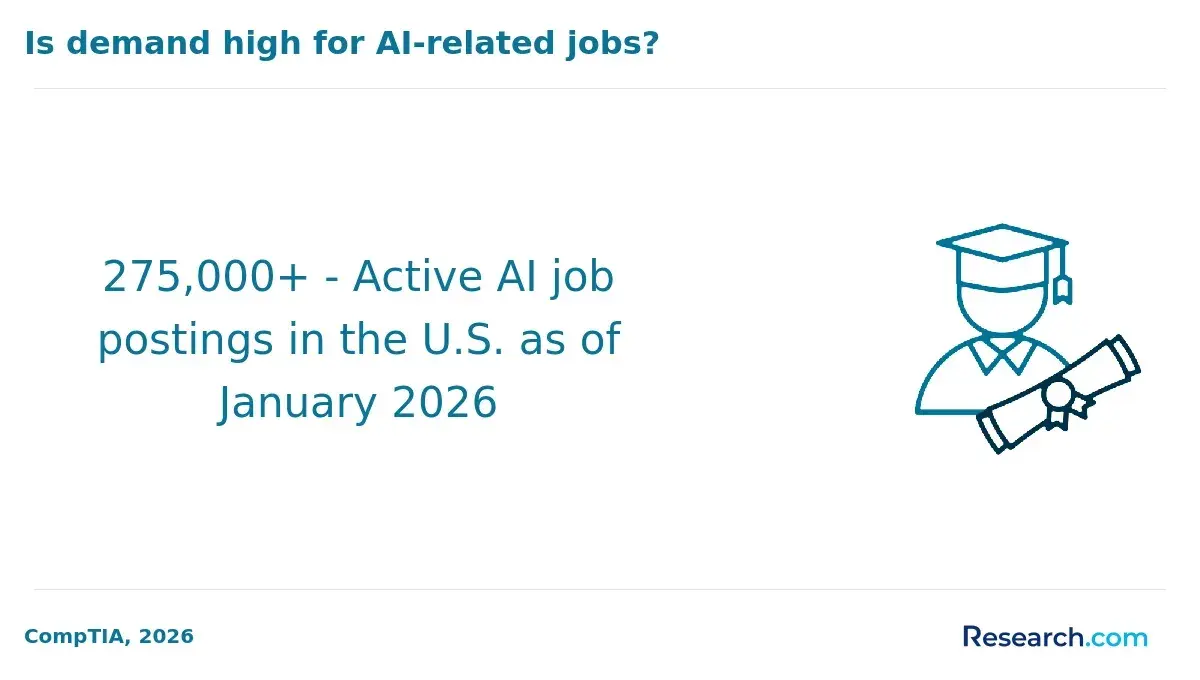
An AI bachelor's degree salary comparison with computer science majors shows a significant earning advantage for AI graduates. PayScale data reveals that AI/Machine Learning specialists earn an average of $125,000 during their first five years, which is 23% higher than the $102,000 average for computer science graduates.
This premium reflects employer demand across sectors such as technology, finance, and healthcare, emphasizing the value of specialized AI skills.
The earning potential of AI graduates versus traditional computer science degrees is further highlighted by the types of roles they qualify for, including machine learning engineer, data scientist, and AI research analyst. These positions often require advanced technical expertise and typically offer salaries above those for general software engineering or IT roles.
For instance, while a mid-sized firm's software developer might start near $85,000, an AI engineer in the same area could command more than $110,000.
Rapid industry growth and the surge in automation and intelligent systems increase demand for candidates with experience in neural networks, natural language processing, or computer vision. This specialized knowledge results in less competition and faster salary growth for AI graduates who often benefit from enhanced negotiating power.
Prospective students should balance these salary benefits against the intense AI curriculum and prerequisites in mathematics and statistics. Those seeking cost-effective options might consider programs like the online artificial intelligence degree as a practical path toward lucrative careers in this expanding field.
What are the typical admission requirements for accredited AI bachelor's programs?
The admission requirements for accredited artificial intelligence bachelor's programs in the US emphasize strong academic preparation, particularly in mathematics and science. Most universities require a high school diploma or equivalent, with coursework in calculus, algebra, physics, and computer science. Taking Advanced Placement (AP) or International Baccalaureate (IB) classes in these subjects can strengthen an application.
These entry criteria for top-ranked artificial intelligence undergraduate degrees typically include competitive standardized test scores; for example, top-tier institutions report average SAT scores ranging from 1480 to 1570.
Applicants are often asked to submit letters of recommendation highlighting their analytical skills and motivation. Personal statements usually focus on interest in AI, problem-solving abilities, and relevant experiences such as coding projects, internships, or research.
Some schools require or recommend proof of programming skills in languages like Python or Java, demonstrated through courses or certifications. Interviews or portfolio reviews may also be part of the evaluation.
International applicants generally must provide proof of English proficiency via TOEFL or IELTS tests. Prospective students should review each program's prerequisites carefully, as requirements vary by school and state. Early preparation in STEM subjects and test scores is essential to meet these benchmarks.
For those seeking related cybersecurity education options, an accelerated cyber security program may be of interest.
How long does an AI bachelor's degree take to complete, and what is the typical cost?
An AI bachelor's degree generally requires four years of full-time study at a U.S. university, aligning with typical undergraduate programs in computer science or related fields. Students may shorten this to three years through advanced placement credits, dual enrollment, or summer courses.
On the other hand, part-time students or those balancing work might take five or more years to graduate.
The cost of an AI degree varies widely based on the institution. Private universities average around $240,000 for tuition, fees, room, and board, while public in-state programs are more affordable, averaging $100,000. Out-of-state public university tuition can range between $150,000 and $200,000 for four years.
Additional expenses such as textbooks, technology, and living costs should also be considered.
Financial aid, scholarships, and grants are crucial for lowering the actual cost and should be pursued early when applying. Internships or co-op experiences can extend the time to graduate but often increase employability, which is a key consideration when planning.
Careful budgeting and clear planning are essential for managing program duration and expenses effectively.
For those looking to build a strong foundation in this rapidly evolving field, understanding these factors can support a more informed decision about pursuing an AI degree.
What core coursework and skills are taught in AI bachelor's degree programs?
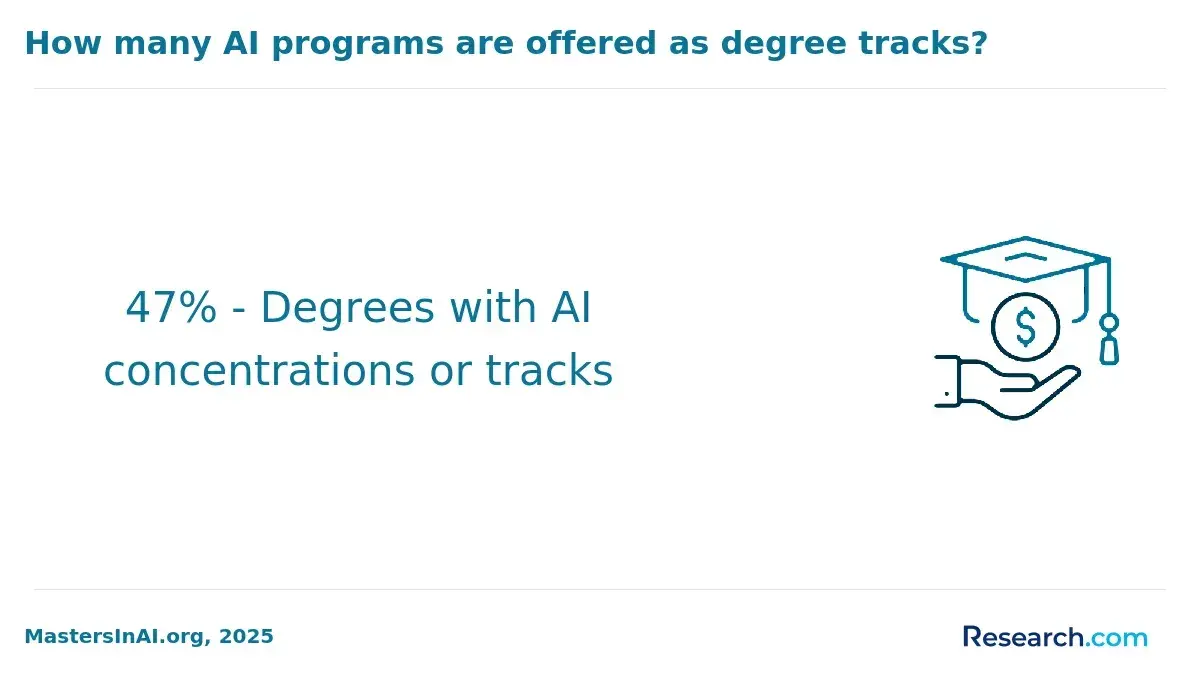
Bachelor's degree programs in artificial intelligence cover essential areas such as machine learning, data structures, algorithms, and programming languages, with a strong focus on Python due to its dominance in AI development. Core modules often include neural networks and deep learning, teaching students to build, train, and optimize models for applications like image recognition and natural language processing.
Mathematics plays a vital role, particularly linear algebra, probability, statistics, and calculus, which underpin AI architectures and performance analysis.
Practical skills are developed through hands-on projects involving data preprocessing, model implementation, and evaluation. Ethics and AI policy courses examine issues like bias, fairness, and the societal impact of AI technologies.
Students may also explore robotics, computer vision, and reinforcement learning to expand their technical scope for diverse uses.
According to LinkedIn's 2024 Jobs Report, skills in machine learning, Python programming, and neural networks remain the most in demand, with job postings requiring these increasing by 74% year over year. Complementary knowledge in software engineering, cloud computing, and database management improves job readiness by enabling efficient deployment of AI solutions.
Programs with robust internship opportunities and collaborative research enhance portfolios, showing applied competence. Excelling in both coding and theory is essential to meet the expectations of employers navigating a competitive AI job market.
Do AI bachelor's degree programs require professional certifications or licensure?
AI bachelor's degree programs do not require professional certifications or licensure to enter the field. The National Association of State Boards of Engineering (NASBE) confirms that AI engineering roles are exempt from state licensure requirements.
Graduates can therefore work legally in AI-related positions without obtaining a professional engineering license. However, certifications remain valuable in demonstrating expertise.
Industry certifications like AWS Certified Machine Learning Specialty, Google Cloud Professional Data Engineer, and TensorFlow Developer are preferred or required by 62% of employers. These credentials validate practical skills in cloud platforms and AI frameworks, helping candidates stand out in competitive markets.
Cloud certifications specifically prove the ability to deploy scalable machine learning models, a crucial skill from research roles to software development.
While an AI bachelor's degree covers fundamentals such as algorithms, data structures, and machine learning theory, certifications show applied proficiency with industry tools. Professionals aiming to specialize in areas like natural language processing or computer vision can further enhance their profiles through relevant certifications offered by well-known tech organizations.
Investing in recognized certifications can significantly improve hiring chances and salary potential. Although not mandatory, they address employers' demand for operational expertise beyond academic knowledge.
Students and graduates should focus on certifications aligned with their career goals to maximize benefits in the evolving AI job market.
What is the job outlook for AI bachelor's degree graduates over the next 10 years?
The job market for graduates with a bachelor's degree in artificial intelligence is expected to expand significantly, with growth projected at 36% by 2033 according to the U.S. Bureau of Labor Statistics. This is well above the average 5% growth rate forecasted for all occupations, highlighting high demand for AI skills.
Career opportunities span diverse industries such as technology, healthcare, finance, robotics, and autonomous systems. For example, AI engineers in healthcare create diagnostic algorithms, while those in finance enhance fraud detection and trading platforms.
Emerging roles in data annotation, AI ethics, and system maintenance offer further pathways beyond traditional AI engineering jobs.
To stand out, graduates should develop specialized expertise in areas like natural language processing, computer vision, or reinforcement learning. Employers value candidates who combine technical skills with strong problem-solving and interdisciplinary communication abilities.
Gaining practical experience through internships, projects, or research can give an edge in the competitive job market.
Staying updated on advancements by following professional organizations and academic journals is essential for sustained career growth. The positive employment outlook is accompanied by favorable salary prospects, particularly for those who continuously enhance their skills and adapt to evolving AI technologies.
How do online AI bachelor's programs compare to campus-based options for career outcomes?
Online AI bachelor's programs offer career outcomes that rival those of traditional campus-based degrees. According to a 2024 study by the Chronicle of Higher Education, 91% of employers hire graduates from both formats equally, basing decisions on technical skills rather than educational delivery.
This reflects strong employer confidence in accredited online AI curricula.
Students earn foundational knowledge in machine learning, data analysis, and programming whether studying online or on campus. While campus programs often provide easier access to in-person networking, internships, and research projects, online students can take advantage of virtual labs, discussion forums, and remote internship opportunities.
Many online learners successfully collaborate with companies offering flexible AI development roles remotely, enhancing practical experience.
Career services remain essential. Traditional campuses usually feature on-site job fairs and placement support, whereas online programs increasingly deliver virtual counseling and digital career fairs tailored to AI fields. Prospective students should assess these resources carefully before enrolling.
The geographic flexibility of online AI programs suits working professionals and those far from specialized institutions, enabling career transitions without relocation. However, students must actively engage with online communities or local tech meetups to build professional networks.
Graduates from reputable online and campus AI bachelor's degrees demonstrate comparable readiness for roles such as AI engineers, data scientists, and machine learning specialists. The 91% hiring parity highlights that skills and experience remain the top hiring priorities.
What factors should you consider when choosing an accredited AI bachelor's program?
When selecting an accredited artificial intelligence bachelor's program, prioritize practical experience and strong industry connections along with academic excellence. ZipRecruiter's employer survey shows 78% of companies prefer graduates from programs with hands-on capstone projects and established industry partnerships rather than purely theoretical coursework.
Programs offering opportunities to collaborate with tech firms on real-world AI challenges enhance student readiness for the workforce.
Verify the program's accreditation status, ensuring it is regionally accredited by recognized bodies such as the U.S. Department of Education or the Council for Higher Education Accreditation. This guarantees the curriculum meets rigorous standards and facilitates future credit transfer or graduate study.
Faculty expertise matters. Choose programs led by active researchers publishing in AI journals or managing funded projects. Specializations like machine learning, natural language processing, or robotics can help align studies with specific career objectives.
Investigate graduation outcomes such as employment rates, median starting salaries, and employer reputation in AI-related fields for practical insights.
Internships and cooperative education are valuable for gaining professional experience and often lead to job offers. Also, select programs that balance foundational courses in data structures and algorithms with emerging AI topics, ethics, and real-world system deployment to prepare for diverse AI roles.
Other Things You Should Know About Artificial Intelligence
In 2027, salary expectations for AI bachelor's degree holders are influenced by technological advancements, industry demand for AI professionals, geographic location, and the level of expertise in areas like machine learning and data analysis. The rapid evolution of AI applications across various sectors also contributes to demand and potential salary growth.
Employers seek graduates with strong programming abilities, especially in Python, as well as knowledge of machine learning algorithms, data modeling, and neural networks. Critical thinking, problem-solving skills, and familiarity with tools like TensorFlow or PyTorch are also important. Additionally, soft skills such as effective communication and teamwork are valuable.
Yes, artificial intelligence graduates have opportunities in various sectors including healthcare, finance, automotive, and manufacturing. AI techniques are used for data analysis, automation, and predictive modeling across many industries. This versatility allows graduates to apply their skills beyond traditional tech companies.
Continuing education is crucial due to the rapidly evolving nature of artificial intelligence technology. Graduates should engage in lifelong learning through workshops, online courses, and certifications to stay current with new algorithms, tools, and ethical standards. This ongoing development helps maintain competitiveness and career growth.
References
- Artificial Intelligence Course Eligibility: Requirements & Prerequisites https://www.mygreatlearning.com/artificial-intelligence/courses/eligibility
- Artificial Intelligence admission requirements in detail https://www.srh-university.de/en/master/bls/information-technology-artificial-intelligence/artificial-intelligence-admission-requirements-in-detail/
- Top 10 jobs in artificial intelligence (AI) & who’s hiring https://joinhandshake.com/blog/students/artificial-intelligence-jobs/
- What level of education is required for artificial intelligence? https://www.outrightcrm.com/blog/what-level-of-education-is-required-for-artificial-intelligence/
- How will Artificial Intelligence Affect Jobs 2025-2030 | Nexford University https://www.nexford.edu/insights/how-will-ai-affect-jobs
- Key Skills Gained from a Bachelor of Science in Artificial Intelligence https://tetr.com/blog/key-skills-gained-from-a-bachelor-of-science-in-artificial-intelligence
- AI Paygrades https://aipaygrad.es/
- Artificial Intelligence Salary and Jobs in 2026 – Is It Still in High Demand? https://certempire.com/artificial-intelligence-salary-and-jobs/
- AI Certification Programs: Which Ones Matter for Your Career https://www.businessplusai.com/blog/ai-certification-programs-which-ones-matter-for-your-career
- Online vs On-Campus Artificial Intelligence Degrees: Which Is Better? https://hakia.com/degrees/artificial-intelligence/online-vs-campus/