2027 AI Bachelor's Degrees With Credit for Prior Learning

Co-Founder and Chief Data Scientist
Many professionals with degrees in unrelated fields seek a pathway to enter the artificial intelligence industry without starting from scratch. They face challenges such as balancing work, acquiring relevant skills, and obtaining recognized credentials efficiently. Traditional programs often demand full-time commitment and extensive coursework, which can delay career transitions and increase costs.
This article explores available bachelor's degree programs that credit prior learning and experience, offering a flexible and accredited route for newcomers. It aims to help readers identify options that accelerate their journey into artificial intelligence careers while maximizing their previous academic and professional achievements.
Key Things You Should Know
- In 2026, over 60% of U.S. institutions offering AI bachelor's degrees accept prior learning credits, accelerating degree completion by up to 12 months for qualified students.
- Credit for prior learning (CPL) primarily includes professional certifications, military training, and relevant college coursework, enhancing accessibility for working adults and veterans.
- The integration of CPL in AI programs reflects growing industry demand, with AI-related jobs projected to grow 35% through 2030, emphasizing practical skills recognition in education.
What is an AI bachelor's degree with credit for prior learning?
An AI bachelor's degree with credit for prior learning allows students to accelerate their academic progress by earning credits for knowledge and skills gained outside traditional classrooms. This can include work experience, professional certifications, military training, or relevant industry projects. By converting existing expertise into credits, students avoid repeating material they already know.
Credit for prior learning in artificial intelligence degree programs is often granted through portfolio assessments, standardized exams, or competency-based evaluations. For example, an experienced software engineer in machine learning might receive credit for foundational AI courses, reducing the total credits required to graduate. This approach supports working professionals and career changers by recognizing real-world skills, lowering costs, and shortening time-to-degree.
Many institutions allow up to one-third of degree credits to be earned this way. Students should inquire about eligibility, evaluation methods, and how these credits apply to AI-specific coursework like algorithms, robotics, or data science. Incorporating prior learning credits can make AI degrees more accessible for those balancing education and career.
With 65% of U.S. employers adopting skills-based hiring, AI bachelor's degrees that integrate prior learning credits align with the growing preference for demonstrated competencies over seat time. Prospective students interested in accelerating their studies should explore options like an accelerated computer science degree that value prior accomplishments efficiently.
How does credit for prior learning work in AI bachelor's programs?
Credit for prior learning (CPL) in AI bachelor's degrees enables students to apply existing knowledge from past education, military training, or work experience toward their degree requirements. This often involves evaluations through standardized exams, portfolio reviews, or course equivalency assessments, reducing tuition costs and shortening the time to graduation.
Transfer credit policies for AI undergraduate programs differ by institution. Some grant credits for prior computer science classes or certifications in fields like machine learning and data science, while others assess hands-on professional experience with AI tools using competency-based methods. Hybrid approaches may combine exams with documented workplace achievements.
Many students struggle to determine how much credit they can earn or which activities qualify as prior learning. Consulting academic advisors early and reviewing detailed CPL policies can clarify these questions. Schools usually require official transcripts, course outlines, or a portfolio that highlights relevant AI skills.
A 2024 multi-institution study by Bragg et al. shows students awarded CPL complete credentials at higher rates, underscoring CPL's effectiveness in facilitating accelerated educational progress.
Prospective students can enhance their CPL success by:
- Gathering thorough documentation of past coursework, certifications, and professional activities
- Understanding CPL assessment methods and deadlines at each institution
- Engaging academic advisors or CPL coordinators to verify eligible credits
- Considering nationally recognized exams such as CLEP or DSST where accepted
Proper use of CPL makes AI bachelor's programs more accessible and affordable, offering diverse pathways into the field. Those interested in affordable advanced study may explore options like the cheapest master in data science to further their education.
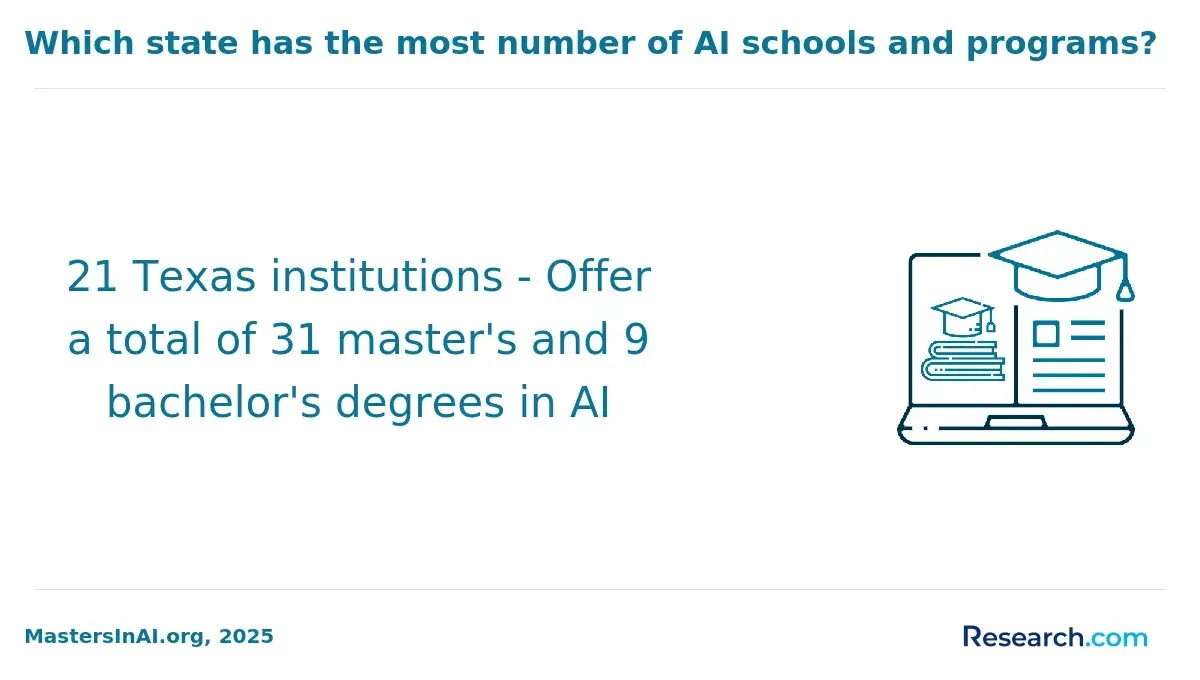
Which colleges offer accredited AI bachelor's degrees with prior learning credit?
Several accredited U.S. colleges offer bachelor's degrees specifically in artificial intelligence that include credit for prior learning, helping students accelerate degree completion. These colleges evaluate past academic work, military training, or relevant professional experience through portfolios, standardized exams, or direct course equivalencies. Colleges with accredited artificial intelligence bachelor programs that accept prior learning include Western Governors University, Purdue University Global, and Thomas Edison State University.
Western Governors University awards up to 30 competency units for demonstrated prior knowledge, ideal for students with IT certifications or related work experience. Purdue University Global combines transfer credits and prior learning assessments to cover foundational AI courses within its Bachelor of Science in Artificial Intelligence and Machine Learning. Thomas Edison State University supports up to 60 credits from prior learning, applicable to both core and elective AI topics.
The U.S. Department of Education's College Scorecard lists over 500 bachelor's programs with artificial intelligence in the title, highlighting rapid growth alongside transfer credit options. Students should verify CPL policies directly, as acceptance varies by institution. Universities offering credit for prior learning in AI bachelor's degree programs create flexible pathways, addressing the needs of adult learners balancing work and education.
For those exploring affordable options, considering an engineering online degree can provide relevant alternatives. Prioritizing strong CPL policies helps students optimize time and tuition investment as they transition into AI careers.
What accreditation should AI bachelor's programs and schools have?
Institutions offering AI bachelor's degrees must have strong accreditation to ensure quality and industry relevance. In the United States, regional accreditation from agencies like the Higher Learning Commission (HLC) or Middle States Commission on Higher Education (MSCHE) is key for institutional legitimacy and eligibility for federal financial aid. This regional accreditation for AI bachelor's degrees assures students that the institution meets established standards in higher education.
Programmatic accreditation is equally critical, especially because many AI bachelor's degree programs are part of computing, computer science, or engineering departments. Among these, accreditation by ABET (Accreditation Board for Engineering and Technology) signals a curriculum that meets rigorous academic and professional standards. ABET's 2024 report notes over 4,300 accredited programs worldwide, underlining its importance. Prospective students should confirm that an AI bachelor's degree program aligns with ABET-accredited computing or engineering tracks, covering essential competencies like algorithms, data structures, programming, and AI fundamentals.
AI bachelor's degree program accreditation standards also include collaboration with professional bodies such as the Association for Computing Machinery (ACM) or IEEE, which helps keep curricula aligned with evolving industry needs. For working professionals, accredited programs facilitate credit transfers and recognition of prior learning, which can be crucial for career advancement.
Those interested in related fields can also explore affordable options in cybersecurity through online cyber security degrees, which often share similar accreditation and industry relevance considerations.
What admissions requirements apply for AI programs using prior learning credit?
Admissions for AI bachelor's degree programs that accept credit for prior learning emphasize demonstrated competencies and relevant experience. Many institutions request official transcripts highlighting coursework in key areas like computer science, mathematics, and data analysis. Proficiency may also be shown through exams or portfolio submissions, particularly when credit is awarded for professional certifications, military training, or work experience.
Admissions for AI bachelor's degree programs that accept credit for prior learning emphasize demonstrated competencies and relevant experience. Many institutions request official transcripts highlighting coursework in key areas like computer science, mathematics, and data analysis. Proficiency may also be shown through exams or portfolio submissions, particularly when credit is awarded for professional certifications, military training, or work experience.Test-optional admissions policies, adopted by about 80% of U.S. colleges, provide added flexibility for applicants applying with prior learning credits. These policies often eliminate the need for SAT or ACT scores but require baseline academic achievements confirmed by previous coursework or evaluated experiences.
Common application requirements include:
- Detailed portfolios showcasing AI-related projects or coding samples
- Standardized exams such as CLEP or DSST for credit validation
- Certified documentation of professional or military training
- Interviews or essays assessing motivation and program fit
- Minimum GPA standards, typically between 2.5 and 3.0
Applicants should verify individual program policies, as credit transfer limits often range from 30 to 60 credit hours. Clear documentation helps streamline review and admission decisions.
What prior learning can earn AI degree credit (certifications, work, military, exams)?
Prior learning credits for AI bachelor's degrees can come from various sources including industry certifications, work experience, military training, and standardized exams. Recognized certifications such as CompTIA's AI-related credentials, Microsoft Certified: Azure AI Fundamentals, and Google Cloud's Professional Machine Learning Engineer validate essential AI knowledge and may qualify for academic credit.
Relevant work experience in AI or related areas may be credited through portfolio assessments or documented employer training. Professionals like software developers who manage AI projects or data scientists with proven machine learning results can request credit by submitting project summaries and supervisor endorsements aligned with course objectives.
Military training in AI, data analytics, or cyber operations often receives credit recommendations supported by the American Council on Education (ACE), which evaluates thousands of courses and training programs to assist academic credit transfer.
Additional credit can be earned through standardized exams like CLEP, DSST, or AP tests when their content matches program requirements. Some institutions also accept coding proficiency and AI-specific assessments for foundational credits.
Students should contact admissions or prior learning assessment offices early to verify accepted credentials. Preparing thorough documentation that directly maps certifications or experience to AI course competencies is crucial to maximize credit transfer and shorten time to degree completion.
- CompTIA AI-related certifications
- Microsoft Certified: Azure AI Fundamentals
- Google Cloud Professional Machine Learning Engineer
- Portfolio and employer training documentation
- Military occupational specialties credit via ACE
- CLEP, DSST, and AP exam credits
What courses and skills are covered in an AI bachelor's curriculum?
Bachelor's programs in artificial intelligence focus on developing technical expertise and practical skills to meet industry demands. Core coursework often includes machine learning algorithms, deep learning architectures, and natural language processing, preparing students to design and train models that emulate human cognition. Data engineering skills such as database management, data cleaning, and big data handling are emphasized to equip students for working with large, complex datasets.
Students also gain foundational computer science knowledge with programming languages like Python, Java, or R, along with software engineering best practices needed for building scalable AI applications. A key area of study involves model deployment, including cloud computing platforms, containerization tools like Docker, and API integration, which are essential for operationalizing AI in real-world settings.
Mathematical courses covering linear algebra, calculus, statistics, and probability underpin the understanding of AI model mechanisms and performance metrics. Ethical AI design and data privacy principles are increasingly important, reflecting the need for responsible technology development.
- Hands-on projects and internships provide practical experience in robotics, computer vision, and autonomous systems.
- Elective courses may include reinforcement learning, cognitive computing, and AI in healthcare, allowing specialization.
The World Economic Forum's Future of Jobs Report highlights AI and big data as fast-growing skills sought by employers, underlining the alignment between these programs and workforce needs.
How do online AI bachelor's programs compare with on-campus options?
More than half of U.S. college students have taken at least one online course, reflecting how online learning has become a mainstream option for AI education. Many universities now offer online AI bachelor's programs that match on-campus degrees in curriculum quality and faculty expertise. These programs cover core topics such as machine learning, natural language processing, and robotics.
Online AI programs emphasize flexibility, often allowing asynchronous study, ideal for working professionals and students managing multiple responsibilities. In contrast, on-campus courses typically provide in-person collaboration, hands-on labs, and direct access to resources like AI research centers and internship opportunities.
Online students can still gain practical experience through virtual labs, remote projects, and industry partnerships, with some programs requiring occasional campus visits for specialized sessions or networking. Accreditation ensures that credits transfer equivalently, whether earned online or on-campus, including those obtained through prior learning assessments.
Factors such as learning style, schedule, and career goals should guide the choice between online and on-campus AI programs. Candidates aiming for immediate research engagement or in-person networking might prefer on-campus study, while those needing flexibility often benefit from online formats. Both pathways increasingly use AI-driven personalized learning and adaptive assessments to enhance education quality.
How long do AI bachelor's programs take with prior learning credit?
AI bachelor's degree programs typically require four years of full-time study for students without prior credits. However, students can significantly reduce this time by transferring previous college credits or earning credit for prior learning (CPL). Many institutions accept up to 30-60 semester credits through CPL, potentially shortening the degree timeline by one to two years.
Students with an associate degree or industry certifications can often bypass foundational coursework, allowing them to focus earlier on specialized AI topics. This pathway can enable degree completion in as little as two to three years.
Data from the National Student Clearinghouse Research Center shows that bachelor's students who transfer credits are more likely to graduate within six years than those who start fresh. This supports the value of CPL and transferred credits in speeding up degree completion.
Prospective students should carefully review their chosen institution's policies, as some require exams or portfolio assessments to validate CPL. While these assessments may add some time, they ultimately reduce semester hours needed.
- Typical bachelor's duration without CPL: four years
- Possible reduction with transferred credits: one to two years
- Completion timeframe with prior learning: two to three years
What jobs and salaries can an AI bachelor's degree support?
An AI bachelor's degree opens doors to in-demand careers such as software developer, data scientist, machine learning engineer, and AI research analyst. According to the U.S. Bureau of Labor Statistics, the median annual wage for software developers was $132,270 in May 2024, highlighting the strong earning potential for graduates with AI skills.
These roles are crucial across industries including healthcare, finance, automotive, and cybersecurity. Key responsibilities vary:
- Machine learning engineers design algorithms that enable computers to learn from data
- Data scientists interpret large datasets to extract actionable insights
- AI research analysts assess emerging models and technologies to inform strategic decisions
Success in these careers requires strong programming knowledge and experience with AI frameworks such as Python, TensorFlow, and PyTorch. Graduates with prior learning credits may enter the workforce sooner, enhancing their career trajectory. Tailoring resumes to emphasize hands-on projects and internships is beneficial.
Job growth for these professions is robust. The BLS projects software developer employment will grow 25% from 2021 to 2031, which is much faster than the average for all occupations. This sustained demand underscores the value of an AI-focused education and maintaining up-to-date skills in this rapidly evolving field.
Other Things You Should Know About Artificial Intelligence
A bachelor's degree in artificial intelligence provides foundational knowledge in programming, data science, and machine learning, which are highly valued in the tech industry. Graduates typically have access to diverse career opportunities in software development, data analysis, robotics, and research. The degree's worth is enhanced if combined with practical experience and continual skill development.
Students learn programming languages such as Python and Java, data management, machine learning algorithms, and neural networks in an AI bachelor's program. The curriculum also often includes critical thinking, problem-solving, and ethical considerations related to AI technology. Practical projects and internships further develop hands-on skills applicable to real-world AI challenges.
Many AI bachelor's programs allow credit transfer for relevant prior learning, including courses in computer science, mathematics, or information technology. Transfer policies vary by institution, but credits related to programming, statistics, and systems analysis often qualify. Evaluations typically consider course content, grades, and accreditation of the previous institution.
Prior learning credits can significantly reduce the duration of completing an AI bachelor's degree in 2027. These credits allow students to bypass certain courses, accelerating their path to graduation by acknowledging previous learning experiences and knowledge, sometimes reducing degree time by one to two years.
References
- AI College Credits: Future-Proof Your Education https://www.upistudy.com/blog/ai-courses-for-credit-what-ap-does-not-offer-that-you-actually-need-in-2026
- AI Degrees: All Schools with Artificial Intelligence Bachelor’s Degrees - MastersInAI.org https://www.mastersinai.org/degrees/artificial-intelligence-degrees/
- University Degree vs AI Bootcamp: Which is Best Career Path? https://agilefever.com/university-degree-vs-ai-bootcamp-which-is-best/
- Credit for Prior Learning - Complete College America https://completecollege.org/our-approach/momentum/credit-prior-learning/
- AI Bachelor's Degree Guide | Top Online Programs https://www.itcareerfinder.com/program-rankings/best-artificial-intelligence-bachelors-degrees.html
- Learning by Doing in an AI Bachelorâs Degree: What to Expect https://tetr.com/blog/learning-by-doing-in-an-ai-bachelors-degree-what-to-expect
- Bachelor in Artificial Intelligence and Machine Learning | EIT Deep Tech Talent Initiative https://www.eitdeeptechtalent.eu/courses/bachelor-in-artificial-intelligence-and-machine-learning/
- The ACE Credit and Other Prior Learning Opportunities https://www.aiuniv.edu/military-students/ace-credit-guidelines-for-prior-learning-opportunities
- Find Accredited Programs https://accreditation.org/find-accredited-programs/university-search
- How to Understand Online vs. On-Campus Student Preferences https://www.userintuition.ai/reference-guides/online-vs-on-campus-student-preference/