2027 AI Bachelor's Degrees for Students Interested in EdTech

Co-Founder and Chief Data Scientist
Many students aiming to enter the education technology field struggle to find bachelor's degrees that blend foundational knowledge with practical AI skills. Traditional programs often lack flexibility or fail to address the intersection of AI and teaching tools. This gap limits career shifts for those holding undergraduate degrees in unrelated fields. The growing demand for AI proficiency in EdTech calls for accredited programs that offer accessible pathways without redundant coursework.
This article outlines current AI bachelor's degrees tailored for aspiring EdTech professionals, highlighting flexible, reputable options that enable efficient career transitions into this dynamic industry.
Key Things You Should Know
- AI bachelor's degrees focused on EdTech integrate core AI concepts with educational psychology, preparing students for developing personalized learning technologies.
- By 2025, over 40% of U.S. EdTech companies seek candidates with combined AI and education expertise, reflecting a growing job market.
- Programs emphasize ethical AI use in education, ensuring graduates can address data privacy and bias in classroom applications effectively.
What is an AI bachelor's degree for students pursuing education technology careers?
An ai bachelor's degree in education technology careers blends core artificial intelligence concepts with specialized education-focused applications. Students gain skills in machine learning, natural language processing, and data analytics aimed at enhancing educational experiences. For instance, they learn to create intelligent tutoring systems that personalize learning to meet individual student needs.
Degree programs in artificial intelligence for edtech students often combine foundational computer science topics like algorithms and programming with coursework in educational psychology, curriculum design, and user interface development. This prepares graduates to develop AI-driven tools that automate grading, offer immediate feedback, or predict student outcomes while addressing ethical concerns such as data privacy and algorithmic bias.
Many programs emphasize practical experience through projects or internships with EdTech companies, supporting career readiness. Tracks may target different sectors including K-12, higher education, or corporate learning technology. Given that 86% of employers expect AI and information-processing technologies to transform business by 2030, graduates with this expertise are in high demand, according to the World Economic Forum's Future of Jobs Report 2025.
Students pursuing this path should confirm program accreditation and faculty expertise in AI and education. Proficiency in programming languages like Python and tools such as TensorFlow or PyTorch is essential for developing sophisticated AI solutions. Those interested can explore options including the best online computer science degree programs to gain strong foundational skills.
Which accredited U.S. colleges offer strong AI bachelor's programs for EdTech?
Several accredited U.S. colleges offer strong AI bachelor's programs that are well suited for students focused on educational technology. Top institutions like Carnegie Mellon University, the University of California-Berkeley, and Georgia Institute of Technology provide computer science degrees with dedicated AI tracks or specializations. These programs emphasize core AI principles, machine learning, human-computer interaction, and data analysis-skills essential for innovation in EdTech.
Students seeking the best bachelor's programs in AI for EdTech should explore interdisciplinary options. Indiana University Bloomington offers a Bachelor of Science in Informatics with AI courses and a concentration in educational technology, combining software development with cognitive science. Likewise, the University of Washington's Bachelor of Science in Computer Science & Engineering incorporates AI coursework alongside education research opportunities.
According to the National Center for Education Statistics, over 16,000 bachelor's degrees in "Computer and Information Sciences, General" were awarded across the U.S., demonstrating broad accredited capacity. Prospective students should focus on programs that include:
- AI coursework such as natural language processing, adaptive learning models, and educational data mining
- Hands-on projects or internships in EdTech companies or research labs
- Connections to education departments and centers for teaching innovation
- Faculty expertise in AI applied to education and human-centered computing
Choosing programs meeting these criteria can balance technical mastery with educational insights, preparing graduates for EdTech careers. For additional guidance on affordable options, consult data science programs that may complement AI studies in this field.
How do AI bachelor's programs compare for online versus on-campus learning?
AI bachelor's programs differ widely in structure and student experience between online and on-campus formats. Online learning offers flexibility, with 31% of U.S. undergraduates in fall 2022 taking at least one distance course and 12% studying exclusively online (National Center for Education Statistics, 2024). This setup suits working professionals or those with location and time constraints, reflecting trends seen in comparing learning outcomes in online and on-campus artificial intelligence bachelor's degrees.
On-campus programs emphasize hands-on labs, direct faculty access, and collaboration, vital for mastering complex programming, math, and problem-solving in AI fields. However, many top institutions now incorporate virtual labs and interactive tools in online curricula, narrowing the gap between modalities.
Online courses typically use asynchronous lectures, allowing self-paced progress but requiring strong self-discipline. Important factors include mentorship, responsive feedback, and platforms for peer collaboration.
On-campus study facilitates immersive networking and internships often arranged through university connections, critical for students prioritizing industry engagement in online versus on-campus AI bachelor's degree programs in the United States.
Prospective students should consider these questions:
- Does the program provide remote access to practical coding labs or AI tools?
- Are faculty and teaching assistants accessible in online settings?
- Is there an established platform for peer collaboration virtually?
- What internship or job placement support is offered by each mode?
For cost-conscious individuals exploring options, the cheapest online computer engineering degree programs may offer valuable insights into affordable pathways in engineering and AI fields.
What courses and projects prepare you for AI-driven learning product development?
Courses focused on AI course curriculum for EdTech development combine foundational topics like machine learning, natural language processing, computer vision, and human-computer interaction. These subjects enable students to build adaptive learning systems and intelligent tutoring platforms. Software engineering classes emphasizing AI integration teach students how to develop deployment-ready code and design scalable systems.
Project-based courses simulate real-world environments with end-to-end AI model training, data collection, and iterative testing that includes user feedback. These projects often involve developing recommender systems that personalize content or chatbots supporting online learners, offering hands-on experience essential for educational product design.
Interdisciplinary collaboration enriches these projects by merging education theory with AI methods, such as designing automated assessment tools or analytics dashboards for educators. These experiences enhance skills in translating educational goals into technical solutions, which are crucial in projects in AI-driven educational product design.
A data point from Stanford University's AI Index Report 2025 highlights 223 AI-enabled medical devices approved by the FDA recently, underscoring the high demand for deployment-ready AI skills. Access to cloud platforms like AWS and Google Cloud for scalable experimentation and internships emphasizing the AI product lifecycle are valuable for career preparation.
Prospective students may also consider a cybersecurity online degree to complement AI expertise, given the growing interconnection between AI systems and security concerns.
What admissions requirements do AI bachelor's programs typically have?
Admission to AI bachelor's degree programs generally requires a strong foundation in mathematics and science. Applicants need proficiency in areas like calculus, algebra, physics, or computer science. Many programs also value experience with programming languages such as Python or Java. A high school GPA above 3.0 on a 4.0 scale is often preferred, although this varies by institution. While standardized tests like the SAT or ACT were traditionally required, over 1,000 U.S. colleges have adopted test-optional policies in recent admissions cycles, reflecting a shift away from mandatory exams.
Recommendations from teachers familiar with quantitative and problem-solving skills are typically requested. Personal statements or essays that demonstrate interest in artificial intelligence, technology, or STEM fields can strongly influence admission decisions. Some programs may conduct interviews or request portfolios to assess relevant experience, especially if the applicant has limited formal tech exposure.
International applicants usually need to verify English proficiency through TOEFL or IELTS unless this is waived due to prior education in English. Early development of critical thinking and logical reasoning - shown through specific admission tests or success in Advanced Placement (AP) or International Baccalaureate (IB) coursework - enhances applications. It is essential to check each university's unique requirements due to the broad variability in prerequisites and minimum grade thresholds.
How long does an AI bachelor's degree take, and what does it cost?
An AI bachelor's degree normally takes four years of full-time study, similar to most traditional undergraduate programs in the U.S. Some universities provide accelerated or part-time options, which can adjust the timeline based on credit load and individual circumstances. Costs differ significantly depending on the institution, residency status, and available financial aid.
According to the College Board's Trends in College Pricing 2024, average in-state tuition and fees at public four-year schools are about $11,610 annually. Private universities may charge up to $40,000 per year, possibly totaling $160,000 over four years before financial assistance. While community colleges offer cheaper first-year courses, they often do not provide complete AI degrees.
Students should also prepare for extra expenses like textbooks, software licenses, and technology fees, which can add $1,000 to $2,000 yearly. Online AI bachelor's degrees tend to reduce overall costs and increase flexibility by cutting out housing and commuting fees.
Financial aid, scholarships, and employer tuition programs can significantly lower net expenses. Prospective students are encouraged to consult individual institutions for precise fees, including potential surcharges for specialized AI labs or courses.
What skills should you graduate with for EdTech and learning analytics roles?
Graduates aiming for careers in EdTech and learning analytics must develop strong technical and analytical skills to keep pace with industry changes. Key abilities include machine learning fundamentals, data science, and proficiency in programming languages like Python or R. These skills help analyze educational data, build adaptive learning systems, and improve student engagement strategies.
Expertise in applied generative AI is increasingly vital. According to Lightcast's 2025 Skills Outlook, jobs demanding generative AI skills are growing rapidly, reflecting employer demand for professionals who can integrate generative AI models in educational technologies to personalize content, automate grading, and simulate tutoring scenarios.
Beyond programming, graduates need solid statistical analysis skills to interpret learning metrics and assess educational interventions. Familiarity with data visualization tools such as Tableau or Power BI enhances communication of insights to diverse stakeholders.
Knowledge of learning management systems (LMS) and UX/UI design principles supports the creation of user-friendly EdTech solutions. Additionally, experience with cloud platforms ensures scalable data processing, while understanding data privacy laws like FERPA is essential for compliance.
- Machine learning and programming (Python, R)
- Generative AI model application
- Statistical analysis and data visualization
- Learning management system familiarity
- Cloud technologies and data privacy compliance
Engaging in internships or real-world projects that combine these skills-such as building AI-driven tutoring systems or analyzing learner engagement data-provides valuable experience for success in this evolving field.
What EdTech careers can you get with an AI bachelor's degree?
A bachelor's degree in artificial intelligence opens doors to diverse careers in EdTech that blend data science, machine learning, and educational analytics. One key role is the learning data scientist, who uses AI to develop algorithms that analyze student performance and tailor learning pathways through predictive analytics and adaptive systems.
Key career paths include:
- Learning data scientist
- Instructional technology specialist
- AI product manager
- Educational content developer
Instructional technology specialists leverage AI to create intelligent tutoring systems and virtual learning environments, enhancing engagement in both traditional and online classrooms. Meanwhile, AI product managers in EdTech companies combine technical expertise with business and user experience knowledge to develop practical AI-driven educational software.
Educational content developers with AI skills focus on automated content creation and personalized modules, helping educators by dynamically adapting materials to student needs. This innovation boosts efficiency and learner engagement.
Job growth projections from the U.S. Bureau of Labor Statistics highlight a 36% increase in data scientist roles, underscoring the strong demand for AI professionals who specialize in learning analytics and educational data optimization.
What salaries can AI graduates expect in EdTech and adjacent tech roles?
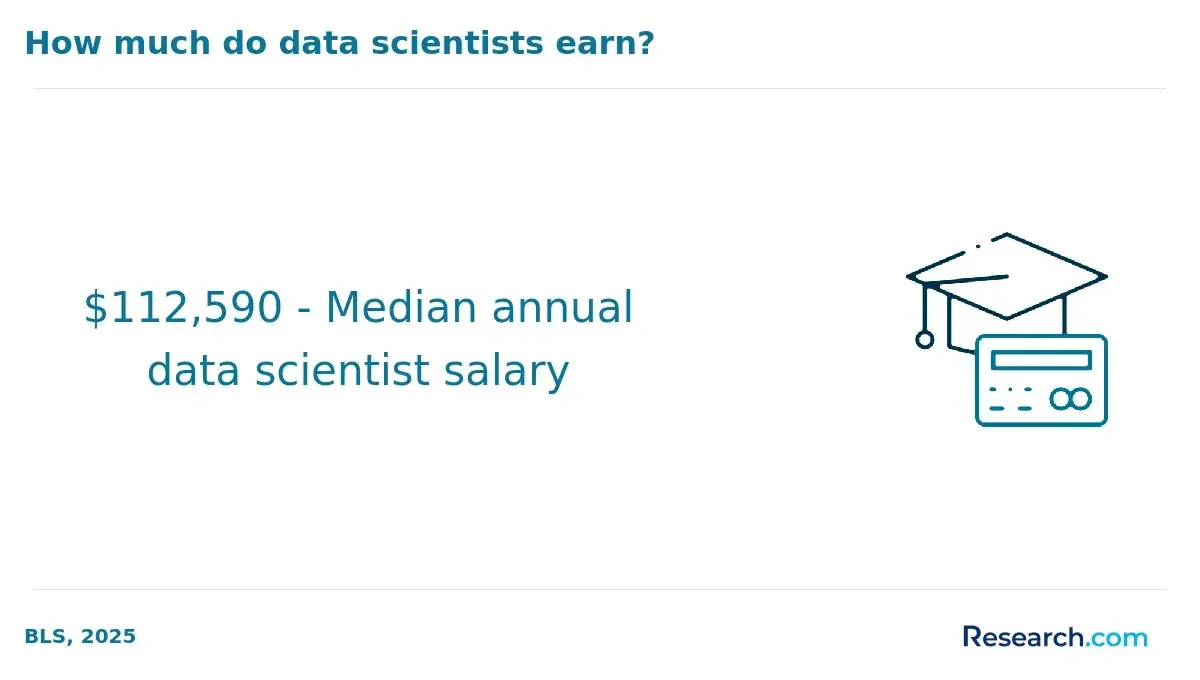
Graduates with a bachelor's degree in artificial intelligence targeting careers in EdTech and related technology sectors can anticipate competitive salaries similar to data science and software development roles. The U.S. Bureau of Labor Statistics (May 2024) reports a median annual wage of $108,020 for data scientists, providing a useful reference point.
Entry-level positions such as AI software engineers, machine learning specialists, and data analysts generally start between $75,000 and $95,000. These roles focus on building intelligent learning platforms, developing adaptive algorithms for personalized education, and analyzing student performance data.
Mid-career professionals working as AI product managers or instructional technologists with AI expertise typically earn $100,000 to $130,000. These roles combine technical AI knowledge with educational frameworks, enhancing data-driven learning tools. Leadership or project management skills in AI product development further boost earning potential.
Senior roles, including AI research scientists or directors of AI programs at large EdTech companies, may command salaries above $140,000. Responsibilities often involve innovating new AI-driven educational models and guiding cross-functional teams.
Salary factors include location, company size, and the extent of AI expertise. For example, tech hubs such as San Francisco or New York can increase median salaries by 15-30%. Certifications in AI ethics, natural language processing, or data privacy also enhance compensation and career prospects.
What certifications complement an AI bachelor's degree for EdTech careers?
Certifications that enhance an AI bachelor's degree for EdTech careers boost both technical skills and domain knowledge. Vendor credentials from industry leaders such as Microsoft carry significant market value and demonstrate real-world expertise. Microsoft's FY24 Q4 certification report shows over 1 million people earned Microsoft Certifications, highlighting their broad industry acceptance. For those focused on EdTech, certificates in Azure AI, data analytics, and cloud computing are closely aligned with creating scalable AI-driven educational platforms.
For foundational knowledge, Microsoft Certified: Azure AI Fundamentals is ideal for those starting AI specialization. More advanced credentials like Microsoft Certified: Azure Data Scientist Associate prepare individuals to manage machine learning models on large datasets, crucial for adaptive learning and personalized education technology.
Pedagogical certifications complement AI skills by focusing on curriculum development and user engagement. Examples include the Certified Professional in Learning and Performance (CPLP) and certificates in Learning Experience Design, which align AI applications with effective instructional strategies.
Data privacy and ethical AI certifications, such as Certified Information Privacy Professional (CIPP) or AI ethics training, are essential for ensuring compliance and responsible use of AI within education.
Combining technical (cloud, AI, data science), pedagogical, and ethical certifications equips graduates for diverse EdTech roles-from AI system development to instructional leadership-enhancing employability and career growth in this evolving field.
Other Things You Should Know About Artificial Intelligence
AI bachelor's graduates focusing on EdTech can look forward to careers such as Educational Data Analysts, Learning Experience Designers, and AI Curriculum Specialists. These roles leverage AI to enhance educational outcomes, create personalized learning experiences, and integrate innovative technologies into educational settings.
Yes, AI bachelor's degrees can provide a solid foundation for research in EdTech. Many programs encourage undergraduate research projects that explore machine learning, natural language processing, or adaptive learning systems. These experiences are valuable for students aiming to contribute to innovative educational products or pursue advanced degrees focused on AI in education.
Ethics is a key component of AI education, particularly when applied to EdTech. Students learn about responsible AI use, data privacy, and bias mitigation in educational tools. Understanding ethical considerations ensures that AI solutions support fair and equitable learning experiences for all students.
Many AI bachelor's programs encourage or require internships to provide real-world experience, especially in EdTech settings. These opportunities allow students to apply theoretical knowledge to practical challenges such as developing personalized learning software or analyzing educational data. Practical experience enhances job readiness and industry connections.
References
- Online AI Degrees vs On-Campus: Which Is Right for You in 2026? https://aidegreeonline.com/online-ai-degrees-vs-on-campus-which-is-right-for-you-in-2026/
- What do you learn in a bachelor's in artificial intelligence? | edX https://www.edx.org/resources/what-do-you-learn-in-a-bachelors-in-artificial-intelligence
- How Much is an AI Course? https://www.nobledesktop.com/learn/ai/how-much-is-a-ai-course
- Top Skills For Data Analytics Roles in 2025 (and How You Can Upskill) - Connexus Recruit https://connexusrecruit.com/top-skills-for-data-analytics-roles-in-2025-and-how-you-can-upskill/
- 9 Must-Have AI Certifications for Boosting Your Career | Cake https://www.cake.me/resources/career-development/ai-certifications
- Top 5 Universities in the USA To Pursue Artificial Intelligence Course https://www.avanse.com/blog/top-ai-universities-in-usa
- 16 Artificial Intelligence Career Paths https://www.calmu.edu/news/artificial-intelligence-career-paths
- The 12 Best AI PM Courses to Supercharge Your Career in 2025 https://www.aakashg.com/ai-pm-courses/
- Artificial Intelligence (procedure for non-EU students) https://apply.unipv.eu/enter/295
- Careers in AI: Opportunities and Pathways - ACS https://www.acs-college.com/careers-in-ai-opportunities-and-pathways