2027 Artificial Intelligence Degree Programs With Cloud Lab Access

Co-Founder and Chief Data Scientist
Many aspiring professionals face barriers entering the artificial intelligence field due to limited access to practical experience and costly lab resources. Traditional programs often require on-site attendance or expensive setups, making it difficult for working adults with unrelated degrees to gain hands-on skills. Cloud lab access provides a flexible, scalable solution, enabling users to engage with real-world AI tools remotely.
This article explores degree programs that integrate cloud lab environments, highlighting options that combine academic rigor with practical application. It aims to guide readers toward accredited programs offering accessible, industry-relevant experience for a career transition into artificial intelligence.
Key Things You Should Know
- Most 2027 artificial intelligence degree programs now integrate cloud lab access, enabling remote hands-on experience with AI tools and real-world datasets through scalable virtual environments.
- Cloud labs reduce costs by up to 40% compared to traditional labs, making advanced AI education more accessible while supporting collaborative projects and experimentation in real time.
- By 2025, over 65% of U.S. AI programs emphasized cloud-based learning to meet industry demand for cloud proficiency alongside core AI competencies, boosting graduate employability.
What are artificial intelligence degree programs with cloud lab access?
Artificial intelligence degree programs with integrated cloud lab access utilize remote cloud computing environments for teaching AI development and experimentation. These cloud-based lab environments provide scalable infrastructure from providers like Microsoft Azure and Amazon Web Services, offering students hands-on experience with machine learning frameworks, neural networks, and large datasets in real-time. Online artificial intelligence education offering cloud-based lab environments supports flexible, asynchronous learning from any location, an advantage for working professionals and remote students.
Programs typically include:
- Access to virtual GPUs and high-performance computing for running advanced AI models.
- Collaboration tools enabling seamless sharing of code and projects among students and instructors.
- Simulated environments that mirror industry-standard workflows for computer vision, natural language processing, and reinforcement learning.
- Flexible schedules to accommodate diverse student needs.
Cloud lab access is vital due to the increasing role of cloud services in AI development, with global public cloud spending forecast to exceed $800 billion. Graduates gain practical skills aligned with current AI tools, enhancing career prospects in software engineering, data science, and AI research. Programs vary widely, from undergraduate certificates to doctoral studies, and those with cloud labs reduce reliance on costly hardware while enabling large-scale experimentation.
U.S. students interested in accelerated options may also consider a 2 year bachelor degree computer science as a pathway into AI and cloud computing fields.
Which schools offer accredited AI degrees with hands-on cloud labs?
Several accredited artificial intelligence degree programs with cloud lab access in the U.S. combine rigorous coursework with hands-on experience using leading cloud platforms such as AWS, Microsoft Azure, and Google Cloud. This practical approach helps students deploy and test AI models in real-world environments, which is essential for skill development and career readiness.
Universities offering hands-on artificial intelligence degrees with integrated cloud labs include Carnegie Mellon University, known for its AI Master's program featuring cloud-based lab projects mimicking industry settings. Georgia Institute of Technology offers an online Master of Science in Computer Science with AI specialization tracks including cloud computing labs for asynchronous, practical learning. Northeastern University also partners with major cloud providers to deliver AI programs enriched with applied lab experiences in machine learning pipelines and data engineering.
When evaluating programs, students should prioritize those accredited by regional bodies recognized by the U.S. Department of Education to ensure quality education and financial aid eligibility. The National Center for Education Statistics lists over 5,900 Title IV-participating postsecondary institutions (IPEDS 2023-24), so verifying accreditation alongside cloud lab access is crucial.
Consider the cloud platforms used, since proficiency in tools like TensorFlow on Cloud TPUs or Azure's AI Studio directly enhances career readiness. Remote access to labs is also important for working professionals. Research programs that emphasize embedded project work rather than purely theoretical study to better apply AI concepts after graduation. For more insight on cost-effective education choices, see the data science major ranking.
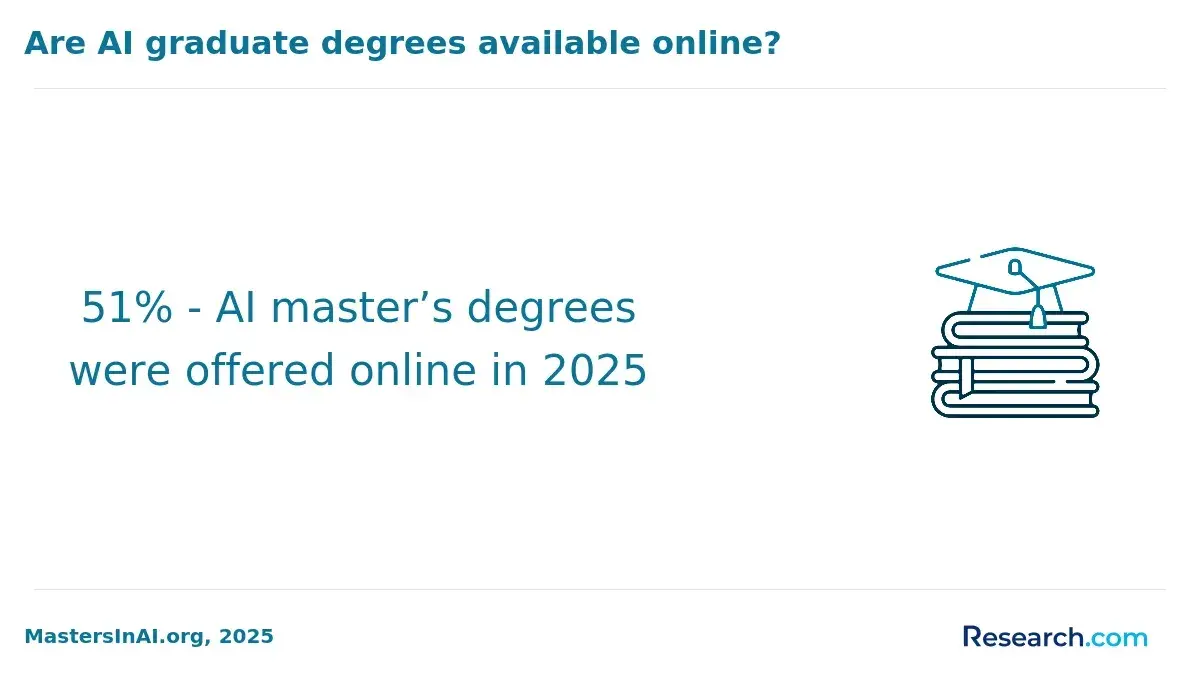
How do online AI degrees provide cloud lab access and support?
Online artificial intelligence degree programs with cloud lab access offer students remote, scalable computing environments integrated directly into their coursework. These cloud labs allow hands-on experience running complex AI models without needing advanced local hardware. Access usually comes through major platforms like Amazon Web Services (AWS), Microsoft Azure, or Google Cloud, tailored for education.
Students gain login credentials to virtual machines equipped with AI frameworks such as TensorFlow, PyTorch, and Jupyter notebooks, facilitating real-world project work. For example, learners can develop neural networks accelerated by cloud GPUs, which reduces training times significantly compared to typical laptops. This virtual AI degree cloud lab support and resources enable practical skill-building essential for AI careers.
Support services often include live help desks, video tutorials, virtual office hours, and peer forums. Some programs also use automated systems to monitor progress within cloud labs, alerting instructors to student challenges early on. Given that over half of U.S. postsecondary students took at least one distance education course recently, demand for reliable remote learning resources continues to grow.
Cloud lab access levels vary by institution, ranging from basic beginner access to advanced setups for research projects. Many schools partner with cloud providers to offer discounted or free resources exclusively to enrolled students. Prospective learners can explore more about online degrees in ai to find programs that meet both their educational and practical needs.
What AI cloud lab tools and platforms will students use in coursework?
Students enrolled in 2027 artificial intelligence degree programs with cloud lab access will primarily use leading cloud platforms such as Amazon Web Services (AWS), Microsoft Azure, and Google Cloud for hands-on coursework. These dominant providers held about 66% of the global cloud infrastructure services market in Q4 2024, according to Synergy Research Group. Their scalable environments support developing, training, and deploying AI models effectively, making them essential in cloud-based tools for artificial intelligence education.
Hands-on experience often includes tools like:
- AWS SageMaker: For building, training, and deploying machine learning models with integrated Jupyter notebooks and automated tuning.
- Azure Machine Learning: Offers a collaborative workspace supporting frameworks like PyTorch and TensorFlow with drag-and-drop features.
- Google Cloud AI Platform: Provides managed services for training, hosting, data labeling, and AutoML capabilities.
Programs incorporate container services such as AWS ECS and Azure Kubernetes Service to teach large-scale AI application deployment. Students also utilize cloud data storage and GPU-accelerated compute instances to handle resource-intensive model training challenges.
Hands-on labs simulate real-world tasks like managing massive datasets, optimizing model performance, and securely deploying AI applications in scalable environments. These ai cloud lab platforms for student coursework are integrated with open-source AI frameworks, allowing learners to develop flexible skills across industries.
Access to cloud labs prepares students for careers where cloud proficiency is crucial. Those exploring further education opportunities might find valuable options among data science masters online programs that emphasize practical cloud experience.
What core courses and specializations are common in AI degrees with cloud labs?
Core courses in artificial intelligence degree programs often cover machine learning, data structures and algorithms, statistics, and neural networks, combined with cloud lab access for practical experimentation. These programs emphasize theoretical knowledge alongside hands-on experience using cloud platforms like AWS, Azure, or Google Cloud, which provide scalable environments often unavailable on-campus. Specializations typically include natural language processing, computer vision, robotics, and reinforcement learning.
Cloud-based distributed computing allows students to deploy and test machine-learning models in real-world settings, reflecting a shift toward applied learning mirrored in industry trends. The Stanford University AI Index Report 2024 highlights this by showing that industry developed 51 notable machine-learning models versus 15 in academia during the previous year. This gap underscores the value of lab-heavy curricula focused on deployment challenges and cloud-native optimization.
Typical coursework includes:
- Advanced machine learning and deep learning techniques
- Cloud architecture and AI services
- Data engineering and pipeline management in cloud environments
- AI ethics and governance at scale
Specialized training also covers scalable AI algorithms, practical troubleshooting of distributed systems, and cost-effective cloud resource management-skills critical for careers involving AI system deployment in enterprise cloud settings.
What admission prerequisites do AI degree programs typically require?
Admission prerequisites for artificial intelligence degree programs often focus on solid skills in math and programming rather than strict seat-time requirements. Candidates typically need proficiency in calculus, linear algebra, statistics, and discrete mathematics. Programming experience in languages such as Python, Java, or C++ is commonly required or highly recommended. Prior coursework in computer science fundamentals, including data structures and algorithms, is also important.
Most programs require official transcripts showing a bachelor's degree in a related STEM field like computer science, engineering, mathematics, or physics. Alternatively, demonstrable knowledge through certifications or portfolio projects may be accepted. Some schools offer conditional admission for those without formal degrees but with verified skills from coding bootcamps or standardized tests.
Submission of GRE scores is becoming less frequent as admissions shift toward skills-based evaluation. The Linux Foundation Research's 2024 State of Tech Talent Report highlights that 93% of hiring managers prioritize skills over traditional credentials. This trend favors applicants presenting completed projects, coding challenges, and relevant work experience.
Additional admission components often include personal statements, letters of recommendation, and sometimes interviews or technical assessments. Familiarity with cloud platforms like AWS, Azure, or Google Cloud can also strengthen applications, especially for programs involving cloud lab access.
How long do AI degrees take, and what do they cost?
Artificial intelligence degree programs vary in length depending on degree level and institution. Associate degrees or certificates can often be completed within two years. Bachelor's degrees usually require four years of full-time study, while master's degrees take one to two years. Doctoral programs, focused on research and academia, typically add another three to six years.
Tuition costs differ widely by type of school and residency. Public four-year in-state institutions average about $11,610 annually in tuition and fees, according to the College Board's Trends in College Pricing and Student Aid 2024. Private schools and out-of-state tuition can be two to three times that amount. For instance, public master's programs with cloud lab access range from $20,000 to $40,000 total, while private universities often exceed $50,000.
Online AI degrees with integrated cloud labs provide flexible scheduling but usually maintain similar tuition rates to traditional programs. Accelerated tracks may allow completion in under two years but often require a heavier workload and relevant experience.
Additional expenses may include fees for cloud lab subscriptions or software licenses needed for hands-on learning. Financial aid, scholarships, and employer tuition assistance programs can significantly reduce costs, but eligibility varies by program.
When comparing programs, consider the balance of program length, tuition structure, and included lab access to ensure quality practical experience and value for your investment.
What careers can you pursue with an AI degree and cloud lab experience?
An AI degree combined with cloud lab experience equips students and professionals with practical skills to develop, deploy, and maintain intelligent systems across various industries. Cloud labs provide hands-on access to scalable environments like Amazon Web Services (AWS) SageMaker, Google Cloud AI, and Microsoft Azure AI, giving a competitive edge in today's job market.
Key roles include AI and machine learning specialists who design algorithms, train models, and optimize data pipelines. Other opportunities include data scientists who transform complex data into insights using AI tools hosted on cloud platforms, and robotics engineers applying AI in automation. Natural language processing (NLP) engineers focus on human language understanding, often using cloud-based training environments.
AI product managers combine technical and business skills to lead projects, while cybersecurity analysts use AI to detect threats in cloud networks. According to the World Economic Forum's Future of Jobs Report 2025, AI and Machine Learning Specialists will be among the fastest-growing roles up to 2030, reflecting rising demand.
Success requires strong Python programming, experience with frameworks like TensorFlow or PyTorch, and knowledge of cloud computing architectures. Graduates with both theoretical AI knowledge and cloud lab experience are well-prepared for careers in healthcare analytics, automotive AI, fintech, and government sectors where AI innovation is vital.
What salaries can AI graduates expect in common job roles?
AI graduates can expect salaries that vary widely based on job role, experience, and industry sector. According to the U.S. Bureau of Labor Statistics (May 2024 OEWS), the median annual wage for data scientists is $108,020, serving as a solid benchmark for many AI-related careers focused on data analysis and machine learning.
Entry-level AI engineers typically earn between $85,000 and $110,000 annually, working on algorithm development and AI model construction. With 3 to 5 years of experience, salaries rise to $120,000-$150,000, especially in healthcare, finance, and technology industries. Mid-career machine learning engineers typically earn $100,000 to $140,000, while senior specialists with cloud lab experience can exceed $160,000 due to their advanced skills in scalable AI deployment.
AI research scientists in academic or corporate labs start around $90,000 and can surpass $150,000 with expertise in deep learning or natural language processing. Hands-on experience gained in cloud lab environments enhances employability and salary prospects.
Roles such as AI product managers or consultants often start near $95,000, increasing to over $140,000, reflecting their blend of technical and strategic business skills. Proficiency with cloud-based AI tools significantly boosts earning potential. Location also matters: AI professionals in tech hubs like San Francisco or New York may earn 10-30% more than the national median.
Which certifications complement an AI degree with cloud lab training?
Certifications paired with cloud lab training significantly boost both technical expertise and career opportunities in artificial intelligence. Essential credentials include cloud provider certifications such as AWS Certified Machine Learning - Specialty, Google Professional Machine Learning Engineer, and Microsoft Certified: Azure AI Engineer Associate. These validate skills in deploying AI models within cloud ecosystems, a crucial ability as cloud platforms increasingly host AI workloads.
Additional certifications in data science and machine learning, like the Certified Data Scientist (CDS) and TensorFlow Developer Certificate, enhance practical experience in building and deploying models. These are especially valuable for students completing cloud labs who want to bring hands-on skills to real-world AI applications.
Cybersecurity credentials such as CompTIA Security+ and Certified Information Systems Security Professional (CISSP) complement AI and cloud skills by focusing on protecting AI systems and data in the cloud, addressing security challenges in this domain.
Pearson VUE's Value of IT Certification 2024 report highlights that 28% of certified professionals received a salary boost, underscoring the measurable benefits of earning certifications aligned with career goals.
For instance, graduates targeting AI model deployment on Azure should pursue the Azure AI Engineer Associate certification, while those working more broadly with machine learning pipelines may find value from AWS or Google certifications. Integrating cloud-specific AI certifications with foundational data science and cybersecurity credentials creates a balanced, competitive skill set for the evolving job market.
Other Things You Should Know About Artificial Intelligence
Yes, a degree in artificial intelligence provides strong foundations in machine learning, data analysis, and programming, which are highly sought after in technology and research fields. Graduates often gain practical experience through cloud lab access, enhancing their job readiness. The demand for AI professionals is growing, making the degree valuable for those seeking careers in this area.
While a solid understanding of math, especially linear algebra, calculus, and statistics, is important for artificial intelligence, many programs offer foundational courses to build these skills. Some AI degree programs with cloud labs include remedial or integrated math support to help students succeed. However, a willingness to engage with mathematical concepts is essential to grasp key AI methods and algorithms.
Yes, artificial intelligence is a rapidly evolving field, so accredited degree programs regularly update their curriculum to include the latest techniques and tools. Programs with cloud lab access often integrate contemporary platforms and datasets to keep learning relevant. Staying current helps students develop skills aligned with industry standards and emerging AI trends.
In 2027, AI degree programs integrate cloud-based labs by offering students real-time access to cloud resources for hands-on projects. This enables interactive learning experiences in diverse AI applications, including machine learning and data analysis. Explore our healthcare artificial intelligence master’s degree for specialized curriculum options.
References
- AI Degree Specializations & Concentrations 2026 https://hakia.com/degrees/artificial-intelligence/specializations/
- AI research tools for for Academics and Researchers https://www.litmaps.com/learn/best-ai-research-tools
- How Long Does It Take to Complete an AI Course https://www.epw.com/blog/courses/how-long-is-ai-course
- The Prerequisites for Artificial Intelligence- IABAC - IABAC https://iabac.org/blog/what-are-the-prerequisites-for-artificial-intelligence-a-modern-approach
- The Top 10 AI-Powered Learning Platforms in 2026 https://360learning.com/blog/ai-learning-platforms/
- AI Cloud vs On-Prem AI Labs: Pros, Cons, and Use Cases https://cyfuture.ai/blog/ai-cloud-vs-on-prem-ai-labs
- CloudLabs - Cloud Certifications | Hands-on Lab Learning https://cloudlabs.ai/cloud-certifications
- Top 10 jobs in artificial intelligence (AI) & who’s hiring https://joinhandshake.com/blog/students/artificial-intelligence-jobs/
- Do AI Degree Programs Worth It?Cost,Time, Career Alternative https://agilefever.com/artificial-intelligence-degree-programs/
- Artificial Intelligence and Cloud Computing Program https://www.harpercollege.edu/academics/business/ai-cloud-computing/index.php