2027 AI Bachelor's Degrees With CLEP-Friendly Transfer Policies

Co-Founder and Chief Data Scientist
Many professionals with unrelated bachelor's degrees seek to transition into artificial intelligence but face obstacles with credit transfer and program requirements. Traditional pathways demand repeating foundational courses, increasing time and cost. The challenge intensifies for those balancing careers and personal commitments, as flexible, accelerated options remain limited.
Institutions recognizing CLEP exams help alleviate these barriers, allowing students to test out of general education credits and focus on core AI coursework. This article explores viable AI bachelor's degrees that accept CLEP credits, highlighting programs designed to streamline education and support efficient, affordable career pivots into the growing AI field.
Key Things You Should Know
- Many U.S. colleges offering AI bachelor's degrees in 2027 accept CLEP exams, allowing transfer credits for foundational courses, reducing time and cost to degree completion.
- Approximately 40% of AI programs nationally recognize at least 6-12 CLEP credits, facilitating smoother transitions for adult learners and transfer students.
- Programs emphasize interdisciplinary AI skills, integrating computer science, data analytics, and ethics, aligning CLEP policies with evolving industry and academic standards.
What is an AI bachelor's degree, and what careers does it support?
An AI bachelor's degree programs and career opportunities in artificial intelligence equip students with foundational knowledge in computer science, machine learning, data analysis, robotics, and neural networks. Graduates develop skills to design and optimize AI systems that handle tasks such as natural language processing, computer vision, and automation of decision-making processes.
Jobs and industries supported by a bachelor's in artificial intelligence include roles like machine learning engineer, data scientist, AI software developer, robotics engineer, and AI research analyst. These positions are in demand across sectors such as healthcare, finance, manufacturing, and technology, where AI drives innovation and operational efficiency.
Generative AI is expected to automate around 30% of working hours in the U.S. economy by 2030, notably affecting knowledge-intensive, higher-wage jobs common among AI bachelor's graduates. This highlights the growing need for expertise in developing and managing autonomous AI systems.
Students should anticipate curricula combining theory with practical skills, including programming in Python and using frameworks like TensorFlow. Many programs are transfer-friendly, accepting CLEP credits to accommodate professionals and career changers. An understanding of AI ethics and regulations is essential to ensure responsible development and deployment.
Strong problem-solving abilities, adaptability, and continuous learning are vital for careers supported by this degree, given the rapidly evolving AI landscape. For additional insights, consider exploring an applied artificial intelligence degree.
Which schools offer AI bachelor's degrees with CLEP-friendly transfer policies?
Several U.S. schools offering ai bachelor's degree programs with CLEP transfer options allow students to accelerate completion by applying CLEP exam credits toward general education requirements. More than 2,900 institutions nationwide accept CLEP credits, simplifying transfer pathways for students pursuing specialty ai degrees. Notable public universities like Arizona State University and the University of Central Florida welcome a broad array of CLEP exams within their ai-related tracks.
Private universities such as Drexel University and Stevens Institute of Technology tend to assess CLEP credits on a case-by-case basis, focusing primarily on foundational subjects like mathematics, computer science, and English composition. This approach helps reduce both time and tuition costs for students presenting previous CLEP achievements.
Universities offering CLEP-friendly transfer policies for ai degrees emphasize verifying credit transfer specifics early. To navigate common challenges, students should:
- Request detailed transfer credit evaluations prior to application to confirm CLEP acceptance.
- Favor schools publishing CLEP equivalency charts or providing dedicated transfer advisors.
- Explore hybrid or online ai degree programs that explicitly support CLEP credits.
Choosing institutions where ai degrees align closely with STEM and computer science departments increases transfer flexibility. Because CLEP generally covers general education rather than advanced technical ai courses, students often need additional transfer credits or portfolio assessments to fulfill core requirements. For more insights on affordable pathways, consider exploring data science degrees which share similar credit and transfer policies.
How does CLEP credit apply to AI bachelor's degree requirements?
CLEP credit transfer policies for AI bachelor degrees often allow students to bypass foundational courses such as college algebra, calculus, statistics, or introductory computer science. These exams typically apply to general education or lower-division requirements, enabling students to concentrate earlier on specialized artificial intelligence coursework. Since CLEP acceptance varies by institution, students must verify individual transfer policies; some limit CLEP credit to 30-45 credits, while others permit more generous amounts.
Applying CLEP exams to artificial intelligence degree requirements can accelerate progress. For instance, a College Mathematics CLEP exam frequently satisfies AI math prerequisites, speeding up enrollment in advanced classes like machine learning or data structures. Likewise, passing a Computer Science CLEP exam may exempt students from introductory coding courses. Universities targeting nontraditional or working students often value CLEP credits for demonstrating prior knowledge without repeating material.
Research shows that students earning credit-by-exam, including CLEP, graduate at a 56% rate, compared to 50% for those without exam credits. This highlights how CLEP can reduce degree completion time while supporting improved academic outcomes. Prospective students should collaborate with admissions and academic advisors early to map CLEP exams onto their AI curriculum efficiently.
For those comparing educational options, exploring the cheapest online mechanical engineering degree programs may provide useful insights into affordable pathways in related STEM fields.
What accreditation should AI bachelor's programs have for transfer and employer acceptance?
Accreditation standards for AI bachelor's degree transfer are critical for students who want their credits recognized across institutions or by employers. The most valued accreditation comes from ABET (Accreditation Board for Engineering and Technology), which verifies that computing programs meet rigorous technical and educational standards. Graduation from an ABET-accredited program fulfills federal education requirements for roles related to computer science, benefiting those pursuing government or military careers.
Regional accreditation of the institution is another significant factor. Schools with regional accreditation generally ensure smoother transfer of credits and greater acceptance of degrees by employers and other universities. National accreditation alone may restrict transferability and cause employers to question the program's academic quality.
When evaluating recognized accrediting agencies for AI bachelor's programs, consider these points:
- Prioritize programs with ABET accreditation for recognized technical credibility.
- Confirm the institution holds regional accreditation to maximize credit transfer options.
- Look for specialized accreditation in computing or related engineering fields connected to AI.
- Check articulation agreements for CLEP credit acceptance and course transfer facilitation.
Employers increasingly seek candidates with degrees from accredited programs to ensure quality assurance. Without proper accreditation, students may struggle to transfer credits, advance in graduate studies, or qualify for positions requiring validated educational credentials. For prospective students interested in AI and data science, also explore options through best data science master's programs that often align with strong accreditation standards, supporting educational and career advancement.
Are AI bachelor's degrees available fully online, and how do online formats compare?
Many accredited institutions offer fully online bachelor's degrees in artificial intelligence, providing flexible options for students managing work, family, or location challenges. These programs often include asynchronous lectures, live virtual sessions, and interactive labs using simulations and coding platforms designed for AI coursework.
Online programs typically mirror on-campus curricula, covering essential topics such as machine learning, data structures, and ethical AI. Hands-on labs may utilize remote access software or project-based learning instead of traditional in-person sessions, supporting a self-paced experience without compromising academic rigor.
Students should verify transfer policies, as many AI programs accept College Level Examination Program (CLEP) credits, which can shorten degree completion time and reduce costs. Institutions also offer cohort models, personalized academic advising, and virtual career services tailored to remote learners.
About 54% of U.S. postsecondary students have taken online courses, reflecting broad acceptance of distance education. Employers increasingly recognize online AI degrees as credible credentials in today's job market.
- Check program accreditation and faculty expertise
- Explore internship or collaboration opportunities
- Evaluate technology platforms used for instruction
These factors help ensure your online bachelor's in artificial intelligence aligns with both academic standards and career goals.
What prerequisites and admissions requirements are common for AI bachelor's programs?
AI bachelor's programs demand strong foundations in mathematics, programming, and sometimes physics or statistics. High school coursework typically includes Algebra II, precalculus, and often calculus. However, only about 42% of first-year undergraduates at four-year institutions meet college-ready math standards, making math proficiency a vital admissions factor.
Admissions often require:
- A minimum high school GPA around 3.0 on a 4.0 scale
- Standardized test scores focused on the math sections of the SAT or ACT when applicable
- Experience or coursework demonstrating proficiency in programming languages like Python or Java
- Completion of prerequisite courses, sometimes verified through CLEP exams or transfer credits
Personal statements and letters of recommendation that emphasize problem-solving skills and dedication to AI fields are commonly requested. Some universities offer conditional admission with remedial math preparation to support students below readiness benchmarks.
Transfer students benefit from CLEP-friendly policies that allow them to satisfy core math and computer science prerequisites efficiently. These options help applicants with limited direct AI experience to prove their readiness.
Meeting or exceeding math requirements is essential because AI degrees involve advanced quantitative skills necessary for courses like machine learning, algorithms, and data structures.
What courses and skills are typically included in an AI bachelor's curriculum?
Bachelor's degrees in artificial intelligence blend computer science fundamentals with specialized AI topics. Key courses often include programming languages like Python, which ranks as the top language in U.S. job postings requiring programming skills, according to Lightcast Labor Market Analytics. Students build a strong foundation through algorithm design, data structures, and software engineering principles.
Core AI subjects focus on machine learning, neural networks, natural language processing, and computer vision. These areas develop systems that learn from data, interpret human speech, and analyze images. Mathematics courses cover linear algebra, probability, statistics, and calculus, essential for model development and optimization.
Students also study data mining, big data analytics, and database management to handle large datasets common in AI projects. Ethics in AI and human-computer interaction courses address challenges like bias mitigation and system usability.
Hands-on experience with tools such as TensorFlow, PyTorch, and Scikit-learn is emphasized through projects and labs. Some programs further explore robotics, reinforcement learning, and cloud computing to keep pace with industry trends.
Graduates gain critical thinking, problem-solving, and teamwork skills via capstone projects reflecting real AI challenges. These programs prepare students for roles including AI software developer, data scientist, or research analyst, meeting the growing market demand for expertise in foundational and emerging AI technologies.
How long does an AI bachelor's degree take with transfer and CLEP credits?
An AI bachelor's degree usually takes about four years to complete on a full-time schedule. However, students who leverage transfer credits and CLEP exams often finish in three years or less. Data from NCES indicates that students using transfer credits tend to graduate faster, especially in AI programs where foundational courses in math, computer science, and general education can be accelerated by these credits.
Transfer policies vary, but many CLEP-friendly institutions accept up to 60 semester credits, roughly two years of coursework. For instance, students entering AI programs with an associate degree or 30+ CLEP credits in relevant subjects may only need two additional years for upper-division AI courses.
Key factors impacting time to degree include:
- The maximum number of transfer and CLEP credits allowed.
- Whether AI degree requirements can be substituted by transfer courses.
- Full-time versus part-time enrollment status.
Early consultation with admissions advisors is crucial to understand credit evaluations and to plan CLEP exams in advance. Strategically using CLEP can cover general education and lower-division requirements, reducing redundant courses and speeding progress through specialized AI studies.
Effectively utilizing transfer credits and CLEP exams can shorten an AI bachelor's degree timeline to about two to three years, depending on individual circumstances and institutional rules.
What does an AI bachelor's degree cost, and how does transfer credit affect tuition?
AI bachelor's degrees at public four-year institutions typically cost about $11,260 annually for in-state students, based on 2024-25 tuition data from the College Board's Trends in College Pricing 2024. Actual costs vary by residency, program specifics, and whether the school is public or private. Out-of-state and private university students can expect tuition fees two to three times higher.
Transfer credits and College-Level Examination Program (CLEP) exams offer significant tuition savings by allowing students to skip some courses. For example, if a school charges $375 per credit, earning credit via CLEP for a 3-credit course can save roughly $1,125 in tuition. AI programs that accept these credits help students finish degrees faster and reduce debt.
Because institutions differ, prospective students should verify transfer credit policies carefully. Some programs limit the number of transfer credits accepted, especially for key subjects such as math, programming, or statistics. CLEP acceptance also varies: some universities only apply them to general education rather than AI major courses.
Students should consider the following:
- Confirm maximum transfer credits permitted by the AI program.
- Compare in-state and out-of-state tuition rates.
- Check if CLEP exams cover AI prerequisites or just liberal arts credits.
- Calculate savings based on the school's per-credit cost.
By strategically using transfer and CLEP credits, students can lower costs and shorten degree duration. Request official transfer evaluations ahead of enrollment to accurately estimate potential savings.
What are typical AI-related job titles, salaries, and demand for bachelor's graduates?
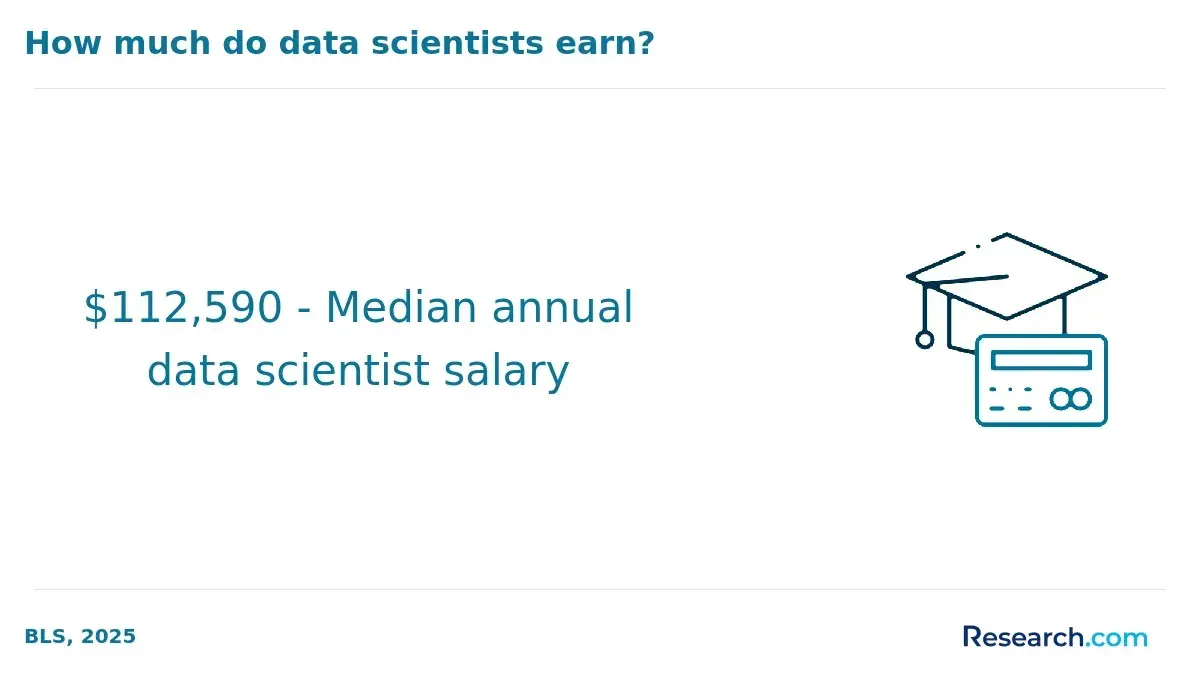
Typical job titles for bachelor's graduates in artificial intelligence include data scientist, machine learning engineer, AI software developer, data analyst, and AI research assistant. These roles often require core skills in programming, data modeling, and algorithm development, with data scientist positions being among the most common and well-paid. The median salary for data scientists was $108,020, reflecting strong demand and specialized expertise.
Employment growth for data scientists is projected at 36% over the next decade, far exceeding the average for all occupations. Opportunities span industries such as technology, healthcare, finance, and government. Salaries for machine learning engineers and AI developers typically range between $90,000 and $130,000, depending on experience and location.
Proficiency in programming languages like Python and R, along with tools such as TensorFlow or PyTorch, significantly boosts job prospects. Practical experience from internships or projects is highly valued. Combining AI skills with domain knowledge in sectors like finance, biology, or robotics can open broader, higher-paying roles.
Key skills sought by employers include data curation, model training, and ethical AI implementation. While some research roles may require advanced degrees, many entry-level positions for bachelor's holders are available, especially in data analysis and software development. Staying current with evolving technologies is essential for maintaining competitiveness in this rapidly advancing field.
Other Things You Should Know About Artificial Intelligence
Several universities, including Arizona State University and University of Maryland Global Campus, offer AI bachelor's degree programs with CLEP-friendly policies in 2027. These institutions allow students to transfer CLEP exam credits, facilitating a more flexible and cost-effective education path.
In 2027, CLEP exams in subjects like College Algebra, and Information Systems may be accepted for credit transfer in AI bachelor's degree programs. Check specific college policies to confirm accepted exams and minimum score requirements.
Most CLEP-friendly AI bachelor’s programs require a 2.0 GPA or higher for transfer admission and accept only “C” grades or better for transfer credit. Many cap transferred credits at 90 semester hours, and CLEP credit usually appears on an official College Board score report.
The average duration for completing an AI bachelor's degree with CLEP-friendly policies is usually around three to four years. However, students can potentially shorten this timeframe by earning credits through CLEP exams. For further education, consider the best AI master’s programs for non-technical students.
References
- Online AI Degree Concentration | SNHU https://www.snhu.edu/online-degrees/bachelors/cyber-security/generative-ai
- Which College Majors are Most and Least Vulnerable to AI? https://www.ivyscholars.com/which-college-majors-are-most-and-least-vulnerable-to-ai/
- GitLab University https://university.gitlab.com/c/UrfHY8iwQzW9H5LePN8oDA
- How Long Does It Take to Earn a Bachelor's Degree? https://www.aiuniv.edu/degrees/business/articles/how-long-does-it-take-to-get-your-bachelors-degree
- MH Cognition https://mhcognition.com/blogs/core-ai-ml-subjects-bsc-cs
- AI Careers - Top AI Jobs with Education Requirements and Pay https://aidegreeprograms.org/ai-careers/
- Best Online AI Degrees: 2025 Rankings & Program Directory - MastersInAI.org https://www.mastersinai.org/degrees/online-artificial-intelligence-degrees/
- Artificial Intelligence Course Syllabus: Topics and Modules https://futurense.com/blog/artificial-intelligence-course-syllabus
- Online vs On-Campus Artificial Intelligence Degrees: Which Is Better? https://hakia.com/degrees/artificial-intelligence/online-vs-campus/
- A Complete 4-Year Course Plan for an Artificial Intelligence Undergraduate Degree https://www.mihaileric.com/posts/complete-artificial-intelligence-undergraduate-course-plan/