2027 Fastest-Growing AI Careers for College Graduates

Co-Founder and Chief Data Scientist
Many college graduates with degrees outside STEM fields face uncertainty when exploring careers in fast-evolving industries. The rapid growth of artificial intelligence has created demand for diverse skills, yet navigating this shift without relevant experience can be overwhelming. Graduates often struggle to identify viable roles that align with their backgrounds while gaining credibility in the AI sector.
Bridging this knowledge gap is critical to accessing opportunities in a competitive market. This article examines the fastest-growing AI career paths suitable for graduates seeking to pivot effectively through flexible, accredited education and training options.
Key Things You Should Know
- AI engineering roles are projected to grow 25% by 2030, driven by demand for automation, data analysis, and machine learning skills among recent graduates.
- Entry-level positions in AI ethics, natural language processing, and computer vision are expanding quickly, with average starting salaries exceeding $90,000 as of 2025.
- Strong foundations in programming, statistics, and domain-specific knowledge remain essential; interdisciplinary expertise boosts job prospects in emerging AI career paths.
What are the fastest-growing AI careers for new college graduates in the United States?
The fastest-growing AI careers for new college graduates in the United States include roles such as AI engineer, machine learning engineer, data scientist, and AI research analyst. AI engineer positions are rapidly expanding, with average annual salaries around $114,000, reflecting strong demand for expertise in building and deploying AI models.
These in-demand AI jobs for recent college graduates in the United States require a blend of software engineering skills and domain-specific knowledge. Machine learning engineers develop algorithms that allow machines to learn from data, a skill sought after in finance, healthcare, and tech industries.
Data scientists analyze vast datasets to derive insights that improve AI applications and support business decisions. AI research analysts evaluate cutting-edge trends, algorithm efficiencies, and potential biases, often requiring proficiency in Python, R, and cloud services like AWS or Google Cloud.
Specializing in fields like natural language processing (NLP), computer vision, or robotics can open niche opportunities. Building a strong portfolio, completing internships, and earning certifications in frameworks like TensorFlow or PyTorch enhance job prospects.
Networking within professional AI communities also helps uncover openings in startups and established companies. For students considering further education, exploring most affordable data science master's programs offers valuable routes to deepen skills relevant to these careers.
Which AI degree majors and specializations best prepare students for these roles?
Majors in computer science and statistics provide a strong foundation for AI careers, especially in research and development. These degrees cover critical skills in algorithms, data structures, and machine learning models essential for AI innovation. Specializations such as machine learning, natural language processing, and computer vision prepare graduates for advanced tasks like developing AI-driven language models or image recognition systems. These AI degree programs with highest job placement rates often emphasize such specializations.
Engineering fields, especially electrical and software engineering, are valuable for careers in AI deployment, robotics, and embedded AI systems. Focus areas like control systems and signal processing equip students for real-time AI solutions, including autonomous vehicles. Applied mathematics supports AI problem-solving through optimization and statistical modeling, promoting skills useful in algorithm design and AI risk assessment.
Degrees in data science, which blend computer science and statistics, prepare graduates for big data analysis and AI-driven decision systems. The US Bureau of Labor Statistics projects a 20% growth in computer and information research jobs between 2024 and 2034, highlighting the growing demand for AI researchers and developers. Pursuing top AI specializations for college graduates in the U.S. should include internships, research projects, and proficiency in Python, R, or TensorFlow.
Students should evaluate programs for faculty expertise, AI labs, and industry ties. Programs embedding ethical AI and cross-disciplinary collaboration enhance readiness for emerging roles focused on accountable and inclusive AI. For those considering program costs, consider exploring online engineering degree cost as part of planning your education path.
What entry-level education and skills are required for top AI career paths?
Entry-level education requirements for AI careers in the US often include at least a bachelor's degree in computer science, data science, mathematics, or engineering fields closely related to artificial intelligence. Specialized degrees in AI or machine learning are becoming more common and highly valued. However, candidates with strong coding skills and applied math knowledge from non-traditional backgrounds can also qualify, especially in data analysis or AI software development roles.
Essential technical skills for starting a career in artificial intelligence include:
- Proficiency in programming languages like Python, R, or Java, fundamental for AI development and data manipulation.
- Understanding machine learning algorithms, neural networks, and basics of natural language processing.
- Experience with AI frameworks such as TensorFlow, PyTorch, or scikit-learn.
- Familiarity with data handling tools including SQL and data visualization software.
Employers also highly value practical experience gained through internships, projects, or contributions to open-source AI initiatives. Strong problem-solving and analytical abilities are crucial since AI roles require designing and optimizing models based on real-world data. Effective communication skills help translate technical insights across teams, boosting project success.
The surge in AI job searches-rising 11-fold on Indeed since ChatGPT launched in 2022-reflects the urgent need for talent equipped with these skills. Those combining formal education with hands-on AI projects stand out. Continuous learning, including completing AI certifications or micro-credentials, significantly enhances employability. For those exploring educational options, the cheapest online PhD in cyber security programs may offer valuable interdisciplinary insights beneficial in AI-related fields.
How do online AI degree programs compare with campus-based programs for career outcomes?
Online AI degree programs increasingly compete with campus-based options in providing strong career outcomes. Both delivery methods equip students with foundational knowledge and practical skills for entry-level roles, yet they differ in flexibility, networking, and practical experience. Online programs allow greater accessibility, helping students balance their studies with work or other commitments, which often boosts retention among nontraditional learners. Campus-based programs, meanwhile, offer structured environments with direct access to faculty, research labs, and collaborative opportunities that enhance mentorship and hands-on learning.
Employers emphasize demonstrable skills and relevant experience regardless of whether education was campus-based or online. Both formats may include projects, internships, and certifications that boost job readiness. Campus programs often facilitate on-site internships and career fairs, while some online options feature capstone projects and industry partnerships to bridge experience gaps. Prospective students evaluating campus-based vs online AI education job prospects should consider these aspects carefully.
Resume Now's 2026 analysis of entry-level careers designed for the AI era shows 12 roles with median annual salaries of at least $50,000 and faster-than-average growth projected through 2034, accompanied by low to moderate automation risk. Whether through online or campus-based programs, graduates work toward significant opportunities by prioritizing programs with strong industry ties and hands-on components. For those interested in engineering-focused paths, resources like best military friendly online electrical engineering degrees provide additional guidance.
How can students verify that an AI program and institution are properly accredited?
Before enrolling in any AI program, students should verify proper accreditation to ensure education quality, employer recognition, and eligibility for certification or advanced study. Confirm institutional accreditation through trusted sources like the U.S. Department of Education's Database of Accredited Postsecondary Institutions and Programs or the Council for Higher Education Accreditation (CHEA).
For AI-specific programs, accreditation at the program level is crucial. Look for recognized accreditors such as ABET for computing disciplines or regional accreditors covering STEM fields. These guarantee a rigorous curriculum aligned with industry standards and often include hands-on experience or partnerships with the tech industry.
Transparency in graduation rates, job placement, and faculty credentials is important. AI prompt engineers, an emerging career requiring specialized training, earn an average salary of $137,609, with top earners reaching $204,000 annually, according to Poets&Quants.[15]
Ask admissions or academic advisors about how accreditation supports career outcomes. Avoid online certifications without institutional backing, as these frequently lack employer recognition. Cross-check accreditation claims with trusted external bodies to protect your education investment from costly mistakes.
What core courses and technical skills do AI bachelor's and master's programs teach?
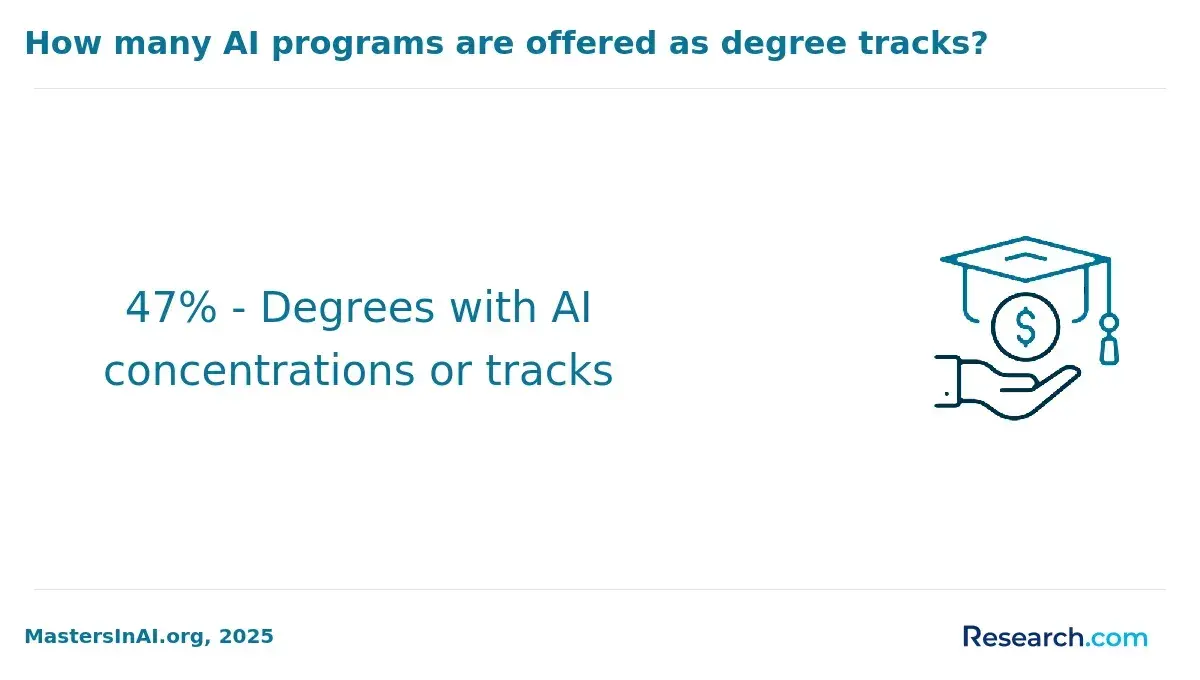
Bachelor's and master's programs in artificial intelligence focus on building strong foundations in mathematics, computer science, and domain-specific skills. Core coursework typically includes linear algebra, calculus, probability, and statistics, providing essential tools for machine learning and data analysis. Programming skills, especially in Python and R, are critical, with emphasis on popular libraries like TensorFlow, PyTorch, and scikit-learn for hands-on AI development.
Students gain expertise in algorithm design, data structures, and database management to efficiently handle large datasets. Specialized courses in natural language processing and computer vision prepare graduates for roles across healthcare, autonomous systems, and more. Practical experience often involves projects focused on neural networks, reinforcement learning, and deep learning frameworks.
The growing need for AI infrastructure skills is reflected in rising demand for MLOps and Large Language Model (LLM) operations professionals. According to HeroHunt.ai's 2026 rankings, job postings for these roles have surged over 250% since 2024. Cloud platform proficiency (AWS, Google Cloud, Azure) and containerization tools such as Docker and Kubernetes are frequently integrated into the curriculum to prepare students for scalable AI system deployment.
Ethics and AI policy coursework promotes responsible development and regulatory compliance. Advanced programs offer electives in robotics, cognitive computing, and reinforcement learning. Prospective students should seek programs with hands-on labs, internships, and industry partnerships to balance theoretical knowledge with practical expertise essential for careers in artificial intelligence.
What are typical admission requirements for AI and machine learning degree programs?
A strong foundation in mathematics, computer science, and programming is essential for admission to AI and machine learning degree programs. Coursework in calculus, linear algebra, statistics, and probability is commonly expected to help students grasp algorithm design and model development. Proficiency in programming languages such as Python, Java, or C++ is often required, proven through coursework or professional experience.
Applicants typically submit GRE scores, though some programs are waiving this test. A cumulative GPA of 3.0 or higher enhances competitiveness, along with letters of recommendation highlighting analytical and coding skills. Many programs ask for a statement of purpose detailing motivation, experience, and career goals. Relevant work or research in AI, data science, or software development strengthens applications, especially at the master's or doctoral level. International students must demonstrate English proficiency via TOEFL or IELTS.
Preparatory bootcamps or certificate programs are available for those without traditional STEM backgrounds, offering foundational knowledge and practical skills. Demand for AI careers continues to grow, roles like machine learning engineer and data scientist are projected to expand by 20% from 2024 to 2034 due to increased enterprise AI adoption. Meeting these admission criteria helps position graduates for success in this expanding, competitive job market.
What are the average program length and tuition costs for AI degrees and certificates?
Programs in artificial intelligence vary widely in duration based on degree level and format. Bachelor's degrees usually require four years, though some accelerated tracks finish in three. Master's degrees, often sought for specialized AI roles, typically take one to two years. Certificate programs, aimed at professionals or recent graduates, generally last between three and twelve months depending on intensity and scheduling.
Costs differ significantly by program and institution. Public universities in the U.S. commonly charge $10,000 to $30,000 annually for in-state bachelor's degrees, while out-of-state and private schools can exceed $40,000 per year. AI master's programs average $20,000 to $50,000, with STEM-centric and prestigious schools on the upper end. Certificates offer a more economical option, usually priced between $1,000 and $5,000, ideal for quick upskilling without committing to a full degree.
According to MarketWatch, as cited by Forbes, the unemployment rate for recent graduates in 2026 stood at 5.6%, higher than the national average. This highlights the importance of evaluating the return on time and financial investment in AI education. Flexible offerings such as online or hybrid programs can reduce barriers and provide adaptable routes into the field.
What starting salaries and long-term earning potential can AI graduates expect?
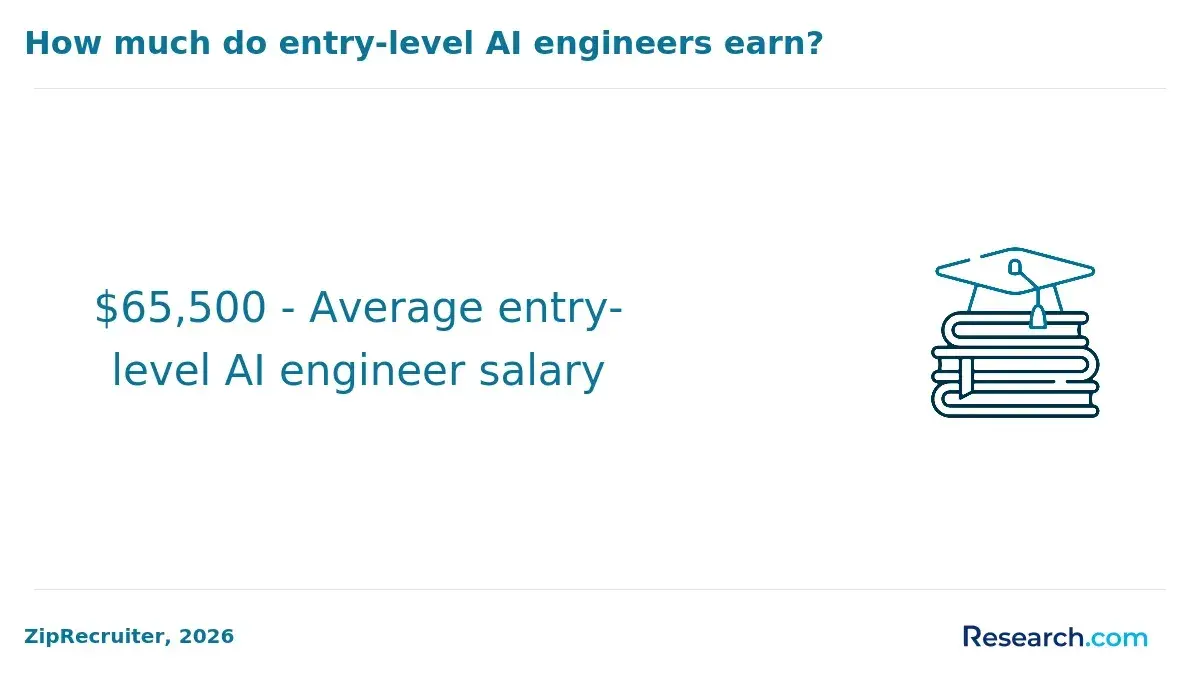
Starting salaries for college graduates entering artificial intelligence fields in 2026 typically range from $85,000 to $120,000 annually, influenced by specialization and location. Entry-level AI research scientists at major tech companies often begin near $100,000, while AI software engineers may start closer to $90,000. Professionals skilled in machine learning, natural language processing, or computer vision generally command higher initial pay. Graduates working in tech hubs like Silicon Valley or New York City can expect salaries at the upper end due to market demand and cost of living.
Long-term earning potential is substantial. Senior AI engineers, data scientists, or AI architects often earn $200,000 or more after 5-7 years, while AI leadership roles such as chief AI officers or research directors frequently surpass $300,000 with bonuses and equity. The demand for AI talent continues to outpace traditional IT roles by more than 2:1, with AI-focused positions driving most net new headcount growth in tech, information, and media sectors.
Industries like healthcare, finance, and automotive are rapidly increasing AI integration, offering competitive salaries comparable to tech firms. Prospective AI professionals benefit from developing programming skills like Python, understanding cloud technologies, and gaining expertise in data engineering. Continuous upskilling and specialization are essential to maximize earning potential and career growth.
What is the job outlook, industry demand, and career advancement path in AI fields?
Jobs in artificial intelligence are growing rapidly, with machine learning engineer among the top three fastest-growing roles for early-career professionals. This growth spans industries such as technology, healthcare, finance, and automotive, all increasingly dependent on AI integration. Demand is high for candidates skilled in machine learning, data science, natural language processing, and computer vision.
Key technical skills include proficiency in frameworks like TensorFlow and PyTorch, alongside programming languages such as Python and R. Candidates who combine strong coding abilities with domain expertise and problem-solving skills are highly sought after. Competition remains strong, but those committed to continual learning have an advantage.
The typical career path starts with entry-level roles such as data analyst or junior machine learning engineer. Experience gained in building models, cleaning data, and deploying systems can lead to mid-level positions like AI specialist or research scientist. With around five to seven years of experience, professionals often move into senior engineer, AI architect, or team lead roles, influencing project direction and innovation. Leadership can extend to product management and AI consultancy.
Ongoing skill development is essential due to rapidly evolving algorithms and hardware. Staying updated with emerging trends and research breakthroughs ensures a competitive edge in this dynamic field.
Other Things You Should Know About Artificial Intelligence
Artificial intelligence is transforming multiple industries, with significant impacts in healthcare, finance, automotive, and retail. In healthcare, AI improves diagnostics and personalized treatment plans. Finance uses AI for fraud detection and algorithmic trading, while automotive relies heavily on AI for autonomous vehicles. Retail benefits through AI-driven customer insights and supply chain optimization.
Programming knowledge is essential for most careers in artificial intelligence. Proficiency in languages like Python, R, or Java allows professionals to build and implement AI models effectively. Understanding programming concepts also helps in data manipulation, model training, and deploying AI solutions across various platforms.
Ethical considerations in artificial intelligence include ensuring fairness, transparency, and accountability in AI systems. Avoiding bias in data sets and algorithms is crucial to prevent discriminatory outcomes. Additionally, respecting user privacy and securing sensitive information are fundamental ethical priorities in AI development.
Programming knowledge is crucial for graduates entering AI careers in 2027. Core languages such as Python, R, and Java are essential for developing algorithms and models. Strong programming skills enhance problem-solving capabilities, enabling graduates to adapt to evolving technologies and contribute meaningfully to AI projects.
In 2027, college graduates typically need a blend of technical skills in programming, statistics, and machine learning, alongside soft skills like critical thinking and problem-solving. For those from non-technical backgrounds, exploring the best AI master’s programs for non-technical students can provide pathways into AI roles.
References
- 5 Benefits of an Online AI MS Degree | University of Bridgeport https://www.bridgeport.edu/news/benefits-of-online-ms-ai-degree/
- 16 Artificial Intelligence Career Paths https://www.calmu.edu/news/artificial-intelligence-career-paths
- Is AI to blame for hiring woes faced by college graduates? https://abcnews.com/Business/ai-blame-hiring-woes-faced-college-graduates/story
- AI career paths: 2026 job guide https://www.pluralsight.com/resources/blog/ai-and-data/ai-career-guide-2025
- Accreditation Explained: Guidelines for Global Verification https://www.motaword.com/blog/understanding-accreditation-how-to-verify-institutions-globally
- Unlock Career Opportunities in Artificial Intelligence https://a1globalcollege.ca/step-into-the-future-unlock-career-opportunities-in-artificial-intelligence/
- Top Artificial Intelligence Courses: Fees and Duration https://collegevidya.com/blog/artificial-intelligence-course-fees-structure-duration/
- Blog https://admissiongoals.com/post/ai-machine-learning-programs-europe-admission-guide-international-students
- Accreditation and AI: Ensuring Quality in an Era of Smart Learning https://www.qahe.org/article/accreditation-and-ai-ensuring-quality-in-an-era-of-smart-learning/
- University Degree vs AI Bootcamp: Which is Best Career Path? https://agilefever.com/university-degree-vs-ai-bootcamp-which-is-best/