2027 How Many Credits Do You Need for an AI Bachelor's Degree?

Co-Founder and Chief Data Scientist
Many prospective students face uncertainty about how many credits they need to earn a bachelor's degree in Artificial Intelligence. This confusion often arises when switching from unrelated fields or considering flexible program options. Understanding credit requirements is crucial for planning time and financial commitments effectively. Without clear knowledge, students risk enrolling in programs that do not align with their career goals or extend their study period unnecessarily. This article clarifies typical credit expectations for AI bachelor's degrees in 2026 and guides readers through accredited and flexible pathways to enter the Artificial Intelligence industry efficiently.
Key Things You Should Know
- Bachelor's degrees in artificial intelligence typically require between 120 and 130 total credits, combining core AI courses, mathematics, and electives.
- Most programs include around 40 to 50 credits of specialized AI topics such as machine learning, data science, and robotics, reflecting industry demands.
- General education and foundational courses account for approximately one-third of credits, ensuring a well-rounded skill set alongside technical expertise.
How many credit hours are required to complete a bachelor's degree in artificial intelligence?
The credit hours required to complete a bachelor's degree in artificial intelligence typically range from 120 to 132 credits. Most U.S. programs follow a standard of around 120 credits, which aligns with general bachelor's degree requirements. These credits include core coursework in computer science fundamentals, data science, machine learning, algorithms, and ethical considerations within artificial intelligence, often totaling 40-60 credits. The remaining credits cover general education requirements in subjects like humanities, mathematics, and communication.
Specialized artificial intelligence bachelor's programs may demand additional credits, up to 132, especially when including advanced topics such as robotics, natural language processing, or AI system design. Some universities also require capstone projects or internships that add practical experience and increase total credit hours. Knowing how many credit hours for a bachelor's degree in artificial intelligence helps students plan their academic path and manage program length, which usually spans four years of full-time study.
Meeting these required credits to complete an artificial intelligence bachelor's program is essential for accreditation and eligibility for graduate studies or professional certifications. Prospective students should verify specific credit requirements at their chosen institutions since curricula vary.
For insights on career paths after graduation, consult resources like artificial intelligence degree jobs.
What is the typical length and timeline for earning an AI bachelor's degree?
The typical credit requirements for an AI bachelor's degree involve about 120 to 130 credit hours, generally completed over four years of full-time study. This timeline closely matches standard undergraduate degrees in the U.S., though AI and other STEM programs often require a strict sequence of prerequisite courses in mathematics, programming, and statistics before students can tackle core artificial intelligence topics. These prerequisites can extend the average time to complete an artificial intelligence bachelor's program beyond the usual four years.
According to the U.S. Bureau of Labor Statistics, only 56% of full-time bachelor's students graduate within four years, with the rate being somewhat lower for AI students due to these rigorous requirements. To stay on track, students need to carefully balance their AI coursework alongside general education obligations. Part-time enrollment or simultaneous work-study commitments may extend this timeline to five years or more.
Some universities offer accelerated tracks or combined degree programs allowing students to earn both a bachelor's and a master's in artificial intelligence within five years. Others provide flexible options through online or evening courses, which may lengthen completion time but better accommodate working professionals. Prospective students should research credit transfer policies, course availability, and program structures to estimate their personal timeline accurately. For insights on affordable options, see the data science rankings.
What core courses and technical subjects are included in an AI bachelor's degree curriculum?
An AI bachelor degree curriculum centers on core courses and technical subjects in artificial intelligence curriculum that build expertise in foundational computing and AI specialties. According to the Association for Computing Machinery (ACM) 2024 guidelines, about 30-40 credit hours-around 25-33% of the total-focus specifically on AI and machine learning topics. These include machine learning algorithms, natural language processing, computer vision, robotics, and AI ethics. Students gain practical skills in designing, training, and assessing AI models.
Mathematics and programming form a crucial foundation beyond direct AI topics. Essential math courses cover linear algebra, calculus, probability, statistics, and discrete mathematics, which support understanding complex algorithms and data structures key to AI. Programming instruction often involves languages like Python, Java, or C++, with an emphasis on software engineering and data manipulation principles.
General education complements technical training with communication, critical thinking, and ethics, preparing students to appreciate AI's societal impact. Electives may include data science, cognitive science, or domain-specific AI applications such as healthcare or finance. Curriculum variations exist across schools but share a blend of theory and practice that aligns with industry demands. Prospective learners may also explore programs in related fields; for example, a game development degree online can offer overlapping skills relevant to AI applications in interactive media.
What are the admission requirements for AI bachelor's degree programs?
Admission requirements for AI bachelor's degree programs in the United States prioritize strong academic credentials, particularly in mathematics, science, and technology. Competitive programs typically expect applicants to have completed advanced coursework, including calculus, statistics, and foundational computer science classes. SAT scores above 1450 and GPAs around 3.8 or higher are common benchmarks, reflecting rigorous STEM admissions standards.
Applicants usually need to submit standardized test scores, although some schools have adopted test-optional policies. Strong quantitative and verbal abilities remain vital, complemented by letters of recommendation from math or science teachers and personal statements showcasing technical interests. Participation in extracurriculars like coding clubs, robotics teams, or AI research projects can significantly strengthen applications. These details are important in understanding AI bachelor's degree application criteria and prerequisites.
Some institutions require specific prerequisites such as programming experience in languages like Python or Java or portfolios featuring coding projects and hackathons. Community college transfer students should verify equivalency requirements, including successful completion of core STEM classes with grades above a B. Diverse pathways exist, but academic rigor with demonstrated passion for technology tends to be prioritized in these applicant pools.
Prospective students interested in related fields might explore flexible options like a master data science online program, which can complement or advance careers in artificial intelligence and data-focused disciplines.
How do online AI bachelor's degrees compare to campus-based programs in terms of credits and structure?
Online AI bachelor's degree programs typically require 120 to 128 credit hours, matching the credit demands of campus-based programs. This parity ensures students receive an equal level of academic rigor regardless of format. The main distinction is in flexibility and program design. Online degrees often offer asynchronous courses, extended deadlines, and year-round enrollment options, which cater especially to working professionals or those with personal commitments.
Campus-based AI programs adhere to fixed semester schedules with in-person attendance, emphasizing hands-on labs, group work, and on-site networking. While these components provide immersive experiences, they also require strict time commitments. Online options use virtual labs and remote collaboration tools to replicate these opportunities, though some programs may still mandate occasional on-campus residencies or exams.
Enrollment in online STEM fields, including AI, has risen by 34% from 2022 to 2024, underscoring the growing recognition of remote learning's quality. For students juggling jobs or family, online programs provide the flexibility to complete credits over a longer period. Those seeking a traditional campus environment may value structured schedules and direct social engagement.
Choosing between online and campus AI degrees depends on individual learning preferences, career aims, and available time, with both formats maintaining consistent credit requirements but differing mainly in delivery style and scheduling flexibility.
What accreditation standards apply to AI bachelor's degree programs in the United States?
In the United States, accreditation of AI bachelor's degree programs largely depends on specialized and regional agencies. The Accreditation Board for Engineering and Technology (ABET) plays a crucial role by ensuring computing, engineering, and technology programs meet strict quality standards, including curriculum, faculty qualifications, and institutional support geared toward artificial intelligence education.
Currently, only 42% of U.S. computer science and AI bachelor's programs are ABET-accredited. This figure is rising as AI curricula become more standardized and industry demand grows. Choosing an ABET-accredited program offers students confidence that their education aligns with professional standards and eases paths to certification and graduate studies.
Regional accrediting bodies, such as the Middle States Commission on Higher Education and the Higher Learning Commission, assess overall institutional quality but do not focus specifically on AI curricula. Additionally, computing organizations like the Association for Computing Machinery (ACM) recommend curriculum guidelines without providing formal accreditation.
Prospective students should verify accreditation status through both institutions and ABET's official database, since unaccredited programs may face recognition challenges from employers and graduate schools. Accreditation impacts credit transferability, access to federal financial aid, and professional degree recognition, making it an essential consideration when selecting a program.
What is the average cost of an AI bachelor's degree, and what factors affect tuition?
The cost of earning a bachelor's degree focused on artificial intelligence varies widely by institution and program type. According to the College Board's 2024 Trends in College Pricing report, private universities average about $288,000 for a four-year AI or computer science degree, while public in-state programs cost around $104,000. Specializations in AI typically add 8-15% more to the tuition compared to standard computer science degrees, reflecting the advanced curriculum and specialized resources required.
Tuition differences are influenced mainly by whether a school is public or private and the student's residency status. Private institutions usually charge higher tuition but may provide greater access to cutting-edge AI research facilities and faculty expertise. Public universities offer lower tuition to in-state students, while out-of-state students often pay significantly more. Programs with deeper AI focus, including specialized tracks, labs, and project-based learning, tend to increase overall costs.
Additional expenses include textbooks, software licenses, and AI-specific hardware such as GPUs or cloud computing access, which some hands-on programs require. Financial aid, scholarships, and cooperative education opportunities may help offset these expenses, allowing students to better manage the total cost.
What career paths and job roles are available after completing an AI bachelor's degree?
Graduates holding a bachelor's degree in artificial intelligence find opportunities across more than 15 industries, according to data from the U.S. Bureau of Labor Statistics. Software development is the largest sector, employing 28% of these graduates. Roles here focus on creating AI-driven applications, automating workflows, and embedding machine learning algorithms into scalable products.
Data science careers attract 22% of AI degree holders. These roles demand proficiency in statistics, programming, and data visualization to analyze large datasets, generate insights, and develop predictive models. Fields like finance, healthcare, and marketing increasingly depend on such expertise for strategic decisions.
Machine learning engineering accounts for 18% of AI bachelor graduates' employment. Professionals in this segment focus on building, testing, and refining machine learning models, requiring both software engineering skills and deep algorithmic knowledge to maintain performance in live systems.
A growing area involves AI ethics and responsible AI, representing 12% of job placements. Experts in this field develop ethical frameworks, address bias mitigation, privacy issues, and ensure compliance with evolving regulations amid rising societal and industry demands.
Additional career paths include roles as AI research assistants, robotics engineers, AI product managers, and AI consultants. Aspiring students should prioritize developing skills in programming, algorithm design, and ethical AI considerations to enhance versatility and competitiveness in the expanding job market.
What is the job outlook and salary potential for AI bachelor's degree graduates?
Computer and information research scientists focusing on artificial intelligence enjoy a robust job market, with a projected growth rate of 23% from 2023 to 2033, significantly outpacing the overall average of 5%. This trend reflects the rising demand for AI expertise in sectors such as technology, healthcare, finance, and robotics. Median salaries for AI researchers reached $136,620 annually as of May 2023, though entry-level roles typically range from $80,000 to $100,000. Experienced professionals with skills in machine learning, natural language processing, or computer vision often command salaries well above six figures.
Opportunities extend beyond research to roles like AI software engineering, data science, and AI ethics, each offering competitive pay. Geographic hubs such as Silicon Valley, New York, and Seattle offer higher wages, balanced by greater living costs, while growing remote work options provide flexibility in location. Building a strong foundation in programming languages like Python and AI frameworks like TensorFlow, alongside internship experience, significantly boosts employability and earning potential. Continuous learning is essential to keep pace with rapid field advancements.
Are there professional certifications or licensing requirements beyond the AI bachelor's degree?
Bachelor's degrees in artificial intelligence typically do not require professional certifications or licensing in most U.S. industries. However, many graduates pursue additional certifications to remain competitive and showcase specialized skills in a rapidly evolving field. Surveys from IEEE and Computing Careers reveal that 67% of AI professionals obtain supplemental certifications within five years of graduation. These certifications often emphasize cloud platforms, machine learning techniques, and ethical AI practices.
Popular credentials include the Google Cloud Certified Machine Learning Engineer and AWS Certified Machine Learning Specialty, which validate expertise in deploying AI models on cloud infrastructure and optimizing machine learning workloads. Certifications focused on AI ethics are increasingly important as organizations prioritize transparency, bias mitigation, and data privacy. Unlike regulated professions, AI lacks mandatory licensing bodies, so employers look for demonstrated expertise through certifications, advanced degrees, or documented projects.
Candidates interested in specialized fields like natural language processing or robotics can benefit from targeted certificates in those areas. Graduates and working professionals should assess their career goals and the job market to select certifications that align with their paths. Maintaining current certifications helps ensure skills remain relevant in this dynamic industry and can improve hiring prospects and salary potential.
Other Things You Should Know About Artificial Intelligence
In 2027, a bachelor's degree in AI typically requires completion of around 120 to 130 credit hours. These credits often include core AI subjects, electives, and general education courses. Credit requirements may vary slightly by institution or program, so checking specific university guidelines is advised.
Yes, interdisciplinary studies can significantly enhance the value of an AI degree. Combining AI knowledge with fields such as data science, cognitive science, robotics, or ethics prepares students for diverse roles and emerging challenges in AI development and deployment. This broader educational approach supports adaptability across multiple industries.
Hands-on experience is vital in an AI bachelor's degree as it reinforces theoretical learning through practical application. Internships, research projects, and lab work provide opportunities to work with real datasets and AI models, which improves skills and employability. Many programs incorporate capstone projects that require building or improving AI systems.
AI bachelor's degree curricula are regularly reviewed and updated to keep pace with rapid advances in technology and research. Universities often collaborate with industry experts to incorporate the latest tools, frameworks, and ethical considerations. This ensures that graduates remain competitive and well-prepared for current and future AI challenges.
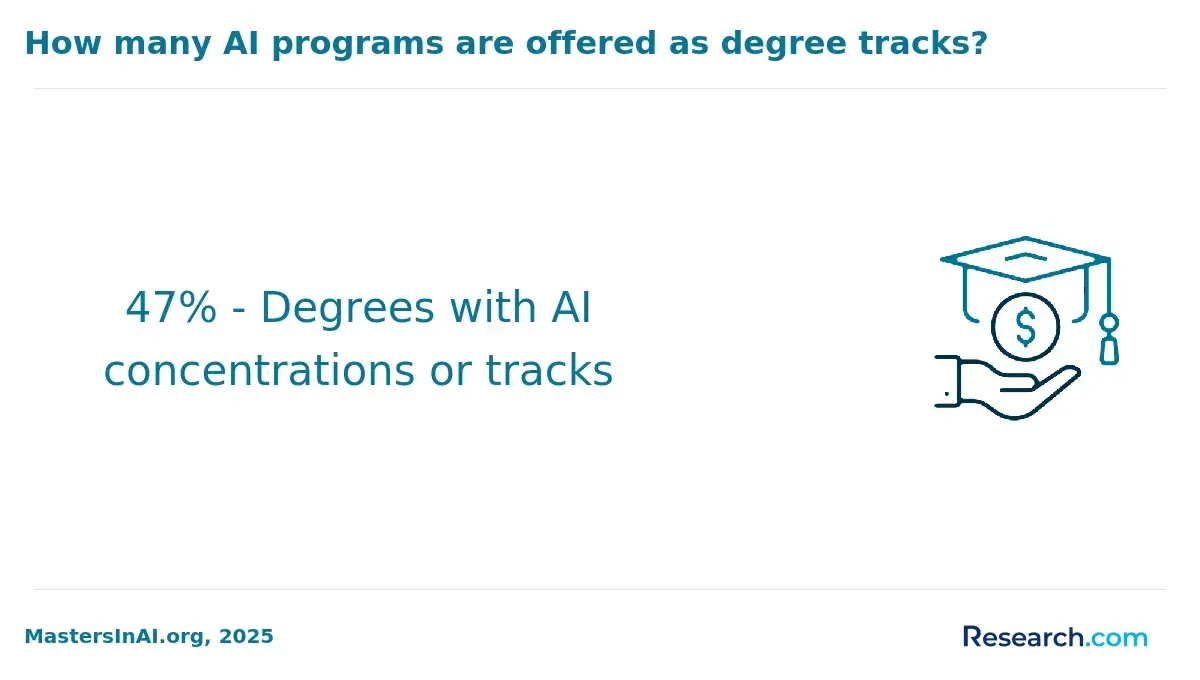
Yes, many institutions offer specialized tracks in AI bachelor's programs to cater to specific career paths. Students can choose focuses like AI for healthcare, robotics, or finance. To pursue a career in finance, one might consider an AI finance degree option for further specialization.
References
- The Cost Implications of AI in Postsecondary Education | HESA https://higheredstrategy.com/the-cost-implications-of-ai-in-postsecondary-education/
- 16 Artificial Intelligence Career Paths https://www.calmu.edu/news/artificial-intelligence-career-paths
- ABET Accreditation and Artificial Intelligence - ABET https://www.abet.org/accreditation/ai-policy/
- A Complete 4-Year Course Plan for an Artificial Intelligence Undergraduate Degree https://www.mihaileric.com/posts/complete-artificial-intelligence-undergraduate-course-plan/
- International Bachelor of Science in AI https://psl.eu/en/education/international-bachelor-science-ai
- University Degree vs AI Bootcamp: Which is Best Career Path? https://agilefever.com/university-degree-vs-ai-bootcamp-which-is-best/
- Bachelor in Management and Artificial Intelligence https://www.kozminski.edu.pl/en/programs/undergraduate-programs-bachelor/bachelor-management-and-artificial-intelligence
- Certification vs Degree: Which Holds More Weight in Tech? - ONLC https://www.onlc.com/blog/certification-vs-degree-in-tech/
- How Long Does It Take to Become Job-Ready in Artificial Intelligence? https://www.h2kinfosys.com/blog/how-long-does-it-take-to-become-job-ready-in-artificial-intelligence/
- Artificial Intelligence Programs https://www.collegeevaluator.com/majors/artificial-intelligence/