2027 AI Master's Degree Careers in Insurance

Co-Founder and Chief Data Scientist
Insurance companies increasingly rely on advanced technologies to assess risk, detect fraud, and personalize policies. However, many professionals without technical backgrounds struggle to enter this evolving field. This creates a gap between industry demand and qualified talent in AI-driven insurance roles. For individuals with unrelated undergraduate degrees, navigating a career pivot can be challenging without targeted education.
This article explores the current landscape of master's degrees in artificial intelligence tailored to insurance careers in 2027. It highlights flexible, accredited programs that help professionals develop relevant skills and effectively transition into AI-focused roles within the insurance industry.
Key Things You Should Know
- By 2026, over 60% of insurance firms plan to expand roles requiring master's-level expertise in artificial intelligence to enhance risk assessment and fraud detection accuracy.
- Graduates with AI master's degrees have a median starting salary of $95,000 in insurance, reflecting a 12% increase from 2024 due to growing data-driven decision needs.
- Specialization in machine learning and predictive analytics is crucial, with 78% of employers prioritizing candidates who can deploy AI models for claims processing automation.
What career roles are available for graduates with an AI Master's degree in the insurance industry?
Graduates with a master's degree in artificial intelligence have access to diverse roles within the insurance sector. Key positions include machine learning engineer, predictive analytics specialist, and AI strategy consultant, all focused on enhancing risk assessment, claims automation, and customer experience. These insurance industry roles for AI master's graduates often involve designing algorithms that detect fraud or predict policyholder behavior through large dataset analysis.
Predictive analytics specialists use statistical models to improve risk forecasting, helping insurers offer tailored premiums while reducing losses. Meanwhile, AI strategy consultants help companies integrate AI solutions smoothly into their workflows while maintaining regulatory compliance and operational efficiency. Data scientists skilled in natural language processing are increasingly important for automating claims documentation and customer communication.
Approximately 35% of insurance companies have integrated AI into key underwriting and claims processes, indicating strong demand for AI career opportunities in insurance industry. Graduates aiming for leadership might pursue roles such as AI product manager or director of AI solutions, where technical expertise meets business strategy to guide AI deployment aligned with company goals and data privacy rules.
Experience with AI frameworks like TensorFlow and PyTorch, along with knowledge of insurance-specific datasets, boosts employability. Continuous learning in emerging technologies like generative AI and explainable AI also supports career growth. For those interested in foundational education, exploring options such as a 2 year computer science degree online can provide a strong technical base.
What is the job outlook and salary potential for AI professionals working in insurance?
The job outlook for AI professionals in the insurance industry is exceptionally strong, with employment for machine learning engineers and AI specialists projected to grow by 36% from 2023 to 2033, according to the U.S. Bureau of Labor Statistics. This growth rate outpaces many other fields, driven by rising demand for AI to enhance risk assessment, fraud detection, claims processing, and customer service automation. The job outlook for ai professionals in insurance industry reflects the sector's increasing reliance on advanced technology.
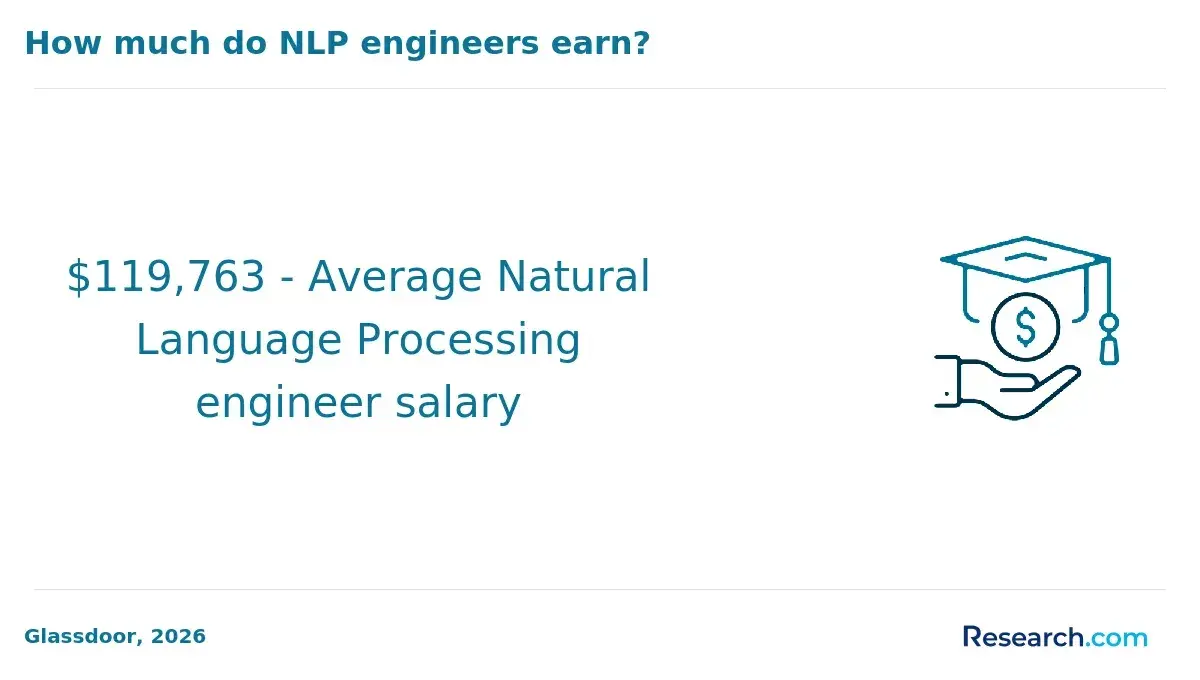
Median salaries for AI specialists in insurance reach around $156,000 annually, as reported by Glassdoor. Professionals skilled in areas such as natural language processing, predictive modeling, and computer vision often earn at or above this level, especially in insurance hubs like New York, Chicago, and California. Roles vary widely, from AI data scientists and actuaries to AI product managers focusing on algorithm deployment and regulatory compliance.
Certifications in AI techniques and insurance regulations improve both job prospects and salary potential. Graduates interested in this path should gain experience with relevant AI tools such as TensorFlow, Python, and cloud computing platforms. Networking and internships with firms adopting AI technology support faster career growth.
Given the strong growth and lucrative salaries, investing in an AI master's degree tailored to insurance applications offers a solid future. For those exploring education options, considering programs like the cheapest mechanical engineering degree online can provide insight into affordable advanced degree pathways. This strategic education choice can benefit those aiming to boost both expertise and earning power in the expanding field of ai careers in insurance salary and growth.
What are the core curriculum requirements and coursework in an AI Master's program designed for insurance applications?
Core curriculum for AI master's degree in insurance typically blends technical AI fundamentals with insurance industry applications. Students complete coursework requirements in AI programs for insurance careers that cover machine learning, data science, neural networks, and natural language processing. This foundation equips learners to manage large datasets, develop predictive models, and build automation systems tailored to insurance processes.
Specialized coursework focuses on practical applications such as claims automation, fraud detection, and risk assessment. For instance, claims automation courses train students to create systems that expedite claims evaluation, cutting down processing times and costs. Fraud detection involves anomaly detection and pattern recognition techniques to spot suspicious activity promptly. Risk assessment studies emphasize predictive modeling to enhance underwriting precision and portfolio risk management.
A survey by the Association of American Universities found that 78% of AI master's programs now integrate insurance-specific modules, underscoring growing industry relevance. Many programs also offer electives on regulatory compliance, explainable AI, and ethics, ensuring graduates understand legal and transparency demands. Hands-on labs and partnerships with insurance firms further enhance readiness for AI-driven roles in underwriting, policy pricing, and fraud analytics.
Students seeking affordable options can explore the cheapest online master's in artificial intelligence programs, which often include tailored insurance components and practical experiences for career advancement.
Which accredited universities offer AI Master's degrees with specialization or focus in insurance?
Several accredited universities offer master's degrees in artificial intelligence with a focus on insurance. According to the 2024 QS World University Rankings for AI and Data Science, 23 top-tier institutions provide specialized AI master's programs integrated with insurance industry partnerships. Notable examples include Carnegie Mellon University, the Massachusetts Institute of Technology (MIT), and Stanford University. These programs collaborate with insurance companies to offer real-world datasets, internships, and applied research tailored to the insurance sector.
Carnegie Mellon's Master of Science in Artificial Intelligence and Innovation features courses in risk modeling, predictive analytics, and fraud detection for insurance applications. MIT's AI and Data Science for Finance and Insurance program emphasizes algorithmic decision-making and automated underwriting processes. Stanford's AI Lab promotes interdisciplinary studies combining machine learning, actuarial science, and insurance analytics, supporting insurance-focused capstone projects and industry engagement. These programs are among the top universities with AI master's programs focused on insurance.
Other institutions, such as the University of Pennsylvania and Columbia University, include insurance-specific electives within their AI master's degrees in data science or operations research. These electives address needs like claims management automation and insurance pricing optimization. Prospective students should confirm whether their curriculum explicitly targets insurance or offers relevant electives and projects.
The presence of insurance partnerships enhances graduate employability in underwriting, risk assessment, and claims processing. Candidates should identify programs with strong university-industry collaboration to gain applied skills. For those interested in affordable options, exploring MS Data Science online programs may also be beneficial.
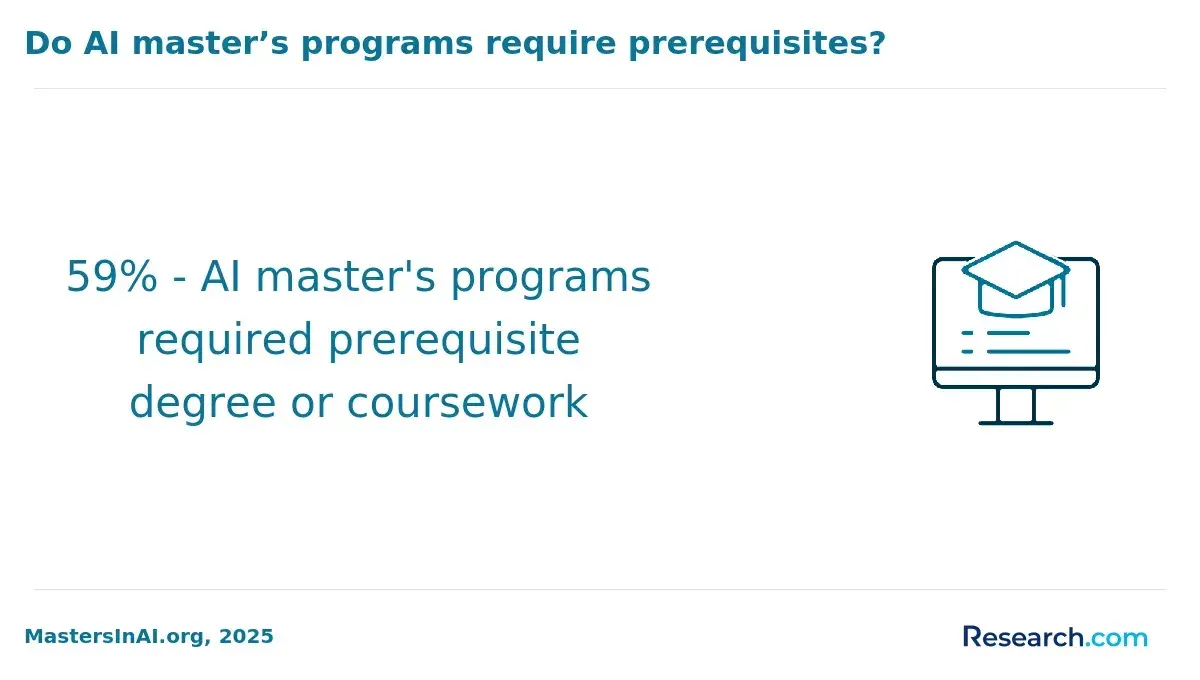
What are the admission requirements and prerequisites for entering an AI Master's program?
Admission to AI master's programs typically requires a bachelor's degree in computer science, engineering, mathematics, statistics, or related STEM fields, with many programs seeking applicants who have a minimum GPA of 3.5. The Graduate Management Admission Council's 2024 data shows that successful candidates average a GPA of 3.6 and GRE quantitative scores above 160. Some programs also accept degrees in adjacent areas such as economics or physics, provided prerequisite courses in programming, calculus, and linear algebra have been completed.
GRE scores, particularly in the quantitative section, are often required, although some programs waive this for applicants with significant relevant work experience. About 68% of admitted students bring professional experience in technology or finance, highlighting the value of practical skills. Work experience supported by machine learning, data analytics, or software development projects can notably strengthen an application.
Letters of recommendation typically come from professors or industry supervisors, focusing on analytical ability, independence, and project experience. A personal statement should clearly express career goals, technical expertise, and reasons for pursuing AI specialization. Some programs may request coding samples or technical assessments during admissions.
International applicants often must submit TOEFL or IELTS scores to demonstrate English proficiency. Those without a strong programming background should consider prerequisite courses or boot camps to meet foundational expectations before applying.
How do online AI Master's programs compare to campus-based options for working professionals in insurance?
Online AI master's programs offer significant advantages for insurance professionals balancing work and family life due to their flexibility. Research from the National Center for Education Statistics shows 62% of insurance workers prefer online study, valuing the ability to complete coursework asynchronously without disrupting daily responsibilities. These programs increasingly include live virtual labs, interactive case studies, and industry projects focused on insurance AI applications.
Graduates from online programs report a 94% job placement rate, comparable to campus-based cohorts, highlighting growing employer acceptance of online degrees in the insurance sector. Campus programs may still appeal to those seeking immersive, face-to-face collaboration and direct access to on-campus resources like faculty and career services. However, for many working professionals, lengthy commutes and rigid schedules limit their feasibility.
Hybrid formats, combining in-person workshops with online lectures, provide a balanced option that preserves networking opportunities without sacrificing flexibility. When choosing a program, accreditation and curriculum relevance to underwriting, claims analytics, or risk assessment are critical. Access to specialized software and real-world AI problem-solving experiences aligned with insurance enhances career prospects.
Ultimately, online AI master's degrees offer essential credentials and outcomes comparable to traditional options while fitting the demanding schedules of employed insurance professionals.
How long does it take to complete an AI Master's degree, and what are the typical program costs?
Completing a master's degree in artificial intelligence generally takes 18 to 24 months full time. Part-time options extend this to 3 to 4 years, allowing working professionals to balance their studies with careers. Tuition costs for these programs range between $45,000 and $120,000, according to a 2024 report by The Chronicle of Higher Education.
Full-time students typically finish coursework, projects, and theses within two academic years, especially in programs offering three semesters annually. Part-time study suits insurance professionals or others needing flexibility but lengthens the program duration. Additional expenses such as fees, materials, and potential lost income during full-time study should be considered.
The Chronicle highlights a 4.2-year return on investment for insurance professionals earning an AI master's degree, indicating that increased earnings usually offset education costs in just over four years after graduation. Prospective students may also explore online programs, scholarships, or employer tuition reimbursement options to reduce costs or accelerate completion.
Verifying program accreditation and how well the curriculum applies to insurance sector AI roles remains vital. These time and cost factors offer valuable guidance for candidates planning educational and career advancement in artificial intelligence.
What industry certifications or professional credentials complement an AI Master's degree in insurance?
Industry certifications such as AWS Certified Machine Learning - Specialty and Google Professional Machine Learning Engineer are highly sought after by professionals with an AI master's degree aiming for careers in insurance. These credentials demonstrate expertise in deploying scalable machine learning models on cloud platforms, an essential capability as insurers increasingly rely on cloud-based AI to improve underwriting, claims processing, and fraud detection. According to LinkedIn's 2024 Skills Report, graduates with AI master's degrees who earn these certifications typically see an 18-22% salary increase and reduce job search time by about six months.
In addition to cloud certifications, credentials in data privacy and cybersecurity like Certified Information Systems Security Professional (CISSP) are crucial for ensuring compliance with regulations such as HIPAA and GDPR. These are especially valuable for risk management roles that require safeguarding sensitive insurance data while implementing AI-driven analytics. Furthermore, industry-specific designations like Chartered Property Casualty Underwriter (CPCU) combine insurance expertise with analytics skills, enhancing domain knowledge.
Certifications in data science and AI ethics, including Certified Analytics Professional (CAP) or recognized AI ethics programs, help build trust in AI outputs and improve governance in automated insurance processes. Aligning certifications with targeted roles-whether machine learning engineering, risk analytics, or compliance-strengthens skillsets and improves competitiveness in evolving insurance markets.
What technical skills and mathematical background do students need before enrolling in an AI Master's program?
Students entering an AI master's program in 2026 need a solid foundation in key technical and mathematical skills. Programming proficiency in languages like Python, R, or Java is essential to implement machine learning algorithms and manage large datasets. An understanding of data structures, algorithms, and software engineering principles improves practical problem-solving, particularly for insurance applications such as fraud detection and risk assessment.
A strong grasp of linear algebra, including matrices, vectors, eigenvalues, and eigenvectors, is crucial as these underpin neural networks and dimensionality reduction. Probability theory and statistics-covering distributions, Bayesian inference, hypothesis testing, and regression-help model uncertainty and enhance predictive accuracy. Calculus, especially differentiation and integration, supports optimization methods used in training AI models.
Research from the American Statistical Association shows 41% of AI master's students needed remedial courses in linear algebra and probability, revealing a gap in preparedness. Prospective students, especially those from non-technical backgrounds, should consider bridging programs or self-study to avoid falling behind.
Additional valuable skills include database and SQL knowledge, cloud computing experience, and familiarity with machine learning frameworks like TensorFlow or PyTorch. These abilities enable students to address real-world insurance challenges, optimizing claim processing and risk modeling through AI.
How should prospective students evaluate and compare AI Master's programs for quality, reputation, and career outcomes?
Transparency in career outcomes is vital when evaluating AI master's programs. Only 34% of these programs publicly share graduate employment rates and salary data, according to the National Association for College Admission Counseling. Verified employment statistics, such as job placement in relevant industries, average salaries, and time to employment, provide valuable insight into a program's real-world value.
Reputation also plays a key role. Prospective students should assess faculty expertise, research output, and industry partnerships. Programs affiliated with leading tech companies or insurance firms often offer direct networking and internship opportunities. Alumni career trajectories on professional platforms like LinkedIn can offer additional perspective on program quality within the insurance AI sector.
Curriculum quality and flexibility are important, too. Core courses should cover machine learning, data analytics, and ethical AI applications tailored to insurance challenges such as risk assessment and fraud detection. Hands-on projects with industry sponsors further demonstrate practical training.
Accreditation must be verified-regional accreditation and recognition by educational bodies ensure smoother certification and licensing for graduates.
Program delivery options-full-time, part-time, or online-impact ongoing employment. Working professionals often prefer flexible schedules to balance work and education. It is also wise to compare financial aid and total costs to evaluate affordability and value.
Other Things You Should Know About Artificial Intelligence
In 2027, AI master's graduates in the insurance industry can explore roles such as AI specialists, data scientists focusing on risk analysis, machine learning engineers developing predictive models, and compliance officers ensuring ethical AI usage. These roles involve leveraging AI to enhance efficiency, accuracy, and decision-making within the insurance sector.
Ethical considerations include ensuring transparency in AI decision-making, preventing bias in risk assessments, and protecting customer data privacy. Insurers must address these issues to maintain fairness and regulatory compliance while deploying AI technologies.
AI enhances risk assessment by analyzing complex datasets such as behavioral patterns, claims history, and external factors like weather. This allows insurance companies to more accurately evaluate potential risks and customize policies, leading to better pricing and reduced losses.
No, a separate insurance license is usually not required for analytics roles, but many employers prefer certifications such as AINS or CPCU for underwriting and claims-track jobs. In 2027, a master’s degree plus SQL, Python, and regulatory knowledge is commonly enough for entry-level AI insurance roles.
References
- Why use AI? A transformative tool for universities and recruitment partners https://www.airc-education.org/why-use-ai-a-transformative-tool-for-universities-and-recruitment-partners
- The most future-proof IT degree programs that won’t be replaced by AI. https://itcompare.pl/en-us/articles/68/the-most-futureproof-it-degree-programs-that-won-t-be-replaced-by-ai
- 25 Best Master's in AI Programs - MastersInAI.org https://www.mastersinai.org/degrees/best-masters-in-artificial-intelligence/
- Cogent | Blog | The Impact of AI on Future Insurance Sector https://cogentinfo.com/resources/the-impact-of-ai-on-future-insurance-sector
- AI Upskilling in Insurance: Boosting careers and building business https://www.rgare.com/knowledge-center/article/ai-upskilling-in-insurance--boosting-careers-and-building-business
- How Long Does it Take to Get a Master’s Degree? https://www.aiuniv.edu/degrees/business/articles/how-long-does-it-take-to-get-a-masters-degree
- AI In Insurance Market Growth Analysis - Size and Forecast 2025-2029 | Technavio https://www.technavio.com/report/ai-in-insurance-market-industry-analysis
- Artificial Intelligence (AI) https://ai-master.org/requirements
- No, AI Will Not Eliminate Insurance Jobs | Liberate https://www.liberateinc.com/blog/ai-will-not-eliminate-insurance-jobs
- The future of AI in the insurance industry https://www.mckinsey.com/industries/financial-services/our-insights/the-future-of-ai-in-the-insurance-industry