2027 Best AI Master's Degrees for Technical Leadership Roles

Co-Founder and Chief Data Scientist
Professionals with backgrounds unrelated to artificial intelligence often face significant hurdles when seeking technical leadership roles in AI-driven industries. Many programs lack the flexibility or accreditation that working adults require, complicating career transitions. Identifying a master's degree that balances rigorous AI training with leadership development is critical for standing out in competitive job markets.
This article evaluates top master's programs tailored to equip learners with both technical expertise and strategic skills, assisting prospective students in selecting a pathway that aligns with their goals and schedules while providing recognized credentials for advancing into AI leadership positions.
Key Things You Should Know
- Master's degrees in artificial intelligence increasingly focus on leadership, blending technical skills with management to meet a 23% projected job growth in AI roles by 2031.
- Top programs emphasize hands-on experience, including AI ethics, cloud computing, and data science, preparing graduates for technical leadership in diverse industries.
- Online and hybrid offerings expanded over 70% from 2024 to 2025, making advanced AI education more accessible for working professionals nationwide.
What are the best AI master's degrees for technical leadership roles?
Top graduate programs in artificial intelligence for leaders merge technical training with strategic, managerial, and ethical expertise. Stanford University's Master of Science in Computer Science with an AI specialization exemplifies this approach, offering advanced courses in machine learning, AI system design, and leadership-driven research projects. Programs designed for technical leadership emphasize interdisciplinary training, including AI ethics, policy, and human-centered AI design.
Other highly regarded degrees, like Carnegie Mellon's Master of Computational Data Science and MIT's AI and Decision Making track, equip students to lead engineering teams by integrating AI methods with leadership skills. Key program features often include:
- Real-world applications blended with AI theory
- Capstone projects emphasizing cross-functional team management
- Industry collaboration opportunities through internships or research
- Advanced coursework in scalable software architecture
Many programs offer flexible formats, such as part-time or online options, to accommodate working professionals without sacrificing academic rigor. Exposure to AI deployment in sectors like healthcare, finance, or autonomous systems also prepares leaders to make informed technical and ethical decisions. For U.S.-based students aiming at senior technical roles, combining applied leadership training with access to cutting-edge research is essential.
Those evaluating career outcomes should consider the applied artificial intelligence salary landscape as part of their decision-making process when selecting the best AI master's degrees for technical leadership.
How do AI master's degrees prepare graduates for technical leadership responsibilities?
AI master's degrees cultivate essential technical leadership skills by blending in-depth knowledge of machine learning, data engineering, and algorithm design with strategic management elements. This equips graduates to lead teams effectively while driving innovation in complex AI environments. A focus on communication, ethical AI, and project management prepares leaders to engage stakeholders and oversee multidisciplinary collaborations.
The impact of artificial intelligence master's education on leadership roles is significant, enabling graduates to translate sophisticated AI concepts into actionable business strategies. Training includes data governance frameworks that help manage privacy risks and ensure compliance with regulatory standards through ethical AI development.
Leadership training within these programs often includes:
- Agile methodologies customized for AI project workflows
- Coordination techniques for interdisciplinary groups including data scientists and software engineers
- Budgeting and resource allocation tailored to AI research and development
This multi-faceted preparation answers the demand highlighted in the World Economic Forum's Future of Jobs Report 2025, which identifies "AI and big data" as the fastest-growing global skill category between 2025 and 2030. Graduates emerge ready for roles such as AI team lead, product manager, or chief technology officer, balancing innovation speed, reliability, and ethics.
Many programs incorporate capstone projects or partnerships with industry, providing real-world leadership experience. Prospective students interested in related STEM fields might also explore a mechanical engineer degree as part of their educational planning.
What careers can you pursue with an AI master's degree in technical leadership?
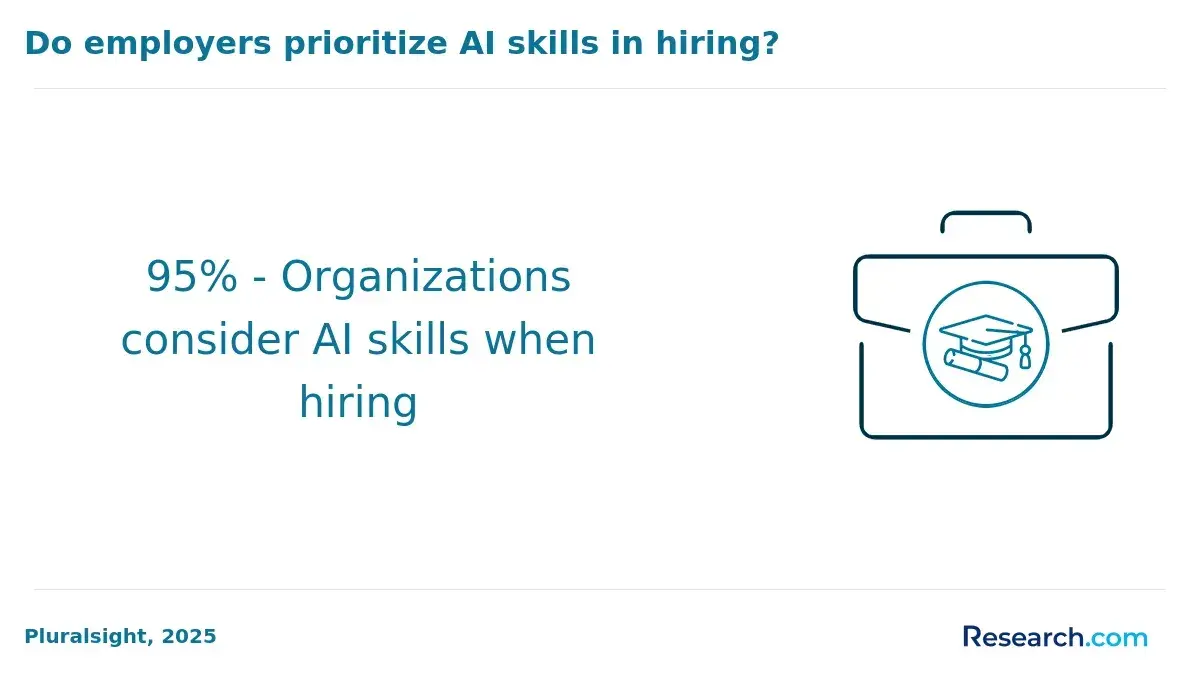
An AI master's degree in technical leadership enables graduates to pursue careers that combine advanced technical skills with management expertise. Common roles include AI project manager, who coordinates teams to develop scalable AI solutions, and technical product manager specialized in AI, aligning machine learning models with business goals. AI technical leads oversee engineering teams to ensure effective algorithm implementation, code quality, and innovation.
Careers in artificial intelligence for technical executives also include senior positions such as chief data officer and AI strategy director, which focus on data governance and long-term AI initiatives. Additionally, roles like AI research scientist or principal machine learning engineer offer opportunities for deep technical work alongside leadership, advancing fields like natural language processing, computer vision, and robotics.
The U.S. Bureau of Labor Statistics projects a 26% employment growth for computer and information research scientists from 2023 to 2033, highlighting demand for AI expertise across academia, government labs, and private R&D. Many graduates transition into consulting, providing strategic advice on AI adoption and ethical deployment in sectors such as healthcare, finance, and manufacturing. Essential skills include team management, AI model lifecycle control, and cross-disciplinary communication.
AI leadership roles in technology management require understanding legal and ethical AI considerations to navigate societal impacts responsibly. Graduates should aim for positions demanding both advanced technical knowledge and strategic decision-making. Prospective students interested in exploring affordable options may consider online AI degrees that fit their career goals.
How do you verify accreditation for AI master's programs in the United States?
To verify accreditation of AI master's programs in the United States, prioritize institutions accredited by federally recognized accreditors listed in the U.S. Department of Education's Database of Accredited Postsecondary Institutions and Programs (DAPIP). Only programs from such formally accredited organizations align with US accreditation standards for AI master's degrees and are reliable for technical leadership roles.
Key steps include:
- Searching the DAPIP website to confirm the institution's current accreditation status.
- Ensuring the accreditor is one recognized by the Department of Education, such as regional accreditors like the Middle States Commission on Higher Education or national ones like the Accrediting Council for Independent Colleges and Schools.
- Verifying the AI master's program is officially offered by the accredited institution.
- Reviewing the institution's website alongside accreditor listings to avoid reliance on outdated claims.
Employers and certification bodies commonly require degrees from accredited programs, particularly in technical fields like AI, as unaccredited degrees may lack acceptance and hinder career advancement. Prospective students should also consult program administrators about current accreditation to confirm compliance with necessary quality standards and leadership competencies in Artificial Intelligence.
For those seeking affordability, it's helpful to explore options such as the cheapest online data science masters, which often follow similar accreditation criteria and serve as a benchmark for value in related AI education paths.
What curriculum and specializations matter most for AI technical leadership roles?
AI technical leadership demands expertise in orchestrating, evaluating, and governing complex AI systems. Industry trends highlight the rise of agentic AI and AI agents, requiring leaders who excel in autonomous system design and integration. Educational programs should emphasize advanced knowledge in multi-agent systems, AI ethics, risk assessment, and human-AI collaboration.
Core technical skills include machine learning theory, reinforcement learning, natural language processing, and AI system architecture. Leaders must not only develop but also deploy AI models in distributed, multi-agent environments. Familiarity with cloud platforms, AI pipelines, and real-time data processing is crucial for effective management.
Key leadership specializations consist of:
- AI governance and policy-understanding regulations and compliance.
- Explainable AI (XAI), focusing on transparency and auditability to build stakeholder trust.
- AI safety and robustness to mitigate system failures and unintended outcomes.
- Project and product management with an AI orientation, managing interdisciplinary teams and AI lifecycles.
Further development in ethical risk assessment and strategic vision for AI deployment fosters well-rounded leaders.
Programs that integrate AI with business strategy, cybersecurity, and data privacy, while offering case studies and collaborative research, give practitioners practical experience to meet enterprise challenges effectively.
What admission requirements do AI master's programs typically have?
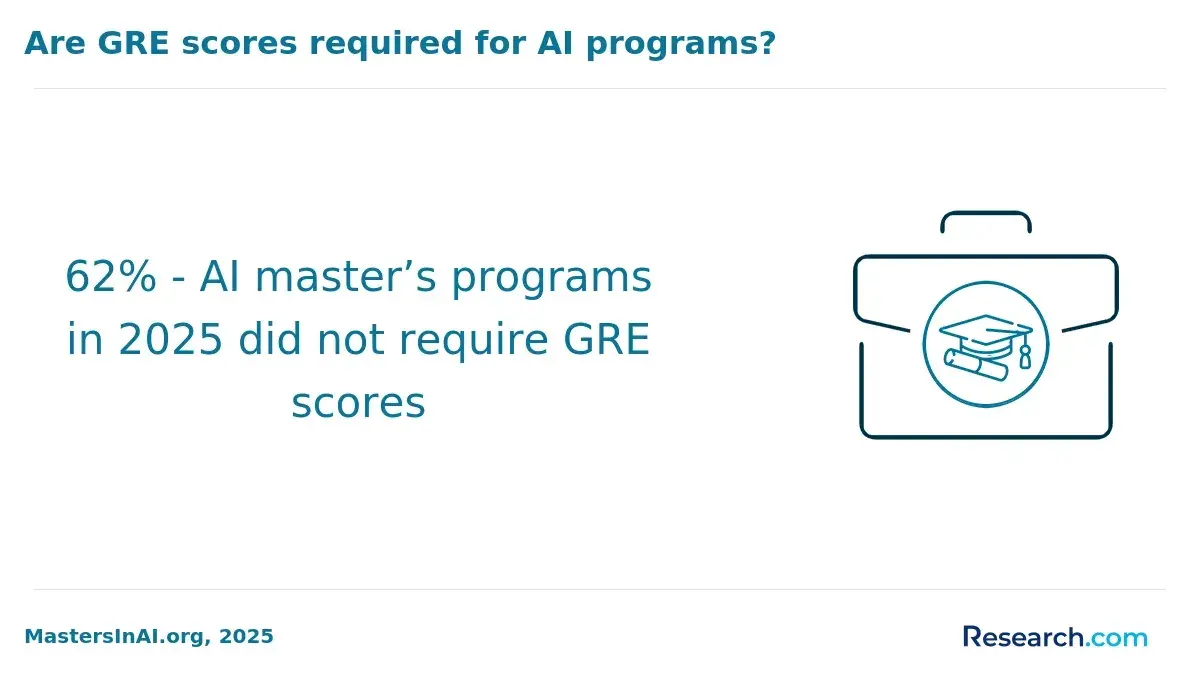
Admission to AI master's programs usually requires a bachelor's degree in computer science, engineering, mathematics, or statistics. Strong foundations in programming, calculus, linear algebra, and probability are essential. Applicants must often submit official transcripts highlighting relevant coursework, along with GRE scores, which remain important for engineering and physical sciences programs according to GRE Test Taker Data, 2024-25.
Letters of recommendation from faculty or supervisors are typically required to attest to technical skills and research potential. A statement of purpose outlining career goals and AI interests is also common. Some programs prefer candidates with relevant work experience or research, particularly for those targeting leadership roles in the field.
Proficiency in programming languages like Python or Java and familiarity with machine learning frameworks are expected. Additional materials may include a resume showcasing AI projects. International students must prove English proficiency through tests such as TOEFL or IELTS. Admissions committees evaluate applicants holistically, balancing test scores, academic background, and professional experience to identify individuals suited for demanding AI curricula and leadership training.
How do online AI master's degrees compare with on-campus programs for leaders?
Online AI master's degrees increasingly align with on-campus programs in rigor and leadership training, making them a strong option for aspiring technical leaders. Remote formats provide flexibility for working professionals and access to the same faculty and curriculum as traditional degrees. NACE's Job Outlook 2025 notes that 87% of employers plan to conduct virtual interviews, underscoring the importance of digital communication and remote teamwork skills cultivated naturally in online programs.
On-campus degrees offer valuable in-person networking, easier access to campus resources, and occasional hands-on labs, which some leaders prefer for team-building and spontaneous collaboration. However, many top schools like Carnegie Mellon and Georgia Tech now provide real-time virtual labs with mentor-guided sessions, reducing these differences.
Prospective students should assess their learning preferences and goals. Online programs promote self-discipline and digital fluency essential for remote or hybrid leadership roles, while on-campus options best serve those seeking immersion in academic communities or nearby industries. Key questions to consider include:
- Does the program support synchronous collaboration and live mentor feedback?
- Are leadership opportunities available within virtual teams?
- How successful are alumni in leadership roles combining technical and interpersonal AI skills?
The environment that fosters adaptability to virtual modes of operation is critical for leadership in AI today.
How long do AI master's programs take, and what do they cost?
AI master's programs generally require one to two years to complete, with full-time students finishing in 12 to 18 months and part-time or online students taking up to 24 months or more. Programs involving a thesis or capstone project can extend this timeline slightly.
Tuition costs vary widely based on the type of institution, residency, and program delivery. Public universities charge approximately $12,600 annually for in-state graduate students, while private and out-of-state students often face tuition ranging from $25,000 to over $50,000 per year.
Many programs bill per credit hour-typically $800 to $1,500-with total credit requirements between 30 and 36 credits. This means tuition alone may total $24,000 to $54,000. Additional fees for technology, labs, and resources can add several hundred to a few thousand dollars.
Key factors to consider include program flexibility, availability of accelerated tracks, and specialized leadership areas, which may influence both duration and cost. Prospective students are encouraged to explore employer tuition assistance and scholarships targeting STEM and AI fields, especially for working professionals balancing career and education demands.
What salaries can AI technical leaders expect after earning a master's degree?
AI technical leaders with a master's degree often command substantial salaries that reflect their expertise and leadership roles. According to the BLS Occupational Employment and Wage Statistics report from May 2024, the median annual wage for U.S. "Computer and Information Systems Managers," a category that includes AI leaders, is $169,510.
Salary ranges vary based on factors like industry, location, company size, and experience. For instance:
- In tech hubs such as San Francisco or Seattle, salaries are typically 15-25% higher than the median due to demand and living costs.
- Finance and healthcare sectors offer $180,000-$200,000 annually because of specialized AI applications and regulatory needs.
- Mid-sized companies may offer $140,000 to $160,000, often accompanied by equity or bonuses tied to AI project success.
Holding an advanced AI master's degree gives candidates a competitive edge for leadership positions by demonstrating both technical expertise and management skills. Transitioning from senior AI specialist to manager can increase salaries by $30,000 or more annually.
Certifications in AI management and experience with AI deployment tools further boost earning potential. Staying updated on emerging AI trends is crucial for maintaining a leadership salary premium.
Which certifications complement an AI master's degree for technical leadership roles?
Complementary certifications for those holding an AI master's degree and pursuing technical leadership roles often involve cloud computing and AI governance. These credentials validate hands-on expertise in deploying and managing sophisticated AI systems.
Cloud and AI certifications such as AWS Certified Machine Learning, Google Professional Machine Learning Engineer, and Microsoft Certified: Azure AI Engineer Associate are highly valued, reflecting the growing demand for skills in scalable AI infrastructure. Such certifications prepare leaders to oversee AI development and production environments effectively.
Data privacy and security certifications like Certified Information Systems Security Professional (CISSP) and Certified Information Privacy Professional (CIPP) address governance issues involving ethics, compliance, and risk management in AI. Technical leaders benefit from these credentials by ensuring AI models function within legal and ethical frameworks.
Project management qualifications including Project Management Professional (PMP) and Agile Certified Practitioner (PMI-ACP) improve leadership abilities in managing multidisciplinary AI teams. These focus on coordinating timelines, resources, and stakeholder communication, essential for scaling AI projects successfully.
- Cloud and AI certifications for infrastructure management
- Privacy and security credentials for AI governance
- Project management certifications for team and resource coordination
- Industry-specific credentials tailored to finance, healthcare, or manufacturing
By integrating core AI education with targeted certifications, professionals enhance their capability to lead innovation across various technical AI environments.
Other Things You Should Know About Artificial Intelligence
While a background in computer science is highly advantageous for a master's in artificial intelligence, it is not always strictly required. Many programs accept students from related STEM fields such as engineering, mathematics, or physics, provided they have foundational skills in programming and algorithms. Some institutions also offer preparatory courses to help students without a computer science degree catch up.
Ethics and the societal impact of AI have become essential components of most AI master's programs, especially for those targeting leadership roles. These courses cover issues like bias in machine learning, data privacy, and the broader consequences of AI deployment. Understanding these topics is crucial for technical leaders to develop responsible AI systems and meet regulatory standards.
Yes, many AI master's degrees allow students to specialize or focus on applications in particular industries such as healthcare, finance, autonomous vehicles, or robotics. This industry-specific knowledge equips graduates with targeted skills and domain expertise, making them more effective in leading AI initiatives within those sectors.
2027 AI master's programs often feature hands-on projects or capstone experiences like developing machine learning models or AI-driven solutions for real-world problems. These projects focus on leadership skills and collaboration. For students without a computer science background, see our AI master’s for non-engineers.
References
- Online AI Degrees vs On-Campus: Which Is Right for You in 2026? https://aidegreeonline.com/online-ai-degrees-vs-on-campus-which-is-right-for-you-in-2026/
- How to Check if a Graduate Program is Accredited (and Why This Matters) | ProFellow https://www.profellow.com/tips/how-to-check-if-a-graduate-program-is-accredited-and-why-this-matters/
- Top AI Certifications for 2026: A Guide to Advancing Your Tech Career | DataCamp https://www.datacamp.com/blog/top-ai-certifications
- Top 10 AI graduate degree programs https://www.cio.com/article/350315/top-10-ai-graduate-degree-programs.html
- Best AI Leadership Courses for Nontech Leaders - Emeritus Online Courses https://emeritus.org/blog/b-best-ai-leadership-courses/
- 6 High-Paying Jobs With a Master’s in AI | University of Bridgeport https://www.bridgeport.edu/news/high-paying-jobs-with-a-masters-in-ai/
- Mastering AI Skills for Next-Gen Leadership https://www.ironhack.com/us/blog/mastering-ai-skills-for-next-gen-leadership
- University Degree vs AI Bootcamp: Which is Best Career Path? https://agilefever.com/university-degree-vs-ai-bootcamp-which-is-best/
- Top AI Graduate Programs To Kickstart Your Career in Artificial Intelligence Today https://www.investopedia.com/top-ai-graduate-programs-to-kickstart-your-career-in-artificial-intelligence-today-11916749
- 16 Artificial Intelligence Career Paths https://www.calmu.edu/news/artificial-intelligence-career-paths