2027 AI Master's Degrees With 7-Week Courses

Co-Founder and Chief Data Scientist
Many professionals with degrees in unrelated fields face the challenge of rapidly entering the artificial intelligence industry without committing to multi-year programs. The demand for AI skills grows quickly, yet traditional master's degrees often require lengthy time investments that conflict with work and personal responsibilities. Accelerated courses offering master's-level education in about seven weeks present a viable solution to acquire essential expertise swiftly.
This article explores accelerated AI master's degree options, focusing on flexible, accredited programs designed for career changers, enabling readers to find efficient pathways into the field and make informed decisions about their educational investments.
Key Things You Should Know
- AI master’s programs with 7-week courses deliver content in accelerated learning cycles, enabling students to focus intensively on one subject at a time while maintaining steady academic progress.
- Shorter course terms often support flexible enrollment for working professionals, allowing learners to balance employment responsibilities with graduate-level study through more frequent start dates and manageable workloads.
- Despite the condensed format, these programs typically maintain the same credit and rigor standards as traditional semesters, requiring consistent time management and strong study habits to successfully master complex AI concepts.
What is a 7-week course format in AI master's programs?
A 7-week accelerated AI master's degree programs condense the traditional semester into a focused period, typically requiring daily or near-daily engagement with assignments, lectures, and projects. This intensive AI master's course format advantages include faster degree completion and concentrated learning, ideal for professionals and career switchers aiming to upskill without extended time commitments.
Research from the National Bureau of Economic Research (NBER) shows that students in 7-week courses perform as well or better than those in longer 15-week terms, with no loss in end-of-course learning despite the faster pace. Variations in 7-week formats include:
- One course tackled intensively for deep immersion.
- Multiple concurrent shorter modules for broader skills.
- Evening or weekend classes paired with asynchronous online content for working learners.
Students should carefully evaluate their ability to maintain steady focus and time management. These courses typically favor continuous assessments over high-stake exams to support consistent progress. Institutions usually cover key foundational topics such as machine learning algorithms, data processing, and ethical AI applications within this condensed timeline.
For those exploring paths forward with an AI degree, it is essential to check credit transfer policies when blending accelerated courses into longer studies to ensure smooth academic progression.
Which accredited universities offer AI master's degrees with 7-week courses?
Several accredited universities in the U.S. offer master's degrees in artificial intelligence designed around accelerated 7-week courses, catering to professionals seeking comprehensive yet flexible education. For instance, Stevens Institute of Technology features a Master's in Artificial Intelligence with online 7-week modules, allowing students to focus intensively on one course at a time.
Drexel University also provides a Master of Science in Artificial Intelligence in a similar accelerated format, accredited by the Middle States Commission on Higher Education, enabling faster degree completion compared to traditional semesters.
This approach aligns with the needs of working professionals balancing employment and study by providing shorter modules that facilitate immediate application of concepts and manageable workloads. Students exploring top accredited online AI master's degrees with accelerated 7-week classes should verify accreditation and course structure, as the U.S. hosts over 3,000 accredited institutions offering 7- to 8-week online graduate terms, according to the Database of Accredited Postsecondary Institutions and Programs (DAPIP).
While this model supports rapid learning, applicants must ensure programs cover essential AI topics such as machine learning, natural language processing, and ethics. Choosing programs with strong faculty expertise and robust research opportunities is key to maintaining education quality despite the accelerated pace.
Additionally, prospective students should consider well-rounded STEM education pathways, such as a mechanical engineering degree online, which can complement AI expertise in interdisciplinary fields.
Are 7-week AI master's degrees available online, on campus, or hybrid?
7-week AI master's degrees online and on campus cater to a variety of student needs, offering accelerated pathways for both working professionals and traditional learners. Online programs typically provide flexibility through asynchronous lectures and interactive assignments, allowing students to manage their studies alongside other responsibilities.
Notable universities such as Georgia Tech and Northeastern deliver fully online, accelerated AI master's courses designed for fast completion.
On-campus 7-week AI master's programs, though less common, exist primarily as intensive summer or intersession offerings. These are beneficial for students wanting direct access to campus facilities and face-to-face engagement with faculty and peers.
Stanford and MIT occasionally offer such intensive courses that can supplement master's degree requirements.
Hybrid AI master's degree programs with 7-week courses combine online content with periodic in-person sessions, balancing flexibility and interaction. Institutions like the University of Illinois Urbana-Champaign provide these hybrid formats to accelerate degree progress.
As distance education grows-in 2024, over half of U.S. postsecondary students took at least one online course-prospective students should evaluate accreditation, faculty expertise, and cohort support while ensuring accelerated programs maintain academic rigor. Additionally, check whether employers provide tuition assistance for online or hybrid formats, often more accessible than on-campus intensives.
Students exploring related technical fields might also consider a game design and development degree as part of their educational planning.
What prerequisites and admission requirements do AI master's programs typically require?
AI master's programs in North America typically require a strong foundation in mathematics, programming, and computer science. Most applicants hold a bachelor's degree in computer science, engineering, mathematics, statistics, or a related STEM field.
Core prerequisites usually include coursework in linear algebra, calculus, probability, statistics, and programming languages such as Python or Java.
Applicants must often submit academic transcripts to verify proficiency in these areas. Additionally, some programs request letters of recommendation, a statement of purpose outlining research interests or career goals in AI, and a current résumé or CV.
Although relevant work experience can enhance applications, it is not always mandatory.
Standardized test scores such as the GRE or GMAT have become less critical. Over 80% of U.S. graduate programs now allow test waivers or have optional testing policies, reflecting a growing trend among many 7-week AI master's courses.
Prerequisites for graduate artificial intelligence degrees sometimes include bridge courses for students without formal backgrounds in computer science or advanced mathematics. International applicants may also need to demonstrate English proficiency through TOEFL or IELTS scores.
Evidence of technical competence, academic readiness, and clear motivation is essential for success. For those exploring costs related to technology fields, consider reviewing cyber security online degree cost as a point of comparison in related STEM education expenses.
What core courses and specializations are common in AI master's curricula?
Core courses in AI master's programs cover essential topics such as machine learning, deep learning, algorithms, data structures, and probability theory. Programming skills, especially in Python, are critical due to its widespread use in AI libraries like TensorFlow and PyTorch. SQL is also commonly taught to manage and query large datasets, reflecting its presence in over 40% of AI job postings according to Lightcast labor-market analytics.
Students develop skills in model building, statistical analysis, and data pipeline engineering, which are fundamental for applying AI in real-world scenarios.
Specializations often focus on natural language processing (NLP), computer vision, robotics, and reinforcement learning. NLP emphasizes language models, sentiment analysis, and conversational AI, which are valuable in automating customer service. Computer vision courses teach image recognition and object detection, skills sought after in healthcare imaging and autonomous vehicles.
Interdisciplinary tracks blend AI with ethics, healthcare, or finance to address specialized challenges. For example, AI in healthcare covers medical imaging, bioinformatics, and predictive analytics, aligning with the rising demand for healthcare data specialists.
Hands-on experience is key: many programs include capstone projects and internships that use Python and SQL to reinforce learning. Prospective students benefit from selecting specializations linked to industry needs, such as NLP for chatbot development or computer vision for automation.
How long does it take to finish an AI master's with 7-week courses?
Completing a master's degree in artificial intelligence through 7-week courses generally takes between 1.5 and 3 years. The accelerated format enables focused study on fewer classes each term, which can shorten the timeline compared to traditional 15-week semesters.
Still, most students do not finish within 12 months due to program requirements of 30 to 36 credit hours spread across multiple terms.
Part-time study is a significant factor in the overall duration. Data from NCES IPEDS shows that 63% of master's students attend part-time, often extending the time-to-degree despite shorter courses.
Many working professionals balance one or two 7-week classes per term alongside their jobs, while full-time students taking three or more courses can graduate faster but face a heavier workload.
Program variations impact pace:
- Some allow continuous enrollment year-round, helping students finish in as little as 1.5 years.
- Others include summer breaks, which may stretch completion to 2-3 years for part-time students.
- Hybrid and fully online options offer flexible pacing, which could speed up or delay graduation depending on individual circumstances.
Students should carefully consider their availability for intensive study and credit requirements before enrolling in a 7-week artificial intelligence master's program. Realistic expectations about timelines help align academic goals with professional and personal commitments.
What do AI master's degrees with 7-week courses typically cost?
AI master's degrees with 7-week courses reflect broader graduate tuition patterns in the U.S. The College Board's 2024 "Trends in College Pricing" reports average graduate tuition and fees near $12,600 at public institutions and $30,000 at private nonprofit schools.
These figures serve as benchmarks, though actual tuition varies by program and format.
Short 7-week courses are often parts of accelerated master's or certificate programs focused on AI. Pricing typically follows per-credit-hour rates or fixed fees per course. For example:
- Public universities may charge $400 to $800 per credit hour, making a 3-credit 7-week course cost between $1,200 and $2,400.
- Private institutions often charge $800 to over $1,500 per credit hour, potentially pushing a 7-week course above $4,500.
Additional fees such as technology, lab, and administrative costs may apply. Financial aid, employer tuition assistance, or scholarships aimed at AI fields can significantly reduce these expenses.
Students should verify if 7-week courses are standalone or part of full degree programs, as bundled courses may impact total tuition. Transparent cost information helps plan budgets effectively for AI master's programs.
How do employers view accelerated AI master's degrees with 7-week courses?
Accelerated artificial intelligence master's degrees featuring 7-week courses have gained strong favor among employers, particularly when paired with micro-credentials that emphasize practical skills. According to the Coursera 2024 Industry Skills Report, 76% of employers prefer candidates who hold micro-credentials, highlighting the growing value of concise, skills-focused education formats.
These programs efficiently equip students with targeted competencies like machine learning or natural language processing, closely matching employer demands for professionals ready to contribute from day one.
Employers typically prioritize proven skills and up-to-date knowledge over traditional degree durations. Completing accelerated master's programs shows a candidate's dedication to continuous learning and adaptability. For example, a 7-week artificial intelligence ethics course combined with a micro-credential can help applicants stand out in specialized sectors such as healthcare AI or financial technology.
Key factors influencing employer perception include the credibility of the issuing institution and the curriculum's rigor. Programs affiliated with reputable universities or industry collaborators carry more weight, especially when candidates present tangible evidence like projects, certifications, or portfolios.
Potential reservations about compressed programs often focus on depth of learning and hands-on experience. Candidates can address these concerns by supplementing coursework with internships, research, or open-source contributions.
- Employers value measurable skills and verifiable credentials.
- Reputation of the institution impacts hiring decisions.
- Practical experience outside coursework strengthens candidacy.
What jobs can you get with an AI master's degree in the U.S.?
An AI master's degree in the U.S. opens doors to specialized, high-demand roles across multiple industries. Among the fastest-growing jobs are AI/ML Engineer and Data Scientist, according to LinkedIn's 2024 Jobs on the Rise (U.S.) report.
These roles focus on developing machine learning models, performing data analysis, and applying AI algorithms to solve complex business challenges.
Additional career paths include:
- AI Software Developer - creating AI-powered applications and tools.
- Data Engineer - managing and optimizing essential data pipelines.
- Business Intelligence Analyst - translating AI insights into actionable business strategies.
- Computer Vision Engineer - working with visual data processing and recognition.
- Natural Language Processing (NLP) Engineer - focusing on AI that interprets and generates human language.
Graduates find opportunities in sectors like healthcare, finance, automotive, and technology, where AI integration boosts innovation and operational efficiency. Job responsibilities vary from software development and applied research to deploying AI models in real-world environments.
To enhance employability, candidates should develop skills in Python programming, familiarize themselves with AI frameworks such as TensorFlow or PyTorch, and understand cloud services like AWS and Azure. Entry-level salaries typically start near $90,000 and can exceed $150,000 with experience.
Employers increasingly value a combination of strong theoretical knowledge and practical experience, including internships or projects, reflecting AI's rapidly evolving and application-driven landscape.
What salaries and job outlook are typical for AI master's graduates?
Graduates with a master's degree in artificial intelligence often find themselves well-positioned for lucrative careers. Median salaries for data scientists, a frequent path for AI graduates, reach $108,020 annually, according to the U.S. Bureau of Labor Statistics.
Employment in this sector is expected to grow 35% from 2022 to 2032, reflecting strong market demand.
Salary ranges depend on location, industry, and role. Entry-level AI specialists typically earn between $90,000 and $110,000, while experienced professionals in tech hubs such as San Francisco or New York can make over $150,000. Specialized roles in machine learning engineering or AI research generally offer higher pay than positions focused solely on data analysis.
Career opportunities span sectors like technology, healthcare, finance, and autonomous systems. Employers seek candidates with hands-on experience and advanced skills in deep learning, natural language processing, and computer vision.
Completing targeted programs, such as a 7-week course embedded within a master's degree, can significantly enhance these skills.
Additional strategies to boost employability include obtaining certifications, contributing to open-source AI projects, and networking through AI-focused groups and conferences. These efforts increase visibility and access to opportunities in an expanding job market with clear potential for compensation growth and career advancement.
Other Things You Should Know About Artificial Intelligence
Yes, students must have a reliable computer, high-speed internet, and access to specific software tools like TensorFlow or PyTorch for coursework and assignments in AI master's degrees with 7-week courses for 2027.
Yes, accelerated AI master's degrees often emphasize interdisciplinary knowledge, combining AI with fields like healthcare, finance, or cybersecurity. This integration equips students to apply AI methods in diverse industries and tackle complex, domain-specific problems. Employers increasingly value graduates who understand AI in context with other professional fields.
Admission requirements for AI master's degrees with 7-week courses typically include a bachelor's degree in a related field, letters of recommendation, a statement of purpose, and sometimes GRE scores. Deadlines for application submissions vary by institution but are often in early spring for the fall intake.
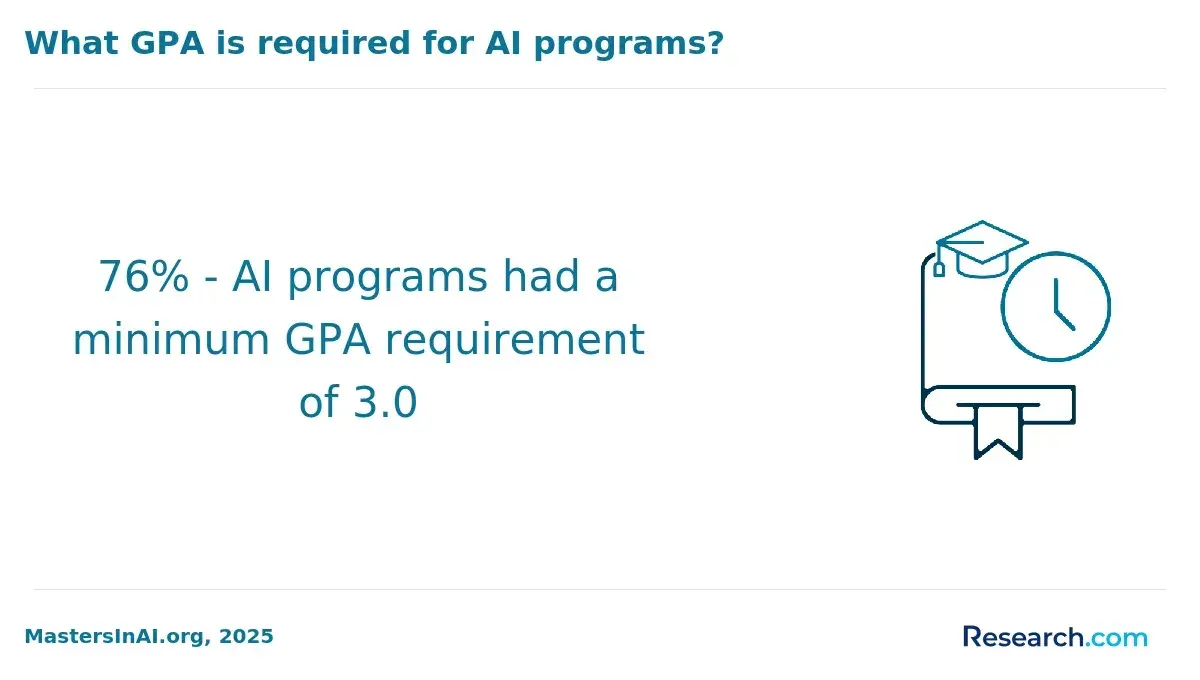
Yes. Most programs require prior coursework or demonstrated skill in Python, linear algebra, and introductory statistics before admission. Some universities also ask for a minimum 3.0 GPA, official transcripts, and proof of technical readiness through a coding sample or prerequisite waiver review.
References
- How Long Does It Take to Complete an AI Course https://www.epw.com/blog/courses/how-long-is-ai-course
- What You'll Learn in an AI MS Program | University of Bridgeport https://www.bridgeport.edu/news/masters-in-artificial-intelligence-program-curriculum/
- MSc Applied Artificial Intelligence https://warwick.ac.uk/fac/sci/wmg/study/masters-degrees/applied-artificial-intelligence/
- MS in AI in USA Admission: A Comprehensive Guide to Pursuing a Master's Degree in Artificial Intelligence https://mentr-me.com/blogs/ms-in-ai-in-usa-admission-process
- 2026 Best Online Master's in AI Programs https://www.mastersinai.org/degrees/online-masters-in-artificial-intelligence/
- Employers favor AI talent with master’s degrees https://www.ciodive.com/news/AI-jobs-masters-degrees/719972/
- Program Details https://www.eastern.edu/academics/graduate-programs/ms-applied-ai
- Master of Artificial Intelligence https://wscs.eu/master-of-artificial-intelligence/
- M.SC. IN Artificial Intelligence https://put.poznan.pl/msc-artificial-intelligence
- Masters Artificial Intelligence https://www.udacity.com/masters-artificial-intelligence