2027 Artificial Intelligence Degree Programs With Asynchronous Courses

Co-Founder and Chief Data Scientist
Professionals seeking to transition into artificial intelligence often face obstacles balancing work, life, and education. Traditional programs frequently require rigid schedules and on-campus attendance, limiting access for those with existing commitments. Additionally, many programs assume prior experience in related fields, creating a barrier for learners from unrelated undergraduate backgrounds. Asynchronous courses offer a flexible solution by allowing students to learn at their own pace while maintaining other responsibilities.
This article examines currently available artificial intelligence degree programs with asynchronous formats, highlighting options that provide accredited, adaptable pathways for career changers aiming to enter the AI industry efficiently.
Key Things You Should Know
- Asynchronous artificial intelligence degree programs in 2027 provide flexible learning, allowing students to balance work and education without fixed schedules, increasing accessibility nationwide.
- Data from 2025 shows a 37% enrollment rise in online artificial intelligence courses, reflecting growing industry demand for AI skills across business, healthcare, and technology sectors.
- Curricula focus on practical AI applications including machine learning, natural language processing, and ethics, equipping graduates for diverse careers in emerging AI-driven fields.
What are asynchronous AI degree programs, and how do they work online?
Asynchronous AI degree programs offer flexibility by allowing students to complete coursework on their own schedules without live class attendance. These online asynchronous artificial intelligence degree programs typically include recorded lectures, digital reading materials, and assignments accessible anytime via a learning management system (LMS). This approach supports learners balancing education with work or personal commitments, reflecting that 67% of online learners prioritize studying when convenient.
How asynchronous AI courses work in online education involves students logging into the LMS to view lessons, participate in forums, submit assignments, and complete exams within deadlines, without fixed meeting times. Faculty provide continuous feedback and hold virtual office hours to foster engagement. For instance, a student might study machine learning tutorials in the evening and join weekly discussion boards as their schedule allows.
Programs often incorporate practical tasks such as coding exercises and virtual labs to simulate real-world AI applications. These features are especially valuable to professionals aiming to upskill without interrupting careers. Some courses may include optional synchronous webinars, but the primary format remains self-paced.
Students must verify program accreditation and ensure curricula align with industry demands. Technical prerequisites generally include reliable internet and computers equipped to run software like Python or TensorFlow. To explore career paths after completion, consider artificial intelligence degree jobs.
Which accredited colleges offer AI degrees with fully asynchronous courses?
Several accredited colleges in the U.S. offer fully asynchronous artificial intelligence degree programs providing flexibility for students managing busy schedules. These programs enable learners to complete coursework without synchronous sessions, making them ideal for working professionals or those balancing other commitments. Southern New Hampshire University (SNHU) delivers an online bachelor's in computer science with an AI concentration entirely asynchronously. Colorado State University Global offers a fully asynchronous bachelor's degree in data analytics and artificial intelligence, while Liberty University provides an online bachelor's program allowing students to progress without live class attendance.
Most of these programs are regionally accredited and cover comprehensive curricula including machine learning, neural networks, and ethical AI applications. Students should confirm program accreditation and state authorization to ensure their degrees are transferable and recognized by employers. The Distance Education Accrediting Commission (DEAC) lists over 80 accredited schools offering distance education programs, highlighting strong options for those seeking fully asynchronous degrees in AI.
When evaluating accredited colleges offering AI degrees online, consider factors such as course delivery methods, absence of mandatory real-time attendance, faculty expertise, and student support services. This approach helps align education with career goals in AI-related fields like autonomous systems and data science.
For related STEM fields, exploring an affordable mechanical engineer degree can also provide valuable skills and opportunities.
How do asynchronous AI degrees compare with synchronous online and campus programs?
Asynchronous artificial intelligence degree programs offer significant advantages by providing flexibility for working professionals and students with irregular schedules. Unlike synchronous courses that require participation at appointed times via live video or in-person sessions, asynchronous options allow students to engage with lectures, assignments, and exams at their convenience. This scheduling freedom helps balance education alongside work, family, or other studies.
The EDUCAUSE 2024 Students and Technology Report highlights that online courses are increasingly offered asynchronously, reflecting a shift in higher education to meet diverse student needs through technology, especially in rapidly evolving areas like artificial intelligence. Comparing asynchronous ai degrees with synchronous and campus options reveals that asynchronous formats often feature structured video content, discussion boards, and lenient deadlines. However, they may lack immediate feedback or live peer interaction found in synchronous or on-campus programs, which can enhance collaboration and networking.
Campus programs emphasize hands-on labs and direct mentorship but require commuting or relocation, limiting accessibility for remote learners. Synchronous online classes try to mimic campus interactions digitally but may struggle with time zone challenges. Students in asynchronous ai programs should be self-disciplined and actively seek support through forums or virtual office hours. Employers recognize these credentials increasingly, especially when paired with demonstrated projects or certifications.
Prospective students interested in affordable options can explore degrees in AI to find suitable asynchronous artificial intelligence degree programs tailored to their needs.
What AI degrees can you earn asynchronously (certificate, bachelor's, master's, PhD)?
Asynchronous artificial intelligence degree programs are offered at various academic levels, including certificates, bachelor's, master's, and PhD degrees. The most prevalent fully online options are certificates and master's degrees, reflecting a growing preference for flexible graduate-level education. According to the National Center for Education Statistics (NCES), U.S. institutions awarded over 1 million postbaccalaureate credentials, highlighting the demand for advanced asynchronous programs.
Certificate programs emphasize core skills such as machine learning, data analytics, and natural language processing. These are well suited for working professionals seeking to specialize without committing to full degrees. Examples include graduate certificates in artificial intelligence or machine learning available through continuing education.
Fully asynchronous online bachelor's degrees in Artificial Intelligence remain less common but are emerging within interdisciplinary computer science programs offering AI concentrations. These programs generally take four years and cover foundational topics like algorithms, programming, and statistics.
Most asynchronous AI master's degrees cover advanced subjects such as deep learning, computer vision, robotics, and AI ethics. They offer part-time pacing options to accommodate working students. Universities like Georgia Tech and the University of Texas are recognized providers. Doctoral options are rarer and often combine online coursework with remote research supervision.
Students should verify accreditation, faculty expertise, and how well programs align with career objectives. For those interested in related fields, exploring affordable cybersecurity programs may also prove beneficial.
What prerequisites and admission requirements are common for AI degree programs?
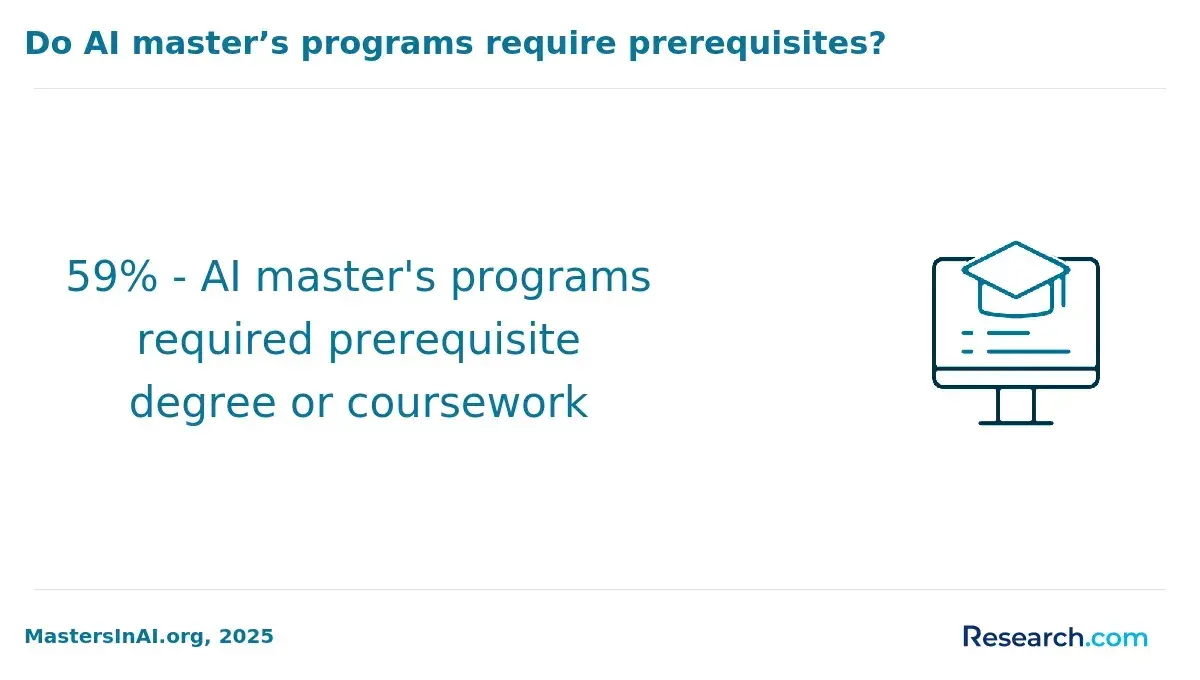
Admission to artificial intelligence degree programs typically requires a solid background in mathematics and programming. Applicants are expected to have completed courses in calculus, linear algebra, and statistics, with programming experience in languages such as Python, Java, or C++ highly preferred. Familiarity with data structures and basic software development principles is often necessary to handle early algorithmic challenges.
Standardized test scores, high school or college transcripts, and relevant prior coursework in computer science or engineering are commonly required. Graduate programs usually mandate a bachelor's degree in computer science, engineering, mathematics, or a related discipline, sometimes along with research experience or professional involvement in AI or machine learning.
Additional application components may include personal statements, letters of recommendation, and interviews to evaluate motivation and readiness. Programs may require prerequisite or bridge courses in math or coding for applicants without a strong STEM background.
Efforts to address disparities in pre-college computing education remain important. For example, only about one in five AP Computer Science A exam takers were female, reflecting a notable gender gap. Many programs offer preparatory resources or recommend supplemental study for those lacking programming experience.
Prospective students should carefully review the specific admissions criteria of each program and consider building foundational skills through online courses or community college classes prior to application.
What courses and skills are typically covered in asynchronous AI curricula?
Asynchronous ai curricula cover essential skills including machine learning fundamentals such as regression, classification, clustering, and neural networks. Courses often integrate programming languages like Python and R, alongside frameworks like TensorFlow and PyTorch, to provide hands-on experience. Data engineering is another key area, focusing on data pipelines, ETL processes, and storage solutions critical for managing vast datasets efficiently. Applied analytics courses train students to interpret data insights and apply statistical methods to solve real-world challenges.
Additional topics frequently include natural language processing, computer vision, and reinforcement learning, preparing learners for diverse ai applications ranging from speech recognition to autonomous systems. Ethics and fairness in ai also form an important part of the curriculum, addressing issues such as bias, privacy, and responsible technology use.
Practical projects and case studies simulate industry scenarios, helping students develop skills in model selection, evaluation, data wrangling, and deployment strategies for cloud and edge environments. According to the World Economic Forum Future of Jobs Report 2025, "ai and big data" rank among the fastest-growing skills, underscoring the emphasis on these areas to meet evolving market demands.
How long do asynchronous AI degree programs take, and what affects pacing?
Asynchronous artificial intelligence degree programs typically require two to four years to complete, largely depending on student pace and enrollment. Full-time learners often finish in about two years, while part-time students, balancing work or personal commitments, may take three to four years or longer. According to the National Center for Education Statistics (NCES), a significant portion of undergraduates enroll part-time, which often leads to extended completion times in self-paced formats.
Many working professionals choose part-time enrollment to accommodate full-time jobs, often stretching degree completion beyond three years. Recent high school graduates frequently pursue full-time study to accelerate earning their degree. Some programs offer accelerated or competency-based tracks, enabling students to progress faster by demonstrating mastery.
Prospective students should explore available support services, pacing options, and credit transfer policies to select asynchronous AI programs matching their career goals and schedules.
What do asynchronous AI degrees cost, and what financial aid is available?
Asynchronous artificial intelligence degree programs differ significantly in cost depending on the institution type and program length. Public universities typically set tuition near the in-state average of $11,260 per year. Private and out-of-state universities may charge between $20,000 and over $40,000 annually for comparable online AI coursework.
Besides tuition, students should budget for fees related to technology access, course materials, and exam proctoring, which can add hundreds to thousands of dollars. Some programs offer certificate tracks or micro-credentials at lower cost per course but without full degree benefits. Bachelor's degrees generally last four years, while master's degrees usually require one to two years of study.
Financial aid is available through federal Pell Grants, Direct Loans, and many institutional scholarships targeted at STEM or AI candidates. Employer tuition reimbursement programs can also offset costs substantially, and some schools offer flexible payment options like installment plans or income share agreements.
Prospective students should verify program accreditation and financial aid eligibility before enrolling. Consulting with program advisors helps clarify available funding, ensuring a comprehensive view of net costs rather than just sticker prices.
What jobs can you get with an AI degree, and which roles fit best?
An artificial intelligence degree prepares graduates for a variety of specialized, high-demand roles such as AI engineer, machine learning engineer, data scientist, and prompt engineer. These careers involve developing, training, and deploying AI models, designing algorithms, and optimizing AI-driven software. Strong programming skills, especially in Python and deep learning frameworks, are essential for many positions.
Data scientists focus on extracting insights from large datasets through statistical analysis combined with AI techniques. Prompt engineers, an emerging role, concentrate on refining AI language models to enhance natural language processing and AI-human interaction.
According to LinkedIn's Jobs on the Rise report, roles like AI engineer and prompt engineer have experienced rapid growth, underlining the practical value of an artificial intelligence degree for those seeking stable, long-term employment.
Additional career options include AI research scientist, AI consultant, and robotics engineer, each demanding specific expertise and hands-on experience. Pursuing internships and related projects helps align skills with career goals effectively.
What salaries and job outlook can AI graduates expect in the U.S.?
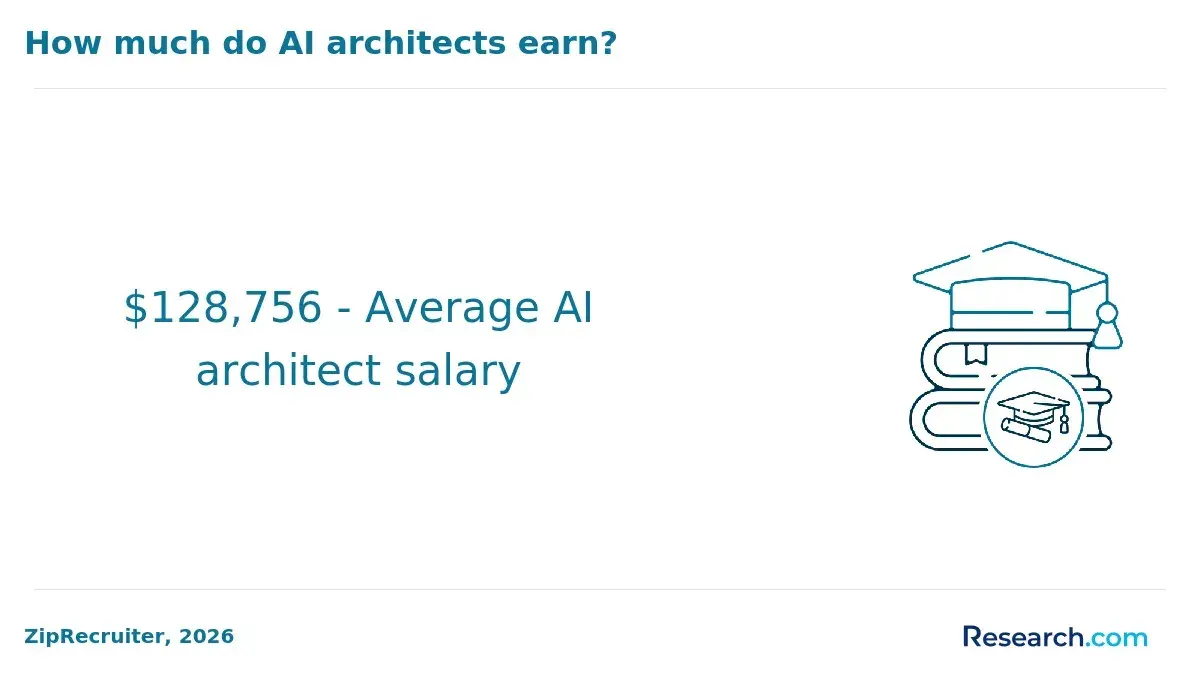
Graduates with artificial intelligence expertise in the U.S. can anticipate competitive salaries and robust job growth. According to the U.S. Bureau of Labor Statistics' 2024-2034 outlook, data scientists-roles closely linked to many AI careers-earn a median annual wage near $108,000. This reflects the earning potential across entry-level to senior professionals working with AI technologies.
The demand for AI skills is projected to grow much faster than average through the early 2030s. This surge is fueled by industries adopting machine learning, natural language processing, and automation, especially in healthcare, finance, and technology sectors. Opportunities for AI graduates include roles such as machine learning engineers, AI research scientists, and data analysts, each with differing responsibilities and pay scales.
Key factors influencing salary levels include:
- Industry: Tech and finance sectors tend to offer higher pay than academia or government roles.
- Experience: Entry-level engineers typically start around $85,000 to $95,000, while senior experts can earn over $150,000 annually.
- Location: Salaries are usually higher in major tech hubs like San Francisco, Seattle, and New York City.
- Education: Holding advanced degrees such as a master's or PhD often results in better compensation.
Students should focus on developing in-demand skills like deep learning and AI ethics, while gaining practical experience through internships, certifications, and networking. These strategies strengthen career prospects and support salary growth over time.
Other Things You Should Know About Artificial Intelligence
Students in asynchronous artificial intelligence programs often work on practical projects such as developing machine learning models, natural language processing applications, and computer vision systems. These projects provide hands-on experience with real-world data and commonly use tools like Python, TensorFlow, and PyTorch. Collaborative assignments may also be part of the curriculum, allowing students to simulate team-based AI development.
Many institutions allow students to switch between synchronous and asynchronous formats if both options are available within the program. However, this depends on the specific college's policies and course scheduling. It's important to consult academic advisors to understand any implications for course sequencing, graduation timelines, and tuition fees before making the switch.
Asynchronous AI programs typically incorporate discussion boards, group projects, and virtual meeting tools to facilitate interaction among students and instructors. While there is no fixed meeting time, these platforms enable collaboration and peer feedback. Additionally, some programs organize optional live webinars or networking events to help build professional connections despite the flexible schedule.
Entry requirements for 2027 AI degree programs with asynchronous courses typically include a bachelor's degree in a related field, basic programming knowledge, and proficiency in mathematics. For specialized tracks like finance, an online AI finance master’s degree might have additional prerequisites. Check specific university guidelines for details.
References
- Online AI Degrees vs On-Campus: Which Is Right for You in 2026? https://aidegreeonline.com/online-ai-degrees-vs-on-campus-which-is-right-for-you-in-2026/
- AI, machine learning Course Fees What to Expect and How to Budget https://www.dfwitcareer.com/blog/ai-machine-learning-course-fees-what-to-expect-and-how-to-budget
- Course Schedule and Course Pacing: Does it Affect Student Success in Online Asynchronous Courses? - OJDLA https://ojdla.com/articles/course-schedule-and-course-pacing-does-it-affect-student-success-in-online-asynchronous-courses
- Top AI Job Roles You Can Land with an AI Certification https://www.h2kinfosys.com/blog/top-ai-job-roles-you-can-land-with-an-ai-certification/
- Artificial Intelligence Graduate Certificate https://www.mssu.edu/academics/business/business-admin/artificial-intelligence-graduate-certificate.php
- AI Prerequisites https://www.nobledesktop.com/learn/ai/prerequisites
- An "AI Student Agent" Takes an Asynchronous Online Course https://opencontent.org/blog/an-ai-student-agent-takes-an-asynchronous-online-course/
- Best Online AI Degrees: 2025 Rankings & Program Directory - MastersInAI.org https://www.mastersinai.org/degrees/online-artificial-intelligence-degrees/
- Artificial Intelligence Course Eligibility: Requirements & Prerequisites https://www.mygreatlearning.com/artificial-intelligence/courses/eligibility
- How AI is challenging credibility of some online courses https://education.economictimes.indiatimes.com/news/edutech/the-impact-of-ai-on-asynchronous-online-courses-credentialing-crisis-ahead/125227860