2027 AI Doctorate vs PhD in Computer Science: What Should You Choose?

Co-Founder and Chief Data Scientist
Many prospective graduate students face a tough choice between pursuing an AI doctorate and a PhD in computer science, especially those transitioning from unrelated undergraduate degrees. The decision affects career trajectories, research scope, and job market readiness. While both paths offer advanced study, they offer different focuses, mentorship, and industry applicability.
Choosing the wrong program can lead to longer completion times or limited job prospects in cutting-edge AI roles. This article explores the key differences between AI doctorates and computer science PhDs to help readers identify which program aligns best with their goals and accelerates their entry into the AI industry.
Key Things You Should Know
- AI doctorate programs, emerging since 2024, focus on specialized AI research and applications, contrasting with broader computer science PhDs that cover diverse computing fields.
- Graduates with AI doctorates have reported a 15% higher demand in tech industries by 2025, reflecting AI's growing role in innovation and job markets.
- PhD in Computer Science offers flexibility for interdisciplinary work, while AI doctorates often involve intensive coursework and projects specifically targeting machine learning and neural networks.
What is an AI doctorate, and how does it differ from a PhD in computer science?
An AI doctorate program focuses specifically on research and innovations in artificial intelligence, covering advanced topics like machine learning, natural language processing, robotics, and computer vision. This is distinct from a traditional PhD in computer science, which spans a broader spectrum including algorithms, systems, theory, and software engineering, with AI often treated as one subfield.
The primary difference between an AI doctorate and a PhD in computer science lies in curriculum and research emphasis. AI doctorate candidates concentrate on specialized methodologies such as deep learning architectures or ethical AI issues, while computer science PhD students may work on foundational algorithms, programming languages, or distributed systems.
This difference shapes career trajectories: AI doctorate holders typically pursue roles in AI-centric industries like autonomous systems or healthcare AI, whereas computer science PhDs have broader options in academia, software development, or interdisciplinary research.
Educational trends demonstrate growing recognition of AI's uniqueness; the rise of dedicated AI degrees, from 15 master's programs in 2015 to 93 today, reflects this shift, and parallels the emergence of focused doctoral programs. Students evaluating these options should consider their goals carefully.
Those seeking broad computer science knowledge with flexibility might prefer a computer science PhD, while those aiming for deep expertise to meet industry demands may favor an AI doctorate program differences from a PhD in computer science.
For those interested in exploring career possibilities with a degree in AI, understanding these distinctions can support informed decisions about educational paths and professional aspirations.
Which degree is better for AI research careers in academia and industry labs?
For careers in AI research within academia and industry labs, a PhD in computer science typically offers broader opportunities than an AI doctorate. This degree provides rigorous training in fundamental algorithms, theory, and varied computer science domains, equipping graduates to contribute to foundational AI research and interdisciplinary innovation.
Such versatility is valuable because many academic AI research roles prioritize deep theoretical knowledge alongside diverse methodological skills, while industry labs often value researchers who can apply AI techniques across different fields.
An AI doctorate usually emphasizes applied AI methods and specific subfields, which can be ideal for roles focused on practical AI implementation. However, this specialization may limit adaptability in academia, where broader theoretical and methodological expertise is often required.
This distinction is important for prospective students weighing the AI doctorate vs PhD in computer science career outcomes.
The AI Index Report 2025 by Stanford HAI highlights that in 2024, "Artificial intelligence" was the top job function posted in U.S. AI listings, surpassing pure research positions. This trend underscores industry's preference for applied skills, suggesting candidates with practical AI experience-often gained through applied PhD tracks or AI-focused doctoral programs-may have a competitive edge in corporate labs.
Students should consider these factors when choosing the best degree for ai research in academia and industry labs:
- Academic careers: A PhD in computer science with strong theoretical and interdisciplinary research is usually better suited.
- Industry labs: Doctorates centered on applied ai techniques and real-world problem solving align well with job market needs.
- Program choice: Opt for programs offering collaboration with both academia and industry to increase career flexibility.
- Long-term goals: Reflect on whether fundamental theory or applied innovation is a higher priority to guide degree selection.
For those exploring related fields, it's useful to review data science undergraduate rankings, which can also influence interdisciplinary research pathways connected to AI.
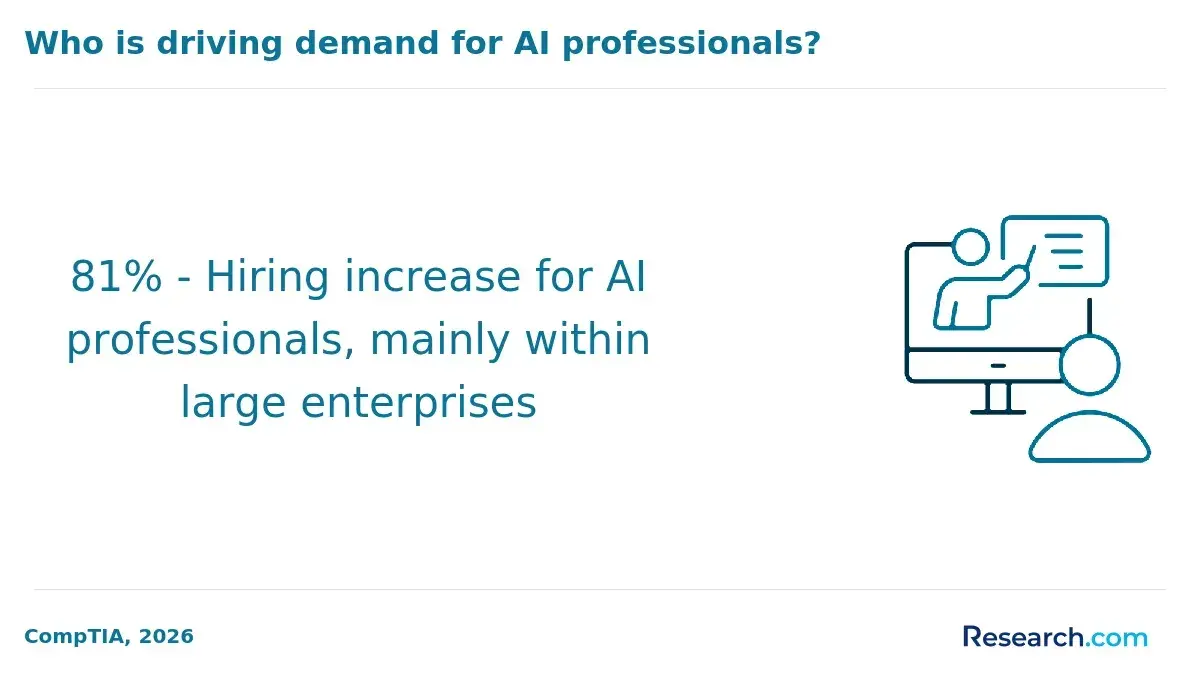
What careers do AI doctorates and CS PhDs typically lead to?
AI doctorates and PhDs in computer science lead to careers mainly in engineering and quantitative research roles. Many graduates find positions as machine learning engineers, data scientists, algorithm developers, or applied researchers.
According to the Stanford HAI AI Index Report 2025, U.S. AI job postings mostly fall within "Computer and Mathematical" occupations, highlighting the primary career destinations for doctoral-level AI and computer science professionals.
Career paths for those with a phd in computer science job opportunities include a wide range of fields such as software engineering, theoretical computer science research, cybersecurity, and systems architecture. AI doctorate holders, however, tend to focus more on cutting-edge applied AI roles-building new models, improving algorithms, and addressing sector-specific challenges in healthcare, finance, and autonomous systems.
Common roles include:
- Research scientists working in tech firms or research labs on innovative AI systems.
- Quantitative analysts or algorithm developers in finance, where predictive analytics are key.
- Machine learning engineers creating scalable AI products.
- Academics concentrating on teaching and foundational research.
Prospective students and graduates seeking careers with an AI doctorate degree should align their skills and interests with these market needs. For those exploring advanced education options, looking into online degrees in AI can be a practical way to enter the field while balancing other commitments.
How do curriculum and dissertation requirements differ between AI and CS programs?
Curriculum requirements differ significantly between ai doctorate and computer science PhD programs, reflecting their distinct academic focuses. AI doctorate programs prioritize specialized courses in machine learning, natural language processing, computer vision, and robotics. Students gain hands-on experience with AI frameworks, programming languages like Python, and data science tools.
In contrast, computer science PhD curricula emphasize broader theoretical areas such as algorithms, systems, and networking, with fewer courses devoted exclusively to AI. According to the 2025 Stanford HAI AI Index, Python ranked as the top technical skill demanded in U.S. AI job postings in 2024, highlighting the trend toward practical machine learning engineering skills in AI programs.
Dissertation expectations in ai doctorate versus computer science PhD programs also show clear differences. AI doctoral candidates typically focus on developing or enhancing AI models, applying them to tangible problems, and advancing machine learning methodologies.
This entails extensive experimentation and validation using datasets, with a strong emphasis on measurable improvements. Conversely, computer science PhD dissertations generally explore theoretical foundations or broad system innovations not necessarily related to AI.
Prospective students should consider career goals carefully. AI doctorates suit those targeting roles requiring deep expertise in AI algorithms and practical implementation, while computer science PhDs provide flexibility for foundational research careers. Reviewing program course catalogs and recent dissertations helps verify alignment with intended fields.
Additionally, those interested in cybersecurity may find relevant options among cybersecurity degrees.
What accreditation should AI or computer science doctoral programs have in the U.S.?
In the U.S., accreditation for doctoral programs in artificial intelligence or computer science hinges on recognized regional or specialized accrediting agencies to guarantee academic quality and eligibility for federal financial aid. Program-level accreditation by ABET (Accreditation Board for Engineering and Technology) is especially important for computer science doctorates.
ABET accredits over 600 computing programs worldwide, affirming curriculum rigor, faculty expertise, and industry relevance.
Stand-alone artificial intelligence doctoral programs often lack specific programmatic accreditation. Prospective students should ensure their chosen programs are offered by institutions with accreditation from a U.S. regional agency recognized by the Department of Education or the Council for Higher Education Accreditation (CHEA).
Institutional accreditation remains the baseline for legitimacy, particularly for newer or interdisciplinary AI doctoral programs.
Choosing a program aligned with career goals is vital. For those pursuing research-intensive roles or academia, a PhD in computer science with ABET accreditation can add value. Alternatively, candidates aiming for applied AI industry roles may emphasize institutional accreditation and strong research output in AI, even if there's no dedicated AI program accreditation.
What are the admission requirements for AI doctorates compared with CS PhDs?
Admission to AI doctorates and PhDs in computer science shares foundational criteria but emphasizes different aspects based on program focus. Both require strong academic records, relevant undergraduate or master's degrees, and prior research experience.
AI doctorate programs often prioritize demonstrated expertise or interest in machine learning, data science, robotics, or cognitive computing, supported by projects, publications, or internships.
Standardized tests such as the GRE remain an important part of admissions. Median GRE General Test scores for computer science applicants typically hover around 161 Quantitative and 154 Verbal, with competitive programs expecting scores at or above these benchmarks.
AI-focused programs especially value high quantitative scores due to the mathematical rigor involved.
Letters of recommendation for AI doctorates should come from mentors familiar with the applicant's AI research skills, while PhD applicants in computer science may submit broader research endorsements. Statements of purpose differ as AI applicants must highlight AI-specific problems and methodologies, whereas CS PhDs address wider research themes.
Some programs require advanced coursework or proficiency in mathematics, statistics, and programming relevant to AI. Evidence of publications or conference presentations in AI fields strengthens AI doctorate applications and is becoming more common for CS PhD candidates.
How long do AI doctorates and CS PhDs take, and what do they cost?
AI doctorates and PhDs in computer science typically require 4 to 7 years to complete, depending on factors like research progress, program design, and funding availability. These doctoral programs usually reside within computer science departments, with key differences in dissertation focus and coursework emphasizing machine learning, robotics, or natural language processing specialties.
Tuition costs vary significantly by institution type. According to the College Board's Trends in College Pricing 2024, the average annual graduate tuition and fees for private nonprofit universities stand at $22,230, while out-of-state students attending public universities pay an average of $12,596.
These costs generally apply similarly to AI and general computer science PhDs.
Additional expenses such as living costs, books, and conference travel often add $15,000 or more per year. Many doctoral candidates reduce this burden by securing stipends, teaching assistantships, or research funding, though funding availability differs widely across programs.
Prospective students should carefully balance program length with funding prospects, as consistent financial support is often more crucial than program duration for completing a doctorate in AI or computer science. Thoughtful evaluation leads to more sustainable progress in this advanced academic path.
How do online and campus doctoral programs in AI compare for credibility?
Online and campus doctoral programs in Artificial Intelligence both offer credible pathways, though differences exist in perception, rigor, and networking. According to U.S. Department of Education data, over 2,300 distance education doctoral programs are active, highlighting the widespread availability of online doctorates but with varied quality standards.
Accredited online programs from reputable research universities gain strong credibility, especially when they demand the same dissertation standards, faculty mentorship, and comprehensive exams as campus offerings.
Campus-based AI doctorates often provide better networking, direct access to research labs, and face-to-face mentorship. These programs may involve collaboration on cutting-edge projects and hands-on work with physical lab resources, essential for fields like robotics or sensory AI systems.
Credibility is more dependent on accreditation and program structure than delivery mode. Prospective students should ask:
- Does the online program require synchronous seminars or research presentations?
- Are faculty members actively publishing in AI journals and involved in grant-funded research?
- Is there access to AI research groups or labs remotely or through periodic residencies?
Working professionals often prefer online flexibility but must verify employer acceptance in their sector. Some STEM employers remain cautious if online doctorates lack rigorous research and external collaboration.
Thorough evaluation of faculty expertise, research output, and program demands clarifies credibility beyond study format.
What salaries can graduates expect with an AI doctorate versus a CS PhD?
Graduates with a doctorate in artificial intelligence or a PhD in computer science typically access similar salary ranges, as both degrees prepare candidates for roles such as computer and information research scientists. The median annual wage for this occupation was $145,080, according to the U.S. Bureau of Labor Statistics.
Salaries vary greatly depending on specialization, industry, and location. For example, AI doctorate holders working in machine learning or natural language processing often command higher salaries in emerging sectors like autonomous vehicles and healthcare technology.
Computer science PhDs with expertise in cybersecurity or databases might find competitive opportunities within government agencies or enterprise tech companies.
Entry-level salaries for PhD graduates usually range from $100,000 to $130,000, while professionals with five to ten years of experience can earn $160,000 or more, especially in tech hubs like Silicon Valley, Seattle, and Boston.
Additional compensation often includes stock options, signing bonuses, and performance incentives. Academia and government research roles may offer lower base pay but provide benefits such as grants and tenure-track stability.
Demand for artificial intelligence skills fuels higher offers in private sector roles compared to some traditional computer science positions. Staying current with industry trends and focusing on high-growth AI applications significantly enhance salary potential for doctorate holders in both fields.
Which certifications or standards complement an AI doctorate or CS PhD career?
An AI doctorate or PhD in computer science gains a significant advantage by acquiring complementary certifications that demonstrate specialized knowledge and enhance job prospects. Among these, the ISO/IEC 42001 standard, introduced in 2024, has become essential.
This certification focuses on AI management systems, reflecting the growing emphasis on formal regulatory compliance for AI development and deployment.
Additional valuable certifications for AI and CS PhD holders include:
- Certified Ethical Emerging Technologist (CEET), emphasizing ethical considerations in AI innovation.
- Cybersecurity credentials such as CISSP or CISM, crucial for AI security and data privacy compliance.
- Data science certifications like Certified Data Scientist, which provide strong analytical and quantitative skills.
- Project management certifications such as PMP or Agile Scrum, which support leadership in research and industry projects.
Professionals aiming for industry roles should stay informed about regional AI governance efforts, such as the EU AI Act and U.S. AI regulations, to gain relevant compliance expertise. For those pursuing academia or research careers, joining organizations like the Association for the Advancement of Artificial Intelligence (AAAI) offers valuable continuing education and exposure to evolving standards.
Combining a doctorate with certifications in AI management, ethics, data science, and project management maximizes career flexibility and readiness in a rapidly evolving AI landscape.
Other Things You Should Know About Artificial Intelligence
Both an AI doctorate and a PhD in computer science are highly research-intensive degrees. The main difference lies in the focus area: an AI doctorate zeroes in on specialized topics within artificial intelligence, such as machine learning or natural language processing, often requiring deep domain-specific research. A PhD in computer science may involve research in broader or diverse areas beyond AI, such as algorithms, systems, or cybersecurity, depending on the candidate's interest.
Yes, many AI doctoral programs are designed to be interdisciplinary. They commonly integrate knowledge from fields such as mathematics, cognitive science, neuroscience, robotics, and data science, alongside core computer science principles. This interdisciplinary approach helps graduates tackle complex AI challenges that span multiple domains.
AI doctorates typically balance both practical and theoretical work. Candidates must develop a strong foundation in theoretical concepts like algorithms and statistical models while also engaging in hands-on projects involving AI programming, data analysis, and system design. The degree prepares students to innovate and implement AI solutions in real-world contexts as well as advance theoretical understanding.
By 2026, AI Doctorate graduates may find specialized roles in emerging fields like autonomous systems and ethical AI, while PhD in Computer Science graduates could pursue broader computer science roles. Those interested in AI health tech might consider a medical artificial intelligence master’s degree for even more focused opportunities.
References
- Online vs On-Campus Artificial Intelligence Degrees: Which Is Better? https://hakia.com/degrees/artificial-intelligence/online-vs-campus/
- PhD in Computer Science: Careers, Research Paths After PhD https://geetauniversity.edu.in/blog/phd-in-computer-science-career-options/
- Who Accredits Artificial Intelligence (AI) Degree Programs? - AI Degrees Online https://aidegreesonline.com/accreditation/who-accredits-ai-degree-programs/
- Difference Between AI And Machine Learning PhD Programs https://learningsaint07.wixsite.com/one-rupee-classroom/post/difference-between-ai-and-machine-learning-phd-programs
- PhD in Artificial Intelligence Programs - MastersInAI.org https://www.mastersinai.org/degrees/phd-in-ai/
- Master’s in Artificial Intelligence vs. Master’s in Computer Science – Which One Rules 2025? https://www.genixoeducation.com/blogs/ai-vs-computer-science-masters-best-choice-in-2025
- What’s the Difference Between Artificial Intelligence and Computer Science? https://www.oxfordscholastica.com/blog/technology-articles/whats-the-difference-between-artificial-intelligence-and-computer-science/
- AI certifications: What employers actually want in 2026 - Spiceworks https://www.spiceworks.com/it-careers/ai-certifications-what-employers-actually-want-in-2026/
- Guide to Computer Science Degree and Program Accreditation https://www.computerscience.org/resources/college-accreditation/
- Designing an Interdisciplinary Artificial Intelligence Curriculum for Engineering: Evaluation and Insights from Experts https://arxiv.org/html/2508.14921v1