2027 Artificial Intelligence Degree Programs for Shift Workers

Co-Founder and Chief Data Scientist
Shift workers often face irregular schedules that complicate pursuing traditional degree programs, especially in demanding fields like artificial intelligence. Balancing work hours with coursework creates barriers that can stall career transitions into tech industries. Many standard programs lack the flexibility to accommodate non-traditional students juggling professional and personal commitments.
This challenge highlights the need for tailored educational options that provide both accessibility and rigor. This article examines degree programs designed for shift workers aiming to enter the artificial intelligence sector, focusing on flexible, accredited paths that enable effective learning alongside challenging work schedules.
Key Things You Should Know
- Artificial intelligence degree programs designed for shift workers are typically structured with asynchronous or flexible scheduling options, allowing students to complete coursework outside of traditional daytime hours without disrupting employment.
- These programs often use online learning platforms with recorded lectures, modular assignments, and extended submission windows, making it easier for students working night shifts or rotating schedules to maintain academic progress.
- Despite flexible delivery formats, shift-worker-friendly AI programs maintain the same academic rigor as traditional degrees, requiring consistent engagement in programming, data analysis, and applied machine learning projects.
What are artificial intelligence degree programs for shift workers?
Artificial intelligence degree programs designed for shift workers offer flexible ai education options for working professionals managing non-traditional schedules like evenings, nights, or rotating shifts. These programs emphasize asynchronous online learning and self-paced modules, enabling students to study without disrupting work commitments.
This flexibility supports about 16% of U.S. workers on non-daytime schedules, according to the U.S. Bureau of Labor Statistics.
Key features often include:
- Fully online courses accessible anytime for study during off-hours.
- Recorded lectures and interactive forums replacing fixed class times.
- Modular curricula allowing sequential focus on specific AI topics.
- Extended deadlines and multiple assessment windows to accommodate shift duties.
Programs range from certificates covering foundational AI concepts to bachelor's and master's degrees in artificial intelligence or machine learning. Many integrate project-based learning and offer career services tailored to shift workers, like flexible internships and remote collaborations.
Prospective students should confirm program accreditation and reliable technology support to ensure smooth access outside traditional hours.
This approach addresses challenges shift workers face such as inconsistent availability and fatigue while maintaining academic rigor. Those interested in advancing their AI careers can explore options aligned with their schedules.
More information on related opportunities can be found by reviewing artificial intelligence degree jobs.
Which AI degrees can be completed fully online with flexible scheduling?
Several flexible online artificial intelligence degree programs can be completed fully online with asynchronous coursework, making them ideal for shift workers. Available options range from associate degrees to graduate certificates, including bachelor's degrees in artificial intelligence or computer science with AI specialization, as well as master's programs in artificial intelligence, machine learning, or data science.
- Bachelor's in Artificial Intelligence or Computer Science with AI specialization
- Master's in Artificial Intelligence, Machine Learning, or Data Science
- Graduate certificates focusing on AI applications such as natural language processing or robotics
Many accredited universities support fully online artificial intelligence degrees for shift workers with recorded lectures and deadline-based assignments to accommodate irregular work hours. Institutions like Arizona State University and the University of Illinois offer modular course structures, allowing students to progress at their own pace despite unpredictable shifts or overtime.
Students should verify program accreditation and the level of interactivity required, as synchronous sessions or live presentations may reduce flexibility. Prioritizing programs with rolling admissions, multiple start dates, and accessible academic advising helps manage schedules better.
About 28% of U.S. postsecondary students took exclusively distance education courses in fall 2022, showing online formats are mainstream and growing. Practical advice includes researching student forums to understand how well programs accommodate varied schedules.
For those also interested in cost considerations, resources such as mechanical engineering degree online cost may offer comparative insights relevant for planning education expenses.
How do you verify accreditation for AI degrees and online colleges?
To verify accreditation for AI degree programs, it is essential to consult official agency listings maintained by the U.S. Department of Education (USDE). The department recognizes around 60 institutional accreditors and about 40 programmatic accreditors, providing authoritative confirmation of an institution's or program's legitimacy beyond marketing claims.
Begin by determining if the accreditation is institutional, covering the entire college or university, or programmatic, focusing on specific fields like computer science or engineering. For instance, an online AI degree may have regional accreditation through agencies such as the Middle States Commission on Higher Education, while its computer science department might hold programmatic accreditation from ABET.
To check accreditation: Access the USDE's Office of Postsecondary Education Database of Accredited Postsecondary Institutions and Programs (DAPIP).Search by institution name or program area to verify current accreditation status.Ensure the accreditor is recognized by the USDE or Council for Higher Education Accreditation (CHEA).Prospective students seeking trusted online colleges with AI accreditation should understand that proper accreditation protects them from diploma mills, ensures eligibility for federal aid, and facilitates credit transfers and professional certification.
Transparency and independent verification via official accreditors are crucial rather than relying on promotional materials alone. For those interested in affordable options, consider exploring the best online master's in artificial intelligence.
What are the best part-time AI degree options for working adults?
Part-time artificial intelligence degree programs designed for working adults emphasize flexibility and practical curriculum integration. Leading universities offer models combining online coursework with asynchronous schedules, ideal for shift workers managing study around irregular hours.
Notable part-time options include the Georgia Institute of Technology's online Master of Science in Computer Science with an AI specialization, Northeastern University's hybrid AI degrees, and the University of Illinois Urbana-Champaign's fully online AI and data science master's track accommodating evening or weekend study.
These affordable online artificial intelligence degrees for shift workers usually incorporate hands-on projects and relevant AI applications.
Key factors when selecting a program include:
- Availability of asynchronous classes to avoid fixed attendance times
- Flexible deadlines and extended time to completion
- Access to faculty and career services supporting working students
- Integration of practical projects aligned with current AI applications
According to the National Center for Education Statistics, about 40% of U.S. undergraduate students attend part time, highlighting the prevalence of such pathways for working adults. Some programs even award credit for prior professional experience, reducing total study time.
Exploring accelerated or competency-based learning models can help optimize study outside traditional work hours without compromising employment stability.
Prospective students should verify accreditation, technology platforms, and support networks. For those seeking comprehensive AI education, consider the best online MS in data science programs that efficiently blend flexibility and quality to meet the needs of working professionals pursuing the best part-time artificial intelligence degree programs for working adults.
What prerequisites and admission requirements do AI degree programs typically require?
Applicants to artificial intelligence degree programs must demonstrate strong quantitative skills and a solid foundation in mathematics due to the field's technical demands. Nearly one in three U.S. adults aged 16-65 perform at the lowest numeracy levels in international assessments, which highlights why many programs require evidence of math proficiency.
Common prerequisites include:
- High school algebra and geometry completion, with calculus or discrete math often required for undergraduates
- Prior coursework in programming or computer science basics
- Strong analytical skills proven through tests like the SAT, ACT, or placement exams
Admission reviews typically involve:
- Verification of transcripts confirming prerequisite courses
- Proof of competency in statistics or probability, via coursework or exams
- Experience with programming languages such as Python or Java, especially for graduate applicants
- Letters of recommendation emphasizing quantitative and technical abilities
Shift workers and nontraditional students may access flexible pathways, including competency-based assessments or bridge courses in math. Many institutions provide online math refreshers and introductory artificial intelligence tutorials to support those without formal backgrounds.
Prospective students should carefully check each program's criteria but be prepared to demonstrate math and programming readiness to succeed in this demanding field.
What courses and skills are covered in AI bachelor's and master's programs?
Bachelor's and master's programs in artificial intelligence provide both foundational theory and practical skills, covering critical areas like machine learning, data engineering, natural language processing, computer vision, and robotics. A strong emphasis is placed on mathematics, including linear algebra, calculus, probability, and statistics, which are essential for algorithm development and modeling.
Students gain proficiency in programming languages such as Python, R, and Java, alongside frameworks like TensorFlow and PyTorch, enabling hands-on AI model development. Curricula often integrate data analytics and big data management to equip learners with the ability to handle large datasets effectively.
The World Economic Forum's Future of Jobs Report 2024 highlights that "AI and big data" rank as the top fastest-growing skills globally, reflecting industry demand for expertise in these fields.
Advanced master's courses may cover deep learning, reinforcement learning, ethical AI, and deployment of AI systems. Project-based learning addresses real-world challenges, such as predictive healthcare models and logistics automation. Cloud computing and distributed systems training help students manage scalable AI applications.
Programs designed for part-time or online learners often use modular or asynchronous classes, enabling targeted skill development in areas like AI ethics or reinforcement learning without full semester commitments.
Case studies and labs simulate industry scenarios, ensuring graduates possess current, practical competencies employers seek.
How long do AI degree programs take and what do they cost?
AI degree programs usually require four years of full-time study at a public university for a bachelor's degree. Part-time students or those working shifts may take five to six years, depending on course loads and scheduling flexibility.
Some accelerated programs or those granting credit for prior work can shorten completion to three years.
Tuition costs depend on the type of institution and residency. Public four-year in-state colleges charge about $11,300 annually in tuition and fees. This averages roughly $45,200 over four years before adding expenses for books, fees, and living.
Private or out-of-state schools often cost two to three times as much.
Online AI degrees aimed at working professionals range from $15,000 to $50,000 total, varying by program quality and flexibility. Employer tuition assistance is sometimes available, which can reduce out-of-pocket costs for working students.
Students managing work alongside studies should explore options like part-time enrollment, flexible scheduling, and financial aid opportunities. Programs offered in the evenings, weekends, or fully online specifically support non-traditional students to balance time and expenses effectively.
What careers can you get with an AI degree, and what do employers expect?
An AI degree unlocks a variety of career opportunities beyond the well-known AI engineer position. Employers across sectors like healthcare, finance, manufacturing, and marketing actively seek professionals who can apply AI technologies effectively. Common roles include data scientist, machine learning engineer, AI product manager, AI research analyst, and automation specialist.
Other positions such as business intelligence analyst and robotics engineer also demand AI skills. With about 77% of companies adopting or exploring AI, demand for AI-literate talent remains strong (IBM, Global AI Adoption Index 2024).
Key competencies include programming languages such as Python, familiarity with machine learning frameworks, strong data analysis skills, and hands-on experience with neural networks and natural language processing. Employers also value problem-solving abilities and the skill to translate complex algorithms into practical business solutions.
Understanding data ethics, AI policy, and compliance is becoming more important.
Shift workers and part-time students should prioritize gaining hands-on experience using tools like TensorFlow or PyTorch, along with cloud AI services. Cross-functional collaboration skills are essential, as AI teams often blend expertise from data science, software development, and domain knowledge.
Practical advice includes tailoring resumes to showcase AI project outcomes, demonstrating proficiency in both foundational statistics and applied machine learning, networking with industry professionals, and pursuing relevant certifications to meet employer expectations effectively.
What salary ranges can AI graduates expect in common roles?
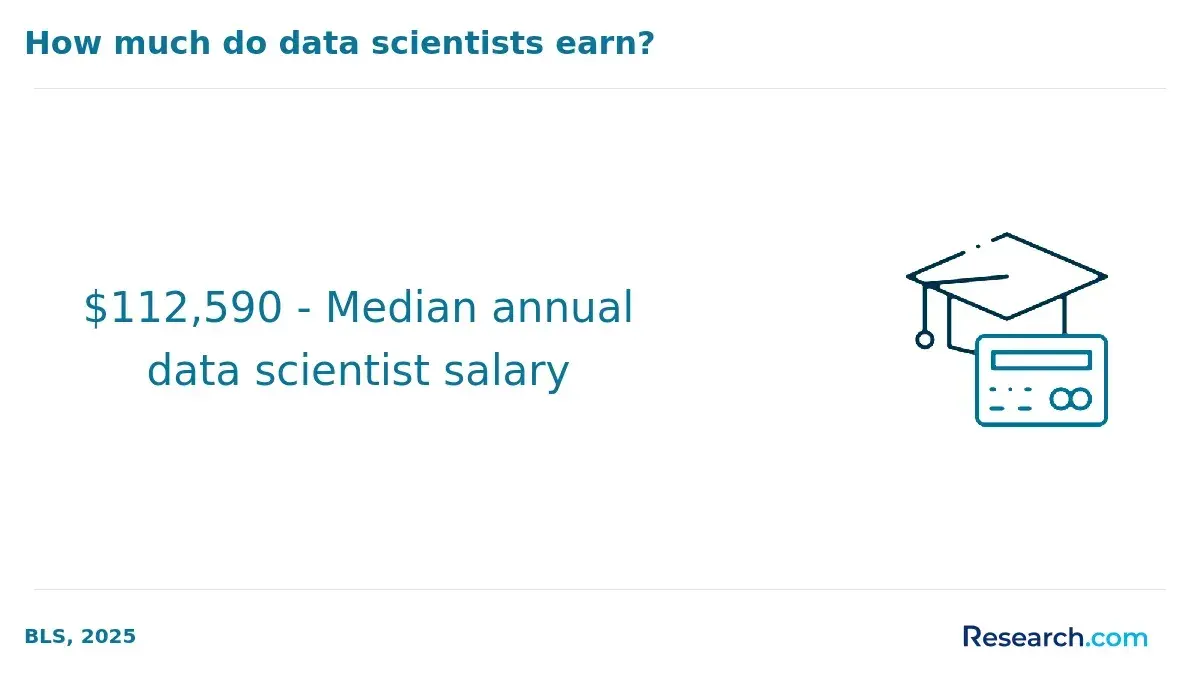
Graduates trained in artificial intelligence can expect salaries influenced by role, experience, and industry. Data scientists, closely related professionals, earned a median salary of about $108,000 in the U.S. as of May 2024 (U.S. Bureau of Labor Statistics).
Entry-level positions typically start from $70,000 to $85,000, especially in smaller companies or startups.
Typical salary ranges by role include:
- Data Scientist: $85,000 to $135,000, varying with experience and location.
- Machine Learning Engineer: $95,000 to $140,000, often higher in tech hubs like Silicon Valley or New York City.
- AI Research Scientist: $100,000 to $160,000, frequently with bonuses for publications or patents.
- AI Software Developer: $80,000 to $120,000 depending on skills and project complexity.
Shift workers earning artificial intelligence degrees should target flexible and remote roles, which are increasing in demand. Specialized certifications in fields like natural language processing or computer vision can boost earnings.
Industries such as healthcare, finance, and automotive may offer higher pay, particularly for advanced expertise or leadership roles.
Geographic factors also impact salaries, with metropolitan tech centers paying more but having higher living costs. Continuous skill development is essential to advancing beyond initial salary ranges in this fast-evolving field.
Which certifications can complement an AI degree for job advancement?
Certifications complementing an artificial intelligence degree help professionals gain specialized, marketable skills that accelerate career growth. Cloud certifications like AWS Certified Machine Learning - Specialty and Google Cloud Professional Data Engineer validate expertise in deploying scalable AI models within cloud infrastructure.
These skills are essential for AI-driven applications in many industries.
Data science credentials, such as the Certified Data Scientist from the Data Science Council of America (DASCA) or the IBM Data Science Professional Certificate, improve proficiency in statistics, data analysis, and machine learning algorithms. These are vital for bridging theoretical AI knowledge with practical data challenges.
Programming and engineering certifications, including Microsoft Certified: Azure AI Engineer Associate and TensorFlow Developer Certificate, demonstrate hands-on skills with AI frameworks and software development, positioning candidates for implementation-focused roles.
Ethics and security certifications like Certified Information Systems Security Professional (CISSP) or specialized AI ethics credentials address the growing need for responsible AI deployment and strong data governance.
A report from PwC, the 2024 Global AI Jobs Barometer, reveals AI-skills job postings typically offer about 25% higher wages than comparable roles without these requirements.
Shift workers benefit from flexible, modular certification programs with online, self-paced formats that fit irregular schedules while supporting continuous learning-key to staying current with AI technology advances.
Other Things You Should Know About Artificial Intelligence
While a background in computer science is beneficial for artificial intelligence programs, it is not always strictly required. Many programs offer foundational courses in programming, mathematics, and data structures to bring students up to speed. However, familiarity with logical thinking and some coding experience can significantly ease the learning process.
Yes, many AI degree programs designed for shift workers provide flexible access to hands-on projects and labs through virtual labs, recorded sessions, and asynchronous assignments. These alternatives allow students to complete practical work on their own time, accommodating nontraditional schedules without compromising educational quality.
Most accredited AI degree programs now incorporate ethics as a core part of their curriculum. Courses often cover topics like bias in algorithms, data privacy, and responsible AI use, preparing students to understand and address ethical challenges in the field.
In 2027, shift workers enrolling in AI degree programs face challenges like balancing variable work hours with study schedules, managing hands-on project deadlines, and accessing campus resources during off-peak hours. Programs addressing these issues often offer flexible timelines and online resources.
AI degree programs in 2027 offer asynchronous online courses, enabling access to lectures and materials anytime. Some programs provide flexible project deadlines. For further specialization in relevant fields, consider a master’s in AI policy and governance.
References
- Artificial Intelligence Course Eligibility: Requirements & Prerequisites https://www.mygreatlearning.com/artificial-intelligence/courses/eligibility
- AI Engineer Salary Guide 2026 | Pay by Role, City & Skill https://www.kore1.com/ai-engineer-salary-guide/
- B.Sc. in Artificial Intelligence https://www.studyinpoland.pl/en/programme
- Top AI Certifications to Advance Your Career https://whitefiretechnologies.com/top-ai-certifications-to-advance-your-career/
- How Long Does It Take to Complete an AI Course https://www.epw.com/blog/courses/how-long-is-ai-course
- What Are the Prerequisites for AI Course? | H2K Infosys Blog https://www.h2kinfosys.com/blog/what-are-the-prerequisites-for-ai-course/
- Top 10 Highest Paying Artificial Intelligence (AI) Jobs 2025 | Nexford University https://www.nexford.edu/insights/highest-paying-ai-jobs
- The Prerequisites for Artificial Intelligence- IABAC - IABAC https://iabac.org/blog/what-are-the-prerequisites-for-artificial-intelligence-a-modern-approach
- 11 Online AI Courses That Can Help You Stay Ahead | The Muse https://www.themuse.com/advice/ai-courses
- Best AI Certifications to Boost Your Career in 2026 – Dataquest https://www.dataquest.io/blog/best-ai-certifications/