2027 AI Master's Degrees for Government Employees

Co-Founder and Chief Data Scientist
Government employees often seek career growth opportunities but face challenges when transitioning into tech sectors like artificial intelligence due to their unrelated undergraduate backgrounds and demanding schedules. Traditional degree programs may lack the flexibility or targeted curriculum needed to develop relevant AI skills efficiently. This gap limits access to roles that leverage AI for public service innovation and policy development.
This article outlines master's degree options designed specifically for government employees, emphasizing accredited, flexible paths that accommodate professional commitments and provide the foundational knowledge necessary to pivot successfully into the artificial intelligence industry.
Key Things You Should Know
- AI master’s degrees for government employees often emphasize public sector applications such as data governance, cybersecurity, and policy-driven analytics, preparing professionals to manage technology initiatives within regulatory and compliance frameworks.
- Many programs offer flexible scheduling, online delivery, and tuition assistance eligibility, enabling federal, state, and local employees to pursue graduate education while maintaining full-time public service roles.
- Coursework frequently includes ethics, privacy protection, and responsible AI deployment, which are critical competencies for government agencies responsible for safeguarding sensitive data and ensuring transparent decision-making.
What is an AI master's degree, and how is it used in government roles?
An AI master's degree for government professionals provides in-depth knowledge in machine learning, natural language processing, robotics, and data analytics. These programs balance theoretical foundations with practical applications, training graduates to create AI systems that enhance government operations, improve decision-making, and optimize public services.
Applications of AI master's degree in public sector jobs include:
- Automating data analysis to detect fraud and security threats.
- Enhancing predictive models for resource allocation and emergency response.
- Improving citizen services through chatbots and intelligent systems.
- Supporting policy development with AI-driven insights.
The U.S. federal government reported 1,757 AI use cases across agencies in FY2024, covering areas such as cybersecurity and healthcare (Office of Management and Budget, FY2024 Agency AI Use Case Inventories). This vast implementation highlights the demand for skilled professionals trained in AI.
Prospective students should look for curricula offering hands-on projects within government data environments, exposure to ethical and regulatory frameworks, and interdisciplinary studies combining computer science, statistics, and public administration.
Some programs include partnerships with federal agencies to provide real-world experience. For those seeking flexible options, an accelerated computer science degree with AI components can be a valuable pathway.
Professionals pursuing this degree often face challenges such as integrating AI with legacy systems and ensuring transparency in deployment. Education tailored for government employees addresses these issues, equipping graduates to develop solutions aligned with compliance, security, and public accountability standards.
Which AI master's programs are best for federal, state, and local employees?
Federal, state, and local government employees seeking AI master's degree programs for federal employees should focus on universities that emphasize practical applications, government data security, and interdisciplinary collaboration. Carnegie Mellon University, Massachusetts Institute of Technology (MIT), and Stanford University top U.S. computer science graduate program rankings, offering specialized AI tracks in machine learning, data science, and ethical AI-skills essential for public sector careers.
Carnegie Mellon's Master of Science in Artificial Intelligence and Innovation features project-based coursework ideal for employees involved in public policy or security. MIT's programs link AI research with government challenges such as cybersecurity and autonomous systems, while Stanford focuses on scalable machine learning and human-centered AI for public management and infrastructure roles.
These programs are well suited for those pursuing the best ai master's courses for state and local government workers.
For employees needing flexible scheduling or remote options, accredited online AI master's degrees maintain robust curricula with government-focused electives. Many programs also support security clearances or offer partnerships with federal agencies to ease career transitions.
Key factors in selecting government-oriented AI programs include:
- Access to interdisciplinary faculty combining AI and public policy expertise
- Capstone projects using government data or simulations
- Flexible formats supporting current employment commitments
- Alignment with defense or civil service missions
These considerations help ensure public employees acquire relevant skills to meet evolving AI demands. Prospective students can also explore affordability and program rankings through resources like the data science major ranking.
How do you verify accreditation for AI master's programs in the U.S.?
To verify accreditation for AI master's programs in the U.S., start with the U.S. Department of Education's (USDE) Database of Accredited Postsecondary Institutions and Programs. This authoritative source lists 19 federally recognized institutional accreditors, ensuring schools meet reputable standards.
Only programs accredited by these agencies conform to federal quality and rigor requirements.
Identify the accreditor overseeing the university offering the AI master's degree. Common regional accreditors include the Middle States Commission on Higher Education and the Higher Learning Commission. National accreditors, although fewer, serve specialized or vocational schools.
Confirming that the accreditor is on the USDE list helps avoid unaccredited or diploma mill programs.
Check the institution's official website or contact admissions for documented proof of accreditation. Many schools display accreditors' seals, but cross-reference with the government database as these can be misleading.
Remember, accreditation usually applies to the entire institution rather than just individual programs, which is important for verifying legitimate accreditation for AI master's programs in the U.S. through recognized regional accrediting agencies.
For government employees, confirming accreditation is essential, since many agencies require accredited degrees for tuition reimbursement or promotion eligibility. Employers also depend on accreditation to validate skills gained through an AI master's degree.
Review renewal dates and any warnings issued against accreditors or institutions; recognition status can change. Use the USDE site or the Council for Higher Education Accreditation directory for reliable data nationwide.
Many students also explore affordable options in related fields-check out engineering degrees as a complementary pathway.
What admissions requirements are typical for AI master's programs?
Admissions requirements for AI master's programs vary but generally include a bachelor's degree in fields such as computer science, engineering, or mathematics. Foundational knowledge in programming, calculus, linear algebra, and statistics is typically expected.
Minimum GPA requirements often hover around 3.0 on a 4.0 scale, with some schools placing additional emphasis on research experience or coursework in machine learning or data science. These details are especially relevant for government employees considering AI master's program admission criteria for government employees, who may need to demonstrate applied skills and prior experience in public sector roles.
Many programs no longer require the GRE, following trends highlighted by ETS data, which show over 1,700 U.S. graduate programs waiving this test. GRE scores tend to be optional if candidates hold advanced degrees or significant professional experience.
Letters of recommendation, usually two to three, remain crucial and must emphasize technical capabilities and academic potential. Statements of purpose and resumes showcasing relevant work or research are also common, particularly for applicants transitioning from government jobs or other sectors.
International applicants must often prove English proficiency via TOEFL or IELTS exams. Competitive programs may include coding challenges or technical interviews to assess practical skills. Early preparation in prerequisite subjects, coupled with demonstrated practical AI knowledge, can improve chances.
Those interested in specialized study paths in tech fields might explore affordable cybersecurity programs as well.
Typical application requirements for AI master's degrees in public sector settings thus combine academic credentials, test waivers, recommendation letters, and proof of relevant experience to create a comprehensive profile.
What courses and skills are covered in an AI master's curriculum?
Master's degrees in artificial intelligence prepare government professionals for both technical and strategic roles through a comprehensive curriculum. Core courses include machine learning, data structures, algorithms, and statistics, providing essential knowledge to design and understand intelligent systems.
Programming languages such as Python and SQL are emphasized, aligning with labor market data that highlights Python as the most sought-after skill in U.S. AI and data science job postings, according to Lightcast's 2024 analytics.
Students develop expertise in supervised, unsupervised, and reinforcement learning models while gaining skills in data wrangling, cleansing, and visualization to effectively manage real-world datasets. Ethical considerations and AI policy are also integral, especially for government roles involving public data and decision-making responsibilities.
The curriculum often includes hands-on projects or internships focusing on applications such as natural language processing, computer vision, and robotics. Skills in cloud computing and big data platforms like AWS and Azure prepare students to handle AI workflows at scale.
Advanced topics often cover neural networks, deep learning architectures, AI optimization, and explainable AI to enhance transparency in the public sector. Students learn to apply AI in forecasting trends, optimizing resources, and automating routine tasks, ensuring their expertise is highly relevant to public administration challenges.
What online and hybrid AI master's formats work best for working public servants?
Online and hybrid master's programs in artificial intelligence offer flexible solutions ideal for government employees balancing work with study. Fully online formats allow asynchronous participation in lectures, assignments, and discussions, fitting diverse public sector schedules.
Hybrid options add occasional in-person sessions, such as weekend workshops or residencies, that enhance networking and practical skills without requiring daily commuting.
Many programs adopt modular or accelerated designs, enabling part-time progress with as few as one to two courses per semester. This approach helps reduce workload stress and supports steady advancement.
Key features to look for include virtual advising, employer partnerships, and career support services tailored to federal and state job markets.
Data from the National Center for Education Statistics (NCES) shows 28% of U.S. postsecondary students enrolled exclusively in distance education in fall 2024, underscoring broad acceptance of online learning. Prioritizing curricula that integrate applied projects on government data or public policy challenges ensures skills transfer directly to job roles.
Choosing programs with asynchronous lectures complemented by periodic synchronous sessions, backed by experienced faculty and robust virtual resources, optimizes learning for working professionals navigating evolving artificial intelligence responsibilities.
How long do AI master's programs take, and what do they cost?
AI master's programs typically last two years full-time, though part-time and accelerated options can extend this to three or four years. These flexible formats are particularly beneficial for working professionals, including government employees, who balance study with their job responsibilities.
Online programs also offer added convenience, often spreading coursework over multiple semesters.
Tuition costs vary widely depending on the institution and residency. Public universities usually offer the most affordable rates, especially for in-state students. According to the College Board's Trends in College Pricing 2024, the average full-time in-state graduate tuition and fees at public four-year institutions are $12,960 annually.
Private institutions and out-of-state tuition fees can exceed $30,000 per year, sometimes totaling over $60,000 for the entire program.
Additional expenses to consider include books, software licenses needed for AI coursework, and technology fees. Some programs require summer courses or thesis work, which may increase both cost and completion time.
Many employers, particularly in government, offer tuition assistance or reimbursement plans that can significantly reduce out-of-pocket expenses.
- Typical duration: 2 years full-time, 3-4 years part-time or online
- Tuition range: $12,960 (public in-state) to over $60,000 (private)
- Extra costs: books, software, technology fees
- Flexible options benefit working professionals
- Check for employer tuition assistance
What scholarships, tuition assistance, and employer benefits support government employees?
Government employees pursuing a master's degree in artificial intelligence benefit from multiple financial aid options, including Pell Grants, which offer non-repayable support for eligible students. For FY2025, the maximum Pell Grant increased to $7,395.
Federal and state tuition assistance programs also help cover graduate education costs. Many agencies provide tuition reimbursement plans, such as the Federal Employee Tuition Assistance (FETA) program, offering up to $5,250 annually for approved courses in fields like technology and data science, including artificial intelligence.
Additional resources include workforce development grants or scholarships available through some state governments, often requiring a commitment to continue public service after graduation. Employer benefits may extend to paid study leave, access to government-sponsored online learning, and mentoring programs.
Specific agencies like the Department of Defense or the National Science Foundation occasionally offer grants or fellowships to support AI research among government personnel.
To maximize funding, employees should combine Pell Grants, employer tuition support, and state scholarships. Early application and approval are critical. Contacting financial aid offices and agency education coordinators ensures access to the latest information on eligibility, deadlines, and documentation requirements.
What AI jobs can government employees qualify for after a master's degree?
Government employees holding a master's degree in artificial intelligence can pursue advanced careers as data scientists, machine learning engineers, AI policy analysts, and AI ethics specialists. The U.S. Office of Personnel Management established the federal job series for Data Scientists (GS-1560) in 2024, providing a formalized career path for AI and data roles across various agencies.
Data scientists apply AI techniques to analyze large datasets for policy development, security, and enhancing public services.
Additional AI-related government positions include research analysts focused on algorithm creation, AI system auditors addressing bias and reliability, and automation experts developing robotic process automation.
AI project managers and cybersecurity specialists also integrate AI into coordinating initiatives and threat detection.
Essential skills for these roles encompass proficiency in machine learning frameworks, natural language processing, computer vision, and statistical modeling. Knowledge of government regulations and ethical standards for AI usage is vital, with many agencies offering advanced training to meet these demands.
The GS-0343 series (management and program analysis) increasingly incorporates AI responsibilities, allowing master's graduates to influence AI strategy and implementation within the federal government. Experience with federal data systems, secure coding, and interagency collaboration benefits those pursuing these roles.
Graduates can expect to contribute to policy formulation, operational efficiency, and public safety improvements through AI-powered tools. These specialized federal series offer clear advancement paths with competitive pay aligned with the GS pay system.
What salaries and job outlook can AI master's graduates expect in public sector roles?
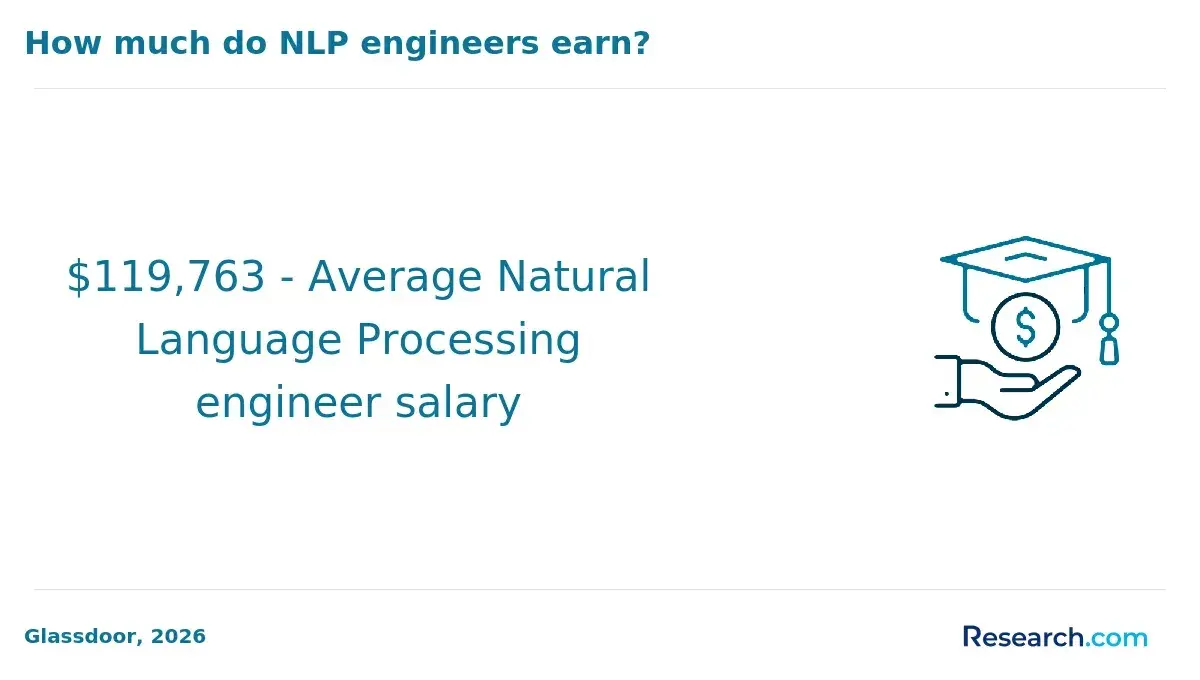
Graduates holding a master's degree in artificial intelligence targeting public sector jobs will find competitive salaries and strong job prospects. According to the U.S. Bureau of Labor Statistics, computer and information research scientists-often a category for AI experts-earn a median annual wage of $145,080.
Government roles commonly fall within this range and include additional benefits such as job security and pension options.
The need for AI professionals is rising across federal, state, and local agencies. Positions like data scientists, machine learning engineers, and cybersecurity analysts play a vital role in upgrading public systems.
Notably, organizations such as the Department of Defense and the National Aeronautics and Space Administration actively seek AI talent for cutting-edge projects.
The federal AI workforce is projected to grow by about 15% over the next decade, faster than many traditional tech careers. Opportunities exist in diverse sectors including intelligence, healthcare, and public safety, where AI enhances data processing, predictive analytics, and threat detection.
Entry-level AI positions in government often start between $90,000 and $110,000. Mid-career salaries exceed $130,000, while senior or specialized roles can surpass $160,000 annually. Location and security clearance status influence pay scales significantly.
- Security clearances are crucial and often come with salary benefits in public AI jobs.
- Develop expertise in federally relevant AI fields such as natural language processing and computer vision.
- Regularly check USAJobs and agency-specific listings for AI opportunities requiring technical skills and clearances.
Other Things You Should Know About Artificial Intelligence
Most AI master's programs in 2027 for government employees require a part-time commitment of approximately 20-25 hours per week over two years. This allows employees to balance their studies with their work responsibilities while completing around 36 credit hours.
In 2027, several universities and institutions offer scholarships and funding options tailored for government employees enrolling in AI master's programs. These financial aids often include public service scholarships, tuition reimbursement programs, and government partnerships, easing the financial burden for eligible candidates pursuing advanced AI education.
Most programs require a minimum 3.0 GPA on a 4.0 scale for admission. Some schools accept a 2.75 GPA if the applicant has strong work experience, while selective programs may require transcripts, two references, and a statement of purpose before review.
References
- 25 Best Master's in AI Programs - MastersInAI.org https://www.mastersinai.org/degrees/best-masters-in-artificial-intelligence/
- AI Fundamentals for Government Employees Course IDTECH7030 https://www.graduateschool.edu/courses/ai-fundamentals-for-federal-employees
- Wilson Center Research Fellowship https://www.benefits.gov/benefit/2963
- What kind of job could I find after finishing this master? https://www.tue.nl/en/education/what-kind-of-job-could-i-find-after-finishing-this-master
- Top AI Graduate Programs To Kickstart Your Career in Artificial Intelligence Today https://www.investopedia.com/top-ai-graduate-programs-to-kickstart-your-career-in-artificial-intelligence-today-11916749
- What You'll Learn in an AI MS Program | University of Bridgeport https://www.bridgeport.edu/news/masters-in-artificial-intelligence-program-curriculum/
- M.SC. IN Artificial Intelligence https://put.poznan.pl/msc-artificial-intelligence
- AI fundamentals for public servants: Opportunities, risks and strategies https://aiforgood.itu.int/aifg-course/ai-fundamentals-for-public-servants-opportunities-risks-and-strategies/
- M.Sc In Artificial Intelligence - Top Colleges, Eligibility, Fees, Admission 2026 https://collegevidya.com/blog/msc-in-artificial-intelligence-detailed-guide/
- FEEA https://www.nteu.org/who-we-are/feea