2027 AI Master's vs Data Science Master's: What Should You Choose?

Co-Founder and Chief Data Scientist
Facing the decision between pursuing a 2027 AI master's or a data science master's can be daunting for professionals seeking to transition careers. Each path offers distinct skill sets, job markets, and long-term opportunities. Choosing the wrong program might delay career progress or limit employment options. Navigating these choices requires clarity about industry demands and educational outcomes.
This article will analyze the differences in curriculum, career trajectories, and market relevance of AI versus data science master's programs to help readers make an informed decision that aligns with their goals.
Key Things You Should Know
- AI master's programs emphasize machine learning, neural networks, and robotics, reflecting a projected 23% job growth in AI roles by 2030, according to the U.S. Bureau of Labor Statistics.
- Data science master's focus on statistical analysis, data management, and business intelligence, with 45% of data scientists employed in tech, finance, and healthcare sectors as of 2025.
- Salary prospects slightly favor AI graduates, averaging $115,000, compared to $110,000 for data science master's holders, but industry demand and specialization significantly affect outcomes.
What are the core differences between an AI Master's degree and a Data Science Master's degree?
An AI master's degree focuses on creating algorithms, models, and systems that enable machines to perform tasks requiring human-like intelligence. This includes deep learning, natural language processing, computer vision, and robotics. Coursework often covers neural networks, reinforcement learning, and AI ethics. In contrast, a data science master's degree emphasizes data analysis, statistical methods, and data-driven decision-making. Students work with large datasets, perform data mining, and apply machine learning mainly to extract actionable insights rather than develop autonomous systems. This distinction is central to understanding the differences between ai master's degree and data science master's degree programs.
Regarding career paths, AI graduates often become machine learning engineers, AI researchers, or robotics specialists focused on building intelligent solutions. Data science graduates typically pursue roles like data analysts, data engineers, or business intelligence specialists who interpret and leverage data for strategic advantage. According to the LinkedIn Jobs Report, applied artificial intelligence jobs grew 74% year-over-year, far outpacing the 28% growth in data science positions, signaling strong market demand for AI expertise.
The core curriculum comparison of ai and data science master's programs shows that AI demands extensive programming in Python and frameworks such as TensorFlow or PyTorch, along with solid foundations in linear algebra and calculus. Data science programs include programming but emphasize statistical software, data visualization, and database management, requiring deeper knowledge of statistics and probability. This academic focus aligns closely with the career objectives each degree supports.
For working professionals evaluating options, an AI degree suits those aiming to design intelligent systems and innovate in automation. A data science degree is ideal for those who plan to analyze complex datasets to support business strategies. Both require ongoing learning but differ fundamentally in purpose and application.
Which master's degree offers better job prospects and salary potential in 2027?
In 2027, a master's degree in artificial intelligence (AI) offers stronger job prospects and higher salary potential compared to a data science master's. According to the U.S. Bureau of Labor Statistics 2024 Occupational Outlook Handbook, AI specialists earn an average annual salary of $164,000, which is 26% higher than the $130,000 average for data scientists. This salary premium highlights growing demand for AI expertise across technology, healthcare, and autonomous systems.
The curriculum for AI master's programs typically covers advanced machine learning, neural networks, and robotics, aligning well with cutting-edge industries that require specialized skills. Graduates often work as AI research scientists, machine learning engineers, or computer vision specialists, roles that usually offer higher compensation and responsibilities. This focus supports favorable master's degree job prospects in AI and data science.
By contrast, data science master's graduates secure broader analytical roles such as data analyst, business intelligence developer, and statistical modeler. Although data science offers versatile opportunities, higher market saturation can limit salary growth compared to AI careers. Professionals should weigh these differences carefully based on their career ambitions.
AI programs often demand stronger mathematical and programming skills, which can influence admission and success rates. For those seeking broader data-driven decision-making roles, data science masters provide greater versatility. Prospective students can explore the top data science master's programs in the US to find affordable options tailored to their goals.
Salary potential comparison for AI and data science graduates underscores that AI masters promise greater financial returns and more specialized job opportunities in the evolving job market.
What are the typical admission requirements and prerequisites for each program?
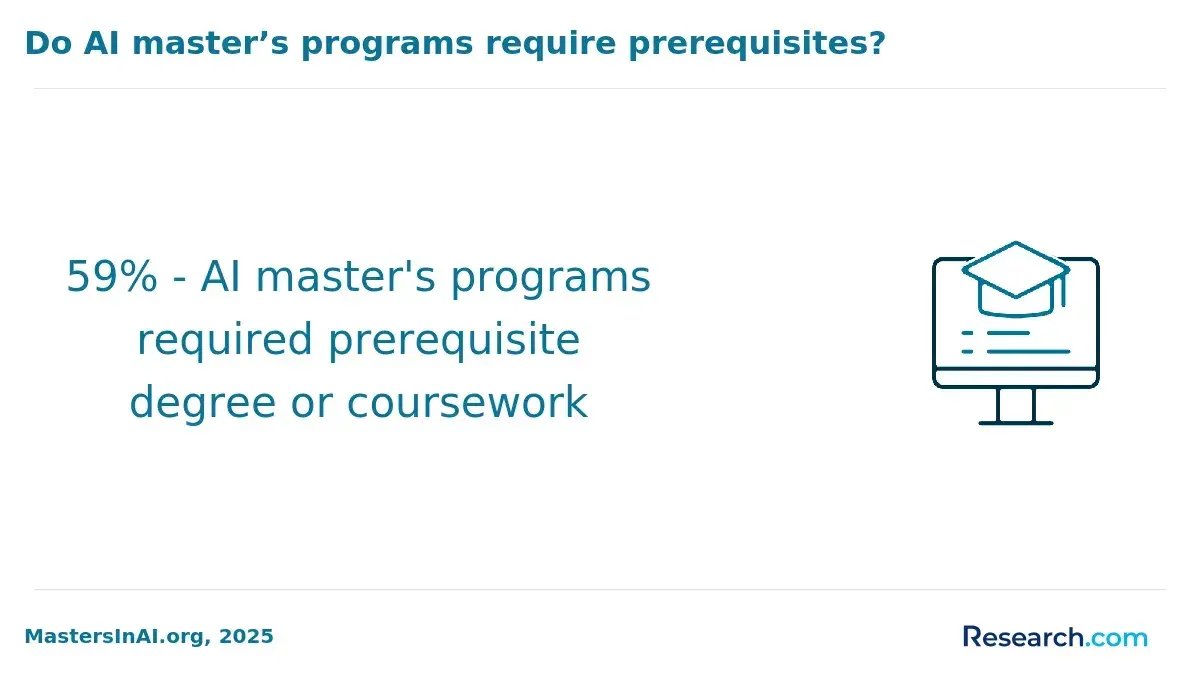
Admission requirements for artificial intelligence master's programs in North America generally emphasize a bachelor's degree in computer science, engineering, mathematics, or related disciplines with a strong focus on advanced mathematics. Research indicates that 68% of top-tier AI master's programs require proficiency in linear algebra and calculus, reflecting the technical rigor expected. In comparison, data science master's prerequisites for top universities in North America display more flexibility in undergraduate backgrounds, admitting students from fields like statistics, economics, or social sciences, although 52% still request advanced mathematics skills.
Both fields typically expect programming experience, but AI programs prioritize languages such as Python, C++, or Java, alongside knowledge of algorithms and data structures. Data science programs may accept applicants with less formal coding experience if they show strong analytical abilities. Professional certifications or work experience in data analysis tools like SQL, R, or Tableau often supplement these requirements. Standardized tests like the GRE remain an admission factor but are becoming optional in many cases.
Letters of recommendation and statements of purpose highlighting technical projects or research hold significant value. AI programs often look for demonstrated research aptitude or internships in machine learning or robotics, while data science applications may accept professional experience in analytics or business intelligence roles. Prospective students interested in AI and data science can also explore options for the cheapest engineering degree online to build foundational skills affordably.
Applicants should aim to showcase strong mathematical proficiency and programming foundations for AI, while emphasizing applied quantitative skills and relevant experience for data science admission success.
How do curriculum and coursework differ between AI and Data Science master's programs?
Curriculum differences between AI and data science master's programs mainly reflect their distinct technical focuses. AI graduate degrees dedicate about 45% of coursework to machine learning and neural networks, highlighting algorithm design, deep learning, and optimization. Data science programs allocate closer to 28% on these topics but emphasize statistical methods, data visualization, and data wrangling, according to the 2024 Course Comparison Analysis by edX and Coursera.
Students studying AI delve deeply into neural networks, reinforcement learning, and natural language processing, equipping them to build intelligent systems and automated decision-making models. In contrast, data science coursework covers hypothesis testing, regression analysis, and exploratory data analysis, fitting roles that require extracting insights from complex datasets rather than developing autonomous AI.
The practical components also differ between these fields. AI programs often feature robotics, computer vision, or speech recognition projects, emphasizing hands-on intelligent system design. Data science curricula focus on real-world data challenges like large-scale data management, predictive analytics, and dashboard creation with tools such as Tableau and Power BI. This blend readies students for roles centered on data interpretation and strategic business intelligence.
Choosing between the two paths depends on career goals: those interested in algorithm development or research should pursue AI-focused programs, while those targeting analytics or data-driven strategy roles should prioritize data science degrees. Prospective students can explore top options, including online masters in data science, to match their ambitions and learning preferences.
What is the average program length, format, and total cost for each degree?
The average duration for full-time AI and data science master's programs ranges between 1.5 to 2 years, with flexible options such as part-time and online formats available to accommodate working professionals. AI master's programs generally require 30 to 36 credit hours, while data science degrees usually need 30 to 40 credits, often including a capstone or thesis project. Part-time or online study paths may extend the total program length to three years or more depending on scheduling.
Cost differences exist between these fields. A survey by the National Association of Graduate Admissions Professionals reports that full-time AI master's degrees at public universities cost an average of $67,000 for domestic students, whereas data science programs average $58,000. Both programs typically experience an 8% annual tuition increase. Additional expenses such as fees, materials, and living costs vary by institution and study format, with some online programs bundling resources to reduce expenses.
Choosing between AI and data science degrees depends on personal timelines and financial flexibility. Accelerated full-time AI programs offer quicker workforce entry but require higher upfront costs, while part-time data science programs allow steady income with longer tuition payment periods. Exploring financial aid, scholarships, waivers, or employer tuition assistance early can significantly reduce these costs.
Are AI and Data Science master's degrees available in online, hybrid, and campus formats?
Master's degree programs in artificial intelligence and data science are increasingly offered through online, hybrid, and on-campus formats to meet diverse student needs. A recent survey by the Chronicle of Higher Education shows that 73% of institutions provide at least one hybrid or fully online option for these disciplines, highlighting a significant shift toward accessible and flexible learning.
Between 2022 and 2024, online ai master's programs expanded by 156%, surpassing the 89% growth of online data science master's degrees. This rapid growth allows students to pursue advanced education without relocating or interrupting their careers, particularly benefiting working professionals balancing jobs and family commitments.
While campus programs remain dominant, especially at research universities offering lab access and faculty collaboration, hybrid options provide a practical balance with remote coursework combined with on-site visits. These formats enable students to gain hands-on experience while maintaining flexibility.
Prospective students should consider program delivery alongside curriculum quality, faculty expertise, and networking opportunities to maximize long-term career benefits. Since not all schools offer every format for both ai and data science, researching individual institutions is essential to find programs aligned with personal constraints and career goals.
Which accreditation bodies and professional certifications matter for AI and Data Science degrees?
ABET accreditation is a significant quality indicator for ai and data science master's programs. Graduates from ABET-accredited programs experience a 34% higher employment rate within six months compared to those from non-accredited programs, according to the Association to Advance Collegiate Schools of Business 2024 report. This accreditation verifies that the program meets comprehensive standards in curriculum, faculty expertise, and alignment with industry needs.
Professional certifications from Google, AWS, and Microsoft are widely respected in ai and data science fields and enhance employability. Graduates of ABET-accredited programs are 2.3 times more likely to obtain these certifications, demonstrating a strong connection between accreditation and industry demands.
Prospective students should ensure their chosen program holds accreditation from recognized entities like ABET or U.S. Department of Education-approved regional agencies. For ai master's degrees, look for those that incorporate training targeting certifications such as Google Cloud Professional Data Engineer or Microsoft Certified: Azure AI Engineer, which validate practical skills sought by employers.
In data science, certifications like AWS Certified Data Analytics and Google's Professional Machine Learning Engineer complement theoretical knowledge with cloud and engineering expertise. Employers increasingly favor candidates who combine accredited education with one or more of these certifications for up-to-date, job-ready capabilities.
Selecting a master's program that offers ABET accreditation along with professional certification pathways maximizes career potential and credibility in both ai and data science.
What specific career roles and job titles can graduates pursue with each degree?
Graduates holding a master's degree in artificial intelligence often step into specialized roles like machine learning engineer, AI research scientist, and robotics engineer. Salary data from Levels.fyi and Blind 2024 reveals average starting salaries of $128,000, $142,000, and $135,000 for these positions, respectively. These careers revolve around designing algorithms, creating autonomous systems, and performing advanced AI research. For example, machine learning engineers build predictive models for sectors such as healthcare and finance, while AI research scientists develop innovative AI methods mainly in academia or corporate labs. Robotics engineers apply AI to hardware, crafting intelligent machines used in manufacturing or defense.
In contrast, graduates with a master's in data science typically pursue roles like data scientist, analytics engineer, or business analyst. Starting salaries for these positions average $110,000, $118,000, and $105,000, respectively. Their work centers on processing large datasets, performing statistical analysis, and translating insights into business strategies. Data scientists develop models for customer segmentation, analytics engineers design data pipelines to support reporting, and business analysts focus on strategy and process optimization based on trends.
The degree choice depends on career goals: an AI master's is ideal for those targeting algorithm development and research, while a data science master's suits those focused on leveraging data for actionable insights. Each path offers distinct roles, salary brackets, and specialized skills.
How does the job market demand and industry growth outlook compare between these two fields?
Job market demand for AI and data science masters varies in growth rate and industry focus. According to the U.S. Bureau of Labor Statistics 2024 Employment Projections, AI roles are projected to grow 35% through 2032, outpacing the 23% growth expected for data science positions. This faster expansion is driven by sectors like technology, healthcare, and autonomous systems, which generate nearly three times more AI job openings annually compared to data science fields.
AI graduates often engage in developing intelligent systems for medical diagnostics, autonomous vehicle navigation, or advanced robotics, reflecting strong investments in automation and machine learning. Data science masters, though growing more slowly, remain vital in big data analytics, business intelligence, and customer insights, with demand spread across finance, retail, and the public sector.
Students should note AI careers commonly require expertise in machine learning, neural networks, and algorithm development to keep pace with rapidly evolving AI products. Data science careers emphasize statistical analysis, data engineering, and visualization, offering flexibility across traditional data-driven industries.
Prioritizing AI master's programs may appeal to those targeting high-growth sectors and substantial salary potential, while data science offers broader industry options with strong analytical foundations. Both areas benefit from ongoing digitization and data reliance. The accelerated expansion and concentrated demand in AI roles provide a distinct advantage for students focused on innovative technological careers.
What factors should you consider when choosing between an AI master's and a Data Science master's?
Choosing between an AI master's and a data science master's depends heavily on your career goals, industry interests, and skill priorities. Graduates who align their specialization with their target industry experience 47% faster job placement and 22% higher starting salaries, according to PayScale Career Outcome Analysis 2024. For instance, specializing in AI within healthcare or biotech yields a 340% return on investment over 10 years, while data science specialization in finance offers a 310% ROI.
Consider the industries you want to impact. AI programs focused on machine learning, neural networks, and applications like robotics or natural language processing offer tailored skills for those fields. Data science is more suited for roles involving statistical analysis, big data management, and predictive modeling-key in finance, marketing, and operations sectors.
Curriculum differences matter: AI master's programs often include deep learning, computer vision, and reinforcement learning, whereas data science emphasizes data manipulation, database systems, and statistical computation. Reflect on which skillset aligns with your intended job function.
Your background also plays a role. Strong math and programming skills help in either field, but AI demands more specialized algorithmic knowledge. If applied analytics appeals more than building intelligent systems, data science could be more accessible.
Programs with direct industry partnerships enhance internship and employment opportunities. Aligning your master's with your desired sector can accelerate your career and boost return on investment.
Other Things You Should Know About Artificial Intelligence
While a computer science background is highly recommended for a master's in artificial intelligence, it is not always strictly required. Many programs offer foundational courses to help students from diverse fields build necessary programming and mathematical skills. However, proficiency in programming languages such as Python and knowledge of linear algebra and calculus will significantly improve your chances of success in AI graduate studies.
Yes, completing a master's degree in artificial intelligence can prepare you for roles in AI research, especially in applied areas like machine learning or natural language processing. However, many advanced research positions, particularly in academia or cutting-edge labs, often require a PhD. A master's degree can also lead to industry research roles where developing and implementing AI models takes priority over theoretical research.
In 2027, job prospects for AI and Data Science graduates are robust, with high demand in sectors like tech, finance, and healthcare. AI graduates may find opportunities in specialized roles like machine learning engineer, while data science graduates often pursue data analyst or data engineer roles.
Mathematics is fundamental to artificial intelligence, especially in understanding algorithms, optimization, and statistical modeling. Courses typically emphasize linear algebra, probability, statistics, and calculus. A solid mathematical foundation is essential not only to grasp theoretical concepts but also to effectively design and implement AI models.
References
- High School Classes Required for College Admission - National Association for College Admission Counseling (NACAC) https://www.nacacnet.org/high-school-classes-required-for-college-admission/
- Are the Minimum Admissions Requirements Enough to Get Into College? https://www.saraharberson.com/blog/minimum-admissions-requirements-enough-to-get-into-college
- Data Science Certifications and Institutional Accreditation | DASCA https://www.dasca.org/
- How Long Until Your Degree Pays Off? A Timeline by Program https://blog.methodistcollege.edu/degree-pays-off-timeline
- Is the job market turning into an employer’s market? 10 Current Job Market Trends You Should Know https://en.antal.pl/insights/article/is-the-job-market-turning-into-an-employer-s-market-10-current-job-market-trends-you-should-know
- 15 Recruiters Reveal If Data Science Certificates Are Worth It https://www.dataquest.io/blog/data-science-certificate/
- AI Master’s vs Data Science Master’s - AIDegreePrograms.org https://aidegreeprograms.org/resources/ai-masters-vs-data-science-masters/
- Data Science and Artificial Intelligence MSc | PGDip | PGCert - Online Course https://online.liverpool.ac.uk/programmes/msc-data-science-and-artificial-intelligence/
- ADaSci - Association of Data Scientists | AI & Data Science Community https://adasci.org/certifications
- The Future of Jobs Report 2025 https://www.weforum.org/publications/the-future-of-jobs-report-2025/in-full/2-jobs-outlook/