2027 Rolling Admission AI Associate Degree Programs

Co-Founder and Chief Data Scientist
Many professionals with undergraduate degrees in unrelated fields face challenges when seeking to enter the artificial intelligence industry. Traditional enrollment cycles and rigid admission deadlines often limit opportunities for timely career changes. This rigidity can delay skill acquisition and frustrate those eager to pivot quickly. Rolling admission associate degree programs in 2027 address these hurdles by offering flexible entry points throughout the year.
Such programs provide a practical, accredited pathway to build foundational AI skills without the wait. This article explores 2027 rolling admission AI associate degree options, helping readers identify flexible, accessible programs to accelerate their industry transition.
Key Things You Should Know
- Rolling admission for AI associate degree programs in 2027 allows students flexible enrollment dates, accommodating varying schedules and increasing access to tech education across the U.S.
- Most programs emphasize practical skills in machine learning, data analysis, and ethical AI, aligning with industry demands where AI job openings are expected to grow by 35% through 2030.
- Enrollment in AI associate degrees rose 22% from 2024 to 2025, reflecting growing workforce needs and the accessibility of rolling admissions in community colleges and technical schools.
What is an AI Associate Degree and how does it differ from a bachelor's degree or certificate?
An AI associate degree is a two-year program that builds foundational knowledge and technical skills in artificial intelligence, machine learning, and data management. This program balances programming, algorithms, and AI applications, blending theory with practical training. Compared to a bachelor's degree, which typically takes four years, an associate degree covers less advanced mathematics and fewer specialized AI domains. Bachelor's programs also include research methods and general education courses, preparing students for leadership roles and complex AI development tasks. Many students consider an associate degree as a stepping stone before pursuing a bachelor's degree, offering foundational skills with more flexibility.
One key advantage of AI associate degree programs over bachelor's degrees is the shorter time commitment while still providing a solid knowledge base. The degree equips graduates for roles such as AI technicians, junior data analysts, or developers working under supervision. In contrast, certificate programs in AI are even shorter and more narrowly focused, often lasting a few months to a year, targeting specific skills like neural networks or natural language processing. However, certificates tend to lead to lower lifetime earnings. According to the U.S. Bureau of Labor Statistics (2024), associate degree holders earn about 20% more than those with only certificates, reflecting the broader education and skill set obtained.
For prospective students seeking accelerated computer science paths related to AI, exploring options like the computer science degree accelerated can be beneficial. This offers a pathway combining speed with comprehensive training, ideal for building a strong AI career foundation.
Which schools offer rolling admission AI associate degree programs, and what accreditation should you verify?
Several U.S. schools offer rolling admission associate degree programs focused on AI, providing flexibility for students to apply anytime throughout the year. Institutions like Northern Virginia Community College, San Joaquin Valley College, and Rasmussen College include rolling admission options specifically for their AI and machine learning-related associate degrees, accommodating those who prefer flexible application timelines. However, applicants should confirm whether rolling admission applies to their specific AI program, as some schools restrict rolling admissions to general associate degrees only. Contacting admissions offices directly is advisable for the most current policies.
Accreditation is a key consideration when exploring which schools offer rolling admission AI associate degree programs in the United States. Only about 34% of AI and machine learning programs hold ABET accreditation, a specialized validation indicating that the program meets rigorous industry standards in curriculum and faculty expertise. Besides ABET, regional accreditation from bodies such as the Higher Learning Commission or SACSCOC indicates overall institutional quality but may not fully reflect a program's strength in AI and technology.
Proper accreditation affects credit transferability, employment opportunities, and financial aid eligibility. Prospective students can also explore options and compare costs among affordable programs by reviewing data science degrees, many of which include AI-related curricula. Ensuring a well-accredited program coupled with rolling admission can support timely enrollment and quality education in this evolving field.
What are the admission requirements for AI associate degree programs in 2027?
Admission requirements for ai associate degree programs generally prioritize accessibility and foundational skills. Most applicants must hold a high school diploma or equivalent, such as a GED. Community colleges often have rolling admission criteria for ai associate degrees, with acceptance rates reaching up to 95%, significantly higher than the approximate 65% rate at many four-year institutions. This approach supports open access and accommodates non-traditional students effectively.
Applicants may need to submit proof of completed secondary education and occasionally standardized test scores like the SAT or ACT, though many community colleges have waived these. Placement tests in math and English are common to evaluate readiness for college coursework. Students lacking strong math or programming skills might be required to take remedial courses before advancing to core subjects.
Programs sometimes recommend or require basic computer proficiency or introductory programming knowledge, demonstrated through prior coursework or certifications. Personal statements or letters of recommendation may be requested by more selective schools, while transfer policies benefit those with relevant work experience or prior college credits. For working professionals, part-time or online program options often ask for resumes to verify experience. Entry criteria focus on preparedness for foundational coursework rather than advanced expertise.
Prospective students looking for affordable options can explore the best online AI degree programs to find flexible paths. These programs blend accessibility with quality education to meet diverse student needs.
How long does an AI associate degree take to complete, and what is the typical cost?
An ai associate degree program duration in the United States typically spans about two years for full-time students. Part-time enrollment can extend completion to three or four years based on course load and scheduling flexibility. Programs generally cover foundational topics such as programming, machine learning, data structures, and ethics in artificial intelligence. Some institutions also offer specialized tracks like natural language processing or robotics to tailor learning paths.
The average cost of ai associate degree programs in the US varies widely. Public community colleges average around $5,600 per year in tuition, while private institutions may charge approximately $28,000 annually. These amounts exclude additional costs such as textbooks, fees, and supplies, which can add several hundred to thousands of dollars. Financial aid options, scholarships, and employer tuition reimbursement programs are vital to minimize overall expenses.
Many schools provide flexible options like rolling admission and online or hybrid formats, accommodating those with work or family commitments but potentially extending the time needed to graduate. Prospective students should consider the total cost across the entire program length and explore pathways that enable credit transfers to bachelor's degrees. Some community colleges have articulation agreements allowing seamless transitions.
For individuals researching affordable paths, there are several affordable cybersecurity programs that parallel the structure and cost considerations typical of ai associate degree offerings.
What core courses and technical skills are covered in an AI associate degree curriculum?
AI associate degree programs emphasize programming fundamentals, particularly Python, which is essential in 87% of entry-level AI jobs, according to LinkedIn Jobs data. Students gain skills in data structures and algorithms to enhance computational thinking and problem-solving abilities.
Mathematics plays a crucial role with courses in linear algebra, calculus, statistics, and probability theory, all foundational for machine learning and model evaluation. Core coursework includes supervised and unsupervised machine learning, where students learn model training and performance metrics.
Hands-on experience with frameworks like TensorFlow and PyTorch enables learners to build and deploy neural networks. Data management courses cover database querying and data preprocessing to ensure clean and usable datasets.
Ethics and algorithmic fairness are integrated into the curriculum to raise awareness about bias and societal impacts of AI technologies. Students participate in labs and projects focused on real-world applications such as image recognition and natural language processing.
Electives in robotics, computer vision, and cloud computing allow students to broaden their technical expertise. Proficiency in software development tools like Git and Linux command-line environments prepares candidates for modern professional workflows.
Are AI associate degree programs available online, on campus, or in hybrid formats?
AI associate degree programs offer flexible learning formats including online, on-campus, and hybrid, catering to diverse student needs. Online programs have experienced an 18% rise in STEM associate degree enrollments year-over-year, reflecting increased access for working adults and remote learners seeking foundational AI skills without relocation.
On-campus options remain important for students wanting hands-on experience, face-to-face interaction with instructors, and access to physical labs. These settings support collaborative projects essential for mastering AI fields like machine learning and data analysis through applied learning.
Hybrid formats now represent 42% of new AI programs, blending online coursework with periodic in-person sessions. This format suits students balancing careers, family, and study by offering both convenience and practical lab access.
Choosing the right program depends on personal learning preferences, schedule flexibility, and technology access. For example, full-time workers often prefer online or hybrid programs, while those seeking immersive lab work choose on-campus options. Many U.S. community colleges have embraced hybrid models, highlighting growing institutional investment to combine accessibility and quality in AI education, supported by data from the Babson Survey Research Group.
What entry-level AI and machine learning jobs can you pursue with an associate degree?
Graduates with an associate degree in artificial intelligence or machine learning can access a variety of entry-level roles that emphasize foundational skills. Common jobs include AI technician, machine learning technician, data analyst, junior AI developer, and AI support specialist. These roles typically involve assisting with the development, deployment, and maintenance of AI models under supervision.
AI technicians handle troubleshooting and management of AI hardware and software to ensure effective operation of machine learning models. Junior AI developers often write basic scripts, perform data preprocessing, and conduct model testing, serving as a bridge between research and operations teams. Data analysts apply machine learning skills to clean, organize, and interpret data, aiding decision-making.
The demand for such roles is growing significantly. Job postings for machine learning engineers have increased by 74% in recent years, with 31% explicitly welcoming candidates with associate degrees, according to Indeed Hiring Lab. This trend highlights expanding opportunities for those with two-year degrees in AI-related disciplines, especially roles that support experienced professionals.
Employers value practical skills in AI tools such as Python, TensorFlow, and basic Natural Language Processing. Certifications and internships further enhance job prospects. Entry-level professionals must be willing to engage in data collection, model validation, and iterative testing, which are foundational for career advancement.
Industry sectors like healthcare, finance, manufacturing, and software development increasingly adopt AI technologies, broadening the range of work environments beyond traditional tech companies.
What is the average salary for AI associate degree graduates, and what is the job outlook?
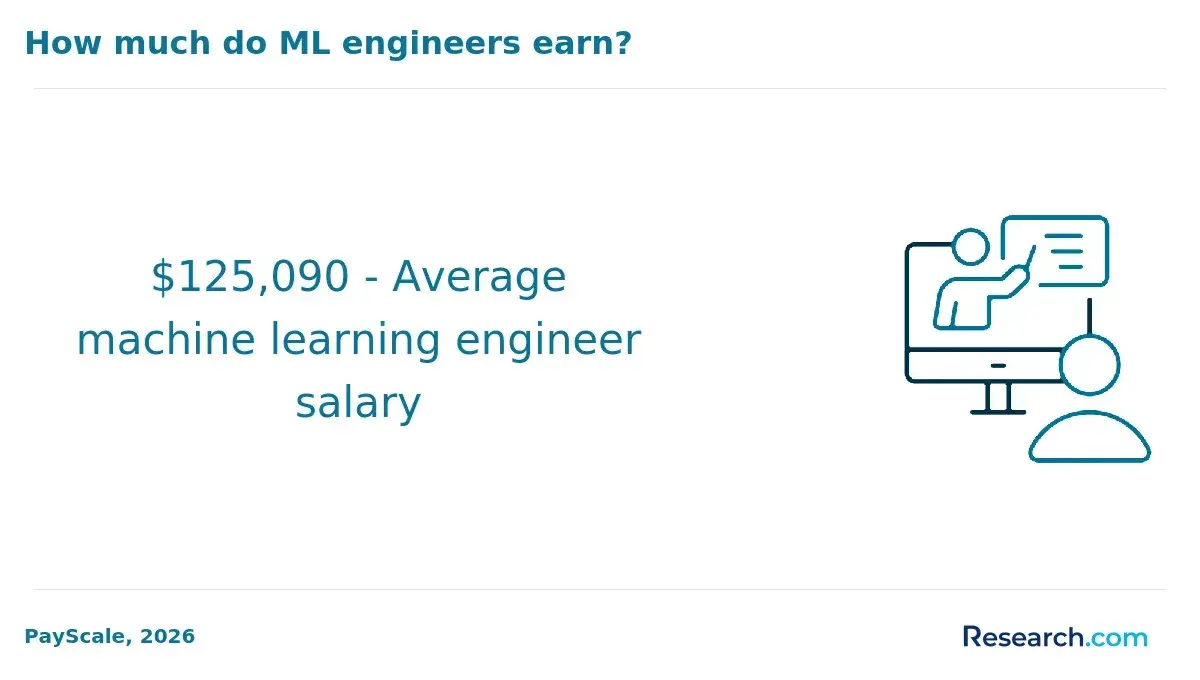
Graduates with associate degrees in artificial intelligence-related fields can anticipate median starting salaries near $62,000 annually, based on data from the U.S. Bureau of Labor Statistics. This figure typically applies to AI and machine learning technician roles, which are common entry points for those holding associate degrees in this area. Salaries vary depending on factors such as geographic location, employer type, and technical specialization, but $62,000 serves as a reliable national benchmark.
The job outlook is notably strong, with a projected growth rate of 36% through 2032-much faster than the average across all occupations. This surge corresponds with rising demand for AI expertise in industries like healthcare, manufacturing, finance, and technology. Skills in data preprocessing, AI model deployment, and automation support will open multiple entry-level opportunities.
Employers look for candidates experienced in programming languages like Python, familiar with machine learning frameworks, and knowledgeable in data science fundamentals. Graduates who earn industry certifications or complete internships alongside their degrees often secure higher starting salaries and improved job prospects. Metropolitan areas and tech hubs usually offer wages above the national median.
Given the fast-paced evolution of artificial intelligence technologies, continuous skill development is essential for maintaining competitive employment and income. The strong job growth projection reflects that AI associate degree holders entering the workforce now can expect both attractive pay and career advancement opportunities.
What industry certifications can you earn alongside or after completing an AI associate degree?
Industry certifications that complement or follow an AI associate degree can significantly boost career prospects and earning potential. Notable credentials include Microsoft Certified: Azure AI Fundamentals, which validates foundational AI and machine learning knowledge in cloud environments, and the IBM AI Engineering Professional Certificate, emphasizing practical skills for building and deploying AI models.
For those interested in data science as a pathway to AI roles, the Certified Analytics Professional (CAP) demonstrates proficiency in data analysis and interpretation. CompTIA's Data+ certification also equips professionals with essential skills for managing and analyzing data critical to AI applications.
Developers often pursue machine learning certifications such as Google's Professional Machine Learning Engineer or AWS Certified Machine Learning - Specialty, highlighting advanced expertise in designing and optimizing AI systems on major cloud platforms.
Vendor-neutral certifications like the Artificial Intelligence Board of America (ARTiBA) Certified Artificial Intelligence Professional cover broad AI concepts, ethical considerations, and practical implementation, appealing to employers seeking well-rounded AI associates.
Research by the National Skills Coalition shows that professionals with both an associate degree and industry certification earn 28% more than those with a degree alone, underscoring the value of certifications alongside formal education.
Choosing certifications aligned with career goals in cloud computing, data analytics, or specialized machine learning is essential. Many AI associate degree programs integrate or recommend these credentials to ensure graduates are job-ready in a competitive market.
How do you evaluate and compare AI associate degree programs to ensure quality and value?
Accreditation is a key factor when evaluating AI associate degree programs. Graduates from regionally or nationally accredited programs report an 89% employment rate within six months, significantly higher than the 71% for non-accredited programs, according to the Council for Higher Education Accreditation. This highlights the value of selecting programs recognized by established agencies.
Strong curricula balance foundational AI topics such as machine learning, data science, programming, and ethics. Programs incorporating hands-on projects or labs mimic real-world industry practices and enhance practical skills. Aligning coursework with standards from organizations like the Association for Computing Machinery (ACM) ensures comprehensive preparation for AI careers.
Faculty expertise is crucial: instructors with advanced degrees and active AI research or industry experience provide up-to-date knowledge. Programs involving adjunct professors working directly in AI can also offer valuable insights and networking opportunities.
Employer partnerships, internships, and career services greatly affect graduate outcomes. Institutions sharing detailed employment statistics or employer feedback demonstrate transparency and a focus on student success. Tuition costs, financial aid, and flexible delivery options-online, hybrid, or in-person-are important considerations for managing education quality alongside personal schedules.
Other Things You Should Know About Artificial Intelligence
Enrolling in a rolling admission AI associate degree program offers flexibility, allowing students to start when they're ready and adjust schedules to suit personal commitments. The 2027 programs provide hands-on learning with up-to-date AI technologies, preparing students efficiently and timely for both further education and the job market.
Students studying artificial intelligence often encounter challenges related to mastering complex mathematical concepts such as linear algebra and statistics. Programming proficiency, especially in languages like Python, is essential and can be difficult for some learners. Additionally, the interdisciplinary nature of AI requires understanding areas such as machine learning, data science, and ethics, which can demand significant time and dedication.
Many accredited institutions allow students to transfer credits earned from an AI associate degree towards a bachelor's degree, often in computer science, data science, or related fields. Transferability depends on the alignment of coursework and institutional policies, so students should verify articulation agreements before enrolling. This pathway can save time and reduce costs when pursuing higher education.
Ethics education is critical in Artificial Intelligence programs due to the significant impact of AI technologies on society. Students learn about responsible AI development, bias mitigation, and privacy issues to ensure technologies are designed and deployed ethically. Integrating ethics prepares graduates to create AI solutions that align with legal standards and societal values.
References
- Ultimate Guide: How to Choose the Right AI Training Course to Boost Your Career - ONLC https://www.onlc.com/blog/how-to-choose-ai-training-courses/
- Best Colleges to Study Artificial Intelligence https://www.collegeadvisor.com/resources/study-artificial-intelligence/
- Learn AI and Cloud Computing at Harper College https://www.harpercollege.edu/aicloud/index.php
- Artificial Intelligence Course Eligibility: Requirements & Prerequisites https://www.mygreatlearning.com/artificial-intelligence/courses/eligibility
- AI Jobs With No Experience â 10+ Entry-Level Roles | Beginner Guide 2026 â Mindrift https://mindrift.ai/blog/ai-jobs-with-no-experience
- Artificial Intelligence Course Duration Guide for 2025 Beginners | Your Blog https://mammothclub.com/blog/artificial-intelligence-course-duration
- AI Certification Programs: Which Ones Matter for Your Career https://www.businessplusai.com/blog/ai-certification-programs-which-ones-matter-for-your-career
- Associate Degree in Artificial Intelligence https://aidegreeguide.com/degrees/ai-associate-degree-and-certificate-programs/
- Courses in AI: Applied Artificial Intelligence (Associate Degree) in Tallahassee, United States https://ia.university/academic-programs/applied-ai-associate-degree-tallahassee-ia-ai/
- Artificial Intelligence and Machine Learning Program https://www.lonestar.edu/programs-of-study/ai-machine-learning.htm