2027 Online MS in Psychology - Forensic Psychology: When a Short Certificate Is Not a Substitute for a Degree
Audited and Verified:
Our Editorial and Data Verification Process
Research.com uses government datasets, official education statistics and primary institutional information to support its career and degree guides. Our review process checks factual accuracy, occupational definitions, source dates and the requirements associated with the credentials discussed.
How This Article Was Fact-Checked
Our editorial team verifies salary estimates, employment projections, education requirements and program information against original data providers and official organizations. Salary figures are checked against the relevant occupational definitions and reporting periods. Information about licensure, accreditation and required in-person training is reviewed separately.
Fact-checked and verified on:

Co-Founder and Chief Data Scientist
A short forensic psychology certificate can teach useful concepts, but it cannot automatically stand in for a master's degree when a job or future program requires graduate study. For applicants weighing an online MS against faster, less expensive training, the distinction affects both career plans and education costs.
This guide explains what each option can offer, where neither provides clinical authority, and how to check whether a degree's coursework and practical requirements match your goal before you enroll.
Key Things You Should Know
- A short certificate may fill a specific skills gap, but it does not satisfy a job or admissions requirement for a completed master's degree.
- An online forensic psychology MS is generally an academic or nonclinical credential; neither the degree nor a certificate alone qualifies you for psychologist licensure.
- Compare the full cost and required experiences against the exact role you want. For some justice-system support jobs, relevant experience or targeted training may be more useful than either credential.
What is an online master's degree in forensic psychology?
An online master's in forensic psychology is a graduate degree studying psychological science in legal and justice-system contexts. Programs may emphasize research, behavior in correctional settings, victimization, ethics, or the interpretation of evidence. "Online" describes course delivery, not necessarily every requirement: live classes, scheduled research meetings, campus visits, or an approved local experience may still be required.
The degree's name is not a reliable description of its depth. One curriculum may center on statistics and a thesis; another may emphasize applied coursework and a capstone. Compare the degree awarded, required courses, and actual delivery format rather than assuming every forensic concentration prepares students for the same work. A broader comparison of forensic psychology degree formats and academic requirements can help frame those questions.
Can a short forensic psychology certificate replace a master's degree?
Usually, no. A short certificate can document focused study, but it is not a completed MS. If an employer, graduate program, or pay classification expressly requires a master's degree, ask that decision-maker whether any alternative is accepted; do not assume a certificate will count.
The better choice depends on the gap you need to close. This comparison separates the credentials by what they ordinarily demonstrate, not by an assumed difference in prestige.
Short certificate: Best for a defined knowledge gap, such as learning terminology used in victim services or reviewing research on eyewitness memory. Check its credit status, assessments, and who issues it. Completion alone does not demonstrate broad research preparation.
Forensic psychology MS: Better suited to a role or next-degree plan that calls for graduate-level psychological science, sustained methods training, and a substantial project - provided the particular curriculum supplies those features. It takes a larger commitment and still does not confer clinical authority.
Neither credential: May be the most economical choice when the target job prioritizes agency experience, a different professional qualification, or employer-provided training. If your actual interest is substance-use services rather than legal applications of psychology, compare the relevant career requirements before selecting either option. Even addiction psychology degree options for undergraduate students represent a different educational starting point, not a substitute for a required forensic MS or a treatment credential.
Does an online forensic psychology master's qualify you for psychologist licensure?
No - not by itself. Studying forensic psychology online does not authorize independent diagnosis, psychotherapy, psychological assessment, expert evaluation, or use of a protected psychologist title. Psychologist licensure depends on the jurisdiction's specified education, supervised experience, examinations, and other rules. In many US jurisdictions, the route requires doctoral-level professional psychology training; applicants must check the board governing the state where they intend to practice.
A certificate does not fix that limitation, and a course titled "assessment" is not permission to administer restricted tests. If your goal is treatment or another regulated service, compare qualifying professional programs with the relevant state board's rules before paying for a nonclinical MS. Likewise, professional pathways in recovery organizations have their own role boundaries and, where applicable, state credential requirements; forensic coursework does not replace them.
Check that the institution has recognized institutional accreditation, then determine whether any additional accreditation is relevant to your intended credential. Institutional accreditation addresses the school; it does not establish that a particular MS satisfies a licensing board's educational requirements.
Do not reject a nonclinical forensic psychology MS merely because it lacks American Psychological Association program accreditation. APA accreditation applies to specified professional psychology training programs, not every psychology master's degree. Conversely, an accredited institution cannot promise psychologist eligibility for its forensic MS. Verify the school's status through the accreditor and the US Department of Education's accreditation database, and obtain any licensing-pathway claim in writing from the program and the relevant board.
Price is a separate test of value, not proof of academic quality. When comparing economical online psychology program choices, check accreditation and the exact credential alongside the advertised tuition.
Relevant courses often address research methods, statistics, psychological theory, ethics, psychology and law, and behavior in justice settings. Depending on the program, electives may examine victimization, correctional settings, or investigative decision-making. A thesis or capstone can provide stronger evidence of research ability than coursework alone, but neither should be assumed to be available - or required - without checking the catalog.
Read assignments as well as course titles. A student preparing for research support may benefit from designing a study, evaluating measurement limitations, and explaining why an observational finding does not establish causation. Someone seeking agency work may value an approved, supervised project involving policy or program evaluation. Work with identifiable client or justice records requires agency permission and appropriate privacy safeguards; enrollment does not grant data access.
If you are still completing undergraduate study, planning a psychology degree with previous college study may help you identify missing statistics or methods preparation. The graduate program, however, decides whether prior coursework meets its admissions prerequisites.
Programs generally expect a completed bachelor's degree, but they differ on acceptable majors, psychology and statistics prerequisites, grades, recommendations, essays, and work or research experience. A criminal justice, social science, or other non-psychology background need not be disqualifying; the question is whether your record meets the specific program's requirements and supports the work it assigns.
Before applying, compare your transcript with the published prerequisite list and ask admissions to distinguish required courses from recommended preparation. If a course is missing, ask whether it can be completed before enrollment, whether an approved equivalent counts, and who makes that decision. Applicants who have not finished a bachelor's degree need a completion plan first; forensic psychology bachelor's completion planning is a separate decision from admission to the MS. Do not assume prior credits, experience, or a certificate will waive a degree requirement.
Completion time depends on required credits, course availability, enrollment pace, and whether a thesis, capstone, or approved experience has scheduling constraints. An accelerated calendar may shorten the elapsed time without reducing the work. Compare each school's published plan against your actual weekly availability, especially if employment or caregiving limits when you can attend live sessions.
For cost, request a term-by-term estimate covering tuition, mandatory fees, books or software, and any travel or placement expense. Then calculate the cost of the pace you can realistically sustain, including possible extra terms; do not compare one school's per-credit tuition with another school's full-program estimate. Forensic psychology master's completion time comparisons are a starting point, but your course sequence and obligations determine your likely finish date.
A forensic psychology MS may support applications for nonclinical work in victim services, corrections programs, justice-related research, policy analysis, or program coordination. Job eligibility depends on the employer's requirements and your experience. For example, a victim-services coordinator may need referral skills, careful documentation, and knowledge of confidentiality; a research role may instead require statistics, data handling, and evidence of completed projects.
Neither a master's nor a certificate makes someone a criminal investigator, licensed clinician, or forensic evaluator. For a career change, compare postings for the specific job title you want: note required degrees, government hiring rules, relevant experience, and whether supervised nonclinical work would close a more immediate gap. Treat lists of forensic psychology master's degree career return considerations as prompts to verify individual roles, not as promises that the MS qualifies you for every listed job.
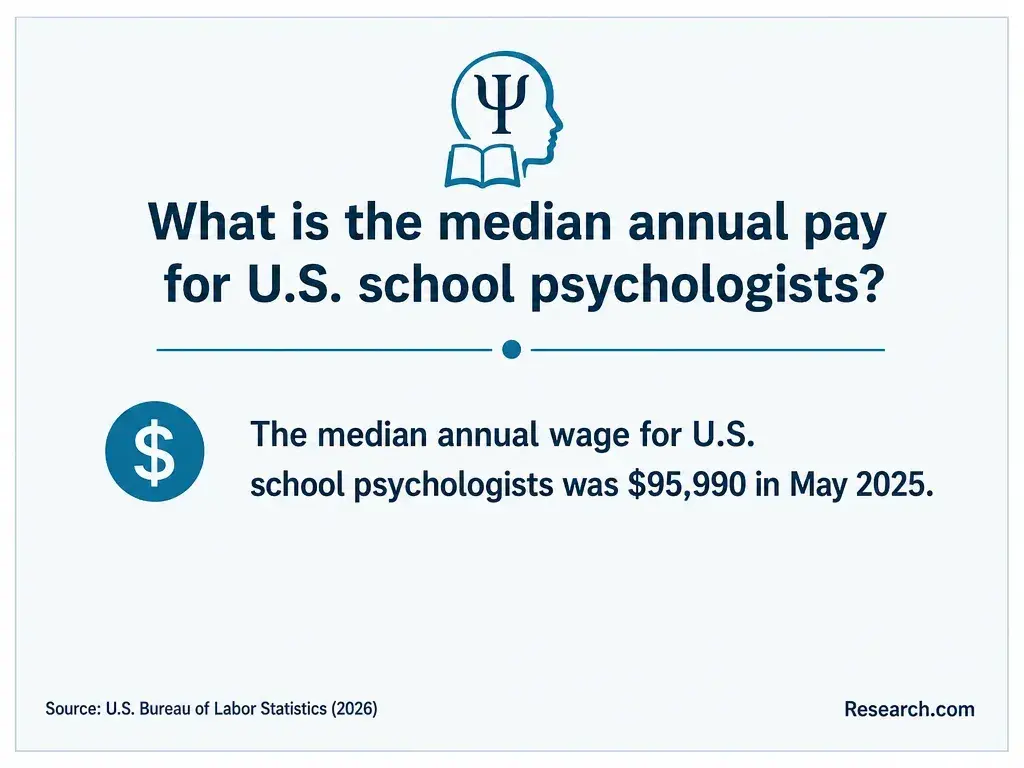
There is no single salary for forensic psychology MS graduates. Employers pay for occupations and responsibilities, not for the degree name alone. The US Bureau of Labor Statistics reports occupation-wide wages for roles such as social and human service assistants or psychologists, but those figures describe workers with varied education and experience. Psychologist wages are particularly misleading as an MS outcome when the target position requires licensure and further training.
For a useful estimate, compare pay ranges on current postings for jobs you could actually qualify for in your location or public-sector pay grade. Weigh any plausible change in earnings against tuition, fees, time away from paid work, and the possibility that experience - not another credential - is the hiring constraint. Guidance on graduate psychology tuition and program value can help organize that calculation without treating an occupational median as a graduate earnings forecast.
How do you choose a reputable online forensic psychology master's program?
Start with the outcome you want, then ask each program for evidence that its requirements support it. A reputable online MS should be clear about its degree designation, accreditation, course sequence, faculty support, total charges, and any live or in-person obligations. Published career examples are less useful than verified information about what students actually complete.
Use the following checks before accepting an offer; each addresses a way a degree can look suitable on paper yet miss your goal.
- Request the current catalog and identify required methods work, electives, and the thesis or capstone rules.
- Ask who arranges and approves any applied experience, what supervision is provided, and whether a suitable site is available where you live.
- Confirm live-session times, course rotation, leave policies, and an individualized cost and completion estimate.
- Ask for clearly defined outcomes for recent cohorts, including which graduates responded and whether reported jobs required additional credentials.
- If a regulated profession is the goal, check the state board's requirements independently rather than relying on the program name.
Compare graduate psychology degrees with accelerated schedules only after these checks. A faster program is valuable if its schedule is feasible and its training fits your goal; speed cannot turn a nonclinical MS into a license-qualifying credential.
Other Things You Should Know About Psychology
Possibly, but only if the receiving program accepts it under its credit-transfer rules. Ask for written confirmation before enrolling in the certificate.
Yes. A graduate certificate is an academic award; professional certification is issued under a separate organization's eligibility and assessment rules. Neither should be mistaken for a state license.
It may help you demonstrate methods skills and obtain academic recommendations. Check the target doctoral programs' prerequisites and research expectations; a master's is not universally required.
Only if the program approves the project and the agency authorizes the work and any data use. Your existing access to a workplace does not automatically permit use of confidential records.
- Program Requirements | John Jay College of Criminal Justice https://www.jjay.cuny.edu/academics/graduate-programs/ma-forensic-psychology/program-requirements
- What Type of Psychology Degree Do I Need to Become a Forensic Psychologist? | Palo Alto University https://paloaltou.edu/resources/business-of-practice-blog/what-type-of-psychology-degree-do-i-need-to-become-a-forensic-psychologist
- A Career in Forensic and Public Service Psychology | apa.org https://www.apa.org/education-career/guide/subfields/forensic/education-training
- Program: Master of Science in Forensic Psychology, MS | ncu.edu https://catalog.ncu.edu/preview_program.php
- Choosing a Program - APA Accreditation https://accreditation.apa.org/choosing-a-program
- Forensic Psychology, MA Frequently Asked Questions | calbaptist.edu https://calbaptist.edu/academics/programs/master-of-arts-forensic-psychology/faqs
- Certificate in Forensic Psychology | Online Options | Continuing & Professional Studies https://caps.washu.edu/programs/certificates/certificate-in-forensic-psychology/
- Online MS in Forensic Psychology | Walden University https://www.waldenu.edu/online-masters-programs/ms-in-forensic-psychology
- M.A. Forensic Psychology: Online and In-Person | The Chicago School https://www.thechicagoschool.edu/programs/psychology/forensic-psychology/ma/
- MS in Forensic Psychology | Neumann University https://www.neumann.edu/academics/grad/masters-degree-in-forensic-psychology