2027 Online MS in Psychology - Forensic Psychology for School Paraprofessionals: Compare Prerequisites, Workload, and Career Fit
Audited and Verified:
Our Editorial and Data Verification Process
Research.com uses government datasets, official education statistics and primary institutional information to support its career and degree guides. Our review process checks factual accuracy, occupational definitions, source dates and the requirements associated with the credentials discussed.
How This Article Was Fact-Checked
Our editorial team verifies salary estimates, employment projections, education requirements and program information against original data providers and official organizations. Salary figures are checked against the relevant occupational definitions and reporting periods. Information about licensure, accreditation and required in-person training is reviewed separately.
Fact-checked and verified on:

Co-Founder and Chief Data Scientist
School paraprofessionals bring experience supporting students, documenting observations, and working within school procedures. An online MS in forensic psychology may build on those skills, but its value depends on the job you want next—not simply on the degree's subject matter.
This guide compares admission prerequisites, study demands, costs, and realistic career paths. It also explains when a school-focused qualification, a justice services role, or a licensure-track degree would be a better investment.
Key Things You Should Know
- Most forensic psychology master's programs require a completed bachelor's degree; psychology and statistics prerequisites vary by school.
- An online forensic psychology MS generally supports nonclinical study and career development, not psychologist licensure, independent assessment, or therapy.
- Before enrolling, compare the program's actual weekly schedule and total cost with requirements for specific jobs in your local school or justice system.
What is an online master's in forensic psychology, and how does it fit paraprofessional careers?
An online master's in forensic psychology studies psychological science in legal and justice contexts. Depending on the program, students may examine behavior, research methods, victimization, corrections, ethics, and the limits of psychological evidence. "Online" describes course delivery; it does not establish that every meeting, project, or required experience can be completed on your own schedule.
For a school paraprofessional, the strongest connection is often transferable practice: observing behavior without jumping to conclusions, maintaining records, communicating with families and staff, and respecting boundaries when working with minors. Those skills can support a move toward youth services, victim assistance, or program coordination. They do not substitute for justice-system experience or confer authority to investigate, diagnose, or make custody decisions.
Compare online forensic psychology programs and graduate outcomes against a defined target job. If your goal is advancement within a school district rather than work connected to courts or justice agencies, a school-focused degree or employer-approved training may be more directly relevant.
Does an online forensic psychology master's qualify graduates for psychologist licensure?
Generally, no. A nonclinical MS in forensic psychology does not by itself qualify someone for psychologist licensure or permission to conduct independent forensic evaluations. Psychologist licensure typically involves doctoral-level professional training, supervised experience, examinations, and state-specific requirements. A course covering assessment or psychopathology is not authorization to administer restricted tests or diagnose people.
If you want to provide psychotherapy, compare the educational requirements for the particular licensed occupation—such as professional counselor or clinical social worker—in the state where you intend to practice. These are distinct pathways, not interchangeable versions of a forensic psychology MS. Because the qualifying degree can be a substantial additional expense, financial planning for accredited counseling degrees is more useful than assuming a nonclinical master's will count toward a counseling license.
Ask the state licensing board which degrees and supervised training it accepts before treating any program's career language as a credential promise.
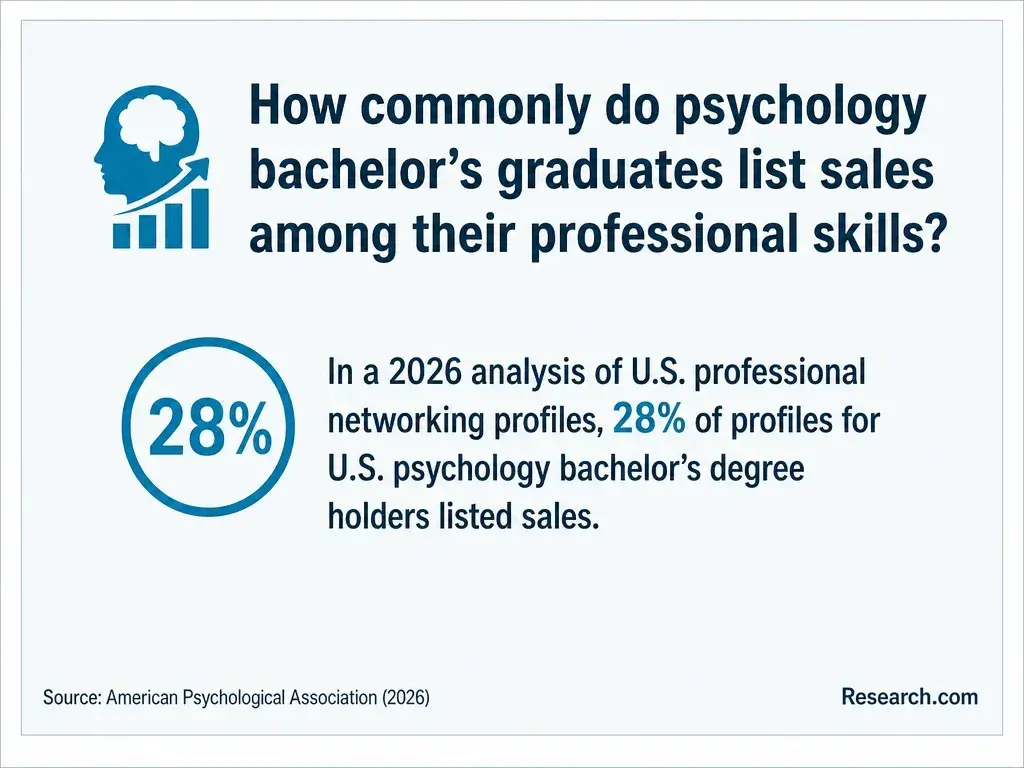
What careers can school paraprofessionals pursue with a forensic psychology master's degree?
The best-fit roles use your school experience alongside new knowledge of service systems or research. A master's may strengthen an application, but hiring agencies still set their own requirements for experience, clearance, credentials, and permitted duties. The table distinguishes plausible directions from qualifications the degree does not provide:
| Career direction | How paraprofessional experience may help | What to verify |
| Youth or family services coordinator | Student support, referrals, documentation, and teamwork | Employer experience requirements and rules for handling confidential records |
| Victim-services or court-program support | Calm communication and working within safeguarding procedures | Agency training, advocacy duties, and any required in-person availability |
| Justice-program research or evaluation assistant | Careful observation and reporting | Statistics, data management, and research experience expected by the employer |
| Licensed forensic psychologist | Experience with young people may inform future interests | Separate qualifying doctoral training and state licensure; the MS alone is insufficient |
Read local job postings before selecting electives: a victim-services opening may value direct advocacy experience, while an evaluation role may emphasize statistics. Guidance on pay and entry requirements in forensic psychology careers is most useful when checked against the duties and credentials in those postings.
A completed bachelor's degree from an institution the graduate school accepts is the usual starting point. Programs differ on whether that degree must be in psychology, whether introductory psychology or statistics is required, and whether research methods is a formal prerequisite or recommended preparation. Education coursework and paraprofessional employment can demonstrate relevant experience, but they do not automatically replace an academic prerequisite.
Separate eligibility from readiness. An applicant may be admissible without a psychology major yet find graduate research papers and statistical interpretation difficult without prior methods training. Request a written review of your transcript, including any prerequisite substitutions or conditions of admission. Also check the program's stated GPA policy, application materials, deadlines, and whether outstanding courses must be finished before enrollment.
If you do not yet hold a bachelor's degree, complete that requirement before comparing master's start dates. Shorter routes to an online psychology major may be worth investigating, but only the receiving institution can determine which prior credits apply to the degree and how long completion will take.
Expect substantial reading, evidence-based writing, and discussion of research and ethics—not just case narratives. Curricula may include statistics or research design, psychology and law, development, violence or victimization, and a thesis or applied capstone. Check the actual course sequence: a program emphasizing research may fit an evaluation goal better than one with broad survey courses, while neither format alone supplies supervised clinical training.
For a working paraprofessional, the weekly calendar matters as much as the course list. Ask for a recent syllabus and identify live sessions, fixed discussion deadlines, group assignments, exam windows, and any site-based work. School-day employment can make a daytime placement or recurring live meeting impractical even when most lectures are asynchronous. Confirm whether the school allows a reduced course load and how that changes aid eligibility and completion time.
If you still need undergraduate preparation, planning a shorter undergraduate forensic psychology degree should include enough statistics and research-methods preparation for graduate work—not just the fastest advertised route to graduation.
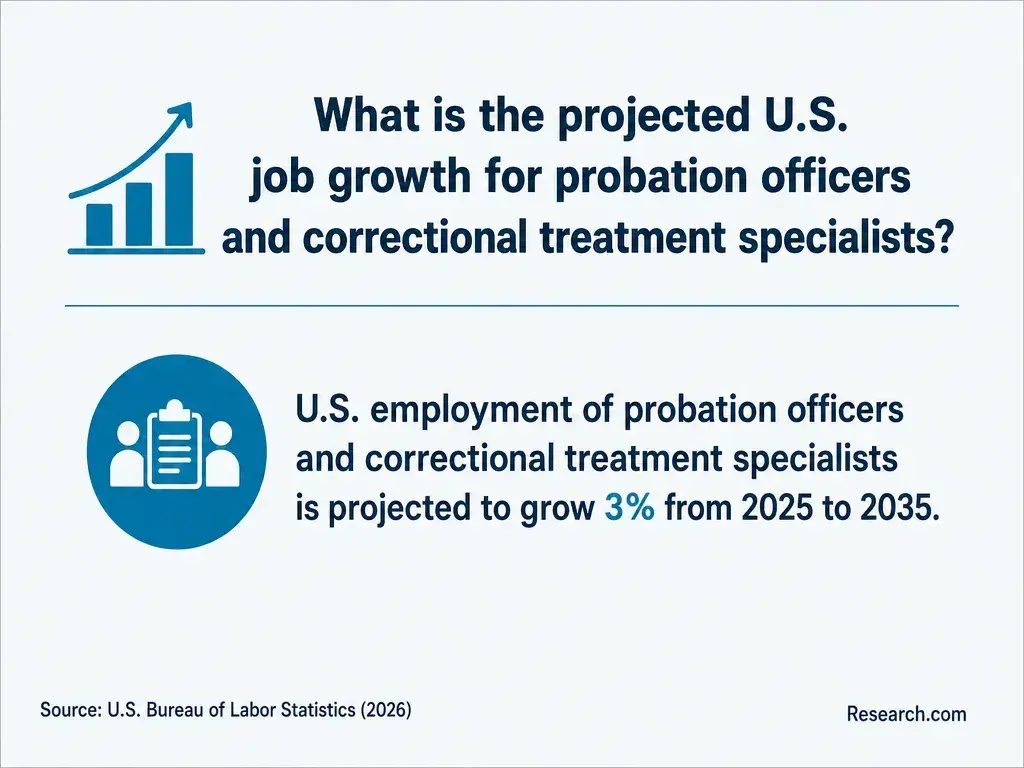
Delivery format affects when and where you work, but it does not determine academic quality or professional eligibility. Compare the specific programs' requirements rather than assuming that "online" means asynchronous or that "campus-based" means better access to applied experience.
| Feature | Online program | Campus-based program |
| Scheduling | May reduce commuting; live classes and fixed deadlines can remain | Requires travel, with class times set by the institution |
| Faculty and peer contact | Depends on advising, office hours, and scheduled collaboration | May offer easier informal contact, subject to faculty availability |
| Applied or research work | Local sites or remote projects may require advance approval | Nearby partnerships may be available but are not guaranteed |
| Cost beyond tuition | Check technology fees and any travel or site costs | Check commuting, parking, and schedule-related costs |
Compare published meeting and placement rules for your entry term. This distinction matters in other professional pathways, too: descriptions of clinical counseling degree formats and completion estimates illustrate why online coursework should never be mistaken for the absence of scheduled or in-person training.
There is no reliable single duration or price for all online forensic psychology master's programs. Required credits, term length, course availability, transfer policy, and full- or part-time enrollment determine the schedule. Published tuition may be charged per credit, course, or term; fees and required travel can change the final amount.
Build a program-specific estimate by multiplying the required credits by the applicable tuition rate, then adding mandatory fees, materials, travel, and any placement-related costs. Ask whether taking fewer courses changes the rate or financial-aid eligibility. Also account for the possibility of unpaid time away from school employment; a lower tuition quote may not be the least costly workable option.
Use affordable online psychology master's programs as a starting comparison, then request each institution's current cost sheet and course sequence. If the degree is mainly for career advancement, ask your district whether it offers education assistance or salary-schedule credit for this specific program before enrolling.
How can students choose an accredited and reputable forensic psychology program?
First, verify the institution's recognized institutional accreditation and confirm that it applies to the school awarding the degree. Then examine the actual program: its degree title, curriculum, online schedule, faculty support, completion requirements, total charges, and any published outcomes with clear definitions. Do not assume that APA accreditation applies to a nonclinical forensic psychology master's; institutional accreditation is not proof of licensure eligibility.
Before applying, ask admissions and the program director for a current degree plan and answers in writing about prerequisite acceptance, required live attendance, thesis or placement expectations, local-site approval, and support for working students. Ask career services which employers have hired graduates and what evidence supports any outcome claims. Finally, compare those answers with the qualifications in jobs you would actually seek.
If a bachelor's degree still stands between you and admission, review psychology program transfer policies and obtain an official degree audit. Credit acceptance alone does not show that a course satisfies a psychology, statistics, or graduation requirement.
Other Things You Should Know About Psychology
Possibly, but obtain program and district approval first. Employment does not automatically satisfy a project or placement requirement, and access to student information for work does not authorize its use in coursework or research.
A supervisor may speak convincingly about reliability, communication, and work with students. If the program also wants evidence of academic or research ability, an instructor who knows your coursework may provide a useful complementary letter.
It may. Requirements depend on the agency, role, and population served. Ask the program and proposed site about screening early, especially if a placement is required for graduation.
Only with appropriate permission and protection of confidential information. A public portfolio can describe your question, methods, and responsibilities without exposing student records, identifiable examples, or restricted district materials.
- Training, practice, and career considerations in forensic... - PMC https://pmc.ncbi.nlm.nih.gov/articles/PMC11638730/
- Understanding College Costs | studentaid.gov https://studentaid.gov/resources/prepare-for-college/students/choosing-schools/consider-costs
- Cost of Attendance (Budget) | 2025-2026 Federal Student Aid Handbook https://fsapartners.ed.gov/knowledge-center/fsa-handbook/2025-2026/vol3/ch2-cost-attendance-budget
- synchronous Archives | Ohio State Online https://online.osu.edu/tag/synchronous/
- MS in Psychology | Palo Alto University https://paloaltou.edu/academic-programs/ms-psychology
- Online MS in Psychology: Forensic Psychology Degree | GCU Blog https://www.gcu.edu/degree-programs/master-science-psychology-forensic-psychology
- Forensic Psychology Handbook | College of Liberal Arts and Social Sciences | Texas A&M University-Victoria https://www.tamuv.edu/liberal-arts-social-sciences/graduate-degrees/forensic-psychology/forensic-psychology-handbook/
- Which Jobs Require a Graduate Degree? | UCLA https://www.ucla.edu/academics/graduate-benefits/which-jobs-require-a-graduate-degree
- A Career in Forensic and Public Service Psychology | apa.org https://www.apa.org/education-career/guide/subfields/forensic/education-training
- Graduate Program Admission Requirements for Program Consideration | Monmouth University Academic Catalog https://catalog.monmouth.edu/graduate-catalog/graduate-admission/graduate-program-admission-requirements-program-consideration/