2027 Online BA in Psychology - Addictions for Work in Community Harm Reduction Organizations: Compare Degree Fit and Hiring Requirements
Audited and Verified:
Our Editorial and Data Verification Process
Research.com uses government datasets, official education statistics and primary institutional information to support its career and degree guides. Our review process checks factual accuracy, occupational definitions, source dates and the requirements associated with the credentials discussed.
How This Article Was Fact-Checked
Our editorial team verifies salary estimates, employment projections, education requirements and program information against original data providers and official organizations. Salary figures are checked against the relevant occupational definitions and reporting periods. Information about licensure, accreditation and required in-person training is reviewed separately.
Fact-checked and verified on:

Co-Founder and Chief Data Scientist
If you want to work for a community harm reduction organization, an online BA in psychology with an addictions focus may help, but the degree title is not the hiring requirement. Outreach teams also need people who can build trust, navigate local services, document work responsibly, and stay within nonclinical role boundaries.
This guide is for prospective students and community-service workers comparing education with direct experience. It explains which jobs the degree can support, what employers may require beyond it, and when a different route could get you to your goal more efficiently.
Key Things You Should Know
- An addictions-focused psychology BA can support outreach, service coordination, and program work; it does not qualify you to diagnose or treat substance use disorders.
- Compare the degree with actual postings. Relevant community experience, scheduling, safety training, and any state-recognized credential may matter more than the concentration name.
- For salary context, the U.S. Bureau of Labor Statistics reports a $45,120 median annual wage for social and human service assistants in May 2024, not an expected salary for psychology BA graduates.
What is an online bachelor's degree in psychology with an addictions focus?
It is an undergraduate psychology degree that combines broad study of behavior and psychological research with coursework on substance use, prevention, recovery, or service systems. "Addictions focus" may mean an official concentration, a group of electives, or simply a program description. Confirm what appears on the transcript and how many courses address the subject.
Online describes how academic coursework is delivered, not whether community experience is remote. A program may still require live classes, an approved local internship, or a campus visit. Admission and transfer rules also vary; ask for a degree audit showing which prior credits fulfill requirements rather than only how many credits the school accepts.
If your goal is specifically substance use counseling, compare the psychology curriculum with cost-conscious substance use counseling undergraduate options. Neither degree name alone establishes eligibility for a state counseling credential.
What jobs can you pursue in community harm reduction with this degree?
Realistic targets include outreach worker, program assistant, resource navigator, intake or referral coordinator, and program-evaluation assistant. Depending on the organization, work might involve connecting participants with supplies and services, maintaining referral relationships, recording aggregate activity, or helping evaluate whether people can access a program.
Job titles alone are unreliable: an "outreach coordinator" might be a frontline position at one organization and a supervisory position at another.
The table separates roles by the work an applicant would need to demonstrate, rather than suggesting that a BA qualifies everyone for each opening.
| Role type | Typical contribution | Likely qualification question |
| Outreach or resource navigation | Build relationships and connect people with services | Does the employer prioritize field experience, local knowledge, or a degree? |
| Program or intake support | Coordinate referrals and maintain accurate records | What privacy, documentation, and scheduling skills are required? |
| Evaluation support | Organize approved program data and summarize findings | Are statistics skills and permission to access data required? |
For a closer look at adjacent positions, see recovery-focused roles and qualifications. Peer recovery work and harm reduction outreach can overlap, but they are not interchangeable job descriptions.
What hiring requirements do harm reduction organizations typically expect?
Requirements depend on the role, funding agreement, employer, and jurisdiction. A frontline posting may accept relevant work or volunteer experience instead of a bachelor's degree.
Another may require a degree, a driver's license, evening availability, or a particular credential. Experience working respectfully with people who use drugs, knowledge of local referral pathways, and reliable documentation can be more immediately useful than an addictions course title.
Before enrolling, collect several postings in your intended location and compare their essential requirements. Check whether they call for outreach or case-management experience, naloxone or other site-specific training, language skills, travel, background checks, or a state credential.
Ask employers which requirements they can train for and which must be met on the first day. Follow the organization's protocols and applicable law for supplies, emergencies, confidentiality, and referrals.
If postings instead require a licensed therapist, this BA is not the qualifying route. Even fast-track online clinical counseling master's options need to be checked against the intended state's education and supervised-practice rules.
Its strongest contribution is a framework for understanding behavior without reducing people to a diagnosis. Courses in learning, motivation, social psychology, and addiction can help a worker interpret barriers to service use and communicate without stigma. Research methods can help an organization ask whether its outreach is reaching the intended community, while ethics coursework reinforces confidentiality and the limits of a support role.
Classroom knowledge is not evidence that you can conduct safe street outreach, respond within an agency's emergency protocol, or maintain community trust. Seek supervised, nonclinical experience and ask a potential placement what students are permitted to do, who supervises them, and whether the school will approve the site. Do not assume an existing volunteer position automatically counts for credit.
A different educational pathway becomes relevant if your goal is psychotherapy rather than outreach or support. Compare clinical counseling master's duration and earning potential only after confirming that the proposed program meets the applicable licensing requirements.
Expect a psychology core that may include introductory psychology, development, social or abnormal psychology, statistics, and research methods. Addictions-related offerings may address substance use science, prevention, community services, or recovery. Course names and required sequences differ, so inspect the current catalog rather than assuming every online program has a formal concentration or field placement.
For harm reduction work, prioritize coursework that makes you practice interpreting evidence, writing clearly for nonacademic audiences, and recognizing ethical limits. A useful applied assignment might be a literature-based service brief or an evaluation plan using hypothetical or properly authorized data, not an unauthorized analysis of identifiable client records.
Ask whether the program offers faculty-supervised projects and whether local placement approval is possible. If later research-oriented study is a possibility, keep statistics and methods preparation strong.
Fast-track graduate psychology programs should be judged by their actual research opportunities and requirements, not speed alone; graduate study is not generally necessary for entry-level harm reduction outreach.
The better format is the one that lets you complete the curriculum and gain relevant community experience. Online study may make it easier to stay employed at a local organization; a campus program may offer established agency partnerships.
Neither format guarantees a placement, and asynchronous lectures do not make a scheduled internship asynchronous.
This comparison highlights the obligations that can affect your ability to graduate and build a credible job application.
| Consideration | Online program | Campus-based program |
| Course scheduling | May include asynchronous work and required live meetings | Usually requires scheduled on-campus attendance |
| Local experience | Student may need to identify an approvable nearby site | Established partners may be available, but placements can still be competitive |
| Professional relationships | Requires deliberate contact with faculty and local organizations | May provide more routine in-person contact |
Ask for the placement handbook, expected supervision hours, live-session schedule, and any travel requirements before choosing. Those checks matter for undergraduate experience too, although comparing condensed accredited counseling study routes involves a distinct, licensure-oriented level of training.
Check that the institution holds recognized institutional accreditation and that the accreditation covers the institution awarding the degree. It matters for academic legitimacy and can affect credit transfer, financial aid, and future applications, although receiving schools and employers make their own decisions.
Do not mistake institutional accreditation for a promise that an addictions concentration qualifies you for counseling certification or licensure. The American Psychological Association does not accredit general bachelor's psychology programs.
If a later professional credential is your goal, check the responsible state board's rules and any program-specific recognition it requires before committing to a course of study.
The same distinction applies beyond addictions. Compressed online master's study in forensic psychology is not, by its title or speed, a clinical credential. Evaluate the accreditation and qualifying pathway for the occupation you actually want.
Peer recovery credentials, addiction counselor credentials, and employer-provided harm reduction training serve different purposes. A peer credential may require approved training, supervised experience, or lived-experience eligibility under a particular state or certifying body's rules.
Addiction counselor credentials can impose distinct education, supervised-practice, and examination requirements. Training in naloxone response or outreach safety may support a job application without being a professional license.
Start with the exact job posting, then identify the issuing authority and verify eligibility, permitted duties, renewal requirements, and whether the employer recognizes the credential. Do not pay for a course merely because its name sounds relevant. A BA may supply useful academic preparation while leaving credential-specific requirements unmet.
If advancement genuinely requires another degree, compare its qualification value with graduate psychology tuition and program value. A nonclinical psychology master's is not a substitute for a required peer or counseling credential.
A traditional bachelor's path commonly spans about four years of full-time study, while the remaining time for a transfer student depends on an approved degree audit, course sequencing, and enrollment pace.
Online delivery does not shorten requirements by itself. An accelerated calendar can also make it harder to maintain paid outreach work or complete a supervised placement.
There is no responsible single price for this degree across institutions. Request a written estimate covering tuition for the credits you still need, mandatory fees, books or software, any placement-related travel, and the cost of courses that cannot be taken in the same term. Confirm aid eligibility and compare that total with your likely income while studying; do not treat accepted transfer credits as proof that all degree requirements are satisfied.
If completion speed matters, use faster psychology degree timelines online to frame questions about scheduling and credit policies, then obtain the institution's own audit and cost estimate before deciding.
What salary and job outlook can addictions psychology graduates expect?
There is no reliable occupation-wide salary for "addictions psychology BA graduates" in harm reduction organizations. The closest published benchmarks describe occupations, not degree outcomes.
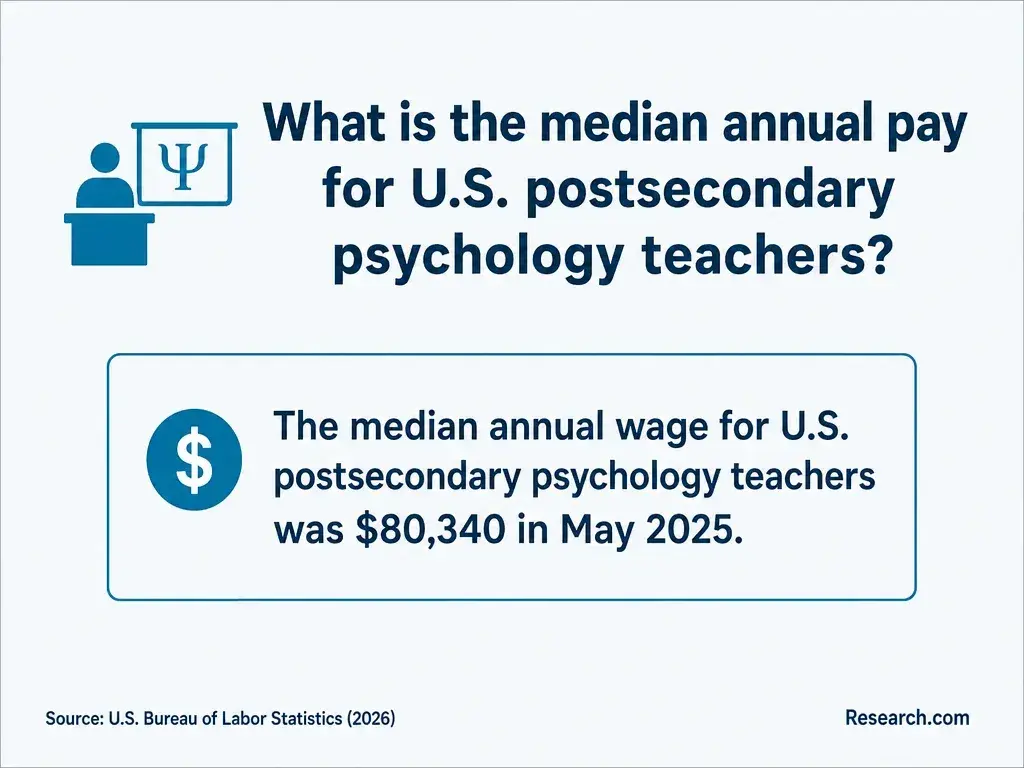
The U.S. Bureau of Labor Statistics reports a May 2024 median annual wage of $45,120 for social and human service assistants and projects 6% employment growth for that occupation from 2024 to 2034. The category covers many settings beyond harm reduction, and its median includes experienced workers; it is not an entry-level offer or a forecast for a specific nonprofit.
Local grant funding, union agreements, hours, travel, and whether a role requires specialized credentials can change the offer. Compare actual vacancies in your area with the full cost of education. If those postings accept experience or a shorter credential, that route may offer better value than a full BA.
If a bachelor's degree is repeatedly required and you also want broader psychology preparation, choosing a cost-conscious psychology degree program becomes more relevant.
Other Things You Should Know About Psychology Programs
Not generally. Some peer-specific positions have lived-experience eligibility rules; other outreach and program jobs do not. Read the posting and the credential criteria separately.
Do not assume you must share private history for a general outreach role. If a peer credential has lived-experience criteria, ask its issuing body what documentation is required and how it is handled.
Ask how staff respond when someone declines treatment, what choices participants control, and how the organization incorporates participant feedback. Compare the answers with the duties in the posting.
Yes. Describe your responsibilities and skills using aggregate, nonidentifying examples permitted by your organization. Do not include client stories, photos, or records without authorization.
- Chapter 6 - How To Become a Peer Specialist - NCBI https://www.ncbi.nlm.nih.gov/sites/books/NBK596268/
- Information for Licensed Alcohol and Drug Counselors | mass.gov https://www.mass.gov/info-details/information-for-licensed-alcohol-and-drug-counselors
- Behavioral Health Career Descriptions | samhsa.gov https://www.samhsa.gov/about/careers/behavioral-health-workforce/careers-by-state/descriptions
- Online Bachelor's Degree in Psychology in Addictions | Purdue Global https://www.purdueglobal.edu/degree-programs/psychology/bachelor-psychology-addictions/
- Psychology (BA)Human Services concentration | depaul.edu https://www.depaul.edu/academics/programs/psychology/psychology-ba/concentrations/human-services
- Online Substance Abuse Concentration | SNHU https://www.snhu.edu/online-degrees/bachelors/ba-in-human-services/substance-abuse
- Applied Psychology: Addictions Studies, B.S. - CPS, CPSO | University of New Hampshire https://www.unh.edu/program/bachelor-science/applied-psychology-addictions-studies
- Online Substance Abuse and Addictions Degree | ASU Online https://asuonline.asu.edu/online-degree-programs/undergraduate/counseling-psychological-sciences/
- Case Studies from Georgia, Maryland, Utah, and Vermont | NASHP https://nashp.org/state-level-strategies-for-supporting-community-level-harm-reduction-case-studies-from-georgia-maryland-utah-and-vermont/