2027 Online BA in Psychology - Addictions: How to Evaluate Quantitative Literacy Support for Returning Students
Audited and Verified:
Our Editorial and Data Verification Process
Research.com uses government datasets, official education statistics and primary institutional information to support its career and degree guides. Our review process checks factual accuracy, occupational definitions, source dates and the requirements associated with the credentials discussed.
How This Article Was Fact-Checked
Our editorial team verifies salary estimates, employment projections, education requirements and program information against original data providers and official organizations. Salary figures are checked against the relevant occupational definitions and reporting periods. Information about licensure, accreditation and required in-person training is reviewed separately.
Fact-checked and verified on:

Co-Founder and Chief Data Scientist
Returning to college for an online psychology BA can mean taking statistics for the first time in years - or discovering that an earlier math course does not satisfy the major. For students interested in addictions, quantitative literacy matters because coursework asks them to interpret research on prevention, treatment, and recovery without overstating what the evidence shows.
This guide explains how to test a program's academic support before enrolling, account for transfer credits and scheduling, and decide whether the degree fits your goals.
Key Things You Should Know
- Evaluate support at three points: preparation before statistics, help during statistics and research methods, and feedback when applying those skills to addiction research.
- Ask for a degree audit: accepted transfer credits do not necessarily satisfy statistics, research-methods, major, or residency requirements.
- Compare the remaining courses, their scheduling, and the full cost - not the advertised pace alone. An addictions focus does not itself qualify a graduate to provide counseling.
What Is an Online BA in Psychology With an Addictions Focus?
It is a psychology bachelor's degree that includes study of substance use, behavior change, prevention, and recovery. The focus might be an officially named concentration, a group of electives, or simply an interest reflected in student projects. Check the catalog and transcript policy before assuming that "addictions" appears on the awarded credential.
Psychology remains the foundation: students learn to assess claims about behavior using research methods and statistics. That distinction matters when comparing distance learning bachelor's degrees in addiction psychology. A compelling course title is less valuable if the program does not provide a workable path through its required methods courses.
How Can Returning Students Evaluate Quantitative Literacy Support Online?
Quantitative literacy means being able to understand and use numerical evidence, not just perform calculations. In addictions coursework, that may mean interpreting a graph of service use, distinguishing correlation from causation, or explaining why a study's sample limits its conclusions. A returning student should evaluate support across the entire learning sequence, rather than asking only whether the school has a general tutoring center.
Use these checks to compare programs on support you could actually use:
- Establish your starting point. Ask whether the program offers a math or statistics readiness assessment, a refresher, or an appropriate introductory course. Find out whether a refresher earns degree credit and whether it delays research methods.
- Test access to help. Request the statistics syllabus and tutoring hours. Confirm whether tutors can help with psychology assignments, statistical software, and evening or weekend questions - not merely general math.
- Inspect the teaching sequence. Ask when statistics and research methods run, whether one is a prerequisite for the other, and what happens if you need to repeat a course. A course offered infrequently can disrupt an otherwise flexible plan.
- Look for applied feedback. Ask for an anonymized assignment prompt or rubric showing how students receive feedback on interpreting results, evaluating a measure, and stating limitations.
If you work or care for family, ask how quickly instructors respond, whether tutoring requires a live appointment, and whether group projects have fixed meeting times. Compare these answers across online bachelor's program choices in psychology; "asynchronous" describes course delivery, not necessarily every support service.
What Accreditation Should an Online Addictions Psychology Program Hold?
Start with institutional accreditation recognized by the U.S. Department of Education. Confirm the institution's status, the campus or online division awarding the degree, and the status applicable to your enrollment period. Accreditation is an essential institutional check, but it does not establish the quality of statistics tutoring or guarantee that a state will accept the degree toward a professional credential.
Do not expect APA accreditation for a general psychology BA; APA's accreditation scope covers specified professional psychology training, not ordinary bachelor's majors. Likewise, an addictions concentration is not automatically an accredited counseling program. This distinction also applies when comparing other specializations: forensic psychology program costs and entry requirements may differ, but a forensic label does not create a separate undergraduate clinical qualification.
Neither format is inherently better for learning statistics. The useful comparison is how each program lets you obtain explanations, practice analysis, and resolve misunderstandings while meeting your other commitments.
The table summarizes common delivery differences; individual schools may offer a different combination.
| Learning feature | Online study | Campus-based study |
| Class participation | May combine recorded lessons with scheduled live sessions | Usually includes scheduled classroom meetings |
| Statistics help | May use virtual tutoring, discussion boards, and screen sharing | May offer in-person office hours and tutoring |
| Applied experience | Local site work or live meetings may still be required | Campus and local partnerships may be easier to access |
For a returning student, the better format is the one whose actual schedule and support hours fit. Short terms can reduce calendar time but intensify weekly work; compare those demands before considering speeding up an online psychology degree.
Typical psychology preparation includes introductory psychology, statistics, research methods, and coursework on development, social behavior, and biological or behavioral processes. Addiction-related offerings may address substance use, prevention, recovery systems, and co-occurring concerns. The catalog - not the program's marketing description - determines which courses are required, elective, available online, and offered often enough for your plan.
For quantitative literacy, inspect what students do in statistics and methods: interpret uncertainty, identify selection and measurement problems, and explain why an observational association cannot by itself prove an intervention works. Ask whether an addictions assignment uses published research or approved, appropriately protected data. Classroom study of screening instruments does not authorize students to diagnose people or administer restricted assessments.
If your goal is a state addiction-counselor credential, compare required subject areas and supervised hours with the state's rules before paying for electives. Some students may need targeted, approved coursework rather than an entire new concentration; tuition assistance routes for substance abuse counseling undergraduates are worth investigating only after confirming that the proposed courses advance the intended pathway.
Requirements vary by institution and may include an application, transcripts from every prior college, and a minimum academic-standing standard. Admission to the university is separate from acceptance of individual credits and from satisfaction of psychology-major requirements. A previously completed statistics course, for example, might transfer as elective credit without meeting the major's methods prerequisite.
Gather course descriptions or syllabi for prior statistics and research classes, then request a written degree audit showing general education, major, prerequisite, and residency requirements. Ask which office approves equivalencies and how to appeal a decision. This is particularly important after a long enrollment gap or when credits come from an applied associate degree, military learning, or quarter-system study. Guidance on moving existing credits into psychology study can help frame your questions, but only the receiving institution can decide how your credits apply.
Completion time depends on the approved degree audit, course sequencing, and how many courses you can sustain alongside work or caregiving. Many U.S. bachelor's degrees are built around 120 semester credits, but that benchmark is not a statement of how many credits you personally have left. A required statistics prerequisite or a course offered only periodically can matter more to your finish date than the number of credits accepted.
For a useful cost comparison, request the price per remaining credit or term, mandatory fees, any software or proctoring charges, and the cost of a slower or repeated course. Check financial-aid eligibility against your planned enrollment load, and do not count employer assistance until its terms are confirmed. Use the same remaining-credit and pacing assumptions when making budget-conscious psychology program comparisons; advertised tuition alone is not your total cost.
Depending on employer requirements and prior experience, graduates may pursue nonclinical work in recovery-service coordination, outreach, intake support, prevention programs, or research and program-support teams. These roles can involve explaining resources, maintaining records, arranging referrals, or summarizing service data - not independently diagnosing or treating substance use disorders.
For a returning student, prior customer-service, community, administrative, or data experience may be as important as the concentration. Seek a supervised project or placement that demonstrates ethical documentation and evidence interpretation, and check whether a current job can count before assuming it fulfills an academic requirement. Compare the duties and credentials described for recovery-focused roles and qualifications against local job postings before choosing electives.
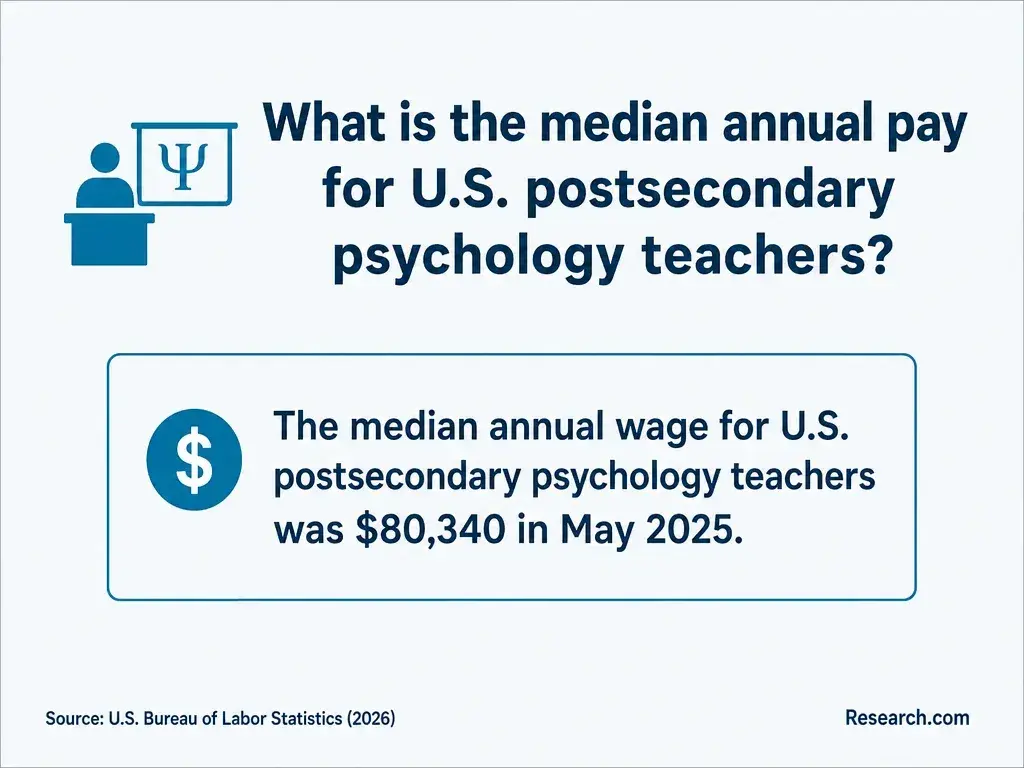
There is no single salary or job-growth figure for graduates of an addictions-focused psychology BA. U.S. Bureau of Labor Statistics occupational data describe jobs, not outcomes for a particular degree. Its category for substance abuse, behavioral disorder, and mental health counselors, for example, includes workers whose roles may require graduate education or state credentials; its occupation-wide median should not be read as a new BA graduate's likely pay.
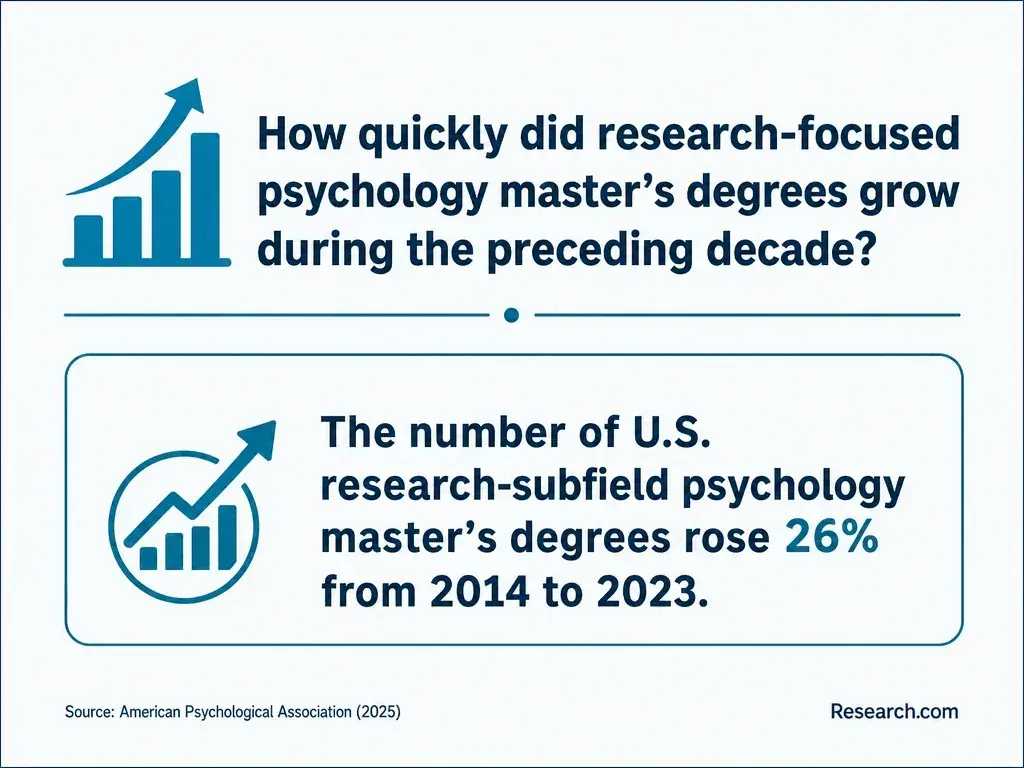
For a realistic comparison, identify the exact job title and location, then review its stated education, credential, and experience requirements alongside the latest BLS occupation data. If you are considering further study for advancement, separate a research-oriented psychology master's from a degree designed to meet counseling licensure requirements. Accelerated MA psychology study pathways may shorten academic study, but speed does not establish eligibility for a regulated role or a higher salary.
What Licenses and Certifications Do Addiction Professionals Need?
Requirements depend on the state, job title, and duties. State-regulated addiction counseling may require specified education, supervised experience, an examination, and an application; peer-support credentials and nonclinical support jobs can follow different rules. A psychology BA with addictions courses is academic preparation, not permission to diagnose or provide psychotherapy.
Before enrolling, identify the credential tied to your intended job and obtain its current requirements from the responsible state board or certifying body. Ask the program to show, in writing, which courses meet those requirements and which supervised components you would still need. Do not substitute a different specialization merely because it sounds practice-oriented: forensic psychology master's intensive study options, for instance, do not automatically satisfy addiction-counselor training rules.
Other Things You Should Know About Psychology
Not necessarily. Ask for the course syllabus and technology requirements first; the school may provide access or specify a tool that differs from one you previously used.
Yes. Contact the institution's disability-services office before the course starts to discuss eligibility, documentation, and available accommodations. Instructors generally implement approved accommodations rather than determine eligibility themselves.
Look for feedback on written interpretations, not just corrected answers. Practice describing what a result supports, what it does not establish, and which study limitations matter.
Only with the necessary workplace and course approvals. Client confidentiality, data-use rules, and possible research-review requirements still apply; removing names alone may not make the data appropriate to use.
- Student support in higher education: campus service... - PMC https://pmc.ncbi.nlm.nih.gov/articles/PMC9834745/
- How Do Transfer Credits Work When You Go Back to School? | Whitworth Online https://online.whitworth.edu/news-articles/how-do-transfer-credits-work-when-you-go-back-to-school/
- Psychology (B.S.) - Addictions & Recovery - Online | Liberty University Course Catalog https://catalog.liberty.edu/undergraduate/colleges-schools/behavioral-sciences/psychology-major-bs/addictions-recovery-online/
- Types of Credit for Prior Learning | sunysccc.edu https://sunysccc.edu/Academics/Register-for-Classes/CPL-Types.html
- Services - Quantitative Research Consulting Center - CUNY https://qrcc.commons.gc.cuny.edu/services/
- 24/7 Free Online Tutoring - Academic Support Center | Library at Surry Community College Library https://library.surry.edu/asc/online
- A Critical Thinking Approach - Statistical Data Analysis https://methods.sagepub.com/book/mono/introduction-to-educational-research/chpt/statistical-data-analysis
- Quantitative Support - Washington, DC | American University https://www.american.edu/provost/eagle-learning-center/quantitative.cfm
- Online Bachelor's Degree in Psychology | OU Online https://online.ou.edu/program/ba-in-psychology/
- Online Psychology B.A. or B.S. Degree Completion Program | gsu.edu https://online.gsu.edu/program/psychology-ba-or-bs-completion-program/