2027 Online BA in Psychology - Mental Health vs. a BA in Rehabilitation Services: Compare Curriculum, Cost, and Career Fit
Audited and Verified:
Our Editorial and Data Verification Process
Research.com uses government datasets, official education statistics and primary institutional information to support its career and degree guides. Our review process checks factual accuracy, occupational definitions, source dates and the requirements associated with the credentials discussed.
How This Article Was Fact-Checked
Our editorial team verifies salary estimates, employment projections, education requirements and program information against original data providers and official organizations. Salary figures are checked against the relevant occupational definitions and reporting periods. Information about licensure, accreditation and required in-person training is reviewed separately.
Fact-checked and verified on:

Co-Founder and Chief Data Scientist
A mental-health-focused psychology BA and a rehabilitation services BA can both lead toward helping professions, but they prepare students for different work. That distinction matters when an online program's appealing course list masks a required placement, an uncertain career outcome, or a costly route to a licensed role. This comparison is for prospective and returning students choosing between the two. It explains what each degree teaches, where graduates may work, how to compare total costs, and which questions to settle before enrolling.
Key Things You Should Know
- Choose a mental-health psychology BA for broader psychological science and research preparation; choose rehabilitation services for a more direct focus on disability, access, and service coordination.
- Neither bachelor's degree alone qualifies a graduate to practice independently as a psychologist or mental health therapist. Check the exact credential required for the job you want.
- Compare the credits still needed, total price, and placement obligations - not the advertised online format or tuition rate alone. National occupational wage figures are not earnings data for either degree.
What is the difference between a psychology mental health degree and a rehabilitation services degree?
A BA in psychology with a mental health focus is generally a psychology degree first. Its concentration, track, or electives may examine psychological disorders, prevention, and behavioral-health systems, while the major builds broader knowledge of behavior and research. Confirm whether "mental health" is an officially recorded concentration or simply a description of available courses.
A BA in rehabilitation services generally centers on helping people with disabilities or other barriers access services, accommodations, employment, and community participation. Its emphasis is often service delivery and systems navigation rather than psychological theory. Program names and requirements vary, so compare actual degree plans rather than assuming either label has a standard curriculum.
If the intended job is specifically substance-use counseling, neither label settles credential eligibility. Compare the education and supervised-experience rules for that role with online substance use counseling degrees before choosing a broader major.
How do psychology and rehabilitation services curricula compare?
The clearest curricular difference is the balance between explaining behavior through psychological science and supporting participation through services and accommodations. The table shows common emphases, not guaranteed courses; the catalog for your entry term controls.
| Comparison point | Mental-health psychology BA | Rehabilitation services BA |
| Core study | Psychological theory, development, social behavior, statistics, and research methods | Disability, rehabilitation systems, accessibility, service coordination, and community resources |
| Applied topics | May include psychopathology, addiction, prevention, or mental-health policy | May include vocational support, assistive technology, advocacy, or case documentation |
| Typical academic strength | Interpreting behavioral research and preparing for further psychology study | Understanding barriers to participation and coordinating practical supports |
| Potential gap to investigate | Limited supervised service experience | Limited statistics or laboratory research depth |
For future research-oriented graduate study, check whether the rehabilitation major includes the psychology and methods prerequisites your target programs require. For service-coordination jobs, check whether a psychology program offers relevant fieldwork. When comparing online psychology degree curricula, inspect required courses and their sequence, not just the concentration title.
What careers can you pursue with either bachelor's degree?
Both degrees can support applications for nonclinical roles such as human-services assistant, intake or referral coordinator, community outreach worker, and program support specialist. Rehabilitation coursework may be especially relevant to disability-service or vocational-support teams; psychology coursework may be especially relevant to behavioral-health outreach or research support. Employers may also require experience, a driver's license, a background check, or a role-specific credential.
Look past job titles to the duties. Coordinating appointments, documenting referrals, helping people navigate benefits, and explaining available services differ from diagnosing a condition or providing psychotherapy. An approved internship or supervised job can provide stronger evidence of readiness for support work than the degree title alone. Work involving confidential records also requires employer training and careful professional boundaries.
A later interest in justice-system research is a separate decision, not an automatic extension of either BA. Information on evaluating faster-paced forensic psychology master's degrees may help with that later comparison, but a forensic master's title does not itself confer clinical or investigative authority.
No - not by themselves for independent psychotherapy or practice as a psychologist. Studying mental illness, counseling approaches, or rehabilitation does not authorize a graduate to diagnose, administer restricted assessments, or provide treatment independently. Those professions have distinct education, supervised-practice, examination, and state-licensing rules.
If your goal is licensed mental health counseling, identify the state where you intend to practice and check its licensing board's educational requirements before selecting an undergraduate major or graduate program. Counseling, social work, and clinical psychology are different professional routes. Comparing accelerated accredited clinical mental health counseling programs can be useful later, but speed and accreditation claims still need to be checked against the intended state's rules.
Some support, peer, or addiction-service roles have their own state certifications or employer training requirements. A rehabilitation BA is not automatically a license in rehabilitation counseling, either; check the specific position and jurisdiction.
Online delivery can remove a commute for lectures and coursework, but it does not necessarily remove scheduled meetings, group work, proctored activities, or in-person fieldwork. Campus programs may offer easier access to local research teams and agency relationships, though an online student can sometimes arrange an approved placement near home. Neither format guarantees a placement.
Before enrolling, ask who finds the site, what supervision is required, whether your current workplace can be approved, and what happens if no suitable site is available locally. A student job or volunteer position counts only if the program approves its duties, supervision, and documentation. Ask about daytime hours as well as credit hours: a placement can be difficult to combine with employment or caregiving even when classes are asynchronous.
Psychology degrees with condensed course schedules may reduce calendar time but intensify weekly work. Check course availability and fieldwork timing before treating an accelerated schedule as the faster route to graduation.
Start by verifying that the institution holds recognized institutional accreditation and that the accreditation covers the school offering the degree. Then ask whether a specific professional credential you want requires particular program recognition or coursework. Institutional accreditation supports a school's standing; it does not establish that every degree meets a licensing board's requirements.
Do not expect American Psychological Association accreditation for a general psychology BA: APA professional accreditation applies to specified doctoral psychology programs and related training, not ordinary undergraduate majors. Likewise, any claimed rehabilitation-related program recognition must be checked for its actual scope and relevance to your intended credential.
This distinction remains important if you later compare graduate options, including costs of one-year forensic psychology master's pathways. A short, institutionally accredited degree is not necessarily a licensure-qualifying professional program. Seek written confirmation from the appropriate licensing board when licensure is your goal.
Applicants commonly submit prior high-school or college records, but requirements differ for first-year, transfer, and degree-completion admission. A school may admit you while still requiring separate approval to enter the major. Transfer students should request a written degree audit showing which credits satisfy general education, major, prerequisite, elective, and remaining in-residence requirements.
Pay particular attention to statistics, research methods, and any fieldwork prerequisite: accepted transfer credit does not necessarily fulfill a named requirement. If you are returning with an associate degree or substantial work experience, ask about applicable credit policies rather than assuming experience replaces coursework. The receiving institution makes the final equivalency decision.
Admission and aid are separate processes. If a substance-use-focused bachelor's program is also under consideration, guidance on undergraduate substance abuse counseling education funding can help frame aid questions; confirm your own eligibility and the specific school's charges with its financial-aid office.
Completion time depends more on remaining required credits, course sequencing, and placement availability than on whether the diploma says psychology or rehabilitation services. A transfer student with many accepted electives may still need several terms of sequenced major courses. An online student may also have to wait for a required course or approved field site.
There is no reliable nationwide price difference between these two degree labels. For each school, calculate the credits still required at its applicable tuition rate, then add mandatory fees, materials, any placement-related travel or screening costs, and the cost of attendance during unpaid fieldwork. Compare written, individualized estimates - not a prominently advertised per-credit rate.
If addiction-specific undergraduate study is a third option, a comparison of the cost and duration of substance abuse counseling bachelor's degrees offers another benchmark. Verify every school's current charges and your transfer-credit evaluation before estimating savings or deciding which route finishes sooner.
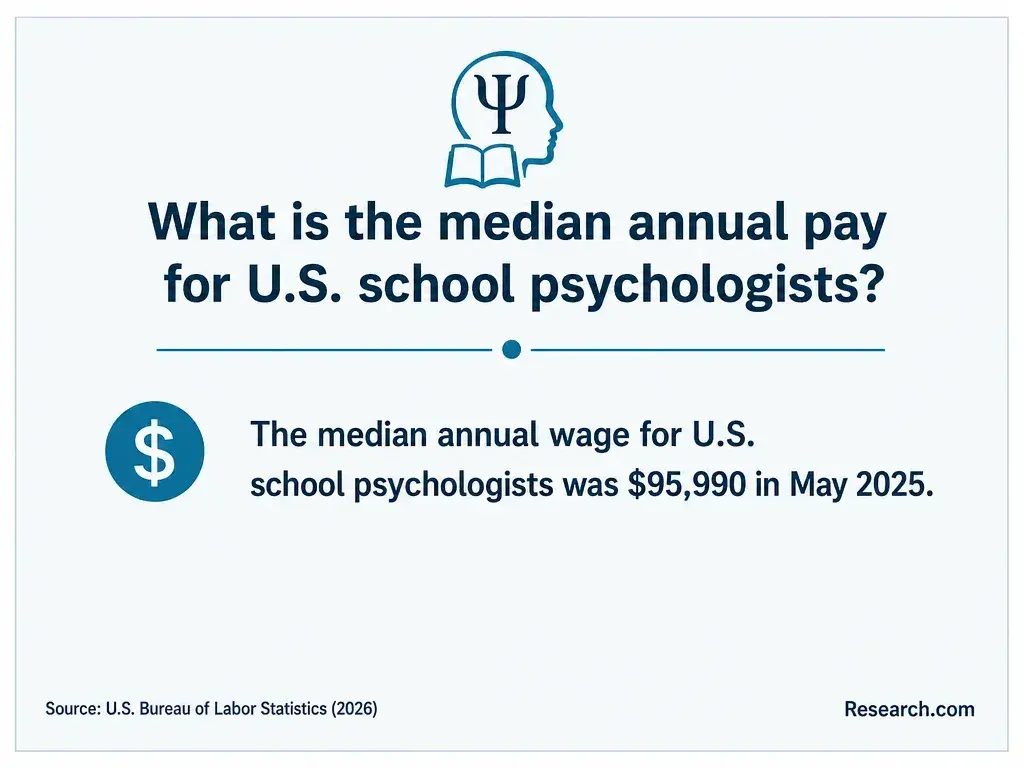
Neither BA has a single defensible graduate salary: pay follows the occupation, location, employer, experience, and credentials. For nonclinical entry points, the U.S. Bureau of Labor Statistics' Occupational Outlook Handbook category for social and human service assistants is more relevant than its psychologist category. Its occupational wage and employment projections describe workers across employers and backgrounds - not graduates of either major.
Rehabilitation counselor figures also require caution: that occupation typically calls for education beyond a bachelor's degree, so its median pay should not be presented as the expected outcome of a rehabilitation services BA. The same caution applies to mental health counselor and psychologist figures when assessing a psychology BA. Compare local postings for actual bachelor's-entry duties, required qualifications, and posted pay, then use the matching BLS occupation for broader context.
Advice about the salary outlook for forensic psychology master's graduates addresses a different degree and career decision. Do not use those figures to forecast earnings from either BA.
How can you choose the right degree and reputable online program?
Begin with a job posting or graduate program you would realistically pursue. A psychology BA is usually the stronger starting point if you want broad behavioral-science preparation, research experience, and flexibility across future study options. Rehabilitation services may fit better if your goal is disability access, vocational support, or service coordination. The recommendation can reverse if one school offers substantially better approved fieldwork, transfers more applicable credits, or meets a target program's prerequisites more efficiently.
Use the same evidence for every school you compare:
- Request the current degree plan and a written audit of your remaining requirements, including course rotation and expected placement timing.
- Confirm institutional accreditation and obtain a direct answer about any credential-specific requirements from the relevant regulator.
- Ask who arranges fieldwork, what local supervision is acceptable, and whether work or caregiving commitments can coexist with its schedule.
- Compare individualized total costs and seek evidence about completion, placement support, and graduates' actual roles; ask how any reported outcome was measured.
For a lower-cost search, budget-conscious psychology program comparisons can identify schools to investigate. An existing support-services job, targeted training, or a shorter credential may be the better investment if it already meets your desired employer's requirements. Enroll in another BA only when its required learning and opportunities justify the remaining time and expense.
Other Things You Should Know About Psychology
Possibly. General education courses may apply to either degree, but major requirements can differ substantially. Request a new degree audit before switching.
It depends on the school. Ask whether it is an officially recorded concentration and where it appears on the transcript or diploma.
Some institutions permit a double major or second degree, but their credit and residency rules vary. Compare the additional requirements with the benefit of a focused internship or elective set.
Employers set their own qualifications. Confirm the institution's accreditation and ask whether the target role requires particular coursework, experience, or credentials rather than assuming delivery format decides eligibility.
- Learning Disabilities and Vocational Rehabilitation Implications | NYS Education Department https://www.acces.nysed.gov/vr/learning-disabilities-and-vocational-rehabilitation-implications
- Requirements Related to the Practice of Counseling - NCBI https://www.ncbi.nlm.nih.gov/books/NBK259170/
- Behavioral Health Series | iowa.gov https://das.iowa.gov/media/6076/download
- Can I Become a Counselor With a Bachelor's Degree? | George Fox University https://www.georgefox.edu/counseling-programs/articles/without-bachelors.html
- Bachelor of Applied Science in Psychology | umn.edu https://online.umn.edu/bachelor-applied-science-psychology
- Online Psychology Major | Hamline University - Minnesota https://www.hamline.edu/academics/online-bachelors-psychology-major
- What Degree Do I Need to Become a Counselor or Therapist? | Palo Alto University https://paloaltou.edu/resources/blog/what-degree-do-i-need-become-counselor-or-therapist
- Tuition and Fees Charts - Student Financial Services https://sfs.gsu.edu/resources/student-acct/tuition-breakdown/
- Online Bachelor's Degree BS Human Services/Mental Health | Columbia Southern University https://www.columbiasouthern.edu/online-degree/view-all-programs/bachelors/bs-human-services-mental-health
- Bachelor of Social Work Field Education Manual | Academics at Walden University https://academicguides.waldenu.edu/bsw-field-education-manual/field-education