2027 Online MS in Psychology - Forensic Psychology: How to Evaluate Access to Faculty Working in Forensic Research
Audited and Verified:
Our Editorial and Data Verification Process
Research.com uses government datasets, official education statistics and primary institutional information to support its career and degree guides. Our review process checks factual accuracy, occupational definitions, source dates and the requirements associated with the credentials discussed.
How This Article Was Fact-Checked
Our editorial team verifies salary estimates, employment projections, education requirements and program information against original data providers and official organizations. Salary figures are checked against the relevant occupational definitions and reporting periods. Information about licensure, accreditation and required in-person training is reviewed separately.
Fact-checked and verified on:

Co-Founder and Chief Data Scientist
A faculty directory can make an online forensic psychology MS look research-rich, but it does not show whether remote students can work with those researchers. That distinction matters if you want a thesis, research experience, or a strong foundation for doctoral applications.
This guide is for prospective master's students comparing programs. It explains how to verify faculty availability, supervision, project access, and research outcomes, then weigh those findings against format, cost, and career goals before enrolling.
Key Things You Should Know
- Confirm that a researcher supervises online MS students, has a feasible project, and can meet on a schedule you can maintain.
- Recent online-student theses, research assistant roles, or documented project contributions tell you more than a faculty biography.
- A forensic psychology MS can support research or nonclinical justice-related work, but it does not itself qualify you for licensed forensic assessment.
What is an online MS in forensic psychology?
An online MS in forensic psychology is a graduate degree examining psychological science in legal and justice-related contexts. Depending on the program, students may study eyewitness memory, decision-making, violence research, victimization, corrections, or the use and limits of psychological evidence. "Online" describes course delivery, not necessarily how research supervision, meetings, or applied work occur.
Programs with similar names can serve different purposes. One may emphasize reading research and completing a course-based capstone; another may offer a thesis with faculty supervision. If your goal is research experience, the distinction matters more than the concentration label. Compare the exact curriculum and opportunities in accredited forensic psychology study and career preparation, then verify the current details with each institution.
How can you evaluate faculty expertise in forensic psychology research?
Start with research fit, identify the specific question you want to investigate, such as eyewitness identification or service access for justice-involved people. Read recent faculty work to see whether its population, methods, and setting match that interest. A publication record establishes subject expertise; it does not establish that the person teaches in the online MS, accepts master's advisees, or has room on a project.
Next, test access. These questions turn a promising faculty profile into evidence you can use when comparing programs:
- Ask the program director which faculty currently supervise online MS research, how advisers are assigned, and whether a thesis is available or required.
- Ask a potential adviser what projects a new student could realistically join, what preparation is expected, and whether participation is paid, for credit, or neither.
- Clarify meeting frequency, time-zone expectations, research-team meetings, and whether any data collection or training requires travel.
- Request examples of recent online-student research outputs and ask what students actually did, rather than assuming their names on a project indicate substantial involvement.
- Ask who approves projects and controls data access, and what happens if an adviser leaves or a planned project cannot proceed.
Look for a feasible method, not just an exciting topic. A supervised literature review or authorized secondary-data project may be more achievable remotely than recruiting people in a court or correctional setting.
Access to identifiable case records, restricted assessments, or justice-involved participants cannot be presumed; institutional permissions, privacy protections, and potentially ethics review must be resolved before work begins. If you are still building research foundations through undergraduate psychology degree program choices, prioritize statistics, methods, and writing experience that will let you contribute to a faculty project.
Is an online forensic psychology master's degree accredited and licensure eligible?
Check the institution's accreditation status with its recognized institutional accreditor and confirm that it applies to the school offering the degree. Then ask separately whether the specific program carries any professional recognition relevant to your goal. APA accreditation should not be assumed for a nonclinical forensic psychology MS; institutional accreditation alone does not establish licensure eligibility.
A forensic-focused MS generally should not be treated as a route to independent psychological evaluation, diagnosis, psychotherapy, or protected psychologist titles. If you intend to practice, obtain written guidance on the required degree, coursework, supervised experience, and examinations from the licensing board in the state where you plan to work.
A qualifying counseling, social work, or psychology professional program may be a more direct route, with different training obligations and costs; mental health counseling education costs after aid are one useful comparison if counseling, not forensic research, is your goal.
Course titles vary, but a research-oriented plan should provide enough methods, statistics, ethics, and scientific writing to support independent analysis. Forensic electives may address psychology and law, memory and testimony, victimization, corrections, or violence-related research. Examine course descriptions and prerequisites: a class about assessment or psychopathology teaches subject matter but does not authorize students to administer restricted tests or provide clinical services.
For faculty access, inspect the sequence as well as the catalog. Ask when students may approach advisers, whether a methods course leads into a thesis or research capstone, and whether elective availability depends on staffing. If your interest is specifically substance use in justice settings, compare that curriculum with addiction psychology degree options for undergraduate students only if you still need foundational study; an undergraduate focus is not a substitute for graduate research supervision.
Neither format guarantees closer mentorship. Campus study can make informal research-team contact easier, while an online program can work well when it deliberately includes remote advising and accessible projects. The comparison below identifies the arrangements to verify rather than assuming every program follows the same model.
| Research-access factor | Online program | Campus-based program |
| Faculty contact | May rely on scheduled video meetings and written feedback | May allow in-person meetings and informal laboratory contact |
| Project participation | Can suit literature reviews, analysis, and approved remote collaboration | May ease participation in on-site teams or local data collection |
| Scheduling constraint | Live meetings, team deadlines, or visits may still be required | Travel and fixed campus activities may constrain employment |
Ask for the actual meeting and project schedule before treating flexibility as an advantage. If either format would require reducing paid work, compare the full financial implications alongside economical online psychology program choices; a lower advertised price is not useful if the research experience you need is unavailable.
Requirements belong to the individual program. Check its current admissions page for accepted bachelor's degrees, GPA rules, psychology and statistics prerequisites, research-methods preparation, writing samples, recommendations, and any test policy. An applicant from criminal justice, sociology, or another field may bring valuable context but still need to demonstrate quantitative and psychological-science readiness.
If you are finishing a bachelor's degree, distinguish admission eligibility from research competitiveness. Strong methods coursework, a carefully scoped research paper, or supervised project experience can give a potential adviser more evidence than an expression of interest alone. Students completing prior study through psychology programs that accept transfer credits should confirm that transferred statistics and methods courses satisfy the eventual master's prerequisites; acceptance of a credit is not the same as prerequisite equivalence.
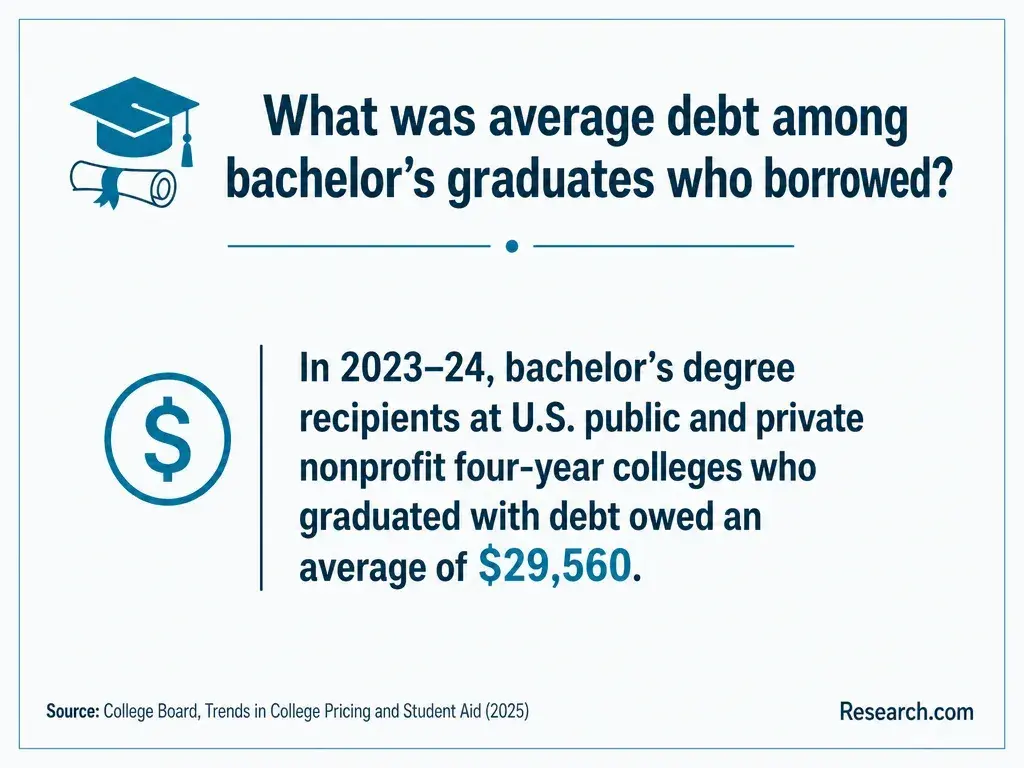
Completion time depends on required credits, course availability, enrollment pace, and whether a thesis can progress on schedule. Calculate cost from the program's current tuition and required fees, then include software, travel, possible unpaid research time, and any charges that continue while a thesis remains unfinished. Request a written estimate for your intended pace rather than treating advertised tuition as a total program price.
Speed can conflict with mentorship: a shorter calendar may leave less time to build methods skills, join a project, and develop a useful faculty recommendation. Compare condensed online psychology master's study against the actual research milestones, not just the projected graduation date. If the degree's main purpose is doctoral preparation, ask whether funding or paid research work is available; do not assume an assistantship is included.
Possible nonclinical directions include research support, program evaluation, victim-services coordination, and administrative or support roles in justice-related organizations. Hiring depends on the position's duties, employer requirements, and your experience - not simply the degree title. For research roles, documented work with data, literature synthesis, and ethical protocols may matter more than a broad list of forensic electives.
Match the credential to the work you want to do. Someone seeking recovery-service support in a justice setting should check relevant state and employer requirements and compare education routes for recovery-related careers. Someone seeking licensed forensic assessment will need to investigate the appropriate professional training and licensing route instead. Neither route follows automatically from this MS.
There is no single defensible salary for holders of a forensic psychology MS. A research assistant, victim-services employee, program analyst, and licensed psychologist have different duties and qualification requirements; a psychologist's occupational wage must not be presented as an expected master's-graduate salary.
For a useful estimate, identify job titles you could qualify for without further credentials, review local public-sector pay schedules and actual postings, and compare responsibilities, location, and required experience. Forensic psychology master's education and job earning prospects can suggest roles to investigate, but verify each role's entry requirements before using its pay to assess the degree's return on investment.
What is the job outlook for forensic psychology careers?
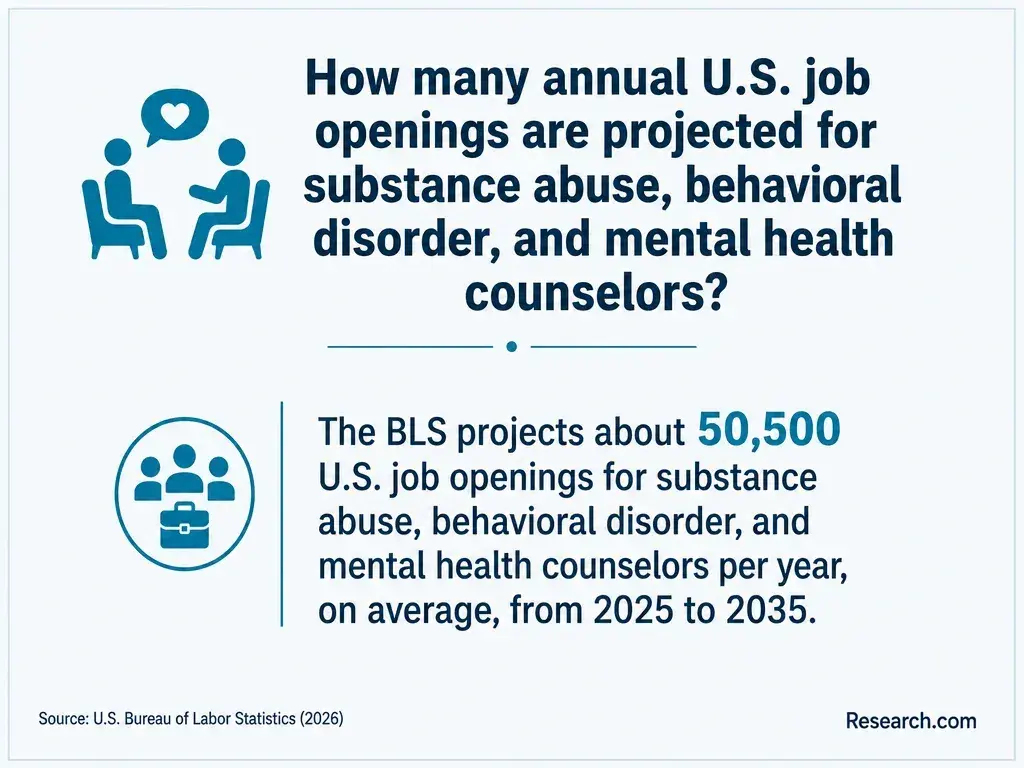
"Forensic psychology" is a field of study, not one uniform occupation with a single employment projection. Outlook depends on the job you pursue: research support, victim services, corrections-related administration, and licensed psychology are distinct labor markets. Use the Bureau of Labor Statistics occupation definition that matches a prospective job's actual duties, then check local postings and public-agency hiring requirements. Broad occupational growth cannot tell you how many openings will be available to graduates of a particular online MS.
If your interest lies in substance-use services connected to courts or corrections, the relevant jobs may call for different credentials than research roles. Compare that distinction before committing to graduate tuition; for someone still planning an undergraduate route, scholarship options for online addiction counseling undergraduates may matter more immediately than a forensic MS. For a research goal, give greater weight to verified faculty access and transferable methods experience than to a broad field-level growth claim.
Other Things You Should Know About Psychology
Yes, if the program permits it. Send a brief, specific note about your interests and preparation, and ask whether the faculty member supervises online MS students. A friendly reply is not an offer of supervision.
Possibly, but public availability does not settle research ethics, privacy, or program approval. Agree on a question and data-handling plan with your adviser before collecting records.
It can demonstrate research ability, especially when you can explain your methods and contribution. Doctoral programs assess fit and preparation differently, and a thesis is not universally required or sufficient.
Ask whether another available adviser can support the question and methods you want to pursue. If supervision depends on one unavailable person, treat that as a significant program-fit risk.
- Research & Capstone Projects - PennWest Career Center https://career.pennwest.edu/channels/research-capstone-projects/
- Online Forensic Psychology Concentration | SNHU https://www.snhu.edu/online-degrees/masters/ms-in-psychology/forensic-psychology
- Identifying research opportunities and potential mentors | uchicago.edu https://ccrf.uchicago.edu/identifying-research-opportunities-and-potential-mentors
- Undergraduate Research Assistantships at Duke Sanford https://sanford.duke.edu/academics/undergraduate-program/current-students/research-assistantships/
- MS in Forensic Psychology | Neumann University https://www.neumann.edu/academics/grad/masters-degree-in-forensic-psychology
- MS in Forensic Psychology | Nova Southeastern University https://psychology.nova.edu/degrees/masters/forensic-psychology/index.html
- Capstone Project | uchicago.edu https://threatresponse.bsd.uchicago.edu/capstone/
- Thesis or Non-Thesis? - Forensic Medicine https://forensicmedicine.med.ufl.edu/program/master-of-science/thesis-or-non-thesis/
- Engaging Undergraduate Students in Mentored Research | gwu.edu https://research.gwu.edu/engaging-undergraduate-students-mentored-research
- Capstone Requirement | University of North Texas https://forensic.unt.edu/student-resources/capstone-requirement.html