2027 Online BA in Psychology - Mental Health Admissions with Part-Time Study Across Several Institutions: What to Ask Before Applying

Co-Founder and Chief Data Scientist
Applying to several online psychology programs can improve your options, but the offer that looks most flexible may leave you with more required courses, inconvenient live sessions, or a degree that does not meet your career goal.
This guide is for prospective and returning students considering a part-time BA with a mental-health focus. It explains what to ask each institution about admission, credit evaluation, scheduling, cost, and applied learning - and how to distinguish preparation for support work from the additional training required for licensed practice.
Key Things You Should Know
- Ask each school for a written degree audit: accepted transfer credits, credits that satisfy the psychology major, remaining requirements, and the courses available at your intended part-time pace are separate issues.
- A psychology bachelor's commonly requires about 120 semester credits in total; the credits you still need - not the published program length - determine your likely time and tuition.
- A mental-health focus can prepare you for nonclinical support roles, but a psychology BA alone does not qualify you to diagnose conditions or provide psychotherapy.
What Is an Online BA in Psychology for Mental Health Careers?
An online BA in psychology is an undergraduate degree in psychological science delivered primarily through online coursework. A mental-health focus may be an officially named concentration, a set of electives, or simply a program's description of its career relevance. Ask which it is: only a formally designated concentration will appear as such under the institution's academic rules.
The distinction matters when comparing institutions. One program may emphasize research and statistics, while another offers more coursework on mental-health systems, development, or substance use. Neither format converts the BA into a clinical credential. If recovery services are your specific interest, evaluating online bachelor's study in addiction psychology can help you frame a more targeted curriculum comparison; check separately whether your state requires a credential for the job you want.
Can You Become a Mental Health Professional With a Psychology Bachelor's Degree?
You can work in mental-health-related settings with a psychology bachelor's, but "mental health professional" is not a single qualification. Depending on the employer and state, bachelor's-level staff may help with outreach, service navigation, documentation, referrals, or program operations. They must work within their assigned responsibilities and supervision arrangements; studying psychopathology does not authorize diagnosis or treatment.
If your goal is to provide psychotherapy, identify the licensed occupation first, then work backward from your state board's educational and supervised-practice requirements. Counseling, social work, and psychology have different training routes. Fast online clinical mental health counseling master's programs may be worth examining if counseling is the goal, but speed is secondary to whether a particular program meets the requirements where you intend to practice.
How Do You Choose an Accredited Online Psychology Bachelor's Program?
Begin with the institution's current accreditation status and confirm that its online degree is offered by the accredited institution. Institutional accreditation is important for issues such as federal aid eligibility and credit recognition, but it does not certify that a BA prepares students for clinical licensure. APA accreditation does not apply to general psychology bachelor's programs.
Then compare evidence of how the program works for a part-time student. The academic catalog, schedule of classes, admissions office, and psychology department should collectively answer these questions:
- What is the exact degree name, and is the mental-health focus a formal concentration or an elective pathway?
- Are required courses offered online at a predictable part-time pace, or can one infrequently offered course delay graduation?
- Do research courses, internships, examinations, or other requirements involve live meetings, campus visits, or an approved local site?
- What advising, career support, leave, and transfer-appeal processes are available to online students?
Use the same verification standard for related specialties. A guide to forensic psychology admissions and education planning, for example, can prompt useful questions about degree labels and outcomes, but a forensic emphasis should not displace your mental-health goals unless its coursework and opportunities actually fit them.
Most psychology BAs combine general education with psychology foundations, statistics, research methods, and upper-level study. For mental-health interests, developmental psychology, social psychology, abnormal psychology, health psychology, or substance-use electives may be relevant. Course names and availability vary; a course on disorders or counseling theories teaches academic content, not permission to assess or treat clients.
Compare the sequence, not just the catalog. Statistics may precede research methods, and methods may precede a capstone. Ask whether each prerequisite is offered in the term you would need it and whether a part-time student can complete the sequence without taking a heavier-than-planned term. If a school advertises shorter routes through forensic psychology bachelor's coursework, examine the underlying credit and course sequence rather than assuming its advertised pace applies to a part-time mental-health student.
Requirements differ for first-time, transfer, and returning applicants. Schools may ask for prior transcripts, proof of secondary-school completion, and other materials specified for the applicant category. Admission to the university does not necessarily settle admission to the major or determine how earlier courses fulfill degree requirements.
When applying across institutions, send the same complete academic history to each and request a program-specific evaluation. Before accepting an offer, ask the registrar or transfer-credit office to document accepted credits, and ask a psychology advisor to confirm how those credits apply to general education, statistics, research methods, the major, electives, and any residency requirement. Retain syllabi for courses whose equivalence is unclear. A psychology transfer credit acceptance guide can help you prepare questions, but only the receiving institution can approve your credits and substitutions.
If you have an associate degree, applied coursework, military learning, or older credits, ask for an evaluation rather than assuming either full acceptance or automatic rejection. Compare offers using requirements remaining after evaluation, not the largest number of credits accepted.
Online study removes some commuting, not necessarily fixed-time obligations. An asynchronous lecture can coexist with scheduled discussions, group research meetings, proctored exams, or an internship at a local agency. Campus-based study may offer easier access to labs and in-person relationships, while online study may better accommodate employment or caregiving if required activities fit your actual week.
Ask each program for a recent part-time course schedule and the attendance rules for required classes. Check time zones, meeting times, group-project expectations, access to remote research opportunities, and whether a leave interrupts a course sequence. Compare those answers with your work and household commitments before considering intensive online psychology program formats: shorter terms can increase weekly workload even when the degree remains online.
A bachelor's commonly totals about 120 semester credits, but a transfer student's remaining credits depend on the receiving school's evaluation. Part-time enrollment generally spreads those credits across more terms; prerequisites, course rotation, and leaves can extend the calendar further. Request a term-by-term plan based on courses you can realistically take, not a standard full-time completion estimate.
For a comparable cost estimate, obtain each institution's tuition basis and mandatory fees, then apply them to the credits and terms in your proposed plan. Include books or digital materials, technology charges, possible site travel, and the cost of an extra term if a required course is unavailable. Ask the financial-aid office how your planned enrollment affects aid and whether satisfactory academic progress rules change after transferred credits are evaluated. Do not treat an aid estimate as a final net price.
If the BA is only the first step toward licensed counseling, include the likely cost of subsequent qualifying education in your decision. An accredited mental health counseling program cost guide can help identify graduate-level expense categories, but you still need institution-specific prices and state-specific eligibility checks.
Possible destinations include behavioral-health program assistant, intake or referral coordinator, community outreach worker, research assistant, and some case-support positions. Duties and entry requirements vary substantially: an employer may prioritize documentation, communication, data skills, experience with a population, a driver's license, or a separate credential. A BA makes an applicant eligible for consideration where it meets the posting's requirements; it does not secure the position.
Build evidence alongside coursework. A supervised, nonclinical placement or research project can demonstrate appropriate referrals, confidentiality, basic data handling, and professional boundaries. Get academic and site approval before assuming an existing job will count as an internship. If your interests shift toward legal settings, master's-level forensic psychology employment pathways offer a different comparison, but forensic graduate study does not itself grant clinical or investigative authority.
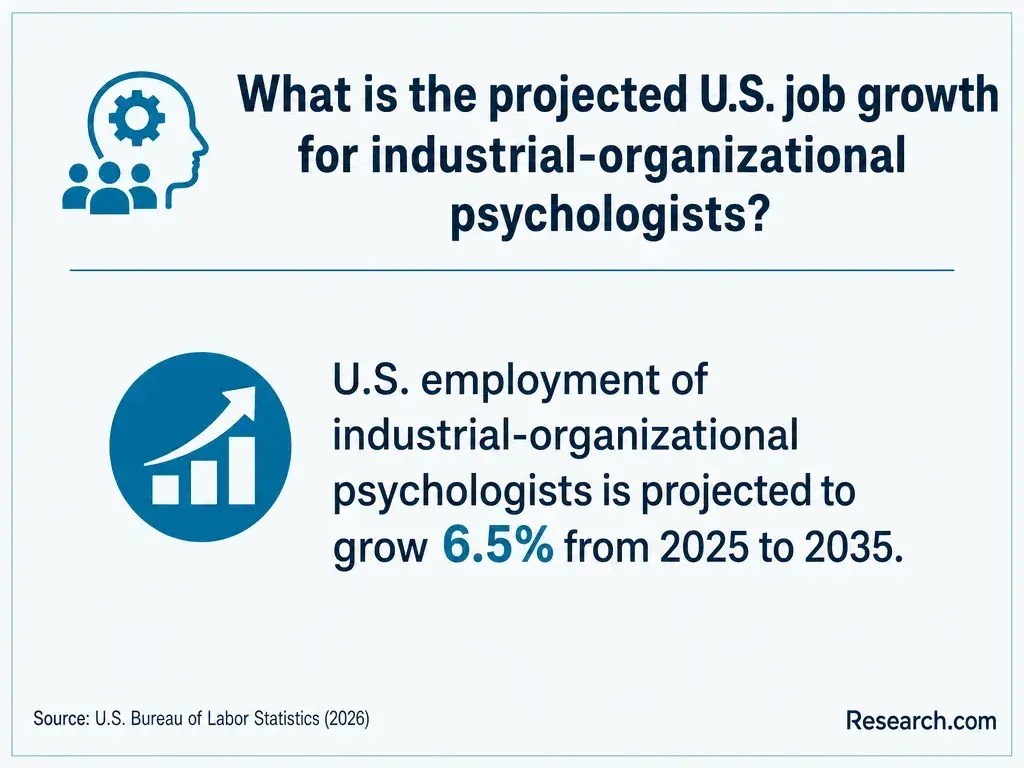
There is no single reliable salary or growth rate for "psychology graduates." US Bureau of Labor Statistics Occupational Outlook Handbook figures describe occupations, not the outcomes of one BA program. For a useful comparison, select actual job titles in the area where you intend to work and check each occupation's latest published median pay, projection period, typical entry education, and duties. Local postings can then show whether your proposed BA and experience match current hiring requirements.
Keep graduate-level or licensed occupations out of a bachelor's-level pay estimate. For instance, a counseling occupation's wage data is not an earnings forecast for someone who has completed only a BA. Nor should a prospective higher salary automatically justify another degree: if you are considering under-two-year forensic psychology graduate program options, compare their full cost and actual qualifying roles against the experience or credential you would gain instead.
What Licenses or Certifications Do Mental Health Careers Require?
Requirements depend on the role and jurisdiction, not on a concentration's title. Psychologists generally need doctoral-level professional preparation and state licensure; licensed counselors and clinical social workers follow distinct qualifying graduate and supervised-practice routes. Addiction counseling, peer support, and other support roles can have state-specific certification or registration rules. Some nonclinical jobs require no professional license but still impose employer training, background-check, or supervision requirements.
Before applying, identify a target job title and ask the relevant state licensing or certifying authority what education, program recognition, experience, and examinations it requires. Then ask each university which, if any, of those requirements its BA actually fulfills. When researching choosing an accredited accelerated clinical counseling pathway for later study, verify eligibility with the board rather than relying on a program's general claim that graduates pursue licensure.
Other Things You Should Know About Psychology
Yes. Keep each school's deadlines and document requests separate, and wait for comparable credit evaluations and cost estimates before choosing.
Ask each institution whether it offers a preliminary or official evaluation before enrollment. A preliminary estimate may change when official records and departmental approvals are complete.
Contact the school's accessibility office before enrollment to discuss its process, course technology, and arrangements for live sessions, exams, or required experiences.
Yes. Save syllabi and descriptions for statistics, research methods, and other relevant courses; a future graduate program may request them when reviewing prerequisites.
- Frequently Asked Questions for Mental Health Counselors | nysed.gov https://www.op.nysed.gov/professions/mental-health-counselors/faqs-education-requirements
- Part-Time TAP for Matriculated Students FAQ for Financial Aid Professionals | HESC https://hesc.ny.gov/financial-aid-professionals/grants-scholarships-faq/part-time-tap-matriculated-students-faq
- Military Training Evaluation Program (MTEP) | dantes.mil https://www.dantes.mil/credit4training/
- Academic Years, Academic Calendars, Payment Periods, and Disbursements | 2025-2026 Federal Student Aid Handbook https://fsapartners.ed.gov/knowledge-center/fsa-handbook/2025-2026/vol3/ch1-academic-years-academic-calendars-payment-periods-and-disbursements
- Accreditation in the U.S. | ed.gov http://www.ed.gov/laws-and-policy/higher-education-laws-and-policy/college-accreditation/accreditation-in-the-us
- Cost of Attendance | lsus.edu https://www.lsus.edu/costs-and-aid/cost-of-attendance
- APA Accreditation - Home https://accreditation.apa.org/
- Transfer Credit Policy | Roosevelt University https://www.roosevelt.edu/admission/transfer/policy
- How Long Does It Take to Get a Bachelor's Degree? | American National University https://an.edu/how-long-to-get-bachelors-degree/
- Undergraduate and Graduate Tuition and Fees | Purdue Global https://www.purdueglobal.edu/tuition-financial-aid/undergraduate-graduate-tuition-and-fees/