2027 Online Artificial Intelligence Bachelor's Degree Programs With Accelerated Courses

Co-Founder and Chief Data Scientist
Choosing an accelerated online artificial intelligence bachelor’s degree is a trade-off: you may finish sooner, but you must be ready for a faster pace, heavier weekly workload, and more independent learning. For working adults, transfer students, and career changers, that trade-off can be worthwhile if the program is accredited, technically rigorous, and structured around projects that build job-ready AI skills.
The timing matters. Employment in AI-related fields is projected to grow by over 40% between 2022 and 2032, but employers still look for more than a degree title. They want evidence that graduates can program, work with data, understand machine learning concepts, evaluate model performance, and communicate technical results clearly.
This guide explains how accelerated online artificial intelligence bachelor’s degree programs work, who they fit best, what courses they usually include, how long they take, what they cost, how to check accreditation, and what career paths may be available after graduation.
Key Benefits of Online Artificial Intelligence Bachelor's Degree Programs With Accelerated Courses
- Accelerated online artificial intelligence programs enable students to complete degrees in as little as two to three years, significantly faster than traditional four-year timelines.
- Flexible scheduling and pacing accommodate working students and those with personal commitments, allowing asynchronous coursework to fit diverse lifestyles.
- Programs often offer a focused curriculum, emphasizing core AI skills and practical applications to enhance efficiency and better prepare graduates for rapidly evolving tech industries.
What Is an Accelerated Online Artificial Intelligence Bachelor's Degree Program?
An accelerated online artificial intelligence bachelor’s degree program is a bachelor’s-level program that teaches AI, machine learning, programming, data analysis, and related computing skills in a shortened academic format. Instead of following a standard semester-by-semester pace, accelerated programs usually use shorter terms, year-round course options, heavier course loads, or transfer-credit pathways to help students finish faster.
The word “accelerated” does not mean the degree should be easier or less complete. A credible program still needs strong instruction in mathematics, programming, statistics, algorithms, databases, machine learning, and ethical AI use. The difference is the delivery model: students cover the same kinds of material in a more compressed schedule.
How the accelerated online format usually works
Most accelerated online artificial intelligence programs combine asynchronous coursework with scheduled deadlines. Students may watch lectures, complete coding labs, join discussion boards, submit projects, and take exams through a learning management system. Some courses may also include live sessions, team projects, or virtual labs.
- Shorter terms: Courses may be delivered in condensed modules rather than traditional full-length semesters.
- Continuous enrollment: Some programs reduce downtime by offering multiple start dates or year-round study.
- Transfer-friendly design: Prior college credits, Advanced Placement coursework, or associate degree credits may shorten the degree path.
- Project-based learning: Strong programs include applied work in areas such as model training, data cleaning, natural language processing, and predictive analytics.
Students comparing online education options should keep the AI degree’s technical demands in mind. A program such as the cheapest online master’s in social work may also be online and flexible, but the workload, skill base, and professional outcomes are very different from an accelerated AI bachelor’s program.
Who Should Choose an Online Artificial Intelligence Bachelor's Program With Accelerated Courses?
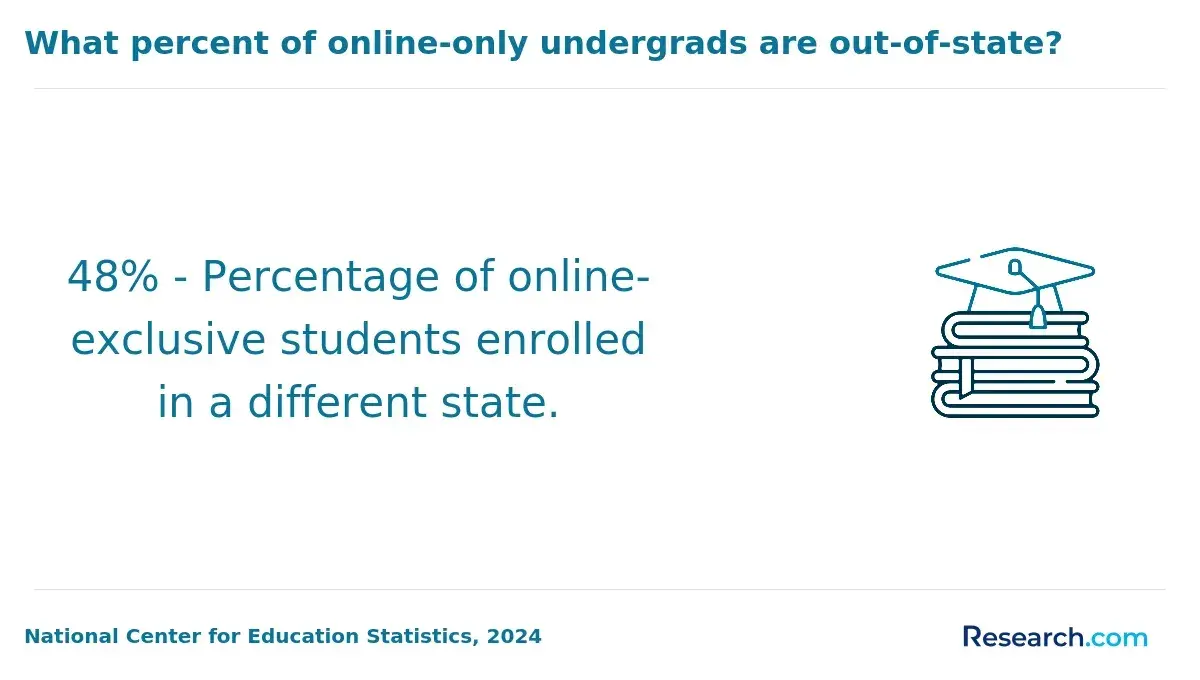
An online artificial intelligence bachelor’s program with accelerated courses is best for students who want a faster route to a technical degree and can manage intensive weekly work without frequent in-person support. According to the National Center for Education Statistics, over 40% of undergraduates in fully online programs are non-traditional students, which helps explain why flexible and accelerated formats appeal to adults balancing school with work, family, or career transitions.
This format can be a strong fit, but it is not ideal for every learner. The pace rewards discipline, planning, and comfort with independent problem-solving.
| Student type | Why the format may work | What to watch for |
| Working professionals | Online coursework can fit around job responsibilities, and faster completion may support a career move into AI, data, or software roles. | Weekly deadlines can be difficult during peak work periods, especially in math-heavy or coding-intensive courses. |
| Career changers | The curriculum can provide a structured path into artificial intelligence without requiring a return to campus. | Students without programming or statistics experience may need extra preparation before enrolling. |
| Transfer students | Accepted prior credits may reduce both time to graduation and total tuition exposure. | Transfer rules vary by school, and not all technical credits apply directly to the AI major. |
| Self-directed learners | Asynchronous online courses allow students to study when they are most productive. | Students who need frequent live instruction may struggle if support is limited. |
Students who are comparing accelerated formats across fields can also learn from other online degree models. For example, someone researching the cheapest online master’s degree in psychology will see similar themes around flexibility, workload, and time management, even though the academic content and career paths differ substantially.
What Courses Are Offered in Online Accelerated Artificial Intelligence Bachelor's Degree Programs?
Online accelerated artificial intelligence bachelor’s degree programs typically combine computer science foundations, mathematics, statistics, data systems, machine learning, and applied AI projects. Because the schedule is compressed, course sequencing matters: students usually need programming and quantitative foundations before they can succeed in advanced AI courses.
Course names vary by institution, but most programs include the following categories.
- Programming and software development: Students commonly study programming fundamentals, object-oriented design, data structures, algorithms, and software engineering practices. These courses support nearly every later AI topic.
- Mathematics and statistics: AI coursework depends heavily on probability, statistics, linear algebra, calculus concepts, and discrete mathematics. Students should not treat these as “background” courses; they are central to understanding models.
- Data management and analytics: Courses may cover databases, data mining, data visualization, data cleaning, and large-scale data processing. These skills help students prepare data for AI systems.
- Machine learning and AI foundations: Students learn supervised and unsupervised learning, model evaluation, classification, regression, clustering, and basic neural network concepts.
- Specialized AI topics: Depending on the program, students may study natural language processing, computer vision, robotics, deep learning, reinforcement learning, or intelligent systems.
- Ethics, communication, and general education: Responsible AI requires more than technical skill. Courses in communication, critical thinking, ethics, and social impact help students evaluate bias, privacy, transparency, and accountability.
- Capstone or applied project: Strong programs often require students to build or evaluate an AI-related system, analyze a real dataset, or complete a portfolio-ready project.
What to look for in the curriculum
Students should look beyond the degree title and review the course catalog. A strong accelerated AI curriculum should include both theory and implementation. If a program advertises artificial intelligence but offers little programming, limited math, or few applied projects, it may not provide the preparation students expect for technical AI roles.
What Are the Best Accelerated Artificial Intelligence Bachelor's Degree Programs Online?
The best accelerated artificial intelligence bachelor’s degree programs online are accredited, transfer-friendly, technically rigorous, and transparent about course pace, tuition, faculty support, and career outcomes. Enrollment in fully online bachelor’s programs has surged by more than 30% recently, but growth alone does not guarantee quality. Students need to evaluate whether a program’s speed is matched by academic depth and adequate support.
Because “best” depends on a student’s background and goals, it helps to compare programs by pathway rather than by marketing claims.
| Program focus | Best for | Key features to verify |
| Core AI foundations | Students who want a direct artificial intelligence curriculum | Machine learning, statistics, algorithms, neural networks, model evaluation, and applied AI projects |
| Computer science with AI concentration | Students who want broader software and systems preparation | Programming depth, data structures, databases, software engineering, and AI electives |
| Data science and AI pathway | Students interested in analytics, modeling, and business or research applications | Data mining, visualization, predictive modeling, statistics, and real-world datasets |
| Applied AI or interdisciplinary track | Students who want to use AI in business, healthcare, robotics, finance, or operations | Domain electives, capstone projects, ethics coursework, and practical tool use |
How to compare accelerated AI programs
- Check accreditation first: Accreditation affects credit transfer, graduate school eligibility, employer recognition, and access to federal financial aid.
- Review transfer-credit policies: The fastest program on paper may not be the fastest for you if it accepts few previous credits.
- Ask about weekly workload: Accelerated AI courses can be demanding, especially when programming assignments and math concepts overlap.
- Look for portfolio value: Capstones, labs, and projects can help graduates show practical ability to employers.
- Compare total cost, not only tuition per credit: Fees, required software, course repeats, and the number of terms can change the final price.
Students exploring fast online options in other career fields may also compare accelerated structures with a construction management degree online, though the technical requirements and job outcomes differ from AI-focused programs.
How Long Does It Take to Complete an Accelerated Online Artificial Intelligence Degree?
An accelerated online artificial intelligence bachelor’s degree typically takes two to three years to complete, compared with the usual four years for traditional programs. The exact timeline depends on transfer credits, course load, term length, enrollment pattern, and how consistently a student can study without stopping out.
Studies show these programs can halve the time needed compared to conventional on-campus options, but that outcome is not automatic. Students who enter with substantial transfer credit, enroll year-round, and take heavier course loads are more likely to finish on the shorter end of the range.
Factors that affect completion time
- Transfer credits: Prior college coursework can significantly reduce the number of credits remaining, if the program accepts those credits toward degree requirements.
- Course intensity: Shorter terms move quickly. Taking multiple accelerated technical courses at the same time can speed completion but increase risk of burnout.
- Math and programming readiness: Students who need remedial or prerequisite coursework may take longer.
- Year-round enrollment: Programs that offer summer, winter, or multiple annual start dates can reduce gaps between courses.
- Personal schedule: Work, caregiving, military service, and health responsibilities can affect whether a student can maintain an accelerated pace.
Before enrolling, students should ask for a personalized degree plan showing the expected graduation date under different course-load scenarios. A realistic three-year plan is often better than an overloaded two-year plan that leads to failed courses or withdrawal.
What Are the Requirements for Accelerated Artificial Intelligence Bachelor's Degree Programs?
Requirements for accelerated artificial intelligence bachelor’s degree programs usually include a high school diploma or equivalent, college readiness in math and English, reliable technology access, and the ability to handle a compressed academic schedule. Some programs may also prefer or require prior coursework in mathematics, computer science, or other STEM subjects.
Studies show that roughly 40% of online students identify time management and self-motivation as vital for successfully completing their programs. That point is especially important in AI programs because students are often learning abstract concepts and technical tools at the same time.
Common admission and readiness requirements
- Academic background: Applicants typically need a high school diploma or its equivalent. Transfer applicants may need transcripts from all previously attended colleges.
- Math preparation: Programs may expect readiness for college algebra, statistics, discrete mathematics, calculus concepts, or linear algebra, depending on curriculum design.
- Programming readiness: Some programs start with introductory programming, while others move quickly into intermediate computing. Students should check whether beginners are fully supported.
- Technology access: Online students need reliable internet, a capable computer, and access to required software, coding platforms, virtual labs, or cloud-based tools.
- Time availability: Accelerated terms require regular weekly study blocks. Falling behind in a short course can be difficult to recover from.
- Transfer-credit review: Students seeking the fastest route should request a formal transfer evaluation before committing to a program.
Questions to ask before applying
- How many credits can I transfer into the program?
- Are courses asynchronous, synchronous, or a mix of both?
- How many hours per week should I expect for each accelerated course?
- What tutoring, coding support, math support, and faculty access are available online?
- Does the program include a capstone, internship, practicum, or portfolio project?
How Much Does an Accelerated Artificial Intelligence Bachelor's Degree Cost Online?
The cost of an accelerated artificial intelligence bachelor’s degree online varies widely. On average, students can expect total tuition costs ranging from approximately $20,000 to $50,000. The final amount depends on the institution, tuition model, transfer credits, fees, enrollment pace, and whether the student qualifies for financial aid, employer tuition assistance, scholarships, or military education benefits.
Accelerated programs can sometimes reduce total cost by shortening time to graduation, but faster is not always cheaper. Students should compare the full cost of attendance rather than relying only on advertised tuition.
| Cost factor | Why it matters |
| Credit load structure | Accelerated students may take more credits per term, which can concentrate tuition payments into a shorter period. |
| Term-based billing | If tuition is charged by term rather than by credit, finishing faster may reduce total tuition, but only if the student can complete courses on schedule. |
| Transfer credits | Accepted prior credits can reduce the number of courses needed and lower total cost. |
| Fees and materials | Online programs may still charge technology fees, course fees, exam-proctoring fees, or software-related costs. |
| Course repeats or withdrawals | Failing or dropping an accelerated course can add cost and delay graduation. |
Students comparing affordability across institutions can broaden their search by reviewing ai degree programs online, then narrowing the list by accreditation, transfer policy, course quality, and student support.
Are Online Artificial Intelligence Bachelor's Degrees With Accelerated Courses Accredited?
Online artificial intelligence bachelor’s degrees with accelerated courses can be accredited, but accreditation must be verified before enrollment. Accreditation is an independent quality-review process that evaluates an institution’s academic standards, faculty qualifications, student services, financial stability, and learning outcomes. It is especially important for online and accelerated programs because students need assurance that speed is not replacing academic quality.
Approximately 7,000 higher education institutions in the U.S. hold either regional or national accreditation. For bachelor’s degrees, institutional accreditation is one of the most important checks because it can affect federal financial aid eligibility, credit transfer, graduate admissions, and employer confidence.
Accrediting bodies students may encounter
- Middle States Commission on Higher Education (MSCHE): A regional accreditor that reviews institutions for academic quality, governance, faculty qualifications, student learning, and institutional effectiveness.
- Higher Learning Commission (HLC): An accreditor for many institutions in the Midwest that evaluates curriculum quality, student support, institutional resources, and continuous improvement.
- Southern Association of Colleges and Schools Commission on Colleges (SACSCOC): A regional accreditor that reviews institutions in the Southern U.S. for standards related to teaching, learning, governance, and student services.
- Distance Education Accrediting Commission (DEAC): A national accreditor focused on distance education, including online learning quality, technology-supported instruction, and student engagement.
How to verify accreditation
- Check the school’s official accreditation page and identify the accrediting agency.
- Confirm the accreditor is recognized by the appropriate federal or higher education authority.
- Ask whether the specific AI program has any additional program-level recognition or industry alignment.
- Confirm whether credits are likely to transfer if you later change schools or pursue graduate study.
Students planning graduate education after an AI bachelor’s degree should be especially careful. For example, someone later exploring online masters in mental health counseling or another graduate pathway may need transcripts from an accredited institution to meet admission requirements.
What Are the Disadvantages of Accelerated Online Artificial Intelligence Bachelor's Degrees?
The main disadvantages of accelerated online artificial intelligence bachelor’s degrees are workload intensity, reduced time to absorb complex material, limited schedule flexibility during short terms, and the need for strong self-direction. According to a 2022 report by the Online Learning Consortium, nearly 40% of online learners struggle with managing extensive workloads, a key factor affecting completion rates in such programs.
These drawbacks do not make accelerated programs a poor choice, but they do mean students should evaluate their readiness honestly before enrolling.
- Increased workload intensity: AI courses often combine coding, math, theory, and applied assignments. In an accelerated format, students may need to complete substantial work every week with little room for delay.
- Less time for concept absorption: Topics such as neural networks, algorithms, probability, and model evaluation can take time to understand. Moving quickly may weaken long-term retention if students rely only on short-term memorization.
- Reduced flexibility: Online learning is flexible in location, but accelerated courses are not always flexible in pacing. Weekly deadlines, group projects, and exam windows may still be strict.
- Higher risk of burnout: Students balancing full-time work, caregiving, and multiple accelerated courses may experience fatigue, especially during technically demanding terms.
- Limited networking if poorly designed: Some online programs offer strong faculty access and peer interaction; others leave students isolated. This matters for motivation, collaboration, and career development.
- Potential mismatch for beginners: Students with little math or programming experience may need a slower ramp-up than the accelerated format provides.
How to reduce the risks
Prospective students should start with a manageable course load, use tutoring early, build a weekly study calendar, and avoid taking multiple high-difficulty technical courses at once unless they have strong preparation. It can also help to compare financial support and flexible degree structures, including resources related to online interdisciplinary studies degree financial aid, when weighing affordability and program fit.
What Jobs Can You Get With an Accelerated Artificial Intelligence Bachelor's Degree?
An accelerated artificial intelligence bachelor’s degree can prepare graduates for entry-level and early-career roles in AI, data, software, automation, and analytics, depending on the curriculum, projects, internships, and prior experience. Studies show that nearly 72% of graduates from fast-tracked technology programs secure AI-related jobs within six months, reflecting strong market demand for these skills.
Job titles vary widely because artificial intelligence is used across healthcare, finance, manufacturing, retail, cybersecurity, logistics, education, and software development. Graduates should expect stronger prospects when they can show a portfolio of practical work, such as machine learning models, data pipelines, code repositories, dashboards, or capstone projects.
- Machine Learning Engineer: Builds, trains, tests, and helps deploy models that support prediction, classification, recommendation, automation, or pattern recognition. Some employers may prefer candidates with advanced experience or graduate education for more senior roles.
- Data Scientist: Uses statistics, programming, and machine learning to analyze large datasets and support decision-making. Responsibilities may include data cleaning, feature engineering, model development, visualization, and communication with nontechnical stakeholders.
- AI Research Scientist: Studies and develops new AI methods, often in areas such as natural language processing, robotics, computer vision, or deep learning. Many research-focused positions may require graduate-level training, but a bachelor’s degree can be a first step.
- Robotics Engineer: Applies AI, programming, sensors, and mechanical or electrical systems to build intelligent machines or automation tools. Some roles may require additional engineering coursework or specialized experience.
- AI Software Developer: Builds applications that use AI services, machine learning libraries, APIs, or automation tools. This path often rewards strong programming ability and software engineering fundamentals.
- Data Analyst or Business Intelligence Analyst: Uses data tools to identify trends, build reports, and support business decisions. This can be a practical entry point for graduates building toward more advanced AI roles.
Students should read job postings early in the program to identify commonly requested tools, programming languages, cloud platforms, and project experience. The degree can open doors, but demonstrated technical ability often determines how competitive a graduate is for AI-related jobs.
What Graduates Say About Online Artificial Intelligence Bachelor's Degree Programs With Accelerated Courses
-
: "
Choosing an online accelerated artificial intelligence bachelor's degree was a game-changer for me primarily because of the flexibility it offered alongside my full-time job. The most challenging part was managing a fast-paced curriculum, but the interactive forums and responsive instructors really helped me stay on track. This degree has opened doors I never expected, leading to a role where I now design intelligent systems for a leading tech company.
—Jason
"
-
: "
Enrolling in an accelerated artificial intelligence program was driven by my desire to quickly pivot my career into tech without pausing my income. The intensity of the courses demanded excellent time management skills, which I gradually developed as I progressed. Reflecting on the experience, the combination of practical projects and theoretical knowledge deeply enhanced my problem-solving abilities in my current role as a data analyst.
—Camilo
"
-
: "
The appeal of an online artificial intelligence bachelor's degree was the opportunity to gain cutting-edge skills at an accelerated pace while balancing family commitments. One insight I'd share is how important it is to cultivate discipline and leverage virtual study groups to overcome challenging topics. Professionally, completing the program drastically improved my ability to contribute to AI-driven initiatives at my company, increasing both my confidence and value.
—Alexander
"
Other Things You Should Know About Artificial Intelligence Degrees
Yes, many programs include mandatory internships or practical components to provide real-world experience. Typically, you need to complete these during the second or third year, depending on the institution's structure and partnerships with industry leaders, ensuring hands-on learning in AI application.
Yes. Many 2027 accelerated online AI bachelor’s programs accept up to 90 transfer credits, and some also allow prior learning assessment or military credit. To graduate, students usually must complete at least 30 semester credits at the degree-granting institution.
Students should have a foundational understanding of programming languages such as Python or Java, as well as familiarity with mathematical concepts like linear algebra and statistics. Comfort with software tools commonly used in artificial intelligence, including machine learning frameworks and data analysis platforms, is also important. Strong self-directed learning skills help manage the accelerated pace.
References
- AI Bachelor's Degree Guide | Top Online Programs https://www.itcareerfinder.com/program-rankings/best-artificial-intelligence-bachelors-degrees.html
- Prepare for the Future of Tech with a Bachelor’s in AI | UMGC https://www.umgc.edu/blog/umgc-bachelors-degree-artificial-intelligence
- Best Online AI Degrees: 2025 Rankings & Program Directory - MastersInAI.org https://www.mastersinai.org/degrees/online-artificial-intelligence-degrees/
- Accelerated Degree Pros and Cons| University of Bridgeport https://www.bridgeport.edu/news/accelerated-degree-pros-and-cons/
- Online Bachelor of Science (BSc) in Artificial Intelligence - Swiss School of Business and Management Geneva https://www.ssbm.ch/online-bachelor-of-science-bsc-in-artificial-intelligence/
- Remote Artificial Intelligence (AI) Jobs | Working Nomads https://www.workingnomads.com/remote-artificial-intelligence-jobs
- What are the Benefits of Studying an AI-Related Programme | Gisma https://www.gisma.com/blog/what-are-the-benefits-of-studying-an-ai-related-programme
- Are Artificial Intelligence Courses Worth It? https://www.snhu.edu/about-us/newsroom/stem/are-ai-courses-worth-it
- The Great College Computing Shift: Why Students Are Abandoning CS for AI Degrees https://captaincompliance.com/news/the-great-college-computing-shift-why-students-are-abandoning-cs-for-ai-degrees-2/
- aijobs.net https://aijobs.net/jobs/education-bachelors-degree-in-artificial-intelligence/