
2027 How Many Credits Do You Need for an Artificial Intelligence Bachelor's Degree?

Co-Founder and Chief Data Scientist
Before choosing an artificial intelligence bachelor’s program, students need to know a simple but expensive detail: how many credits must be completed before graduation. Credit requirements shape tuition, transfer planning, course load, time to degree, and whether an online or campus-based format is realistic for a working adult.
Most artificial intelligence bachelor’s degrees require approximately 120 to 130 total credits. Those credits are usually divided among general education courses, AI and computer science major requirements, mathematics and technical foundations, electives, and any concentration-specific coursework. The exact total can vary by institution, accreditation expectations, transfer policy, and whether the student brings in prior college, exam, military, or professional learning credit.
This guide explains how AI bachelor’s degree credits are typically structured, how online and on-campus programs compare, which options may reduce the number of credits you still need to complete, and how to avoid paying for unnecessary courses.
Key Benefits of Knowing the Number of Credits Needed for a Artificial Intelligence Bachelor's Degree
- Knowing total credits required helps estimate tuition costs and time commitment, enabling students to budget effectively and avoid unnecessary debt while pursuing an artificial intelligence degree.
- Understanding credit distribution between general education, major courses, and electives aids in selecting transfer credits or exams like CLEP to reduce expenses and accelerate degree completion.
- Awareness of credit loads and accelerated term options allows students to plan a flexible, efficient path tailored to work or personal obligations, maximizing career readiness in artificial intelligence.
How Many Total Credit Hours Are Required to Earn a Artificial Intelligence Bachelor's Degree?
Most artificial intelligence bachelor’s degree programs require about 120 semester credit hours, which is the common national benchmark for bachelor’s degrees in the United States. Many AI programs fall slightly above that range because they include substantial coursework in programming, mathematics, algorithms, data structures, machine learning, and applied computing.
Data from the National Center for Education Statistics (NCES) and the Integrated Postsecondary Education Data System (IPEDS) show that artificial intelligence degree programs often range from 124 to 128 credit hours, depending on state requirements, institutional curriculum design, and specialized program expectations.
- Arizona State University: Requires 120 credit hours, with about 40 credits focused on core AI and computer science courses alongside general education and electives.
- University of Central Florida: Requires 124 credit hours, combining AI coursework, mathematics, and additional STEM electives.
- Northeastern University: Requires 128 credit hours, with AI specialization, experiential learning, and integrated co-op terms.
- University of Texas at Dallas: Requires 120 credit hours and offers flexible pathways, including transfer credits and prior learning assessments that may help reduce repeated coursework.
The total credit requirement matters because many colleges charge tuition by the credit. A program requiring 128 credits can cost more than a 120-credit program if the per-credit tuition rate is the same. However, the published credit total does not always equal the number of credits a student must still complete after transfer credit, CLEP exams, prior learning assessments, or military training credit are applied.
Students comparing programs should look beyond the headline credit total and ask three practical questions: how many credits will transfer, how many upper-division AI courses must be completed at the institution, and whether the program’s term structure supports the student’s preferred pace. This is especially important for transfer students, working adults, and students considering online classes for adults.
A full-time student taking 12 to 15 credits per semester can usually complete a 120-credit program in about four years. Accelerated terms or heavier course loads may shorten the timeline, while part-time enrollment can extend it but make the degree more manageable for students balancing employment, caregiving, or military obligations.
What Is the Standard Credit Distribution Between General Education and Artificial Intelligence Major Coursework?
Artificial intelligence bachelor’s programs usually divide credits into three broad categories: general education, major coursework, and electives. The exact distribution varies, but the structure is designed to give students both a broad academic foundation and the technical depth needed for AI-related roles.
- General Education Credits: Most programs require 30 to 45 credits in areas such as English composition, mathematics, natural sciences, social sciences, and humanities. These courses build communication, quantitative reasoning, ethical awareness, and analytical skills that are useful in technical and nontechnical roles.
- Major Core Coursework: AI and computer science major requirements commonly account for 40 to 60 credits. This portion often includes programming, data structures, algorithms, statistics, machine learning, artificial intelligence foundations, database systems, and specialized topics such as natural language processing or robotics.
- Elective Credits: Electives often account for 10 to 20 credits. Students may use them to study data analytics, cybersecurity, cognitive science, software engineering, cloud computing, or another area that supports their career goals.
The balance among these categories affects both graduation planning and transfer value. General education courses are often easier to transfer than specialized AI courses because they are more standardized across institutions. By contrast, upper-division AI courses may need to be completed at the degree-granting school, especially if they are tied to a concentration or capstone sequence.
- Broad-based programs may allocate more credits to general education and interdisciplinary study, which can help students develop communication and ethical reasoning skills.
- Technical-first programs may introduce programming, discrete mathematics, algorithms, and machine learning earlier, which can benefit students who want faster exposure to AI tools and methods.
- Transfer-friendly programs often make it easier to apply completed general education credits, associate degree coursework, CLEP exams, prior learning assessments, or military training credits toward the degree.
- Graduate-school-oriented plans may require stronger mathematics, statistics, and theory coursework, so students should review prerequisites carefully if they plan to pursue advanced study later.
Prospective students should review each school’s sample four-year plan, degree audit worksheet, and course rotation. These documents show whether required AI courses are offered every term, whether prerequisites can create bottlenecks, and whether electives align with the student’s goals. Students comparing the financial return of different fields can also review majors that make the most money while keeping credit requirements in mind.
How Do Credit Requirements for an Online Artificial Intelligence Bachelor's Degree Compare to On-Campus Programs?
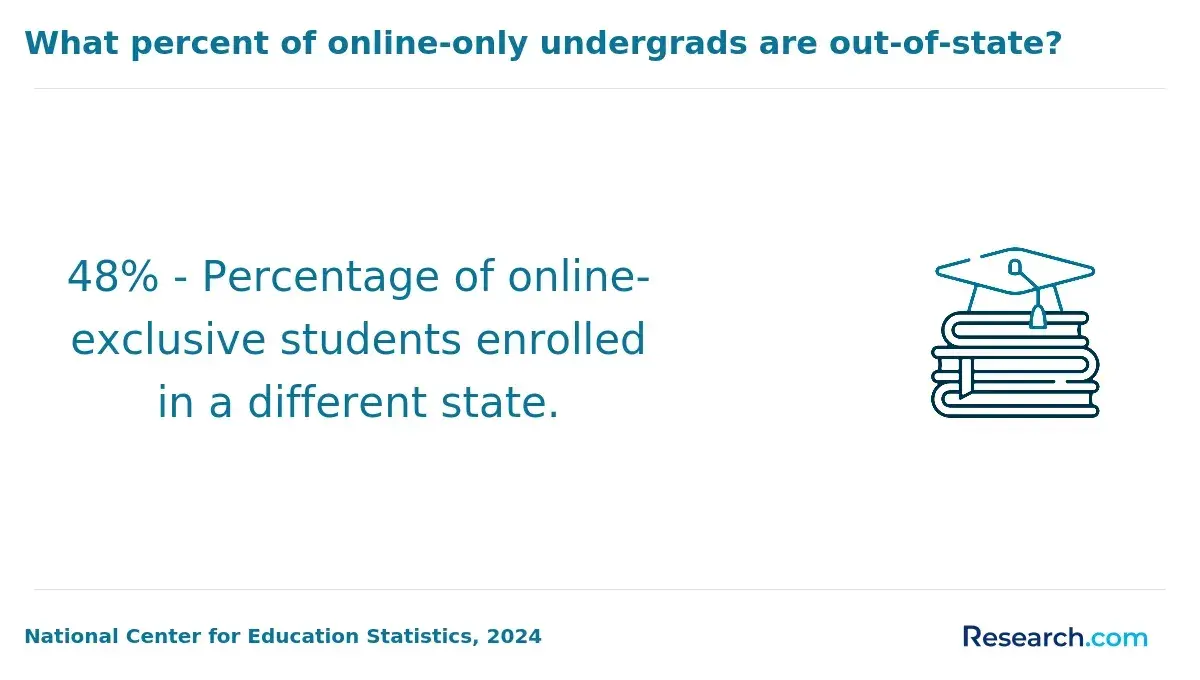
Online artificial intelligence bachelor’s degrees usually require the same number of credits as on-campus programs. Accreditation standards focus on learning outcomes, academic rigor, and credit-hour equivalency, not whether students complete courses online or in person.
The main differences are usually format, pacing, and credit evaluation. Online programs may offer asynchronous courses, shorter terms, rolling starts, or competency-based education (CBE). A CBE model can allow students to progress by demonstrating mastery rather than following a traditional seat-time structure, although institutional policies still determine how that learning is translated into degree credit.
- Equivalent Credit Loads: Online and campus-based AI programs commonly share the same overall credit expectations because both must meet institutional and accreditation standards.
- Flexible Scheduling: Online courses may be asynchronous or self-paced, which can help working students complete credits around job and family responsibilities.
- Transfer and Prior Learning Options: Many online programs are designed for adult learners and may accept transfer credits, CLEP exam results, prior learning assessments, and military training credits.
- Same Degree Categories: Both formats typically include general education, AI and computer science core courses, mathematics, electives, and sometimes concentration courses or capstones.
The trade-off is that online flexibility requires strong self-management. AI courses often involve coding assignments, labs, mathematics, and project work, so students should not assume that an online format is easier. Before enrolling, ask whether technical support, tutoring, faculty office hours, and career services are available to online students.
One artificial intelligence bachelor’s student described the adjustment this way: “Adjusting from a traditional workweek to managing asynchronous coursework was initially overwhelming, but the ability to set my own pace made a huge difference.” He also noted that transfer credit took effort but paid off: “Submitting prior learning documentation felt daunting, but it shortened my time in the program and saved money.”
Which Artificial Intelligence Bachelor's Programs Allow Students to Complete the Degree With Fewer Than 120 Credits?
Most accredited artificial intelligence bachelor’s degrees are built around the standard 120-credit bachelor’s framework. In practice, students usually do not complete the entire degree with fewer than 120 total recognized credits; instead, they may need to complete fewer than 120 new credits at the transfer institution because previous coursework, exam credit, prior learning, or military training is accepted toward the degree.
- Transfer Credit Acceptance: Many AI bachelor’s programs accept community college or prior university credits, often granting up to 60 credits. This can allow transfer students to enter with a large portion of general education or lower-division requirements already completed.
- Credit for Prior Learning: Some schools award credit for professional certifications, military training, workplace learning, or portfolio-based assessments. Adult learners and veterans may benefit most from these policies.
- Accelerated Scheduling: Programs using quarters, trimesters, or shorter terms may feel faster, but students should confirm whether the credit total is actually lower or simply distributed differently across the calendar.
- Integrated Curriculum Design: Some programs combine electives, major requirements, and interdisciplinary coursework more efficiently, reducing duplication and helping students avoid unnecessary credits.
- Accreditation and Recognition: A lower apparent credit requirement is not automatically better. Students should verify accreditation, employer recognition, transferability, and graduate school eligibility before choosing a shortened pathway.
The best strategy is to request a preliminary degree audit before enrolling. This audit should show how many credits are accepted, which requirements they satisfy, and how many credits remain. Students comparing credit flexibility across fields may also examine how another online pathway, such as a criminal justice degree online, structures transfer and completion requirements.
Can Transfer Credits Reduce the Total Credits Needed to Finish a Artificial Intelligence Bachelor's Degree?
Yes. Transfer credits can reduce the number of new credits a student must complete at the institution awarding the artificial intelligence bachelor’s degree. They do not usually reduce the total credit value of the degree itself; instead, they satisfy part of the requirement using previously completed coursework.
Most accredited bachelor’s programs review transcripts from community colleges, four-year universities, and international institutions. Some schools allow students to transfer as many as 60 to 90 credits, which can substantially lower remaining tuition costs and shorten the path to graduation.
- Transfer Credit Caps: Schools often set limits on the number of credits students can bring in. A common transfer range may include up to 60 credits from community college coursework or up to 90 credits from a combination of approved sources, depending on institutional policy.
- Course Equivalency Review: Colleges compare previous courses against their own curriculum. They may request syllabi, catalog descriptions, lab details, credit-hour information, and proof that the course covered comparable material.
- Minimum Grade Rules: Many schools require a minimum grade, usually a C or better, for a course to transfer. Some AI, computer science, or mathematics courses may have stricter requirements.
- Upper-Division Requirements: Even generous transfer schools often require students to complete advanced AI, capstone, concentration, or residency credits at the institution granting the degree.
- Pre-Enrollment Evaluation: Students should request a formal transfer credit assessment before committing. An unofficial estimate is helpful, but a formal degree audit is more reliable for planning cost and timeline.
A graduate who used transfer credit to finish an artificial intelligence bachelor’s degree said the process was easier once she gathered detailed records. “Knowing which credits would count saved me months of extra classes and tuition,” she explained. Her experience shows why students should collect official transcripts, course descriptions, syllabi, and documentation early rather than waiting until after admission.
How Do CLEP, DSST, and Prior Learning Assessments Count Toward Artificial Intelligence Bachelor's Degree Credits?
CLEP, DSST, and prior learning assessments can help students satisfy selected artificial intelligence bachelor’s degree requirements, most often in general education, electives, or foundational subject areas. These options are especially useful for adult learners, military-affiliated students, and students who already have college-level knowledge but lack transcripted credit.
The College Level Examination Program (CLEP) and DANTES Subject Standardized Tests (DSST) are proctored exams that colleges may accept for credit. Many programs allow up to 30 credits from these exams, but policies vary by institution, degree plan, subject area, and minimum exam score.
- CLEP and DSST Use: These exams most often replace lower-division or general education courses. Exams in computer applications, information systems, technical writing, mathematics, or related areas may be relevant depending on the school’s AI curriculum.
- Prior Learning Assessment (PLA): PLA may award credit through portfolios, challenge exams, faculty evaluations, or learning recommended for credit by the American Council on Education (ACE).
- Military and Workplace Training: ACE credit recommendations can help colleges evaluate certain military, corporate, or technical training for academic credit.
- Documentation Requirements: Students seeking PLA credit should prepare certifications, training records, project summaries, job descriptions, supervisor verification, and evidence of measurable learning outcomes.
- Policy Limits: Even when a school accepts exam or PLA credit, it may restrict how that credit applies to AI major courses, upper-division requirements, laboratory work, or capstone projects.
- Rising Acceptance: Since 2020, over 60% of accredited online STEM bachelor's programs, including Artificial Intelligence, have expanded recognition of CLEP, DSST, and PLA credits.
Students should confirm these policies in writing before taking exams or preparing a portfolio. Paying for an exam that does not satisfy a required course can waste both time and money.
What Is the Role of Elective Credits in a Artificial Intelligence Bachelor's Degree Program?
Elective credits give artificial intelligence bachelor’s students room to customize the degree. They can be used to build specialized technical skills, complete a minor, explore interdisciplinary interests, or prepare for graduate school and industry certifications.
- Curricular Flexibility: Electives let students study related areas such as data science, robotics, cybersecurity, cognitive science, software engineering, cloud computing, or ethics.
- Career Alignment: A student interested in machine learning engineering may choose advanced statistics, deep learning, and data engineering electives, while a student interested in responsible AI may prioritize ethics, governance, privacy, and policy.
- Graduate School Preparation: Students considering future graduate study should use electives to strengthen prerequisites in mathematics, statistics, algorithms, and research methods; those comparing advanced options can also review masters in artificial intelligence programs to see which undergraduate electives may be useful later.
- Cost Control: Electives usually cost the same per credit as required courses. Students should avoid taking interesting but unrelated electives if those credits push them beyond the graduation requirement.
- Transfer and PLA Value: Elective slots are often the easiest place to apply transfer credits, CLEP exams, prior learning assessments, or military training credits.
- Growing Importance: Recent studies show that 68% of Artificial Intelligence programs have expanded elective offerings to adapt to rapidly evolving industry needs.
The most valuable electives are not necessarily the newest or trendiest. Students should choose courses that support a clear outcome: a stronger portfolio, a technical specialization, a graduate school prerequisite, or a skill employers can verify through projects and experience.
How Many Credits per Semester or Term Do Most Artificial Intelligence Bachelor's Students Typically Take?
Most full-time artificial intelligence bachelor’s students take 12 to 15 credits per semester. At many universities, 12 or more credits is considered full-time enrollment. A student completing about 15 credits per semester can stay on pace to finish a 120-credit degree in about four years.
Part-time students usually take fewer than 12 credits per term. This extends the graduation timeline but can be a better fit for students who work full time, care for family members, serve in the military, or need a slower pace for technical coursework.
Term length also affects pacing. Traditional semesters usually last around 15 weeks. Quarter systems may run approximately 10 weeks, and accelerated online blocks may last 8 weeks. Shorter terms can help students complete courses more frequently throughout the year, but they also compress assignments, exams, coding projects, and labs into a tighter schedule.
- Full-time Enrollment: Usually 12 or more credits per term, supporting a typical four-year timeline for a 120-credit bachelor’s degree.
- Part-time Enrollment: Fewer than 12 credits per term, offering flexibility but extending time to completion.
- Accelerated Terms: Shorter sessions can support faster progress, but they require disciplined time management.
- Credit Overload Risk: Taking too many technical courses at once can lead to burnout, weaker grades, and repeated coursework, which may increase cost.
- Work-Life Balance: Students with significant outside responsibilities should be realistic about the weekly time required for programming, mathematics, labs, and group projects.
- Recent Trends: A 2023 study found that 42% of artificial intelligence bachelor's students enrolled in online programs prefer part-time study to accommodate work schedules.
A practical first-term schedule often includes a manageable mix of technical and nontechnical courses. New students may want to avoid taking several demanding classes, such as programming, calculus, and discrete mathematics, in the same accelerated term unless they have strong preparation.
Students who want to reduce their remaining credits should investigate transfer credit, CLEP exams, prior learning assessments, and military training credit before registration. They can also compare how accelerated online programs structure pacing by reviewing examples such as the best online sports management degrees.
Are Credit Requirements for a Artificial Intelligence Bachelor's Degree Affected by the School's Accreditation Type?
Yes. Accreditation can affect credit expectations, transferability, employer recognition, and eligibility for future study. For artificial intelligence bachelor’s programs, accreditation is especially important because students may later apply to graduate school, seek technical roles, or transfer credits between institutions.
- Regional vs. National Accreditation: Regionally accredited artificial intelligence programs are approved by organizations such as HLC, SACSCOC, or NECHE. Nationally accredited schools may focus more heavily on vocational or career-specific education and may use different credit structures.
- Credit Hour Standards: A bachelor’s degree in artificial intelligence from a regionally accredited institution generally requires about 120 credit hours, divided among general education, major coursework, and electives. Nationally accredited programs may use fewer or differently arranged credits.
- Transfer Credit Acceptance: Credits from nationally accredited schools are less likely to transfer into regionally accredited programs. This matters for students who may change schools before graduating.
- Graduate School Access: Regionally accredited degrees are typically more widely accepted by graduate programs. Students considering a master’s degree should verify that their bachelor’s credits and prerequisites will be recognized.
- Employer Recognition: Employers often evaluate the credibility of the institution, especially for technical roles where degree quality, portfolio strength, and verified skills all matter.
Before enrolling, students should verify accreditation through the U.S. Department of Education's accreditation database and review whether the program’s credits are transferable. They should also ask whether CLEP exams, prior learning assessments, and military training credits are accepted, since these options may reduce the number of credits they must complete after admission.
Accreditation is not the only factor in career outcomes, but it is a foundational quality check. Students comparing degree-to-career pathways in other fields can review resources such as what can you get with an environmental science degree to see how degree choice, skills, and labor market demand interact.
How Do Credit Hour Requirements Differ Across Artificial Intelligence Bachelor's Degree Concentrations or Specializations?
Artificial intelligence bachelor’s degrees typically require about 120 credit hours, but concentrations can change how those credits are distributed. Some specializations fit within the existing elective space, while others require additional labs, advanced technical courses, or prerequisite sequences that can increase total credits or delay graduation if not planned early.
- Machine Learning: May demand 12-18 extra credits in advanced algorithms, statistical learning, model evaluation, and applied labs.
- Robotics: May add 15-20 credits involving embedded systems, hardware, sensors, controls, and lab-based work.
- Natural Language Processing: May require 10-15 additional credits emphasizing linguistics, programming, computational language models, and text analytics.
- Data Science and AI: Integrates 12+ credits in data mining, visualization tools, databases, and applied analytics.
- Ethics and AI Policy: Adds 9-12 credits focused on governance, regulation, privacy, accountability, and social impact.
Changing concentrations midway through the degree can create credit waste. A course that counts toward one track may only count as a general elective in another, and some advanced courses are offered in sequence. Students should choose a concentration after reviewing course maps, prerequisites, and projected graduation dates with an academic advisor.
Credit transfer can help, but it is not guaranteed for specialized AI courses. Community college credits, CLEP exams, prior learning assessments, and military service credits are more likely to satisfy general education or elective requirements than upper-division concentration courses.
According to U.S. Bureau of Labor Statistics data, AI specialists with machine learning or robotics expertise can earn up to 15% higher salaries than general AI graduates. That potential value may justify additional coursework for some students, but only if the specialization aligns with their career goals and does not create unnecessary debt or delay.
What Happens If a Artificial Intelligence Bachelor's Student Exceeds the Required Credits - Do Extra Credits Cost More?
Extra credits can cost more, but the answer depends on the school’s tuition model. Students in artificial intelligence programs should understand how their institution charges tuition before adding minors, certificates, double majors, or extra electives.
- Per-Credit Tuition: If the school charges by the credit hour, every additional course increases the total cost. This can make extra electives, repeated classes, double majors, and certificates more expensive.
- Flat-Rate Tuition: Some universities charge a flat semester rate for full-time students within a set credit range. In that model, students may be able to take additional credits within the allowed range without paying more tuition, although fees, materials, or overload charges may still apply.
- Repeated Courses: Repeating a failed or low-grade course can add cost and delay progress, especially when the course is a prerequisite for advanced AI classes.
- Double Majors, Minors, and Certificates: These can strengthen a resume, but they may add credits beyond the base degree requirement. Students should weigh the career value against the extra time and tuition.
- Degree Audit Monitoring: Regular degree audits help students confirm which requirements remain and avoid taking courses that do not apply to graduation.
The safest approach is to meet with an advisor before registering each term and ask whether every planned course satisfies a requirement. Students should also check whether electives can be used strategically for a concentration, graduate prerequisite, or portfolio-building project rather than accumulating credits without a clear purpose.
What Graduates Say About Knowing the Number of Credits Needed for the Artificial Intelligence Bachelor's Degree
- : "Choosing how to earn the credits for admission to the artificial intelligence bachelor's program was a game changer for me. By strategically selecting courses that offered the best value, I minimized my education costs significantly. This approach also helped me make smarter enrollment decisions, reducing my debt while ensuring I was well-prepared for a high-demand career in AI. — Jason"
- : "Looking back, the knowledge I gained about the credit requirements for the artificial intelligence program allowed me to map out a clear path that aligned with my career goals. I felt confident knowing exactly how to fulfill admissions criteria cost-effectively and avoid unnecessary expenses. This structure boosted my career readiness and gave me a solid foundation to succeed in the evolving AI industry. — Camilo"
- : "Understanding the number of credits needed for entry into the artificial intelligence bachelor's degree helped me make informed academic choices from the start. I was able to minimize debt while maximizing skill acquisition, which directly translated into job opportunities after graduation. The strategic planning of my course load truly enhanced my professional preparedness in the AI field. — Alexander"
Other Things You Should Know About Artificial Intelligence Degrees
Military service members can transfer credits to an artificial intelligence bachelor's degree program through ACE-recommended courses and military training. These credits are evaluated by institutions, helping fulfill general education or elective requirements, potentially reducing overall time and cost to degree completion.
Yes, some institutions award academic credit for relevant work experience or industry certifications through prior learning assessments. This process typically involves submitting documentation and passing competency exams. Earning credit this way helps professionals leverage their experience toward degree requirements in artificial intelligence.
Minor and dual degree credit requirements vary, but minors often require around 18 to 24 credits, while dual degrees can require an additional 30 or more credits beyond the primary bachelor's program. These extra credits usually include specialized courses that complement the artificial intelligence curriculum.
References
- How can AI courses in degree programs benefit career opportunities? https://www.umu.com/ask/q11122301573854217327
- Online vs On-Campus Artificial Intelligence Degrees: Which Is Better? https://hakia.com/degrees/artificial-intelligence/online-vs-campus/
- Program Details Artificial Intelligence - Bachelor's Degree https://www.jku.at/en/ba-artificial-intelligence/details/
- Accreditors Encourage AI to Boost Credit Transfer Process https://www.insidehighered.com/news/students/retention/2025/10/06/accreditors-encourage-ai-boost-credit-transfer-process
- What do students typically learn in AI courses? https://m.umu.com/ask/a11122301573854188194
- The Cost Implications of AI in Postsecondary Education | HESA https://higheredstrategy.com/the-cost-implications-of-ai-in-postsecondary-education/
- Can You Transfer Credits From a Completed Degree? https://www.edvisorly.com/student-guides/can-you-transfer-credits-from-a-completed-degree
- Learning by Doing in an AI Bachelorâs Degree: What to Expect https://tetr.com/blog/learning-by-doing-in-an-ai-bachelors-degree-what-to-expect
- Online AI Degree Concentration | SNHU https://www.snhu.edu/online-degrees/bachelors/cyber-security/generative-ai
- C-RAC Statement on the Use of Artificial Intelligence (AI) to Advance Learning Evaluation and Recognition https://www.c-rac.org/post/c-rac-statement-on-the-use-of-artificial-intelligence-ai-to-advance-learning-evaluation-and-recogn


