
2027 What Jobs Can You Get With an Artificial Intelligence Bachelor's Degree?

Co-Founder and Chief Data Scientist
A bachelor's degree in artificial intelligence can lead to technical, analytical, research, and product-focused roles, but the best path depends on how well your skills match the work employers need done. Some graduates move directly into machine learning, data analysis, software development, or robotics. Others use the degree as a quantitative foundation for roles in finance, healthcare, operations, cybersecurity, or business intelligence.
This guide explains what jobs may be available after an artificial intelligence bachelor's degree, which industries hire AI graduates, when additional certifications or graduate study may matter, and how to evaluate career growth, remote work, and career-switching options. It is written for students, recent graduates, and career changers who want a practical view of the AI job market without assuming that every AI role has the same requirements or salary potential.
According to the Bureau of Labor Statistics, employment in AI-related fields is projected to grow by over 15% through 2030, outpacing many other technology sectors. That growth creates opportunity, but it also raises expectations: employers increasingly look for candidates who can combine programming, statistics, data handling, communication, and responsible AI judgment.
Key Benefits of the Jobs You Can Get With a Artificial Intelligence Bachelor's Degree
- Graduates with an artificial intelligence bachelor's degree can enter diverse sectors including healthcare, finance, and technology, reflecting high career versatility and adapting skills across industries.
- The growing demand for AI professionals results in competitive salaries with a median annual wage often exceeding $100,000, alongside strong advancement prospects.
- This degree supports long-term growth by providing foundational knowledge critical for evolving AI roles, enabling graduates to pursue varied career pathways or advanced studies.
What Entry-Level Jobs Can I Get With a Artificial Intelligence Bachelor's Degree?
With a bachelor's degree in artificial intelligence, entry-level jobs are usually concentrated in AI development support, data work, software engineering, machine learning operations, research support, and automation. Recent surveys indicate that about 68% of bachelor's degree holders secure relevant employment within six months of graduating, which suggests that graduates with applied technical skills can compete for roles aligned with their training.
The strongest candidates typically show evidence of hands-on work: projects, internships, GitHub repositories, research experience, data cleaning experience, or familiarity with cloud tools. A degree can help you meet baseline qualifications, but employers often want proof that you can build, test, explain, and troubleshoot AI systems.
- AI Developer: AI developers help design, code, test, and maintain applications that use machine learning models, natural language processing, recommendation systems, or automation. Entry-level work may include writing Python scripts, integrating APIs, preparing model outputs for software teams, or improving existing AI features.
- Data Analyst: Data analysts clean, organize, visualize, and interpret datasets so teams can make better decisions. AI graduates are well suited for this path when they have strong SQL, spreadsheet, statistics, and visualization skills. This role can also be a practical stepping stone toward data science or machine learning engineering.
- Machine Learning Engineer: Some graduates qualify for junior machine learning engineer roles, especially if they have strong programming ability and project experience. Entry-level responsibilities may include training models, evaluating performance, preparing datasets, documenting experiments, and supporting deployment under senior supervision.
- AI Research Assistant: Research assistants support faculty, laboratories, product teams, or applied research groups by running experiments, reviewing literature, preparing datasets, and documenting results. This job is a good fit for graduates considering graduate school or research-intensive AI careers.
- Robotics Technician: Robotics technicians work with automated systems that may rely on AI for perception, movement, or decision-making. Duties can include programming, calibration, testing, troubleshooting, and system integration. Graduates with coursework or projects in robotics, computer vision, or embedded systems may be especially competitive.
Students still comparing educational routes may find that an ai degree is most valuable when it includes applied projects, programming depth, math preparation, and opportunities to build a portfolio before graduation.
For those interested in further education, a 1 year masters program may help deepen technical expertise or support a move into more specialized AI roles.
What Industries Hire Artificial Intelligence Bachelor's Degree Graduates?
Artificial intelligence graduates are hired in industries that rely on data, automation, prediction, personalization, optimization, or intelligent software. Employer demand is not limited to technology companies. Over 70% of technology-driven companies plan to increase hiring of AI-skilled graduates, reflecting broader adoption across sectors.
The best industry for you depends on the kind of problems you want to solve. Some fields emphasize software products, while others require domain knowledge, regulatory awareness, or comfort working with sensitive data.
- Technology and Software Development: Technology companies hire AI graduates to help build recommendation engines, search tools, natural language systems, computer vision products, automation features, and developer tools. These roles often reward strong coding ability, model evaluation skills, and comfort working in fast-changing environments.
- Healthcare: Healthcare organizations use AI in medical imaging, predictive patient care, workflow automation, clinical documentation, and drug discovery. Graduates entering this field should understand that accuracy, privacy, ethics, and regulatory compliance are especially important when AI affects patient care.
- Finance and Banking: Financial institutions use AI for fraud detection, risk assessment, credit modeling, customer service automation, algorithmic trading, and compliance monitoring. AI graduates in this sector often need strong data analysis skills and an ability to explain models to nontechnical stakeholders.
- Manufacturing and Automation: Manufacturers hire AI-trained professionals for robotics, predictive maintenance, quality control, supply chain optimization, and production process improvement. This industry can be a strong match for graduates interested in applying AI to physical systems and operations.
- Transportation and Automotive: AI supports autonomous vehicle development, routing, logistics, fleet optimization, driver assistance systems, and traffic management. Graduates with skills in computer vision, sensor data, simulation, or optimization may find opportunities in this sector.
Graduates interested in interdisciplinary applications should compare requirements carefully. For example, those drawn to mental health technology or human-centered AI may also need to understand regulated professional pathways, and resources on CACREP-accredited programs can help clarify counseling-related education standards.
Across industries, employers tend to value AI graduates who can translate business or operational problems into technical tasks, communicate limitations clearly, and avoid overstating what an AI system can do.
Can You Get Jobs Outside Your Major With a Artificial Intelligence Bachelor's Degree?
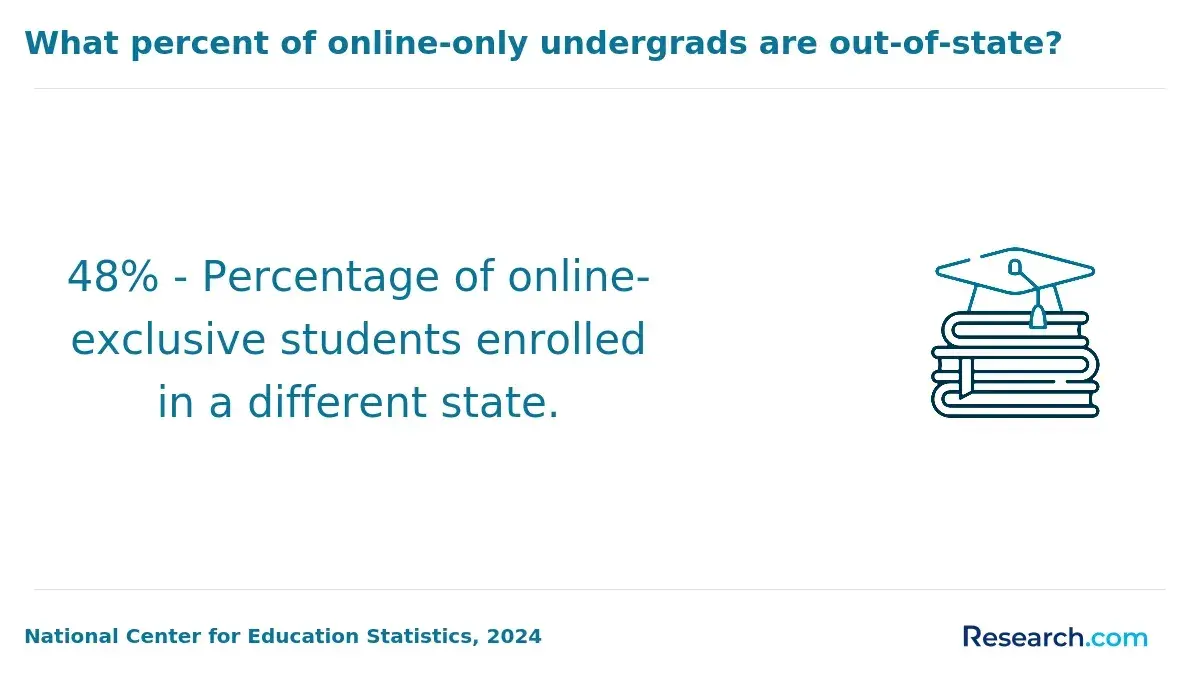
Yes. A bachelor's degree in artificial intelligence can support jobs outside a narrowly defined AI role because the curriculum usually builds programming, data analysis, mathematical reasoning, systems thinking, and problem-solving skills. Studies show that about 40% of college graduates start jobs unrelated to their major within a few years, so moving into adjacent fields is common rather than unusual.
The key is to present the degree in terms the employer understands. A hiring manager outside AI may not need a machine learning specialist, but they may need someone who can automate reporting, evaluate data quality, improve workflows, test software, or explain technical findings.
- Transferable Skills: AI programs often build skills in logic, statistics, coding, experimentation, and structured problem-solving. These skills can apply to roles in analytics, product operations, quality assurance, cybersecurity, technical support, project coordination, and business intelligence.
- Employer Preferences: Many employers want candidates who are digitally fluent and adaptable. AI graduates can stand out for roles outside the major when they show they can learn tools quickly, work with data responsibly, and communicate technical concepts to nontechnical teams.
- Experience and Training: Internships, short courses, portfolio projects, and on-the-job training can make a career pivot more realistic. Additional study in cybersecurity, cloud computing, UX research, product management, finance, or healthcare analytics can help connect AI training to a specific industry need.
Common mistakes include applying only to jobs with “AI” in the title, using overly technical resumes for business roles, or failing to explain how class projects produced measurable outcomes. If you want to work outside your major, tailor your resume around the employer's problem rather than the course catalog.
What Remote Jobs Can I Get With a Artificial Intelligence Bachelor's Degree?
Many AI-related roles can be done remotely because the work is often software-based, data-driven, and collaborative through cloud platforms. Remote work has surged in popularity, with over 30% of U.S. employees now working remotely at least part-time. For AI graduates, remote opportunities are strongest when they can document work clearly, manage deadlines independently, and collaborate across technical and business teams.
Remote AI roles usually require more than technical ability. Employers may assess whether you can communicate progress asynchronously, protect sensitive data, follow security practices, and work productively without close supervision.
- Machine Learning Engineer: Remote machine learning engineers build, test, and improve models using shared repositories, experiment-tracking tools, and cloud infrastructure. Entry-level candidates may begin by supporting data pipelines, model evaluation, and documentation.
- Data Scientist: Data scientists analyze large datasets, build predictive models, and communicate findings to decision-makers. In remote settings, clear visualization, written explanation, and careful documentation are especially important.
- AI Software Developer: AI software developers build applications that incorporate AI features. Remote work often involves code reviews, issue tracking, API integration, testing, and collaboration with product managers or designers.
- Natural Language Processing Specialist: NLP specialists work on text, speech, chatbots, search, summarization, and language-based AI tools. Remote teams may rely heavily on shared datasets, model evaluation notes, and asynchronous feedback.
- AI Research Assistant: Remote research assistants may help prepare data, run experiments, review papers, document results, or support model evaluation. This role can be suitable for graduates who want research exposure before deciding whether to pursue graduate school.
One graduate of an artificial intelligence bachelor's program described the transition to remote work as both challenging and rewarding. She noted that managing her schedule without direct supervision required adjustment, and that virtual communication became essential for staying aligned with her team. “It was a learning curve to maintain focus and ensure clear updates,” she shared, “but over time, I appreciated the flexibility and developed skills that made remote collaboration feel natural and efficient.”
Can I Switch Careers With a Artificial Intelligence Bachelor's Degree?
Yes. An artificial intelligence bachelor's degree can be a strong base for switching careers because it signals technical ability, quantitative reasoning, and familiarity with modern data-driven tools. Data from 2023 indicates that nearly 60% of technology degree holders in the United States undergo at least one major career change during their professional lives, so career movement is common in technology fields.
Career switching works best when you connect your AI background to a specific target role. For example, a graduate moving into finance can emphasize predictive modeling and risk analysis. A graduate moving into healthcare technology can emphasize data privacy, model reliability, and workflow improvement. A graduate moving into product management can emphasize technical fluency and the ability to evaluate AI capabilities realistically.
A bachelor's program in artificial intelligence typically develops analytical thinking, problem-solving, communication, and adaptability. Those competencies are useful across industries, but they are not always enough by themselves. Successful transitions often depend on building evidence in the new area through internships, freelance projects, professional certificates, self-directed projects, or entry-level roles that combine the old and new skill sets.
Networking and mentorship can also shorten the transition. Informational interviews with people already working in your target field can help you identify which skills matter, which credentials are respected, and which job titles are realistic entry points.
For graduates who want to deepen their quantitative and analytics background, an online data science degree may complement an AI foundation and support a move into data-heavy roles.
What Are the Highest-Paying Jobs With a Artificial Intelligence Bachelor's Degree?
The highest-paying jobs for artificial intelligence bachelor's graduates are typically roles that combine strong programming, advanced data skills, model development, scalable software systems, and business impact. Earnings can vary considerably by industry, geographic region, employer size, experience level, and specialization. Studies indicate that technology bachelor's degree holders often command higher salaries compared to those without degrees, especially as they gain experience over time.
Graduates should treat salary ranges as general indicators rather than guarantees. Early-career compensation depends heavily on portfolio quality, internships, interview performance, technical stack, and whether the role is truly AI-focused or more broadly analytical.
- Machine Learning Engineer: Machine learning engineers create and refine algorithms that allow systems to learn from data. They may work on predictive models, model evaluation, deployment pipelines, and performance optimization. Salaries typically start around $90,000 and rise well beyond $140,000 as skills develop.
- Data Scientist: Data scientists interpret large datasets, build models, and translate findings into business or research decisions. AI graduates with strong statistics, programming, and communication skills can be competitive for these roles. Earnings usually fall between $85,000 and $130,000, increasing with experience and specialty knowledge.
- Robotics Engineer: Robotics engineers design, program, and maintain robots that may operate autonomously or semi-autonomously. AI coursework can support work in perception, planning, and system integration. Salaries range from $75,000 to $125,000 depending on project complexity and sector.
- AI Software Developer: AI software developers build intelligent applications and integrate AI models into usable products. They may work with neural networks, deep learning frameworks, APIs, and production software systems. Typical starting pay falls between $80,000 and $115,000.
- Business Intelligence Analyst: Business intelligence analysts use data tools and, increasingly, AI-assisted methods to turn raw information into insights for managers and executives. Salaries generally range from $70,000 to $110,000 and can advance as professionals gain industry knowledge and technical depth.
To improve earning potential, graduates should prioritize skills that employers can verify: production-level coding, SQL, statistics, cloud platforms, model evaluation, data engineering basics, and the ability to explain trade-offs in plain language.
What Career Growth Opportunities Are Available With a Artificial Intelligence Bachelor's Degree?
An artificial intelligence bachelor's degree can support long-term career growth in technical, leadership, research-adjacent, and cross-functional directions. Many graduates begin in analyst, developer, technician, or junior engineering roles, then move toward higher-responsibility positions as they gain experience and build deeper expertise.
Common growth paths include moving from data analyst to data scientist, from junior developer to AI software engineer, from machine learning support work to machine learning engineer, or from technical contributor to team lead. Some professionals specialize in natural language processing, computer vision, robotics, recommender systems, AI safety, or cloud-based machine learning operations. Others move into product management, consulting, technical sales, or strategy roles where AI fluency is valuable.
Career advancement usually depends on three areas. First, technical growth: stronger coding, better model evaluation, deeper mathematics, and experience with production systems. Second, domain knowledge: understanding the industry where the AI system is used. Third, communication: explaining limitations, risks, results, and business value to people who may not have a technical background.
A professional with an artificial intelligence bachelor's degree shared that early career growth required more than coding ability. “It wasn't just about coding algorithms but ensuring the solutions aligned with business goals,” he said. He emphasized that learning to communicate with diverse teams helped him move into leadership roles: “Learning to communicate effectively with diverse teams was as important as my technical knowledge.” Looking back, he described adaptability as central to his progress: “Each new project brought fresh challenges, pushing me beyond my comfort zone and driving my career forward.”
What Jobs Require Certifications After a Artificial Intelligence Bachelor's Degree?
Most AI jobs do not require a certification in the same way that licensed professions require a license. However, certifications can strengthen a resume when they validate a specific tool, cloud platform, analytics method, or machine learning framework that an employer uses. They are most useful when paired with projects or work experience, not used as a substitute for practical ability.
- Machine Learning Engineer: Candidates may pursue credentials such as the Google Professional Machine Learning Engineer or Certified TensorFlow Developer to demonstrate applied knowledge of machine learning frameworks, model development, and deployment workflows.
- Data Scientist: Certifications such as the Certified Analytics Professional (CAP) or IBM Data Science Professional Certificate can help validate skills in analytics, statistics, data handling, and AI tools, especially for candidates trying to show practical readiness.
- AI Developer: AI developers working with cloud-based tools may benefit from the Microsoft Certified: Azure AI Engineer Associate credential, which focuses on developing AI solutions using Azure services.
- Robotics Engineer: Robotics-focused professionals may pursue the Certified Robotics Engineer (CRE) certification to show knowledge of robotics control systems, programming, and automation concepts.
- Cloud AI Specialist: Professionals who manage AI workloads on cloud infrastructure may use the AWS Certified Machine Learning - Specialty certification to demonstrate cloud-based machine learning expertise.
Before paying for any certification, compare job postings for your target role. If employers repeatedly list a credential or platform, certification may be worth considering. If postings emphasize projects, programming tests, or prior experience instead, you may get more value from building a portfolio.
Graduates who want to combine AI knowledge with business creation, product strategy, or venture development may also consider an online MBA in entrepreneurship to broaden their management and market-facing skills.
What Jobs Require a Master's After a Artificial Intelligence Bachelor's Degree?
Some AI roles are available with a bachelor's degree, but more advanced or research-heavy roles may prefer or require a master's degree. Studies indicate that about 35% of positions in artificial intelligence-related fields prefer or mandate graduate education for specialized responsibilities. A master's degree can be especially useful when the job involves advanced mathematics, original research, complex model architecture, or interdisciplinary policy and ethics work.
- Machine Learning Engineer: Some machine learning roles are open to bachelor's graduates, but advanced positions may expect graduate-level preparation in mathematics, statistics, optimization, and algorithm design. A master's can help candidates compete for more specialized engineering work.
- Data Scientist: Many data science jobs require strong modeling, statistics, experimentation, and data engineering skills. While some roles accept bachelor's graduates, a master's may be preferred for complex predictive modeling, large-scale analytics, or research-oriented data science work.
- Research Scientist: Research scientists focus on developing new AI methods, improving model architectures, and advancing the field through experimentation. These roles typically require deeper academic preparation, and a master's degree is often a minimum expectation.
- AI Ethics Specialist: AI ethics roles may require knowledge of technology, policy, law, philosophy, and organizational governance. A master's degree can provide the interdisciplinary training needed to evaluate responsible AI use in high-stakes settings.
- Robotics Engineer: Advanced robotics work combines AI, control systems, mechanical systems, perception, and real-time decision-making. Graduate education can provide the depth needed for complex design and research problems.
A master's degree can improve access to specialized roles, but it is not automatically the right next step for every graduate. Before enrolling, compare tuition, time commitment, opportunity cost, target job requirements, and whether your current portfolio could qualify you for the role without graduate study.
When planning further education, students sometimes compare costs across very different graduate fields; for example, resources on the average cost of MLIS degree in the US can be useful for understanding how graduate program pricing varies by discipline.
What Is the Job Outlook for Artificial Intelligence Careers?
The job outlook for artificial intelligence careers is strong, but it is not uniform across every job title or industry. The U.S. Bureau of Labor Statistics forecasts a 22% growth in computer and information research science roles, which encompass AI positions, between 2020 and 2030. This growth rate surpasses that of most other fields and reflects the wider use of AI in healthcare, finance, manufacturing, automotive technology, and other sectors.
Demand is shaped by how quickly organizations adopt AI, how much data they have, whether they can afford technical teams, and whether AI systems can be deployed responsibly in their industry. Hiring may also vary with broader economic conditions, because AI projects often depend on investment in technology, infrastructure, and skilled workers.
Long-term prospects are strongest for professionals who keep learning. AI tools, frameworks, and employer expectations change quickly. Graduates who build adaptable skills in programming, statistics, model evaluation, cloud tools, data governance, and ethical AI use are better positioned than those who know only one platform or technique.
The strongest candidates will also understand the context in which AI is used. Employers need people who can ask whether a model is accurate enough, whether the data is appropriate, whether results can be explained, and whether the system creates risk for users or organizations. Technical skill matters, but sound judgment is becoming just as important.
What Graduates Say About the Jobs You Can Get With a Artificial Intelligence Bachelor's Degree
-
: "Choosing to major in artificial intelligence was driven by my fascination with how machines learn and solve complex problems. The program equipped me with skills in machine learning and data analytics, which opened doors to roles in tech startups and established firms alike. Today, I see how this degree has been crucial in landing a job that blends innovation with real-world impact.
— Jason"
-
: "Reflecting on my journey, pursuing a bachelor's in artificial intelligence offered a solid foundation in both theory and practical application, making the transition into the workforce smoother than expected. Employers highly value the problem-solving and programming skills we've developed, which makes this degree a competitive asset in fields like robotics and natural language processing. It's been rewarding to contribute to projects that advance automation in industries that matter most to me.
— Cam"
-
: "From a professional standpoint, earning a degree in artificial intelligence fundamentally changed my career trajectory by providing a deep understanding of algorithms and ethical AI use. Navigating the job market, I found that many employers seek candidates who can balance technical expertise with critical thinking—skills honed through this program. This degree not only positioned me for lucrative roles but also allowed me to work on cutting-edge solutions with a global impact.
— Alexander"
Other Things You Should Know About Artificial Intelligence Degrees
Both formal education and practical experience play critical roles in securing AI jobs. While a bachelor's degree provides foundational knowledge, hands-on experience through internships, research projects, and coding competitions greatly enhances employability. Many employers prioritize candidates who can demonstrate applied skills and real-world problem-solving in AI contexts.
Yes, understanding ethics and data privacy is increasingly important in artificial intelligence roles. Professionals are expected to design and implement AI systems that respect user privacy and mitigate biases. Awareness of regulatory standards and ethical considerations helps ensure responsible AI development and deployment.
Yes. Employers often require knowledge of AI ethics, privacy law, and responsible data use, especially for roles handling personal data. Many bachelor’s programs include these topics in coursework on governance, bias reduction, and compliance, and employers may test them in interviews or onboarding.
References
- Embrace These Artificial Intelligence Job Opportunities in Tech | Michael Page Poland https://www.michaelpage.pl/en/advice/career-advice/job-search-advice/AItech23-embrace-these-artificial-intelligence-job-opportunities-tech
- AI & ML Certification – Here Are 7 High-Paying Jobs You Can Target Next https://www.cloudthat.com/resources/blog/ai-ml-certification-here-are-7-high-paying-jobs-you-can-target-next
- AI Certification Programs: Which Ones Matter for Your Career https://www.businessplusai.com/blog/ai-certification-programs-which-ones-matter-for-your-career
- Top AI Job Roles You Can Land with an AI Certification https://www.h2kinfosys.com/blog/top-ai-job-roles-you-can-land-with-an-ai-certification/
- Top 10 Highest Paying Artificial Intelligence (AI) Jobs 2025 | Nexford University https://www.nexford.edu/insights/highest-paying-ai-jobs
- Top 10 Highest Paying AI Jobs | Best AI Career Opportunities https://k21academy.com/ai-ml/top-10-highest-paying-jobs-ai/
- AI and graduate jobs: what students need to know https://www.bcu.ac.uk/student-info/university-courses-research/ai-and-graduate-jobs
- AI Pushing Students to Consider Changing Majors https://poetsandquantsforundergrads.com/news/ai-pushing-students-to-consider-changing-majors/
- Top 10 jobs in artificial intelligence (AI) & who’s hiring https://joinhandshake.com/blog/students/artificial-intelligence-jobs/
- The state of AI: How organizations are rewiring to capture value https://www.mckinsey.com/capabilities/quantumblack/our-insights/the-state-of-ai


