2027 Online BA in Psychology - Mental Health Admissions with Two Admission Offers with Different Credit Evaluations: What to Ask Before Applying
Audited and Verified:
Our Editorial and Data Verification Process
Research.com uses government datasets, official education statistics and primary institutional information to support its career and degree guides. Our review process checks factual accuracy, occupational definitions, source dates and the requirements associated with the credentials discussed.
How This Article Was Fact-Checked
Our editorial team verifies salary estimates, employment projections, education requirements and program information against original data providers and official organizations. Salary figures are checked against the relevant occupational definitions and reporting periods. Information about licensure, accreditation and required in-person training is reviewed separately.
Fact-checked and verified on:

Co-Founder and Chief Data Scientist
Two admission offers can look equally promising until their credit evaluations show different paths to graduation. One online BA in psychology may accept more of your previous coursework, while the other may apply fewer credits more effectively to the major. If you are returning to college and interested in mental health work, that difference affects your schedule, cost, and preparation for your next step. This guide shows you what to request from each school, how to compare the remaining requirements, and when to seek a revised evaluation before you commit.
Key Things You Should Know
- Compare requirements satisfied, not just credits accepted. Ask each school for a degree audit showing general education, psychology major, elective, residency, and remaining requirements.
- Get decisions in writing. Statistics and research-methods equivalencies, course substitutions, and appeals can change which offer gets you to graduation sooner.
- Compare the full remaining path. Required courses, their availability, tuition and fees, and any in-person obligations matter more than the admission letter's headline credit total.
What is an online BA in psychology for mental health careers?
An online BA in psychology studies behavior and psychological science through coursework delivered primarily online. A mental health focus, where offered, may add courses on psychological disorders, prevention, addiction, or service systems. The exact degree title and whether the focus is a formal concentration depend on the school.
For a transfer student, the useful question is whether the program builds on existing coursework without sacrificing essential preparation. A school might accept an earlier abnormal psychology course but still require its own statistics or research-methods sequence. Ask how the resulting degree plan supports your intended role or future graduate application - not merely whether the catalog uses "mental health" in its description. If your goal centers specifically on substance-use services, compare the BA's curriculum with addiction counseling academic preparation and your state's requirements for the job you want.
Is an online psychology bachelor's degree accredited and reputable?
Check the institution's accreditation status with its recognized accreditor and confirm that the status covers the campus or institution awarding your degree. Then assess the psychology program separately: accreditation alone does not establish that particular courses will transfer, that research opportunities are available, or that graduates qualify for a license. APA accreditation does not ordinarily apply to a general psychology BA.
For each offer, ask who teaches required online courses, how often they run, whether online students can access faculty advising and research opportunities, and what happens if a required course is canceled. If a later counseling degree is your goal, examine that prospective program's own recognition and requirements; clinical mental health counseling accreditation and pacing are separate questions from undergraduate institutional accreditation.
What should you ask about different admission offers and credit evaluations?
Admission is not a degree-completion guarantee. An offer may admit you to the institution while leaving admission to the psychology major, course equivalencies, or graduation requirements unresolved. Request a current, individualized degree audit from each school before comparing offers.
The table separates decisions that an admission letter may collapse into a single "credits accepted" figure. Use it to identify which office must confirm each part of your evaluation.
| What the offer says | What still needs confirmation | Likely authority |
| Prior credits are accepted | Which satisfy general education, major, prerequisites, or only free electives | Registrar or transfer-credit office; academic department for major equivalencies |
| Psychology courses transfer | Whether their content and recency meet specific major requirements | Psychology department or authorized faculty evaluator |
| An associate degree is recognized | Whether it fulfills a general-education block or merely contributes individual courses | Registrar or transfer-credit office |
| A graduation estimate is provided | Remaining courses, required institutional credits, sequencing, and scheduled availability | Academic advisor and registrar |
Send both schools the same complete evidence: official transcripts; syllabi for disputed psychology, statistics, or research-methods courses; and documentation for any applied, military, competency-based, or international learning. Ask how quarter credits convert if applicable, whether a course must be repeated, and how to request a written substitution or appeal. A provisional evaluation may change after official records arrive, so ask when the audit becomes final and what could still alter it.
Consider an illustrative comparison: Offer A accepts more total credits but counts statistics only as an elective; Offer B accepts fewer total credits yet satisfies statistics and more major requirements. Offer B could involve less remaining study. That conclusion depends on the approved audits and course schedules, not the headline totals. For a broader cost screen, choosing a cost-conscious psychology degree program is useful only after you know what each school actually requires you to complete.
A psychology BA can support applications for nonclinical work such as behavioral-health program support, intake coordination, community outreach, victim advocacy, or research assistance. Duties and hiring requirements vary: one employer may value prior service experience, while another requires specialized training, a background check, or a different degree. A mental health focus can provide useful context, but it does not replace supervised experience or job-specific qualifications.
As you compare offers, ask which school helps online students obtain relevant, appropriately supervised experience and whether any internship requires an approved site. If you already work in a service organization, ask whether that work can meet an academic requirement; do not assume it will. Graduates considering justice-related support roles can use career planning with a forensic psychology graduate degree to distinguish those roles from work requiring further education or licensure.
No: a psychology BA alone does not qualify someone to diagnose mental health conditions, provide independent psychotherapy, or practice as a licensed psychologist. A mental health concentration does not change that boundary. Counseling, clinical social work, psychology, and some addiction-service roles have distinct educational, supervised-experience, examination, and jurisdiction-specific rules.
If licensure is your goal, first identify the exact profession and state where you intend to practice. Then compare the schools' remaining BA requirements with the prerequisites of appropriate qualifying graduate programs. A general psychology master's is not necessarily a licensure pathway, either. The later degree has its own financial implications, so affordability checks for online counseling study belong in a long-range plan rather than being treated as a benefit of either BA offer.
Psychology BAs commonly combine foundational psychology with development, social or biological aspects of behavior, statistics, research methods, and electives. Mental health-related courses may address psychological disorders or addiction as academic subjects. Requirements and elective availability differ by institution, making course-by-course evaluation especially important when two offers assign your prior work differently.
Ask each department whether your earlier statistics and methods courses satisfy its required sequence, whether prerequisites prevent you from taking advanced courses immediately, and whether a desired mental health elective runs often enough for your planned graduation term. If graduate study might follow, preserve evidence of quantitative and research preparation. Later program timelines - including forensic psychology master's completion time comparisons, if that specialization becomes relevant - should be assessed separately from how quickly you can finish this BA.
Your remaining time depends on requirements left to satisfy, not simply the number of credits a school accepts. A prerequisite offered infrequently, a required sequence, or a minimum number of credits earned at the degree-granting institution can extend the plan. Request a term-by-term schedule for each offer, including the enrollment pace you can realistically maintain.
Compare costs using the courses you would actually need to take. The categories below reveal why a lower advertised rate may not produce a lower final bill.
| Cost component | What to compare between offers |
| Tuition | Rate charged to you and the credits or terms still required |
| Mandatory fees | Online, technology, course, and graduation charges that apply |
| Course materials | Books, software, and any required research tools |
| Experience costs | Possible travel, site checks, or unpaid internship time |
| Financing | Actual aid offer, borrowing, employer assistance, and eligibility at your planned enrollment level |
Ask the financial-aid office to explain how your proposed schedule and transferred coursework affect aid eligibility; the transfer advisor cannot make that determination. If substance-use support work is your target, budget-friendly substance abuse counseling bachelor's study offers a relevant comparison, but any advertised tuition or duration still needs to be recalculated against your own approved audit.
Online delivery can remove a regular commute without removing scheduled obligations. Ask whether each offer involves live classes, group meetings, proctored assessments, campus visits, or local internships. Campus-based study may provide easier access to particular faculty activities or sites, but availability depends on the institution - not the delivery label.
If the two online offers differ in remaining coursework, format can magnify the difference: a required live course during work hours may be harder to complete than an additional asynchronous elective. Compare the actual schedule before treating either program as faster. Ask each aid office whether your enrollment pattern affects available assistance; resources on grants for substance abuse counseling bachelor's study may be relevant if that is your intended route, but grant eligibility is never established by online format alone.
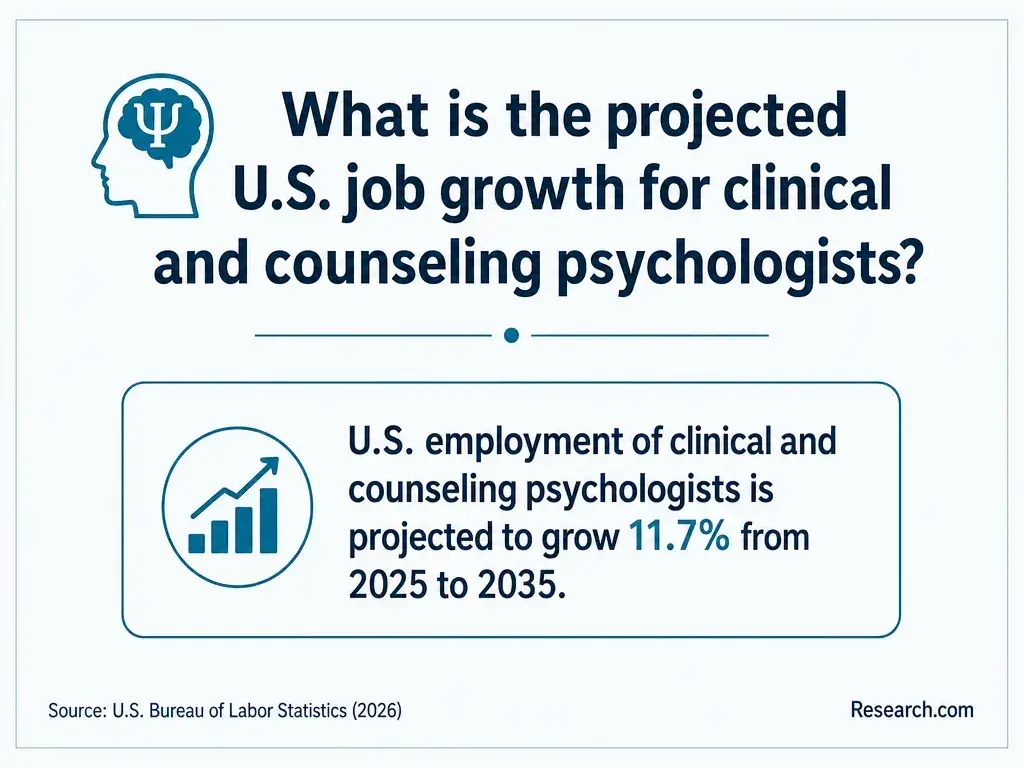
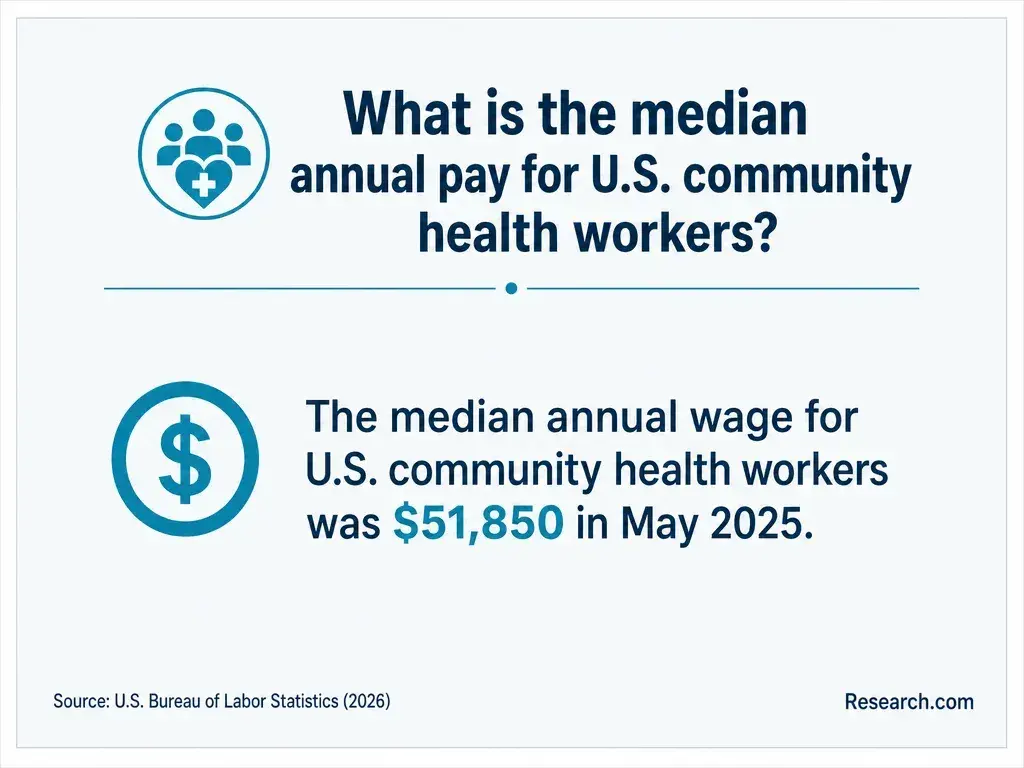
There is no single salary or job-growth figure for "online psychology BA graduates." Pay and outlook attach to defined occupations, and even a matching occupation-wide median is not an entry-level offer or a school-specific graduate outcome. Use the U.S. Bureau of Labor Statistics Occupational Outlook Handbook to check the latest published wage reference year, projection period, typical entry education, and duties for the specific job you want.
That distinction matters when assessing the cost of two offers. Compare plausible local openings and their qualifications with each school's remaining bill; do not use a licensed clinician's earnings to justify the price of a BA. Likewise, accelerated forensic psychology master's costs and outcomes describe a possible later education decision, not a salary forecast for bachelor's graduates.
How should you compare online psychology programs before applying?
If you already hold two offers, compare them as two remaining degree plans. If an evaluation is incomplete, resolve that uncertainty before paying a nonrefundable deposit when possible. A useful comparison proceeds in this order:
- Obtain each school's individualized audit and identify which transferred courses meet general education, major, and prerequisite requirements.
- Ask the authorized department to decide disputed equivalencies or substitutions in writing, then request an updated audit.
- Build a realistic term-by-term plan using actual course availability, residency rules, and online or in-person obligations.
- Request a cost and aid estimate based on that plan, including fees and your intended enrollment pace.
- Choose the offer that best supports affordable completion and your next career or educational requirement - not necessarily the offer accepting the most credits.
If graduate study is part of your goal, compare its prerequisites and future cost separately; affordable online psychology master's programs are not substitutes for checking whether a specific program fits your intended role. Keep copies of the final audit and written decisions. They are more useful for planning than an informal assurance that your prior coursework "should count."
Other Things You Should Know About Psychology
Check each school's acceptance and deposit terms. You may be able to hold an offer, but deadlines, refund rules, and enrollment commitments differ.
A school may list them as pending. Ask when it needs the final transcript and whether completed grades could change your degree audit.
Possibly, but appeal deadlines and approval rules vary. Request the policy before enrolling if the disputed course materially affects your choice.
Follow each institution's document rules, and disclose all required prior attendance. Sending complete syllabi and records to both makes their evaluations easier to compare.
- Cost of Attendance (Budget) | 2025-2026 Federal Student Aid Handbook https://fsapartners.ed.gov/knowledge-center/fsa-handbook/2025-2026/vol3/ch2-cost-attendance-budget
- What Financial Aid Offers Don't Tell You About the Cost of College | U.S. GAO https://www.gao.gov/blog/what-financial-aid-offers-dont-tell-you-about-cost-college
- Undergraduate And Graduate Degrees | Veterans Affairs https://www.va.gov/education/about-gi-bill-benefits/how-to-use-benefits/undergraduate-graduate-programs/
- How Do Transfer Credits Work When You Go Back to School? | Whitworth Online https://online.whitworth.edu/news-articles/how-do-transfer-credits-work-when-you-go-back-to-school/
- Taking Courses for Transfer Credit | princeton.edu https://advising.princeton.edu/choosing-courses/taking-courses-transfer-credit
- Transfers • Admissions | SUNY Purchase https://www.purchase.edu/admissions/transfers/
- What Degree Do I Need to Become a Counselor or Therapist? | Palo Alto University https://paloaltou.edu/resources/blog/what-degree-do-i-need-become-counselor-or-therapist
- Accept & Commit (Transfer) | Brooklyn College https://www.brooklyn.edu/lp/transfer/accept-commit-transfer/
- How to Become a Therapist - Step-by-Step Guide | Bellevue University https://www.bellevue.edu/articles/how-to-become-a-therapist/
- Major Requirements | Psychology - Natural Sciences https://naturalsciences.uoregon.edu/psychology/undergraduate-programs/major-requirements