2027 Online BA in Psychology - Addictions for Psychology of Compulsive Digital Use: Which Courses Should You Look For?
Audited and Verified:
Our Editorial and Data Verification Process
Research.com uses government datasets, official education statistics and primary institutional information to support its career and degree guides. Our review process checks factual accuracy, occupational definitions, source dates and the requirements associated with the credentials discussed.
How This Article Was Fact-Checked
Our editorial team verifies salary estimates, employment projections, education requirements and program information against original data providers and official organizations. Salary figures are checked against the relevant occupational definitions and reporting periods. Information about licensure, accreditation and required in-person training is reviewed separately.
Fact-checked and verified on:

Co-Founder and Chief Data Scientist
An online psychology BA may advertise an addictions focus without offering much instruction on gaming, social media, or other forms of problematic digital use. That distinction matters if you want to study the behavior rather than simply earn a concentration with a relevant-sounding name.
This guide is for prospective and returning undergraduates who want to compare courses, research opportunities, and career preparation. You'll learn which subjects provide the strongest foundation, how to check whether an online program actually offers them, and when a different education or training route would better fit your goal.
Key Things You Should Know
- Prioritize statistics, research methods, learning and cognition, and addiction courses; a digital-behavior elective is most useful when it builds on those foundations.
- Check whether relevant electives run often enough to fit your plan. A typical bachelor's degree requires about 120 semester credits, but accepted transfer credits do not necessarily satisfy psychology-major requirements.
- A psychology BA can prepare you for research or nonclinical support work; it does not, by itself, qualify you to diagnose compulsive digital use or provide addiction treatment.
What Is an Online Bachelor's Degree in Psychology Focused on Addictions and Compulsive Digital Use?
Usually, it is a general psychology BA with an addictions concentration or a set of relevant electives - not a degree devoted exclusively to digital behavior. The curriculum should teach psychological science first, then apply it to substance use, behavioral addictions, prevention, and recovery. A program may offer strong preparation even if it has no course called "digital addiction," provided its methods and electives let students examine digital-use questions rigorously.
Compulsive digital use is a useful description of behavior that feels difficult to control and causes meaningful problems; it is not one diagnosis covering every form of screen time. Researchers distinguish the activity, its context, and its effects. For example, gaming that interferes with sleep and schoolwork raises a different research question from frequent messaging that supports a person's relationships. Gaming disorder appears in the World Health Organization's ICD-11, while internet gaming disorder is identified in the DSM-5-TR as a condition for further study. Neither label means heavy use alone establishes a disorder.
When comparing bachelor's study in addiction psychology online, confirm whether "addictions" is an officially recorded concentration, a certificate, or simply an elective theme. That distinction affects what appears on your academic record, but the actual courses and research experience matter more for this particular interest.
Which Courses Should You Look for in a Psychology of Compulsive Digital Use Program?
The strongest course plan moves from explaining behavior to measuring it and evaluating possible responses. The table shows what to look for in a catalog; course titles vary, so inspect descriptions, prerequisites, and recent schedules rather than relying on names alone.
| Course area | Why it matters for compulsive digital use | What to check |
| Statistics and research methods | Helps you evaluate surveys, experiments, sampling, and claims about whether digital use causes harm. | Are both required, and is there an opportunity to analyze data or design a study? |
| Learning, cognition, and motivation | Explains reinforcement, habit formation, attention, and decision-making without assuming every engaging activity is an addiction. | Do courses examine mechanisms and competing explanations? |
| Developmental and social psychology | Places digital behavior in the context of age, peers, relationships, and social norms. | Can assignments address adolescents or adults without treating their experiences as interchangeable? |
| Addictions and psychopathology | Introduces substance-use and behavioral-addiction research, impairment, co-occurring concerns, and prevention. | Does instruction distinguish research concepts from clinical diagnosis and treatment? |
| Psychological measurement and ethics | Builds judgment about screen-time logs, self-report scales, privacy, consent, and the limits of screening tools. | Can students critique a measure and discuss responsible data use? |
If your goal is research, take statistics before advanced methods, then seek a faculty-supervised project or capstone. A feasible undergraduate project might compare how different studies define "problematic use"; it need not collect sensitive information from users. If your goal is prevention or community support, prioritize developmental psychology, health psychology, addiction studies, and an approved nonclinical placement.
Do not let an unrelated specialty displace the foundation you need. For instance, forensic psychology master's course sequencing for faster completion addresses a different academic goal; it is not a substitute for undergraduate methods and addiction coursework. Ask an advisor which relevant electives are scheduled during your expected enrollment, not merely listed in the catalog.
How Does an Online Addictions Psychology Degree Prepare You for Careers?
The BA's clearest contribution is the ability to read behavioral research, communicate without stigmatizing people, document work accurately, and recognize when a concern belongs with a qualified professional. A student interested in compulsive digital use could apply those skills in prevention outreach, service coordination, or research support. Those are different from conducting clinical assessments or delivering therapy.
Coursework becomes more persuasive to employers when paired with evidence of work: a supervised research assignment, an approved community placement, or an ethically scoped literature review. For example, a review comparing definitions of problematic gaming can show measurement literacy without claiming to identify or treat anyone. Before accepting a placement, confirm who supervises it, what tasks are permitted, whether any work must occur in person, and how confidential information will be protected.
If you already work in a community organization, ask whether an approved project can improve a real prevention resource or referral process. Employment or volunteering does not automatically count for academic credit. For a broader view of duties and advancement, compare career progression in addiction recovery with the qualifications in actual local job postings.
Check the institution's accreditation through the accreditor and the school's current disclosures, then check the exact degree and concentration in the university catalog. The American Psychological Association does not accredit general psychology bachelor's programs; institutional accreditation does not certify that a concentration meets a state addiction-counselor requirement.
Transferability is a separate decision made by the receiving school. A statistics course may be accepted as elective credit yet fail to replace the major's statistics requirement. Request a written degree audit showing which prior courses satisfy general education, psychology prerequisites, major courses, electives, and credits that must be completed at the new institution. Students comparing remaining coursework after transferring into psychology should also ask how a missing methods prerequisite affects access to upper-level addiction electives.
Requirements depend on the institution and whether you apply as a first-year or transfer student. Schools commonly request academic transcripts and evidence that general admission standards are met; some admit students to the university before they can declare or enter the psychology major. Do not assume prior psychology coursework is required for every undergraduate applicant.
For this topic, the more consequential question may be when you can start the relevant courses. Ask admissions and the psychology department whether statistics, introductory psychology, or other prerequisites gate access to research methods and addiction electives. Request a term-by-term plan that reflects the courses actually offered online. Use psychology program admissions and curriculum comparisons to develop a shortlist, then verify each school's requirements for your entry term.
A bachelor's degree commonly comprises about 120 semester credits; a student entering without transfer credit typically plans around four years of full-time study. Your timeline depends on applied transfer credits, enrollment pace, prerequisites, and how frequently upper-level courses run. An accelerated calendar will not help if the addiction or research course you need is unavailable when you reach it.
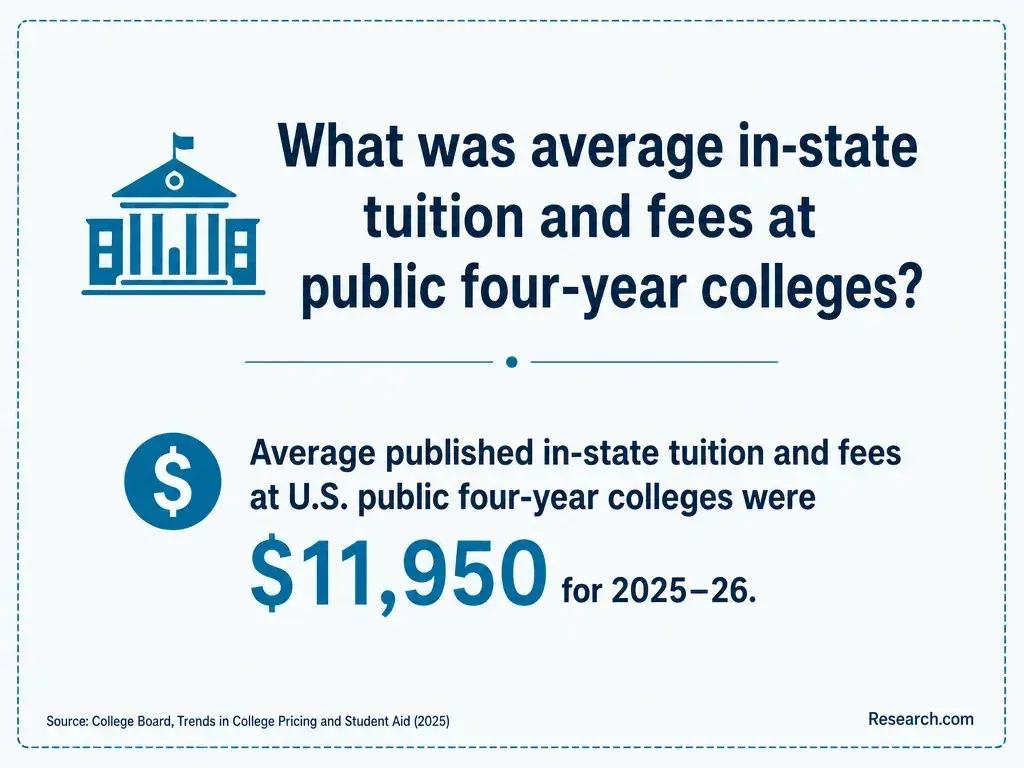
Compare each school's remaining required credits against its tuition and mandatory fees, then add books, technology, and any travel or unpaid placement costs. Ask for a degree audit and a course schedule before estimating a total. For aid, FAFSA and grants for substance abuse counseling students provide a starting point, but eligibility and awards depend on your circumstances and the school's policies.
Online students can study the same core topics as campus students, but access to the experiences that matter here may differ. Compare whether statistics courses include usable feedback, whether faculty supervise remote research, and whether addiction electives are offered online rather than only on campus. Asynchronous lectures may still come with scheduled group meetings, exams, or placement hours.
Campus study may make it easier to join a lab or meet a community partner; a well-supported online program can instead offer remote research collaboration and locally approved placements. Ask for specific examples of what online undergraduates can do, without assuming a clinical practicum is available or appropriate at the BA level. Likewise, short-format forensic psychology graduate program choices are not a useful benchmark for the pace or practical requirements of an undergraduate addictions-focused degree.
Depending on the employer and your experience, relevant nonclinical openings may include behavioral-health program assistant, prevention or outreach coordinator, intake assistant, case-coordination support worker, and research assistant. Duties can involve scheduling, sharing approved resources, maintaining records, helping participants navigate referrals, or collecting research data under supervision. A posting's duties - not its psychology-related title - determine whether your degree and experience fit.
Search local vacancies before choosing electives. Note which roles require a bachelor's degree, a specific state credential, experience with clients, data skills, or evening availability. If the roles you want mainly require a recognized addiction-counselor credential, compare that direct preparation with the time and expense of a BA. Discussions of substance abuse counseling undergraduate education investment are most useful when you compare actual program costs with the qualifications required for your target jobs - not with a promised graduate salary.
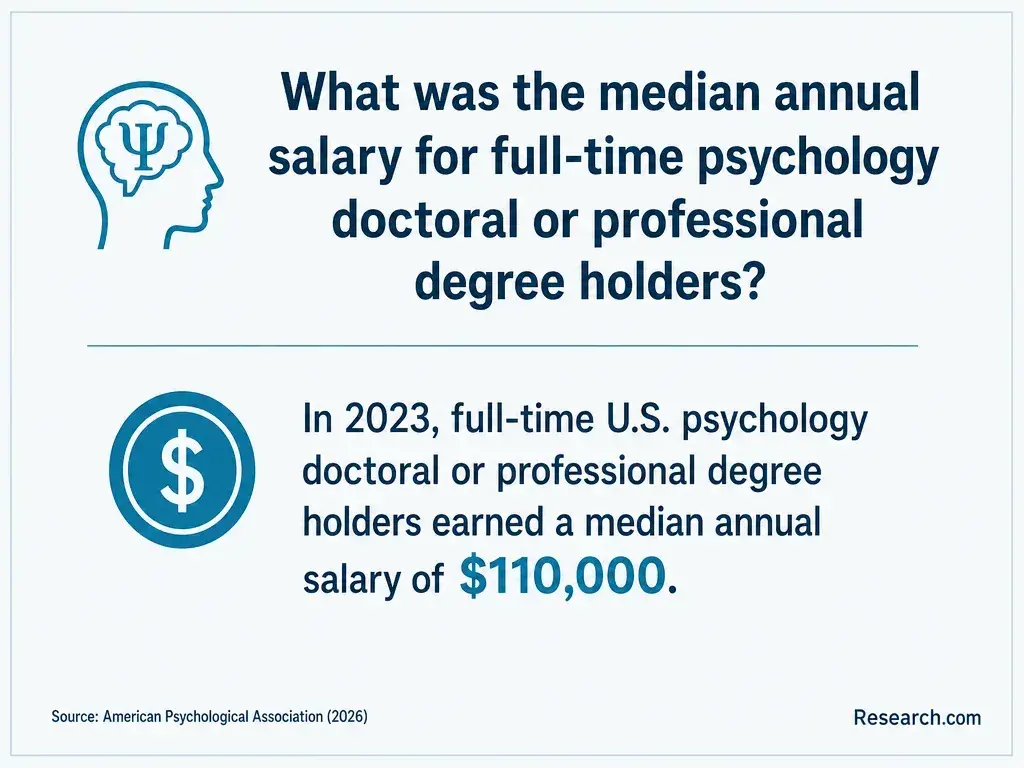
Independent psychotherapy, diagnosis, and use of protected clinical titles require a qualifying professional pathway, not merely an addictions concentration. Licensed professional counselors typically need an eligible graduate degree plus jurisdiction-specific supervised experience and examinations. Clinical social workers and psychologists follow different graduate and licensing routes. For substance-use-disorder counseling, states set their own credential levels, education, supervision, examination rules, and permitted duties; some roles may be accessible without a graduate degree, but a psychology BA alone does not establish eligibility.
If treatment is your objective, start with the relevant state licensing board's requirements and work backward to an eligible program. Compare accredited mental health counseling education by program pace only after confirming that the specific program meets the educational requirements where you intend to seek licensure. Faster coursework cannot eliminate required supervised training.
What Is the Salary and Job Outlook for Addiction and Behavioral Health Careers?
Use occupation-specific labor data, not a school's degree label, to assess earnings and demand. The US Bureau of Labor Statistics groups substance abuse, behavioral disorder, and mental health counselors in an occupation for which published pay and employment projections reflect workers with varied credentials and experience. Its occupation-wide median is not an expected starting salary for an addictions-focused psychology BA graduate, and counseling vacancies may have qualifications that the BA does not meet.
For a decision you can act on, check the latest Bureau of Labor Statistics Occupational Outlook Handbook figures alongside local postings for the exact entry-level role you want. Compare the posted pay, required credential, likely hours, and your remaining education costs. If you expect to pursue counseling later, include mental health counseling program charges beyond tuition in that longer-term calculation. Strong demand for counselors does not remove the cost or time required to qualify as one.
Other Things You Should Know About Psychology
Yes. Ask whether assignments let you choose a digital behavior and whether a faculty member can supervise that topic. Keep the activity and the outcome you want to study clearly defined.
Not necessarily. Statistical reasoning and careful interpretation matter first. Coding can help with larger datasets, but many undergraduate projects use literature reviews, approved survey methods, or introductory statistics software.
Possibly, if the instructor approves the assignment. Personal records can reveal sensitive information and cannot establish what causes a behavior. Follow course privacy rules, particularly if records contain information about other people.
No. Lived experience can inform a question, but sound research and support work require evidence, ethical boundaries, and respect for people whose experiences differ from your own.
- Training | Prevention Research Methods | ODP https://prevention.nih.gov/education-training/training-prevention-research-methods
- Alcohol and Drug Abuse Counseling Certificate Program | UCLA Extension https://www.uclaextension.edu/health-care-counseling/health-care-counseling-general/certificate/alcohol-and-drug-abuse-counseling
- A Guide to Professions in Addiction Studies and Recovery | University of the Cumberlands https://www.ucumberlands.edu/blog/guide-to-professions-in-addiction-studies-and-recovery
- Education & Training - USC Institute for Addiction Science https://ias.usc.edu/education-training/
- Online Substance Abuse and Addictions Degree | ASU Online https://asuonline.asu.edu/online-degree-programs/undergraduate/counseling-psychological-sciences/
- Online Bachelor's Degree in Psychology in Addictions | Purdue Global https://www.purdueglobal.edu/degree-programs/psychology/bachelor-psychology-addictions/
- Addictive Use of Social Media, Not Total Time, Associated with Youth Mental Health https://www.cuimc.columbia.edu/news/addictive-use-social-media-not-total-time-associated-youth-mental-health
- Potential risks of content, features, and functions | apa.org https://www.apa.org/topics/social-media-internet/youth-social-media-2024
- Directory of Addiction Study Programs (DASP) | icuddr.org https://icuddr.org/education/directory-of-addiction-studies-programs/
- AI, Pornography, Social Media, Online Gambling, & Gaming | naadac.org https://www.naadac.org/treating-internet-addiction-ai-pornography-social-media-online-gambling-gaming