2027 Cheapest Way to Get a Teaching Credential in Philadelphia, PA: Degree Requirements & Certification

Co-Founder and Chief Data Scientist
Getting a teaching credential in Philadelphia can open the door to stable, meaningful work in classrooms that need qualified educators, but the cost of certification is often the first major obstacle. Tuition, exam fees, application charges, books, transportation, and unpaid student teaching can add up quickly, especially for career changers and recent graduates already managing student debt.
The cheapest path is not always the lowest advertised tuition. A lower-cost program should also be approved for Pennsylvania certification, fit your schedule, help you complete fieldwork, prepare you for required exams, and connect you with hiring opportunities in Philadelphia schools. This guide explains the most affordable routes, what certification requires, how long the process can take, where online programs may save money, and which financial aid options can reduce out-of-pocket costs.
Use this article to compare credential pathways, avoid expensive mistakes, and decide whether a Philadelphia teaching certification program is a smart investment for your goals.
Quick Answer: Cheapest Teaching Credential Programs in Philadelphia, PA
- The lowest-cost route depends on your starting point. If you already hold a bachelor’s degree, a post-baccalaureate, residency, or alternative certification pathway is usually faster and less expensive than earning a second undergraduate education degree.
- The average cost of attending a teaching credential program in Philadelphia ranges between $10,000 and $20,000, depending on the institution and program length.
- Some listed credential examples cost less: teaching credential programs in Philadelphia, PA, generally cost between $6,600 and $10,500, depending on the institution and residency status.
- Student debt for Philadelphia teaching graduates averages around $30,000, so comparing aid, transfer credit, exam costs, and unpaid clinical hours matters before enrolling.
- Financial aid options include the Pennsylvania Higher Education Assistance Agency (PHEAA) grants and the TEACH Grant, both designed to reduce out-of-pocket expenses for aspiring educators.
- What are the academic requirements for teachers in Philadelphia, PA?
- What are the certification requirements for teachers in Philadelphia, PA?
- How much do teaching credential programs cost in Philadelphia, PA?
- How long does it take to get a teaching certificate in Philadelphia, PA?
- Are there schools in Philadelphia, PA offering affordable teaching programs?
- Are online teaching programs cheaper than traditional ones in Philadelphia, PA?
- How can certified educators diversify their career pathways in Philadelphia, PA?
- Can combining teaching credentials with substance abuse counseling certifications broaden career opportunities in Philadelphia, PA?
- How can students lower the cost of attending teaching programs in Philadelphia, PA?
- What are the special education certification pathways in Philadelphia, PA?
- How can aspiring teachers excel on certification exams in Philadelphia, PA?
- Are there organizations in Philadelphia, PA that provide financial aid for teachers?
- Is investing in a teaching credential in Philadelphia, PA worth it?
- Are there alternative pathways aspiring educators in Philadelphia, PA can take to obtain credentials?
- What additional career support and professional development opportunities exist for certified teachers in Philadelphia, PA?
What are the academic requirements for teachers in Philadelphia, PA?
Philadelphia teachers must meet Pennsylvania’s educator preparation standards. The right academic route depends on whether you are starting college, changing careers after a bachelor’s degree, or seeking an additional certification area. The most important point is this: your program must match Pennsylvania certification requirements, not just offer education coursework.
Core academic requirements for teacher certification in Philadelphia include:
- A bachelor's degree from an accredited institution: Pennsylvania teacher candidates need a bachelor’s degree. Education majors are the most direct option, but candidates preparing for secondary education often benefit from subject-area majors such as Biology, Chemistry, Mathematics, or Physics.
- An approved teacher preparation program: A degree alone is not enough for most candidates. You must complete a program aligned with Pennsylvania teacher certification academic program requirements, including pedagogy, classroom management, assessment, and supervised practice.
- Required state assessments: Candidates must show readiness through exams covering general, professional, and subject-specific knowledge. The Pre-service Academic Performance Assessment (PAPA) has been temporarily waived until 2025 and will be eliminated thereafter, but subject-specific Praxis exams remain mandatory.
- Clinical practice or student teaching: Teacher preparation includes supervised classroom experience. Residency models, including Drexel University's Philadelphia Teacher Residency, combine coursework with hands-on classroom training so candidates can build practical skills before becoming the teacher of record.
- Post-baccalaureate requirements: Candidates who already hold a bachelor’s degree may pursue certification after completing additional requirements. Pennsylvania requires at least 24 additional credits and documentation of three years of successful teaching experience verified by a school administrator.
Certification applications are handled through Pennsylvania's Teacher Information Management System (TIMS). Applications are typically processed within nine weeks, but delays can happen when transcripts, test scores, or program verification documents are incomplete.
If your long-term plan includes leadership, curriculum work, or specialized education roles, it can help to compare certification with graduate-level pathways. Research.com’s guide to careers for professionals with a master’s in education explains how advanced credentials can connect to non-entry-level opportunities.
| Candidate background | Likely academic route | Cost-conscious decision point |
| No bachelor’s degree yet | Complete an undergraduate education degree or a bachelor’s degree with approved teacher preparation | Compare total four-year cost, transfer options, and whether the program leads directly to Pennsylvania certification |
| Bachelor’s degree in a non-education field | Post-baccalaureate certification, residency, or alternative certification | Avoid paying for a second full bachelor’s degree if a shorter approved pathway meets your certification goal |
| Already certified teacher | Add-on certification, graduate certificate, or advanced degree | Confirm whether the credential increases job options or salary potential before borrowing |
What are the certification requirements for teachers in Philadelphia, PA?
To teach in Philadelphia public schools, charter schools, or many private school settings, candidates generally need to satisfy Pennsylvania Department of Education certification rules. The process is manageable, but it is document-heavy. Missing test scores, unverified coursework, or choosing a non-approved program can slow down certification and increase costs.
The main certification requirements include:
- Submitting an application through the Pennsylvania Department of Education’s Teacher Information Management System (TIMS): TIMS is the state’s online portal for filing certification applications, checking status, managing records, and accessing issued credentials.
- Passing required assessments: Candidates must meet testing requirements, including the Pre-service Academic Performance Assessment (PAPA), which measures basic reading, math, and writing skills, and the subject-specific Praxis exam for the certification area. No substitutions are allowed, and out-of-state scores must be sent directly to the PDE.
- Completing document review: The Bureau of School Leadership and Teacher Quality reviews applications and supporting materials. After approval, certification is issued electronically, typically within three weeks for in-state candidates.
- Maintaining certification after approval: Teachers must keep track of renewal, continuing education, and compliance obligations. Using TIMS proactively can help prevent missed deadlines or credential lapses.
Certification is not a one-time administrative task. Teachers may later add endorsements, pursue leadership credentials, or move into higher education and administration. If you are comparing long-term academic routes, review Research.com’s overview of the best online doctorate in higher education programs to understand how advanced study differs from initial teacher certification.
How much do teaching credential programs cost in Philadelphia, PA?
Teaching credential programs in Philadelphia, PA, generally cost between $6,600 and $10,500, depending on the school, format, credit load, and residency status. Broader estimates for teaching credential programs in the city can range between $10,000 and $20,000, especially when students include fees, books, exams, transportation, and living expenses.
Drexel University charges around $10,500 for its Pennsylvania Instructional I credential, although pathways such as the Philadelphia Teacher Residency may cover most tuition for selected candidates. For post-bachelor’s certificates, Drexel’s per-credit rate is about $1,111 for the 2024–2025 academic year.
Temple University has a residency-based tuition structure. In-state students pay approximately $1,105 per credit, or about $6,630 for a typical 6-credit certificate. Out-of-state students pay around $1,518 per credit, or roughly $9,108. Candidates should also budget for Pennsylvania Department of Education application fees of $200 for in-state and $260 for out-of-state applicants.
| Cost item | What to check before enrolling | Why it affects affordability |
| Tuition | Per-credit rate, total credits, and whether the program includes required coursework | A lower per-credit price may not save money if the program requires more credits |
| Residency status | Whether you qualify for in-state pricing | Out-of-state rates can increase the total significantly |
| Certification fees | Application fees of $200 for in-state and $260 for out-of-state applicants | These are separate from tuition and often due near the end of the program |
| Testing | Praxis exam fees, retake policies, and preparation materials | Retakes can raise the total cost and delay certification |
| Student teaching | Whether the placement is unpaid, stipend-supported, or part of a residency | Lost work hours can be one of the biggest hidden costs |
| Books and materials | Required textbooks, software, background checks, and classroom supplies | Small required purchases can accumulate across terms |
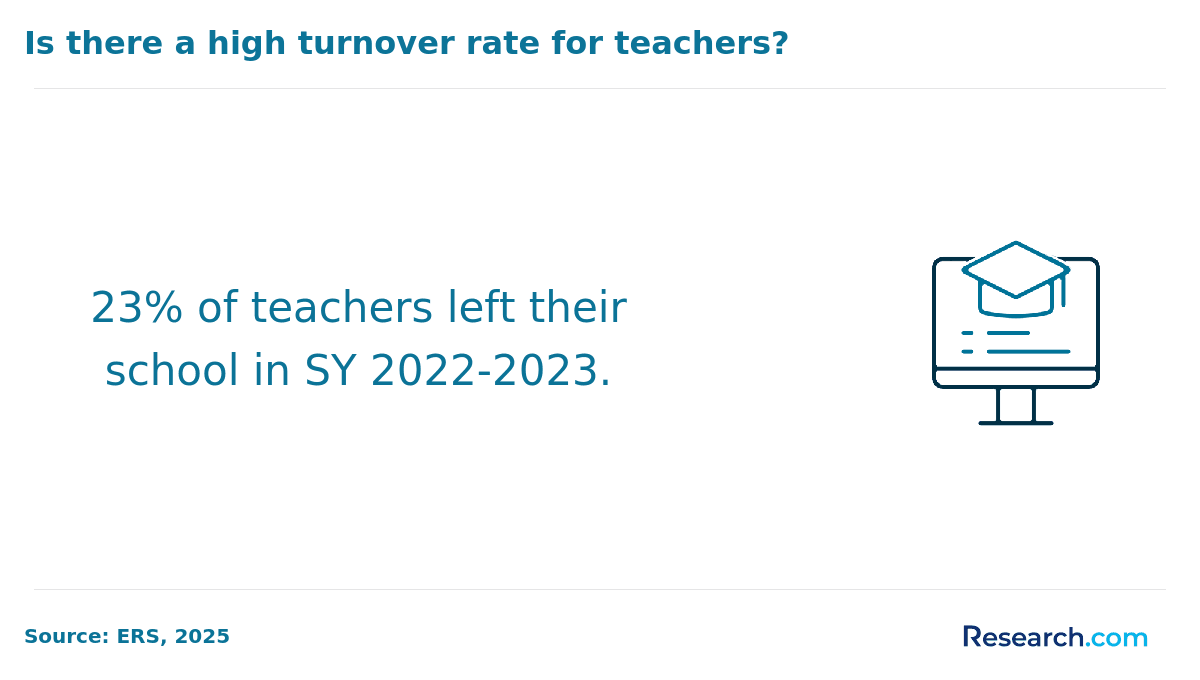
Cost planning is especially important because nearly a quarter of teachers—23%—left their schools during the 2022–2023 school year. Affordable, flexible credential options can help Philadelphia prepare new educators without asking candidates to take on unnecessary financial strain before they enter the profession.
How long does it take to get a teaching certificate in Philadelphia, PA?
For candidates who already have a bachelor’s degree, earning a teaching certificate in Philadelphia, PA typically takes between 1.5 to 2 years through a post-baccalaureate route. This can be faster than returning for a full undergraduate education degree, but it still requires coursework, field experience, testing, and state application review.
Student teaching is a major part of the timeline. Candidates generally complete 12-14 weeks of full-time classroom practice, which can affect work schedules and income. In addition, the School District of Philadelphia requires participation in an Induction Program involving 60 hours of training that count toward the 24 credits needed for the Instructional II certificate.
Candidates also need time to prepare for Praxis or PECT exams. A realistic timeline should include study time, test registration windows, score reporting, transcript processing, and TIMS application review. If you are exploring future education leadership routes after certification, Research.com’s guide to the most affordable online EdD programs can help you understand later-stage degree options, though an EdD is not the same as an initial teaching credential.
| Step | Typical time consideration | Cost-saving tip |
| Choose an approved program | Before enrollment | Verify certification alignment before paying application or deposit fees |
| Complete coursework | Part of the 1.5 to 2 years for many post-baccalaureate candidates | Ask whether previous credits can reduce required coursework |
| Complete student teaching | Usually 12-14 weeks of full-time classroom practice | Look for residency or stipend-supported options if you cannot afford unpaid placement |
| Finish induction requirements | Includes 60 hours of training through the School District of Philadelphia | Track documentation so completed hours count toward the Instructional II certificate |
| Apply through TIMS | Applications are typically processed within nine weeks | Submit complete documents to avoid delays and extra transcript requests |
Preparation matters because 51% of educators state that “teaching is a hard job.” A shorter credential path can save money, but it should still give candidates enough supervised practice, feedback, and classroom management preparation to begin teaching with confidence.
Are there schools in Philadelphia, PA offering affordable teaching programs?
Yes. Philadelphia and nearby Pennsylvania institutions offer several lower-cost certification routes, particularly for students who already hold a bachelor’s degree. The best choice depends on your certification area, schedule, ability to complete fieldwork, and whether you need online or hybrid coursework.
- Drexel University: Drexel offers a Post Baccalaureate Teacher Certification program with tuition approximately half the regular cost. Its Philadelphia Teacher Residency Program is delivered 100% online and supports certification in Elementary Education (PreK-4), Middle Level (4-8), and Secondary Education (7-12). This option may appeal to working adults who need flexibility and a route tied to Philadelphia classrooms.
- Eastern University: Eastern University provides fully online Pennsylvania teaching certification programs designed for accessibility and cost control. Online delivery can help candidates avoid commuting expenses while completing required preparation.
- Keystone College: Keystone College is outside Philadelphia but offers accelerated certification for candidates with bachelor’s degrees, a 3.00 GPA, and 150 hours of fieldwork. Its Early Childhood/Special Education (PreK-12) track may be relevant for candidates seeking broad preparation in high-need instructional areas.
When comparing affordable programs, do not stop at tuition. Ask whether the program is approved for your desired Pennsylvania certification, how field placements are arranged, what exam pass support is available, and whether the school has connections with Philadelphia employers. Educators who want to broaden their work in school or community learning environments may also compare related graduate options, including affordable online library science master’s programs.
Are online teaching programs cheaper than traditional ones in Philadelphia, PA?
Online teaching credential programs can be cheaper overall, but the savings are not automatic. The biggest financial advantages usually come from reduced commuting, lower campus-related expenses, and the ability to keep working while completing coursework. Candidates still need to complete required clinical or student teaching experiences in approved settings.
Drexel University charges approximately $1,111 per credit for its online teaching certificate, which represents a 25% savings compared with the $1,190 or more per credit typical of on-campus graduate education courses. For students balancing work and family responsibilities, the ability to complete coursework online can be just as important as the tuition difference.
| Program format | Potential advantages | Possible drawbacks | Best fit |
| Online | May reduce commuting, housing, and campus costs; often easier to combine with work | Still requires approved field experience; students need strong self-management | Career changers, working adults, and students outside easy commuting distance |
| Campus-based | More face-to-face interaction, local networking, and immediate access to campus services | May require commuting, parking, and fixed class times | Students who want in-person support and can attend regularly |
| Hybrid | Combines online flexibility with some in-person preparation | Requires planning around on-campus sessions and fieldwork | Students who want structure without attending campus full time |
Before choosing online study, confirm that the program leads to Pennsylvania certification, that field placements can be completed in or near Philadelphia, and that online students receive the same advising and certification support as campus students.
How can certified educators diversify their career pathways in Philadelphia, PA?
A teaching credential can support more than a traditional classroom role. In Philadelphia, certified educators may move into instructional coaching, curriculum development, school leadership, community education, tutoring program management, education nonprofit work, or student support roles. The strongest path depends on the teacher’s subject area, experience level, graduate training, and interest in working directly with students versus designing programs or leading teams.
Some educators combine teaching expertise with human services, counseling, or family support work. This can be especially relevant in urban school systems where students may need coordinated academic, emotional, and community-based support. Teachers considering a clinical or counseling-oriented path should review licensing requirements carefully; teaching certification alone does not qualify someone to practice therapy. For a separate but related career path, see Research.com’s guide on becoming a marriage and family therapist in Philadelphia.
Can combining teaching credentials with substance abuse counseling certifications broaden career opportunities in Philadelphia, PA?
Yes, but only when the educator completes the separate education, supervision, and credential requirements for counseling-related roles. A teaching credential can provide strong experience in youth development, communication, classroom behavior, and family engagement, while substance abuse counseling preparation may support work in prevention programs, student assistance services, community organizations, and crisis response settings.
This combination may be useful for educators who want to support students beyond academics, especially in schools or community programs addressing behavioral health and substance use concerns. However, candidates should not assume one credential substitutes for the other. To compare requirements outside teacher certification, review Research.com’s guide on how to become a substance abuse counselor in Philadelphia.
How can students lower the cost of attending teaching programs in Philadelphia, PA?
The cheapest credential pathway is usually built through several decisions, not one discount. Students can reduce costs by selecting an approved program with a shorter path, using prior credits, applying early for aid, and avoiding exam retakes through focused preparation.
- Apply for Philadelphia-specific scholarships, including Philadelphia Education Fund’s Teacher Excellence Initiative grants.
- Ask whether previous college credits can transfer into the certification plan and reduce the number of required courses.
- Buy used textbooks, rent materials, or use library resources when program rules allow it.
- Consider AmeriCorps opportunities in Philadelphia schools that may provide education awards.
- Review loan forgiveness and support options through the Pennsylvania Higher Education Assistance Agency.
- Enroll part time if you need to keep working, and consider gaining experience as a teacher’s aide in the School District of Philadelphia.
- Choose exam preparation early to reduce the risk of paying for multiple Praxis or PECT attempts.
- Compare the total cost of online, hybrid, and campus formats, including transportation and lost work time.
-
: "
A Philadelphia teacher described affordability as a planning problem, not just a tuition problem. She said that keeping her job while taking hybrid coursework helped her avoid unnecessary debt, while local scholarships and community college credits “cut down tuition costs dramatically.” Her main advice was to talk with advisors early, document every requirement, and use every legitimate aid source before borrowing.
"
Questions to ask before enrolling in a low-cost teaching credential program
- Is the program approved for the exact Pennsylvania certification area I want?
- What is the total cost, including tuition, fees, exams, books, background checks, and certification application charges?
- Can I transfer credits from prior coursework?
- Will the school arrange my field placement or student teaching site?
- Can I complete clinical requirements while working?
- What percentage of students complete the program and pass required exams?
- Does the program offer scholarships, stipends, residency funding, or payment plans?
- Will this credential meet requirements if I later move outside Pennsylvania?
What are the special education certification pathways in Philadelphia, PA?
Special education certification requires preparation beyond general teaching coursework. Candidates need training in inclusive instruction, individualized education programs, assessment, classroom supports, legal responsibilities, collaboration with families, and strategies for students with diverse learning needs.
Philadelphia candidates should look for programs with supervised special education placements, mentoring from experienced special educators, and coursework aligned with Pennsylvania standards. It is also important to confirm whether the program prepares candidates for the age band and disability categories they intend to serve. For a more focused explanation, review Research.com’s guide to special education teacher requirements in Philadelphia.
How can aspiring teachers excel on certification exams in Philadelphia, PA?
Certification exams are one of the easiest places to lose money if you prepare casually and need multiple retakes. Candidates should begin by identifying the exact Praxis or PECT exam required for their certification area, then study from the official content outline instead of relying on broad education review materials.
- Use practice tests to identify weak content areas before paying for a test date.
- Build a study schedule around tested competencies rather than rereading entire textbooks.
- Join a study group with candidates taking the same subject exam.
- Ask recent program graduates which content areas surprised them on test day.
- Use university workshops, tutoring, or advising resources when available.
- Schedule the exam early enough that a retake, if needed, will not delay student teaching or certification.
Teachers pursuing specialized student support or behavior-focused roles may later compare additional credentials. Research.com’s guide to BCBA education requirements in Philadelphia explains one advanced pathway outside standard teacher certification.
Are there organizations in Philadelphia, PA that provide financial aid for teachers?
Yes. Philadelphia teacher candidates may be able to reduce costs through state, local, institutional, and national funding sources. Availability and award amounts can change, so students should confirm deadlines and eligibility directly with the organization or program.
Pennsylvania Higher Education Assistance Agency (PHEAA)
PHEAA administers the PA Student Teacher Support Program, which provides stipends to student teachers across Pennsylvania, including Philadelphia. In the 2024-25 academic year, over 2,100 recipients received awards that typically cover several thousand dollars, though amounts depend on state funding.
Eligible students must be enrolled in an approved teacher preparation program and complete a student teaching placement. Because the program is competitive and prioritizes financial need, candidates should prepare documentation early and apply as soon as possible.
City Teaching Alliance
City Teaching Alliance provides relocation-related grants for educators moving to Philadelphia, with awards ranging from $100 to $2,000. Eligibility may consider distance moved, cost of living, and individual financial circumstances. Applicants must maintain at least a 3.0 GPA and remain on track in their master’s programs. DACA recipients may apply, although federal aid eligibility can differ.
Fulbright Program
The Fulbright Program is a national opportunity that offers scholarships and grants to graduate students and early-career professionals who plan to teach in Philadelphia. Awards may support tuition and living expenses and are generally tied to academic achievement and service to diverse communities.
Financial aid matters because over 17,000 teachers in Pennsylvania are not fully certified for their assignments. Programs that lower the cost of student teaching and certification can help more candidates complete the credential process and enter classrooms fully prepared.
Is investing in a teaching credential in Philadelphia, PA worth it?
A Philadelphia teaching credential can be worth the investment if you want a classroom career, choose an approved and reasonably priced program, and enter with realistic expectations about salary, workload, and debt. The credential can improve access to public school and many charter school roles, but it should be evaluated like any career investment: total cost, time to completion, likely employment path, and long-term advancement options all matter.
- Demand can support employment prospects: Philadelphia schools continue to need qualified teachers, especially in high-need subjects and urban school settings. Demand can improve opportunity, but no program can guarantee a job unless that commitment is explicitly part of the pathway.
- Residency models may reduce risk: Programs such as Drexel University’s Teacher Residency Program can provide a more direct bridge into the School District of Philadelphia by connecting preparation with school-based experience.
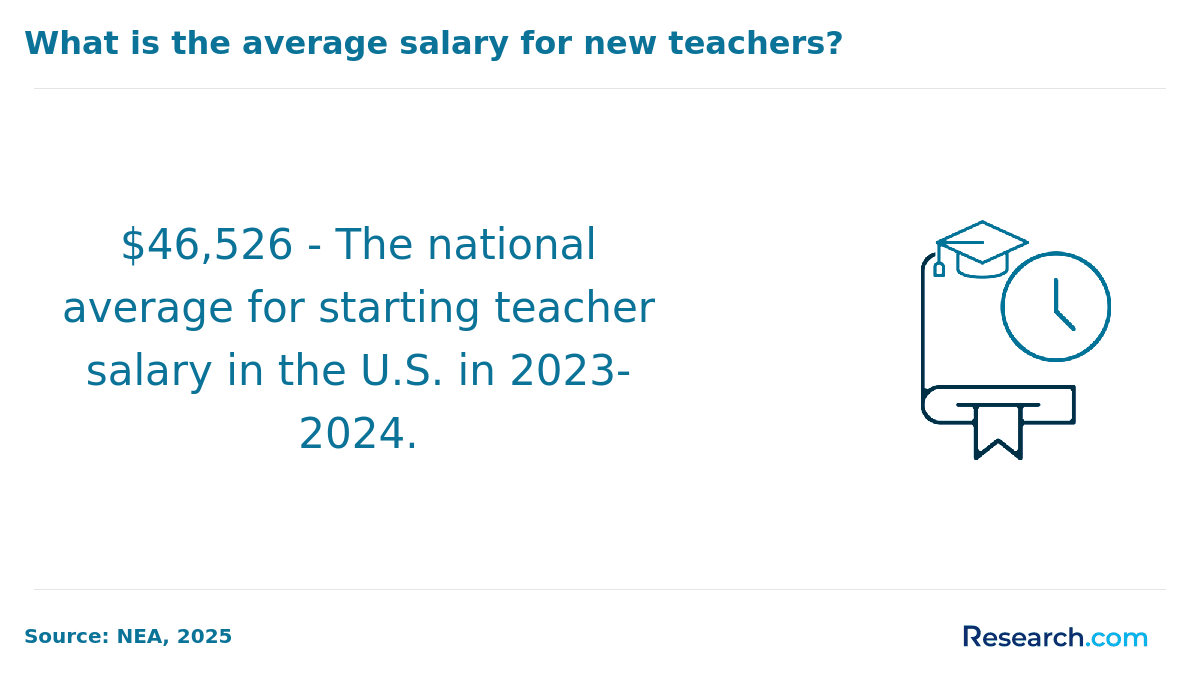
- Compensation should be weighed against debt: The national average starting teacher salary reached $46,526 in 2023–2024. Candidates should compare expected earnings with tuition, unpaid student teaching time, and any loans needed to finish certification.
- Benefits and advancement can improve long-term value: Teaching roles may include benefits, pension plans, and salary growth tied to experience or additional education, but policies vary by employer and contract.
- Community impact is a real factor: For many educators, the value of the credential includes the opportunity to serve Philadelphia students and families, not only financial return.
If you are already thinking beyond initial certification, compare whether advanced study would support your goals. Research.com’s article on whether an online doctorate degree in education is worth it may help with longer-term planning, but most new teachers should first focus on affordable certification and classroom readiness.
Are there alternative pathways aspiring educators in Philadelphia, PA can take to obtain credentials?
Yes. Alternative pathways are especially useful for adults who already hold a bachelor’s degree, career changers with subject expertise, and candidates who cannot afford a traditional full-time education degree. These routes can reduce time and cost, but they still require candidates to meet Pennsylvania certification standards.
- Teacher residency programs: Residency pathways usually combine intensive classroom experience with certification coursework, often in high-need schools. Candidates may receive a stipend or salary, reduced tuition, and structured mentoring. Some programs can also lead to a Master’s degree, allowing candidates to earn while preparing for certification.
- American Board Passport to Teaching: This competency-based pathway is designed for bachelor’s degree holders in any major. Candidates complete pedagogy and subject exams to qualify for a Pennsylvania Temporary Teaching Permit. The initial cost ranges between $1,900 and $2,500, but candidates should also budget for required mentoring and additional coursework through partner institutions.
- Alternative certification for non-education majors: Schools such as Drexel University offer accelerated post-baccalaureate programs for working adults. These pathways may be completed in about a year and focus on teaching practice rather than requiring candidates to restart undergraduate study.
| Pathway | Best for | Main advantage | Main caution |
| Traditional undergraduate education degree | Students without a bachelor’s degree | Most direct academic preparation route | Usually longer and may cost more overall |
| Post-baccalaureate certification | Bachelor’s degree holders changing careers | Shorter than earning another bachelor’s degree | Requires careful review of prerequisites and fieldwork |
| Teacher residency | Candidates who want school-based training | Can combine preparation, mentoring, and employment connections | May require service commitments or specific placement locations |
| American Board Passport to Teaching | Independent learners with strong subject knowledge | Lower initial program cost compared with many traditional routes | Additional mentoring and coursework costs still apply |
What additional career support and professional development opportunities exist for certified teachers in Philadelphia, PA?
After certification, Philadelphia teachers can continue building skills through district induction, mentoring, subject-area workshops, instructional coaching, leadership development, and education association events. These supports can help teachers improve classroom management, adapt to changing standards, and prepare for roles such as department chair, instructional coach, curriculum specialist, or school administrator.
Professional development is also important for retention. New teachers should ask employers about mentoring, planning time, coaching access, and support for high-need classrooms before accepting a position. For a focused entry-path guide, see Research.com’s resource on the cheapest way to become a teacher in Philadelphia.
Common mistakes to avoid when choosing a Philadelphia teaching credential program
- Choosing based only on tuition: A cheap program can become expensive if it has weak advising, limited placement support, or poor exam preparation.
- Failing to confirm Pennsylvania approval: Do not assume every education certificate leads to state teacher certification.
- Ignoring student teaching logistics: Full-time clinical practice can reduce income, so plan for transportation, scheduling, and unpaid hours.
- Underestimating fees and exams: Budget for certification applications, Praxis or PECT exams, background checks, textbooks, and possible retakes.
- Assuming online means fully remote: Online coursework does not eliminate fieldwork or student teaching requirements.
- Borrowing before checking aid: Apply for grants, stipends, scholarships, residency support, and transfer credit before taking loans.
- Relying only on rankings or brand name: The best program is the one that is approved, affordable, flexible, and aligned with your certification goal.
References
- All Education Schools. Pennsylvania Teacher Certification Guide.
- Community College of Philadelphia. College Costs.
- Drexel University. Online Learning from Expert Educators.
- Education Data Initiative. Cost of Online Education vs. Traditional Education [2024]: Comparison.
- eSchool News. Online Learning vs. Classroom Learning Research.
- Jefferson University. Tuition, Fees and Room & Board.
- Mayor's Office of Education. Learn About Financial Aid Resources Available for New and Returning College Students.
- Peirce College. Lower Your Tuition.
- Student Financial Services | Temple University. TEACH Grant.
- TeachPHL. PA Teaching Certification, Residency Programs & Jobs Pathways.
Key Insights
- The cheapest way to get a teaching credential in Philadelphia is usually a post-baccalaureate, residency, or alternative certification pathway if you already have a bachelor’s degree.
- Program cost should be evaluated as total cost, not tuition alone. Include fees, exams, books, transportation, student teaching income loss, and certification application charges.
- Online programs may reduce expenses, but they still require approved fieldwork and student teaching placements.
- Always confirm that a program is approved for Pennsylvania certification before enrolling. A low-cost program that does not lead to the right credential can cost more in the long run.
- Financial aid sources such as PHEAA support, the TEACH Grant, scholarships, AmeriCorps awards, residency funding, and transfer credits can substantially reduce out-of-pocket costs.
- A teaching credential can be worth it for candidates committed to classroom work in Philadelphia, but the best return comes from choosing an affordable approved program with strong placement, advising, and exam support.
Other Things You Need to Know About the Cheapest Way to Get a Teaching Credential in Philadelphia, PA
The Pennsylvania Department of Education approves and issues teaching credentials for Philadelphia educators. Applicants must complete an approved educator-preparation program, pass required exams such as Praxis, and submit certification materials through the state’s online certification system, TIMS.
To obtain a teaching credential in Philadelphia in 2027, candidates must pass the Pennsylvania Educator Certification Tests (PECT) or Praxis exams, specific to their subject area or grade level. Tests assess knowledge and skills necessary for teaching. Registration and study resources are available online.