2027 Online MS in Psychology - Forensic Psychology for Call Center Team Leaders: Choosing a Program Without Leaving Your Job
Audited and Verified:
Our Editorial and Data Verification Process
Research.com uses government datasets, official education statistics and primary institutional information to support its career and degree guides. Our review process checks factual accuracy, occupational definitions, source dates and the requirements associated with the credentials discussed.
How This Article Was Fact-Checked
Our editorial team verifies salary estimates, employment projections, education requirements and program information against original data providers and official organizations. Salary figures are checked against the relevant occupational definitions and reporting periods. Information about licensure, accreditation and required in-person training is reviewed separately.
Fact-checked and verified on:

Co-Founder and Chief Data Scientist
Leading a call center team already involves coaching, conflict resolution, sensitive conversations, and performance data. An online MS in forensic psychology could build on those skills, but the degree is a substantial commitment - and its name does not confer clinical or investigative authority.
If you want to keep working while exploring justice-related careers, program format matters as much as subject matter. This guide helps you assess scheduling, academic preparation, costs, career options, and credentials so you can decide whether a forensic psychology master's is the right move or a more direct alternative would serve you better.
Key Things You Should Know
- Keeping your job is possible, not automatic. Confirm live classes, group work, placement hours, and campus visits before relying on an "online" label.
- Career fit comes first. A nonclinical forensic psychology MS may support justice-related services or research, but it does not itself qualify you as a licensed psychologist or forensic evaluator.
- Compare the full investment. Get a written course schedule and total-cost estimate; the U.S. Bureau of Labor Statistics' May 2024 median of $41,410 for social and human service assistants is an occupation-wide benchmark, not a graduate salary promise.
What is an online master's in forensic psychology, and who is it for?
An online MS in forensic psychology applies psychological science to legal and justice-related settings. Depending on the program, students may study research methods, behavior in legal contexts, victimization, corrections, ethics, and psychological evidence. "Online" describes delivery, not whether every activity can be completed independently or from home.
For a call center team leader, the strongest fit is a defined goal that uses both existing management experience and new subject knowledge: for example, coordinating victim-service operations, supporting a justice-focused program, or evaluating service quality. Coaching staff and handling escalations are transferable skills, but they are not substitutes for experience with justice systems, research, or vulnerable populations.
If you have not completed a bachelor's degree, that is usually the first educational decision. Online forensic psychology bachelor's programs in three years or less may be worth investigating, but verify remaining requirements rather than treating an advertised timeline as your completion date.
Can call center team leaders earn a forensic psychology degree without leaving work?
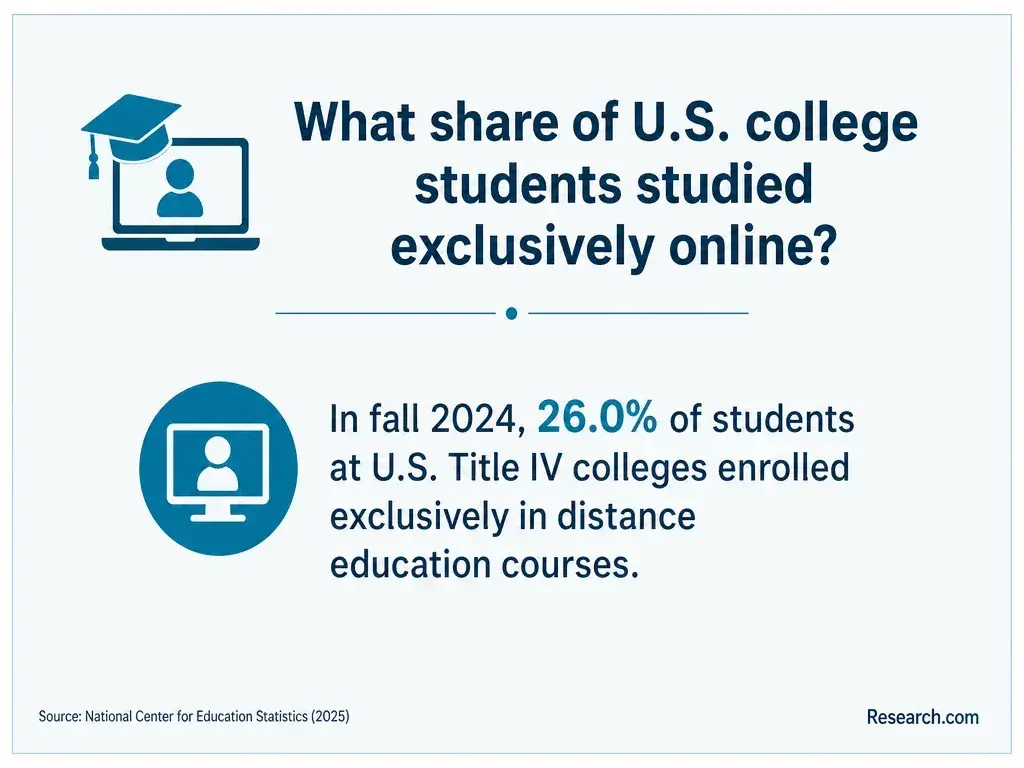
Yes, if the program's actual weekly obligations fit your shifts and the parts of your leadership role you cannot delegate. Asynchronous lectures may help when coverage changes, while fixed seminars, group meetings, timed exams, and faculty-supervised projects can still require predictable availability. A required placement may be particularly difficult if it operates during weekday agency hours.
The distinctions below clarify what "flexible" can mean when comparing online programs.
| Program feature | Potential benefit | Work-schedule constraint |
| Asynchronous courses | Lectures and discussions can often be completed within set windows | Deadlines and group projects still apply |
| Live online sessions | Direct discussion with faculty and classmates | May conflict with shifts or peak call periods |
| Internship or applied project | Evidence of work beyond classroom study | Site approval, supervision, or daytime access may be required |
| Part-time enrollment | Smaller course load alongside employment | Longer time to completion and potentially different aid eligibility |
Ask for a recent course rotation and syllabi, not just a statement that classes are online. If speed is attractive, compare accelerated MA psychology study pathways against the weekly workload you can sustain; a faster calendar can mean less scheduling flexibility.
What accreditation should an online forensic psychology master's program have?
First, verify that the university holds recognized institutional accreditation and that it applies to the school awarding the degree. Check the accreditor's directory and the institution's current catalog. Institutional accreditation matters for degree recognition and can affect federal aid eligibility, but it does not prove that a particular curriculum meets a licensing board's rules.
Do not reject a nonclinical forensic psychology MS merely because it lacks APA accreditation: APA accreditation applies to specified professional psychology training programs, not every psychology master's. Conversely, do not treat a university's institutional accreditation as proof that its forensic MS qualifies graduates for psychologist licensure.
If a bachelor's degree is still unfinished, accreditation is only one part of the earlier-school comparison. Planning a psychology degree with previous college study also requires a school-specific evaluation of which accepted credits satisfy graduation requirements.
Generally, a nonclinical forensic psychology MS does not by itself qualify someone for licensure as a psychologist. State psychologist-licensure pathways typically require qualifying doctoral education, supervised experience, examinations, and other board requirements. Studying assessment or testimony does not authorize independent forensic evaluations, diagnosis, psychotherapy, expert practice, or use of a protected title.
If your goal is to provide therapy, compare programs built for the specific license you seek rather than assuming forensic coursework will count. For example, accelerated master's study in clinical mental health counseling addresses a different professional pathway; eligibility still depends on the particular program and state board. Before enrolling anywhere, ask the relevant board which educational and supervised-practice requirements apply to your intended role.
Coursework varies, but a useful nonclinical curriculum combines psychological theory with research design, statistics, ethics, and the limits of evidence in legal settings. Possible subjects include psychology and law, victimology, corrections, psychopathology as an academic subject, and cultural or developmental factors. A thesis or capstone can help demonstrate analysis and writing, provided the program supplies appropriate faculty supervision.
Look beyond course titles. For a move from call center leadership into program evaluation, methods training and a supervised project may be more valuable than several survey courses on criminal behavior. If the intended job is substance-use counseling instead, compare the required credential and curriculum directly; substance abuse counseling bachelor's program value comparisons address a different route, and neither route should be assumed to satisfy your state's counseling rules.
For a workplace-based project, obtain faculty and employer approval before using operational information. Customer recordings, staff records, and sensitive case information are not automatically available for student research; privacy rules, consent, data-use permission, and institutional review may apply.
Programs commonly require a completed bachelor's degree, transcripts, and application materials explaining academic and career goals. A psychology major is not universally required. A team leader with a business, communications, or other undergraduate background may be eligible, but a school might require or recommend introductory psychology, statistics, or research methods. GPA thresholds, recommendations, tests, and prerequisite policies differ by institution.
Your application should connect specific work to graduate study: staff coaching, documented process improvement, careful handling of sensitive interactions, or responsible interpretation of performance measures. That evidence demonstrates maturity and analytical potential without presenting call center work as clinical or justice-system experience.
If you do not yet hold a bachelor's degree, compare remaining undergraduate requirements before applying to master's programs. Faster psychology degree timelines online can inform that separate step, but only a university's evaluation can establish your own remaining coursework.
Time depends on required credits, course availability, enrollment pace, and any thesis or placement. A published accelerated completion time may assume consecutive terms and a workload that conflicts with full-time team leadership. Compare the school's recommended part-time sequence with the dates courses are actually offered.
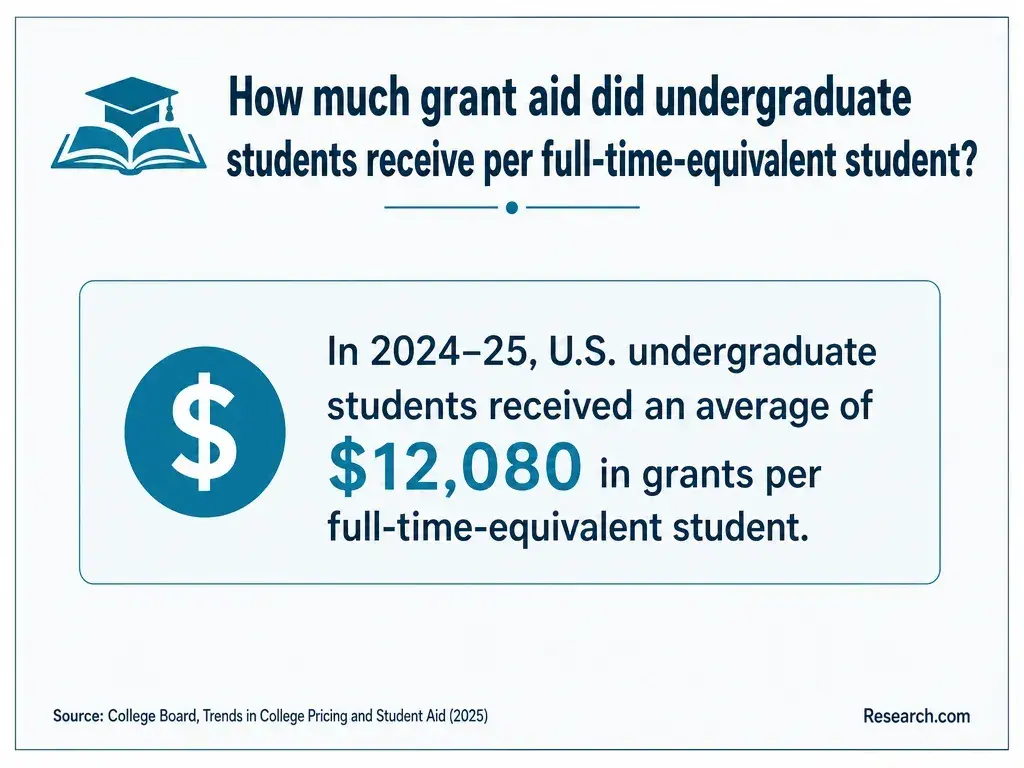
Request a written estimate covering tuition for all required credits, mandatory fees, books or software, travel, placement expenses, and any continuation charges. Multiply the school's applicable per-credit tuition by required credits only if it bills that way; then add charges that are not included. Ask whether employer tuition assistance applies and whether your planned enrollment meets financial-aid rules. For a faster option, review shorter master's study plans in forensic psychology alongside their course loads, rather than comparing advertised durations alone.
The most plausible transition is into nonclinical operations or support work that values leadership and communication while requiring you to learn a new service setting. Potential functions include victim-service program coordination, justice-agency administrative support, corrections-program support, research coordination, or service-quality analysis. Employers may require relevant agency experience, a different degree, a background check, or particular technical skills; the MS alone does not establish eligibility.
The comparison below separates adjacent moves from transitions that require a substantially different credential.
| Target | What your leadership experience may contribute | Likely additional preparation |
| Justice-related program operations | Supervision, scheduling, training, and quality monitoring | Agency procedures, confidentiality, and sector experience |
| Victim-service support or coordination | Respectful communication and escalation management | Trauma-informed practice, referrals, and supervised service experience |
| Research or evaluation support | Reporting and process analysis | Research methods, data handling, and a relevant project |
| Licensed forensic assessment | Limited direct transfer | Qualifying professional education, licensure, and specialized supervised training |
For some support roles, targeted training and relevant experience may be more direct than another degree. If substance-use services are the real destination and undergraduate education is still needed, investigate both state credential rules and financing options such as scholarships for undergraduate substance use counseling before committing to a forensic MS.
How should you compare online forensic psychology programs for career advancement?
Start with one target job and identify its actual hiring requirements. Then ask each program for evidence that its curriculum, format, and graduate support address the gaps between that job and your current experience. A useful comparison should include the course rotation, live-session schedule, project or placement policy, faculty supervision, career-service access, and a complete cost estimate.
Use this sequence before you pay an enrollment deposit:
- Find several realistic job postings and separate required credentials from preferred degrees or experience.
- Ask each school whether its applied work can be completed alongside your shifts and whether your current workplace could be approved; do not assume it can.
- Verify institutional accreditation and ask the relevant regulator about any licensed role you intend to pursue.
- Compare written part-time schedules and total costs, including expenses outside tuition.
- Choose the MS only if its specific training and opportunities justify its cost over targeted courses, sector experience, or a different qualifying degree.
For the financial comparison, planning the cost of a psychology master's can help you identify charges to check. The best choice is the program that advances a verified goal without requiring a work schedule - or promising a professional outcome - that does not hold up to scrutiny.
Other Things You Should Know About Psychology
Possibly, if the program approves the topic and your employer permits the work. Confirm supervision, data access, privacy protections, and any research-review requirements before proposing it.
You may need to if you seek tuition assistance, schedule changes, or approval for a workplace project. Check those policies before assuming your employer can accommodate the program.
Diploma wording varies by institution. Ask the registrar for the exact degree title and whether delivery mode appears on the diploma or transcript.
Speak with people in target roles and review local job postings. Approved volunteering or introductory training can also help you assess the setting without first committing to a master's degree.
- Frequently asked questions about educational assistance programs | Internal Revenue Service https://www.irs.gov/newsroom/frequently-asked-questions-about-educational-assistance-programs
- DAPIP | Homepage - Office of Postsecondary Education (OPE) https://ope.ed.gov/dapip/
- Types of Financial Aid: Grants, Work-Study, and Loans | studentaid.gov https://studentaid.gov/understand-aid/types
- Employer Tuition Reimbursement: How It Works and How to Pay for College | Winston-Salem State University https://ramsonline.wssu.edu/blog/employer-education-benefits/
- Employer Tuition Assistance Plans May Help Pay for College | Campus https://campus.edu/blog/financial-aid/employer-tuition-assistance-programs-can-help-pay-for-college
- and Ask For - Employer Tuition Reimbursement Benefits | Harvard Extension School https://extension.harvard.edu/blog/how-to-use-and-ask-for-employer-tuition-reimbursement-benefits/
- Developing and Supporting Virtual Social Work Practicum Placements: Applied Learning in Social Work Education https://alswe.simmons.edu/article/developing-and-supporting-virtual-social-work-practicum-placements/
- Can You Work Full-Time and Go to School? A Practical Guide | Whitworth Online https://online.whitworth.edu/news-articles/can-i-go-to-school-and-work-full-time/
- How to Become a Forensic Psychologist in California (2026) | Touro University Worldwide https://www.tuw.edu/psychology/how-to-become-a-forensic-psychologist-in-california/
- Online Forensic Psychology Master's Degree | ASU Online https://asuonline.asu.edu/online-degree-programs/graduate/master-science-forensic-psychology/