2027 Choosing an Online BA in Psychology - General Psychology Around A Need to Avoid Mandatory Daytime Meetings
Audited and Verified:
Our Editorial and Data Verification Process
Research.com uses government datasets, official education statistics and primary institutional information to support its career and degree guides. Our review process checks factual accuracy, occupational definitions, source dates and the requirements associated with the credentials discussed.
How This Article Was Fact-Checked
Our editorial team verifies salary estimates, employment projections, education requirements and program information against original data providers and official organizations. Salary figures are checked against the relevant occupational definitions and reporting periods. Information about licensure, accreditation and required in-person training is reviewed separately.
Fact-checked and verified on:

Co-Founder and Chief Data Scientist
An online psychology BA may fit around a job or caregiving - until a required class meeting, group project, or internship lands in the middle of the day. For students who cannot reliably attend daytime meetings, the degree's delivery rules matter as much as its subject matter.
This guide explains what "asynchronous" does and does not promise, how to check requirements across the entire general psychology major, and how to weigh cost, academic preparation, and career goals before enrolling. The aim is to identify a program you can actually finish on your schedule, not merely one advertised as online.
Key Things You Should Know
- An asynchronous online BA is the strongest starting point, but it does not rule out scheduled exams, group work, internships, or required live sessions; check every requirement in your degree plan.
- A bachelor's degree commonly requires about 120 semester credits. Transfer credits, course sequencing, and part-time enrollment determine how many credits and terms you personally have left.
- Verify institutional accreditation and obtain written scheduling answers before paying a deposit. A general psychology BA does not, by itself, qualify you to practice as a licensed psychologist or therapist.
What is an online BA in general psychology without daytime meetings?
It is a bachelor of arts in psychology that covers the discipline broadly and lets students complete required academic work without attending scheduled sessions during the day. Typically, recorded lectures, readings, discussion posts, and assignments are available through a learning platform. Deadlines still apply; "asynchronous" means students do not have to be online together for instruction, not that they can work whenever they wish throughout the term.
The distinction matters most to working adults and caregivers. A program may be online overall while one required statistics course uses live daytime labs or a capstone requires meetings with a project team. General psychology can offer flexibility in electives and future study, but neither the BA label nor the major name establishes a scheduling policy. When choosing an online psychology program, treat the published course schedule and required experiences as more decisive than an "online" badge.
How do you verify accreditation for an online psychology bachelor's degree?
Check the institution - not just a promotional page - through the U.S. Department of Education's accreditation database or the accreditor's own directory. Confirm that the school and your intended enrollment period fall within the accreditor's recognized scope. Then ask the school whether the online BA is awarded by that institution and whether any location-specific restrictions affect you.
Institutional accreditation is especially important for federal aid eligibility and for how another school may evaluate the degree or transfer credits. It does not guarantee that another institution will accept every course. The American Psychological Association does not accredit general psychology bachelor's programs, so a claim that a BA is "APA-accredited" calls for clarification. If you are comparing a specialized option, distinguish the school's accreditation from the curriculum and outcomes of accredited online pathways in forensic psychology; the subject area does not confer a professional credential.
Can an online psychology degree lead to licensed psychology careers?
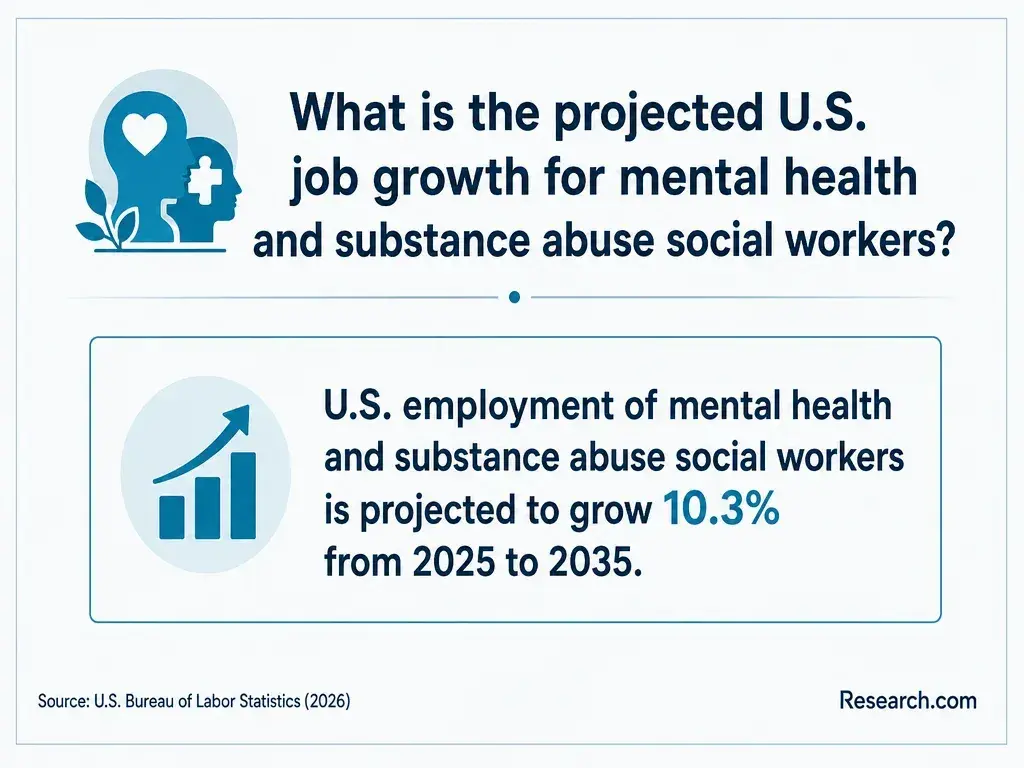
Yes, as an academic first step - not as a license. A general psychology BA can help you prepare for further study, especially if you complete statistics, research methods, and the prerequisites of your intended graduate program. Becoming a licensed psychologist generally requires qualifying doctoral education and additional jurisdiction-specific steps. Licensed counseling and clinical social work follow different graduate-training and licensing pathways.
If therapy is your goal, compare the requirements of the particular state license with the curriculum of a qualifying professional program before choosing undergraduate electives. Later, accredited mental health counseling education by program pace may be worth examining, but an online or accelerated graduate program can still require scheduled supervision and in-person clinical training. Studying mental disorders in a BA course does not authorize diagnosis, psychological assessment, or psychotherapy.
Expect a mix of general education, psychology foundations, and electives. Common psychology subjects include introductory psychology, statistics, research methods, development, social behavior, cognition, biological bases of behavior, and abnormal psychology. Programs differ in which subjects are mandatory, whether courses have prerequisites, and whether a senior capstone, research project, or internship is required.
For a student avoiding daytime meetings, the curriculum question is also a delivery question: can every required methods course and capstone be completed on a workable schedule, and how often is each offered? If your objective is specifically recovery-support or substance-use services, compare the general major's electives with distance learning bachelor's degrees in addiction psychology. Specialized coursework may be more relevant to that work, but neither route automatically satisfies a state's substance-use counseling credential rules.
Programs do this by offering asynchronous instruction, recorded rather than required-live lectures, flexible office-hour options, and assessments that can be completed within a defined window. Those features need to apply to required courses - not just introductory ones. The table separates common scheduling formats so you can recognize what a school is offering.
| Format | What participation usually involves | Daytime-meeting risk |
| Asynchronous coursework | Independent work with scheduled deadlines | Lower for class sessions; other requirements may differ |
| Scheduled live-online coursework | Attendance at a set video-session time | Depends on the published timetable |
| Online coursework with a placement or residency | Remote classes plus site-based or scheduled activities | Depends on site hours and program rules |
Ask about required attendance, proctored exams, group presentations, faculty research meetings, capstones, and internships. A local placement may be harder to schedule than any online class, particularly when a host site operates during business hours. Request answers for your entry term in writing and ask what happens if a required course is offered only in a conflicting time slot. The same scrutiny matters if you later pursue graduate study: online forensic psychology master's graduation planning, for example, is a separate scheduling decision rather than proof that your bachelor's format will carry forward.
Requirements depend on whether you are entering college for the first time or transferring. Schools commonly request an application and prior academic records; they may have separate standards for admission to the university and entry into the psychology major. Ask whether there are minimum grades in introductory psychology or statistics, and whether a course can be completed after enrollment.
For returning students, the crucial document is a degree audit showing not only which credits were accepted but which satisfy general education, major, prerequisite, and residency requirements. A transferred statistics course, for instance, may count as elective credit without replacing the major's statistics requirement. Students considering a more occupationally specific bachelor's route can compare bachelor's-level substance use counseling tuition and career value, then obtain a separate admissions and credit evaluation from each school. No comparison can substitute for the institution's decision on your transcript.
A bachelor's degree commonly totals about 120 semester credits, but your timeline depends on credits that apply to the degree, your term-by-term course load, and when required courses are offered. A full-time student starting without college credit often plans around a four-year path; a transfer student or part-time caregiver needs an individualized estimate rather than a promise based on the program's advertised length.
Ask an advisor for a term-by-term plan that includes prerequisites, courses offered infrequently, and any capstone or placement. Shorter terms do not necessarily reduce the work: they compress it into fewer weeks. Guidance on speeding up an online psychology degree can help you compare pacing options, but the fastest feasible schedule is the one you can sustain alongside your other obligations.
Compare the cost of remaining required credits, not just an advertised per-credit rate. Request an itemized estimate covering tuition, mandatory online and technology fees, books or software, exam-proctoring charges, and any travel or unpaid placement costs. An inexpensive credit price can become a costly degree if fewer transfer courses satisfy requirements or if a needed course delays graduation.
Ask the financial aid office how your planned enrollment intensity affects aid eligibility, and check satisfactory academic progress rules before choosing a very light course load. Complete the FAFSA if you may qualify for federal aid; eligibility and award amounts depend on your circumstances and the school. The process also applies when comparing adjacent fields, as explained in FAFSA and grants for substance abuse counseling students. Before committing, compare written net-cost estimates using the same number of credits and terms at each school.
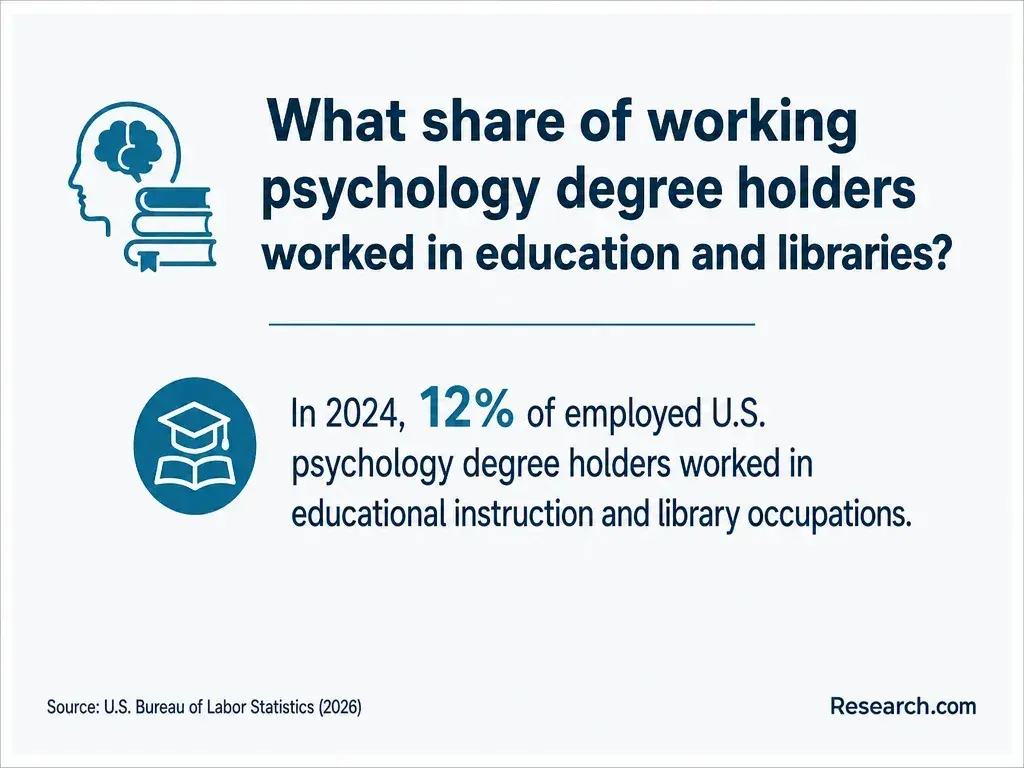
A general psychology BA can support applications for nonclinical roles such as human-services support, program coordination, research assistance, and some recruiting or organizational positions. Duties and entry requirements vary substantially: a research assistant may need data skills, while a service-support role may emphasize documentation, referrals, and respectful client communication. Internships, relevant employment, and demonstrable methods skills can matter more to an employer than the major name alone.
There is no single reliable "psychology BA salary." The U.S. Bureau of Labor Statistics reports wages for defined occupations, not for everyone holding a particular degree, and an occupation's median includes workers with varied experience and education. Use the latest Occupational Outlook Handbook entry for a job you would actually seek, then compare local postings for pay, required credentials, and work hours. Do not use psychologist or licensed-counselor wages as an estimate of bachelor's-level earnings. If counseling is your long-term aim, account for further education when weighing mental health counseling graduate study costs versus earnings.
How do you choose a reputable online psychology bachelor's program?
Start with a nonnegotiable condition: no mandatory daytime meetings anywhere in the path you intend to take. Then compare only institutions whose accreditation, degree requirements, and written scheduling information you can verify. A school's general promise of flexibility is weaker evidence than a current catalog, recent course schedules, and a personalized degree audit.
Before enrolling, obtain answers to the questions most likely to change your decision:
- Which required courses, exams, group activities, capstones, or placements have fixed meeting times, and are evening or asynchronous alternatives guaranteed?
- How will each prior course apply to the degree, and which requirements must be completed at this institution?
- What is the estimated total charge for my remaining plan, and what changes if I enroll part time or pause for a term?
- Who provides online advising, research or internship support, and help when a required course conflicts with work or caregiving?
If a later specialized degree is part of your plan, assess its costs and attendance rules separately; costs of one-year forensic psychology master's pathways, for example, should not be folded into an undergraduate affordability claim. Choose the BA whose documented requirements fit both your current schedule and your intended next step. If no program can accommodate a required placement or meeting, delaying enrollment or taking targeted courses first may be the sounder choice.
Other Things You Should Know About Psychology
Usually. You may choose when to study within the week, but discussions, quizzes, and assignments can still have fixed due dates. Check the syllabus for each required course.
Often, but arrangements vary. Ask whether instructors offer evening appointments, recorded explanations, or written questions and answers when posted office hours conflict with your schedule.
Diploma wording is set by the institution. Ask the registrar for a sample diploma and transcript notation if this matters to you; do not assume the delivery format will or will not appear.
Possibly. Confirm that the institution can enroll students in your state and that any required placement can be completed there before applying or relocating.
- Academic Years, Academic Calendars, Payment Periods, and Disbursements | 2025-2026 Federal Student Aid Handbook https://fsapartners.ed.gov/knowledge-center/fsa-handbook/2025-2026/vol3/ch1-academic-years-academic-calendars-payment-periods-and-disbursements
- Accreditation in the U.S. | ed.gov http://www.ed.gov/laws-and-policy/higher-education-laws-and-policy/college-accreditation/accreditation-in-the-us
- Understanding College Costs | studentaid.gov https://studentaid.gov/resources/prepare-for-college/students/choosing-schools/consider-costs
- Class Details - Office of the University Registrar - Mizzou https://registrar.missouri.edu/registration-classes/class-details/
- Internship FAQ's - Psychology and Child Development - Cal Poly https://psycd.calpoly.edu/internship-faqs
- Psychology | Transfer Handbook | Office of Undergraduate Admissions | Illinois https://transferhandbook.illinois.edu/las/psychology/
- Guidelines for Undergraduate Students Participating in Research | Office of the Provost https://www.provost.pitt.edu/guidelines-undergraduate-students-participating-research
- Psychology Major Transfer Guides - College of LSA https://lsa.umich.edu/transfer/prospective-students/mapping-your-transfer-plan/transfer-credits/community-college-transfer-guides/psychology-major-transfer-guides.html
- Online Bachelor's in Psychology | University of Kansas https://online.ku.edu/undergraduate-programs/online-bachelors-psychology
- Bachelor of Arts in Psychology - Degree Completion | Notre Dame de Namur University https://www.ndnu.edu/psychology/ba-completion-psychology.html