2027 Choosing an Online MS in Psychology - Forensic Psychology Around A Planned Parental Leave
Audited and Verified:
Our Editorial and Data Verification Process
Research.com uses government datasets, official education statistics and primary institutional information to support its career and degree guides. Our review process checks factual accuracy, occupational definitions, source dates and the requirements associated with the credentials discussed.
How This Article Was Fact-Checked
Our editorial team verifies salary estimates, employment projections, education requirements and program information against original data providers and official organizations. Salary figures are checked against the relevant occupational definitions and reporting periods. Information about licensure, accreditation and required in-person training is reviewed separately.
Fact-checked and verified on:

Co-Founder and Chief Data Scientist
A planned parental leave changes what "flexible" must mean in an online master's program. A course you can watch at midnight may still have live meetings, group deadlines, or a field placement you cannot postpone.
This guide is for prospective students considering an online MS in psychology with a forensic focus while preparing for a new child. It explains how to check academic policies, build a realistic enrollment plan, compare costs and career outcomes, and decide whether starting before, during, or after leave makes the most sense.
Key Things You Should Know
- Choose by the least flexible requirement - such as a scheduled seminar, residency, or placement - not by an "online" label.
- If eligible, federal Family and Medical Leave Act protections may provide up to 12 weeks of job-protected leave; they do not provide academic leave or make coursework a qualifying reason for FMLA leave.
- A forensic psychology MS can support nonclinical justice-related work, but it does not, by itself, qualify you as a licensed psychologist or forensic evaluator.
What Is an Online MS in Psychology-Forensic Psychology?
It is a graduate psychology degree focused on psychological science in legal and justice settings. Depending on the school, forensic psychology may be the degree's name or a concentration within a broader MS. Students might study research on eyewitness memory, violence prevention, victimization, or correctional settings without training to conduct clinical evaluations.
For a prospective parent, the important distinction is between content delivered online and a degree that can be completed on an unpredictable schedule. Compare the degree title, concentration requirements, and delivery model rather than assuming that all psychology degree schools and online formats offer the same flexibility.
Does a Forensic Psychology Master's Degree Lead to Licensure?
Usually, an academic forensic psychology MS is not designed to meet the requirements for psychologist licensure. It does not authorize psychotherapy, independent psychological assessment, or expert evaluation. Licensure requirements depend on the profession and state; licensed psychologist pathways generally require qualifying doctoral education and additional supervised training.
If your goal is to provide therapy, compare programs explicitly designed for the license you seek and obtain a written assessment of their fit from the relevant state board. Accredited clinical counseling program timeline comparisons can illustrate a different route, but a counseling degree and a forensic psychology MS are not interchangeable. A supervised placement in either program may be especially difficult to schedule during parental leave.
How Do You Choose an Accredited Online Forensic Psychology Program?
First, confirm the institution's accreditation through the accreditor and the U.S. Department of Education's recognition records. Then verify the exact online MS: its official title, required courses, entry-term policies, and whether it includes a thesis, capstone, residency, or placement. Institutional accreditation does not establish licensure eligibility; APA accreditation should not be assumed to cover a nonclinical MS.
Ask the program for a current sample course sequence and student handbook. Look for written answers about live attendance, deadline flexibility, temporary withdrawal, reentry, and whether required courses run every term. Use accredited forensic psychology study and career preparation as a comparison starting point, then confirm each policy with the institution for your intended entry term.
Curricula vary, but useful courses may cover research methods, statistics, psychology and law, forensic research ethics, developmental or social psychology, and behavior in correctional settings. A methods course teaches you to evaluate evidence; a course discussing psychological assessment does not qualify you to administer restricted tests professionally.
Inspect when demanding work occurs, not just which subjects appear on a course list. A statistics sequence, team research project, or fixed-date capstone may be harder to pause than reading-heavy electives. If your actual goal is substance-use treatment rather than justice-system research or support, evaluating online addiction counseling programs is a more relevant curriculum comparison - and any counseling credential still requires a separate check of state rules.
Delivery format affects travel, but it does not settle the caregiving question. The comparison below shows which obligations are worth checking before you choose a campus or online offer.
| Feature | Online program | Campus program | Parental-leave implication |
| Class attendance | May be asynchronous or live | Usually scheduled on site | Check required attendance and time zones |
| Collaboration | May require scheduled video meetings | Often occurs around class hours | Either format may require childcare |
| Applied work | May still require an approved local site | May use campus-area partners | Site hours may be less flexible than classes |
| Research access | Remote supervision varies | On-site opportunities may be easier to reach | Confirm advisor access before relying on a thesis plan |
Students finishing a bachelor's before applying should also separate undergraduate credit mobility from graduate flexibility: comparing psychology transfer credit limits addresses a different decision than whether an MS will accept prior graduate work. For the MS, request its own written transfer-credit policy.
Programs commonly request a bachelor's degree, transcripts, a statement of purpose, and recommendations; psychology, statistics, or research-methods prerequisites vary. Check whether the program accepts applicants from criminal justice, education, social work, or other backgrounds, and whether missing preparation can be completed before enrollment. Do not assume work experience substitutes for a stated prerequisite.
If you are still completing undergraduate study, comparing accredited addiction psychology BA pathways may help you examine earlier psychology preparation, but it should not dictate a forensic MS choice. Before submitting an application near your due date, ask whether admission can be deferred, how long the offer remains valid, and whether prerequisite courses must be finished before a deferred start.
There is no reliable single duration or price for all programs. Credits required, course availability, enrollment pace, and thesis or placement rules determine completion time. A program advertised as accelerated may assume continuous enrollment - a poor match if you need an uncertain break after a birth or adoption. Review accelerated forensic psychology graduate completion routes against their actual term-by-term requirements rather than treating the advertised finish date as a promise.
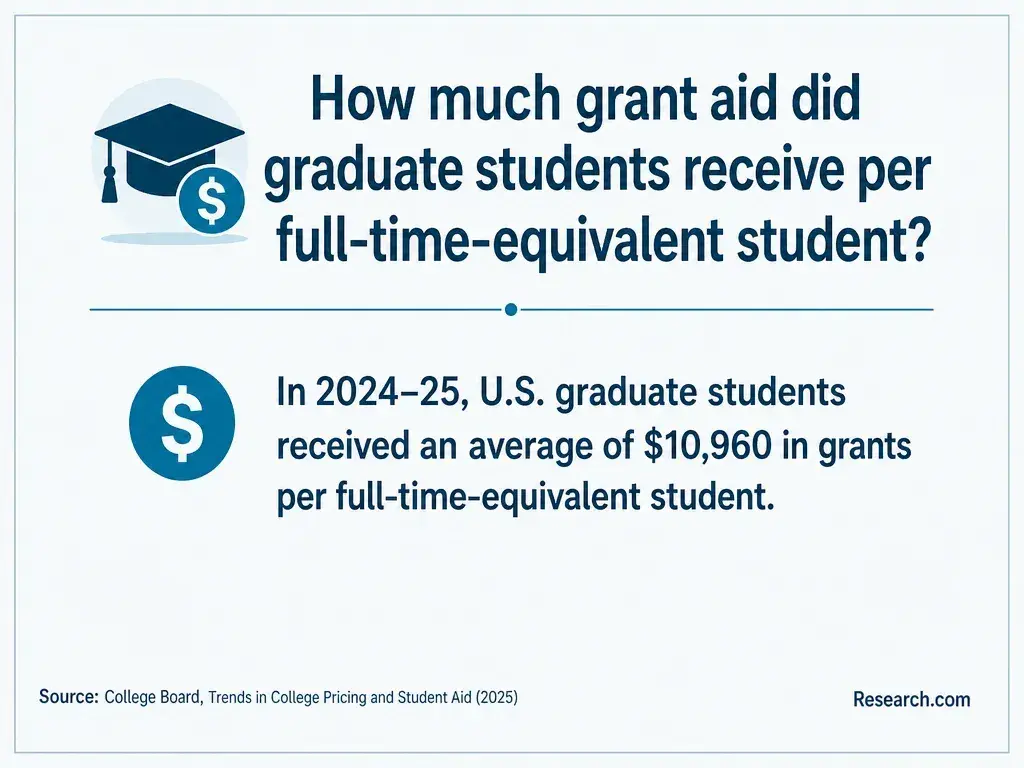
Request an itemized estimate for your likely pace: tuition and mandatory fees, books or software, any travel and placement expenses, and charges that continue during thesis enrollment. Ask financial aid staff how reduced enrollment or an approved leave affects aid eligibility and satisfactory academic progress. Compare the total cost of your realistic schedule, including childcare or reduced earnings, not only the fastest published schedule.
Possibly, but parental leave is not automatically study time. Recovery, infant care, sleep disruption, and a changing return-to-work date make a fixed course load risky. Federal FMLA leave, when available, concerns qualifying leave from employment; your school's enrollment and leave rules are separate. A more resilient plan may be to defer admission, take a lighter first term if permitted, or schedule a formal academic leave.
Before committing, get written answers to the questions that could change your start date:
- Which classes require live attendance, group meetings, timed exams, or daytime contact with a supervisor?
- Can you reduce your course load, defer entry, or pause without losing your place, completed credits, or access to required courses?
- What are the withdrawal, refund, aid, and reentry rules if caregiving needs change midterm?
- If there is a placement or capstone, can its start date move, and who must approve the change?
Budget for the enrollment level you can sustain, not the one you hope will be possible. If you are comparing an earlier-stage credential instead, online substance use counseling bachelor's aid resources concern undergraduate funding; have the MS financial aid office explain the graduate rules that apply to you.
Potential nonclinical directions include victim-services coordination, justice-program support, correctional program administration, and research or evaluation assistance. Duties and hiring standards vary: an employer may value your prior agency experience, data skills, or supervised project work more than the concentration name alone. Check actual postings for required credentials, background screening, and permitted responsibilities.
If your target is direct substance-use counseling, compare the required credential and training costs before investing in a forensic MS; substance abuse counseling bachelor's tuition and earning potential addresses a different educational route, not automatic counseling eligibility. If your target is forensic evaluation or expert testimony, plan around the applicable professional qualification and experience requirements instead of treating the MS as sufficient.
What Salary and Job Outlook Can Forensic Psychology Graduates Expect?
There is no single defensible salary or growth figure for "forensic psychology MS graduates." The U.S. Bureau of Labor Statistics reports occupations, not outcomes for this concentration. Its psychologist figures describe an occupation with different entry and licensing requirements and should not be used as a forecast for an MS graduate seeking a nonclinical role.
For a useful estimate, identify a specific job - such as social and human service assistant or research assistant - then compare the latest BLS occupational wage and outlook data with local postings that match your experience. For household planning, compare likely pay with tuition, childcare, and any earnings lost while studying. If licensure-track counseling is your alternative, affordability checks for online counseling study should include its distinct training and credential requirements, not just its advertised tuition.
Other Things You Should Know About Psychology
Diploma wording is set by the institution. Ask the registrar for the exact diploma and transcript wording before relying on an assumption about format or concentration.
Only if the program explicitly permits it and approves the work, supervision, and deliverable. Employment in a relevant agency does not automatically satisfy an academic requirement.
Not without the necessary employer, program, and - where applicable - research approvals. Use authorized public or simulated material when you cannot establish permission to use client information.
You can apply while plans are uncertain, but ask about deferral deadlines and enrollment commitments before accepting an offer. Keep an option that remains workable if your caregiving schedule changes.
- Certification Procedures for Title IV of the HEA | ed.gov http://www.ed.gov/laws-and-policy/higher-education-laws-and-policy/higher-education-policy/ope-guidance-documents/frequently-asked-questions-certification-procedures-title-iv-of-hea
- Types of Financial Aid: Grants, Work-Study, and Loans | studentaid.gov https://studentaid.gov/understand-aid/types
- Rule 3342-3-01.12 - Ohio Administrative Code https://codes.ohio.gov/ohio-administrative-code/rule-3342-3-01.12
- Cost of Attendance (Budget) | 2025-2026 Federal Student Aid Handbook https://fsapartners.ed.gov/knowledge-center/fsa-handbook/2025-2026/vol3/ch2-cost-attendance-budget
- Master's in Forensic Psychology Degree Online & On Campus | University of North Dakota https://und.edu/programs/forensic-psychology-ma-ms/index.html
- Course Modes & Definitions - Office of the University Registrar https://registrar.washington.edu/classrooms/course-modes/
- Online Forensic Psychology Master's Degree | ASU Online https://asuonline.asu.edu/online-degree-programs/graduate/master-science-forensic-psychology/
- Student Guide to Asynchronous Online Course Success | Fairleigh Dickinson University https://www.fdu.edu/student-guide-to-asynchronous-online-course-success/
- Parental Leave Policy for Graduate Students | The University of Utah https://gradschool.utah.edu/navigating-grad-school/graduate-policies/parental-leave-policy-for-graduate-students.php
- Policy | Leave of Absence and Reinstatement from a Leave: Graduate Students https://policy.umn.edu/education/gradstudentleave