2027 Choosing an Online BA in Psychology - Addictions Around Caring for a Child with Frequent Appointments

Co-Founder and Chief Data Scientist
A child's recurring appointments can make a fixed class schedule difficult to keep. If you are considering an online BA in psychology with an addictions focus, the deciding factor is not simply whether classes are online: it is whether deadlines, live sessions, group work, and any field experience fit your caregiving responsibilities.
This guide shows you how to test that fit, compare the degree's cost and academic value, and understand which addiction-related jobs it may - and may not - prepare you to pursue.
Key Things You Should Know
- Look for asynchronous coursework, predictable deadlines, and documented options for missed live activities; "online" alone does not mean appointment-friendly.
- A psychology bachelor's degree commonly requires about 120 semester credits, but transfer evaluations, course sequencing, and a manageable credit load determine your actual time to finish.
- An addictions focus can support nonclinical recovery-service work, but a psychology BA alone does not qualify you to diagnose, provide therapy, or assume eligibility for a state addiction-counselor credential.
What is an online bachelor's degree in psychology for caregivers?
It is a bachelor's program that teaches psychological science primarily through distance learning, with a schedule a caregiver can realistically sustain. A BA usually combines general education, psychology courses, electives, and sometimes an internship or capstone. An addictions focus may be a formally named concentration, a group of electives, or simply a program description; check the catalog to see which designation appears on the transcript.
For a parent managing frequent appointments, the best fit is a program that permits planned study around care - not one that merely replaces classroom attendance with mandatory video meetings. Compare distance learning bachelor's degrees in addiction psychology by their actual schedules and requirements, rather than assuming similar names mean similar flexibility.
How can an online psychology degree accommodate a child's frequent appointments?
Asynchronous lectures let you choose when to watch or read material, but quizzes, discussion posts, exams, and group projects may still have fixed windows. Build a weekly plan around the appointments you already know about, then reserve a second study block for rescheduled visits, travel, or an unexpectedly difficult day. If that buffer is not possible, taking fewer courses may be safer than relying on extensions.
Ask an advisor or course instructor for written answers to these questions before enrolling:
- Which required courses have live meetings, timed exams, group meetings, or on-site activities?
- How far ahead are deadlines published, and what happens when a child's appointment changes at short notice?
- Can students reduce their course load, pause enrollment, or return after a leave without losing access to required courses?
- If there is an internship, who finds the site, and can its hours accommodate daytime caregiving?
Acceleration is a separate choice from flexibility. Even forensic psychology undergraduate graduation timelines advertised as short depend on transfer credit, course availability, and a demanding pace. The same caution applies to an addictions-focused BA: a predictable part-time schedule may lead to more reliable progress than the fastest advertised route.
How do you choose an accredited online psychology bachelor's program?
First, verify that the institution holds accreditation recognized by the U.S. Department of Education or the Council for Higher Education Accreditation, and confirm that the online BA is offered by that institution. Then inspect the catalog for the exact degree and concentration name, required courses, transfer rules, and any in-person obligations. Institutional accreditation is not proof that a program meets a state's addiction-counselor requirements; APA accreditation does not apply broadly to psychology bachelor's programs.
Use the same checks if you are comparing addictions with another specialty, such as forensic psychology academic pathways and tuition. A specialty label can help organize electives, but it does not establish a professional credential. Request a program-specific degree plan and ask how often each required course runs. For a caregiver, an infrequently offered course can matter as much as an attractive tuition rate.
Expect foundations such as introductory psychology, developmental and social psychology, statistics, research methods, and courses on behavior or psychological disorders. Addictions-focused offerings might examine substance use, prevention, recovery systems, and the social conditions affecting access to care. Names and requirements differ by school; a course about counseling techniques is academic study, not authorization to counsel clients.
Prioritize statistics and research methods even if you expect to work in services rather than research. They help you judge claims about treatment, evaluate community programs, and prepare for graduate prerequisites. If later graduate study is a possibility, compare its entry requirements before choosing electives; shorter master's study plans in forensic psychology, for example, should not be mistaken for substitutes for missing undergraduate methods preparation.
Also ask whether a capstone, research project, or internship is required and whether it can be completed remotely or through an approved local organization. Work involving clients or service records requires appropriate supervision, privacy protections, and site permission.
First-year applicants generally provide evidence of secondary-school completion and whatever application materials the institution requires. Returning students usually submit transcripts from every prior college; some schools have separate requirements for entry to the psychology major. Do not assume that admission means all previous coursework will count toward graduation.
For a returning caregiver, the crucial document is a written degree audit showing where accepted credits apply: general education, psychology requirements, electives, or nowhere in the degree. Ask the registrar or transfer office about statistics and research-methods equivalencies, remaining residency credits, and how to appeal a disputed evaluation. The institution makes the final decision about psychology major credit portability; an unofficial estimate is not a completion guarantee.
A bachelor's degree commonly totals about 120 semester credits, but your remaining credits - not the standard four-year label - determine your likely timeline. Ask for a term-by-term plan that accounts for transferred requirements, prerequisites, courses offered only in certain terms, and the number of courses you can manage alongside appointments. A slower pace may also affect aid eligibility, so check before changing enrollment.
For cost, compare the school's published tuition and mandatory fees against your remaining courses. Add books, technology, possible travel, childcare during exams or placements, and any income lost to required activities. The financial aid office can explain applicable grants, loans, enrollment thresholds, and satisfactory academic progress rules; use a guide to financial aid for substance abuse counseling bachelor's degrees as a starting point, not as confirmation of your personal award.
An online BA can eliminate a regular commute and make recorded coursework easier to place around appointments. Campus study may offer easier access to faculty, research teams, and local organizations, but its fixed travel and class times can be difficult for a caregiver. Neither format removes deadlines or guarantees convenient internship hours.
The meaningful comparison is between two complete weekly schedules. Ask each program about live participation, research opportunities, advising hours, placement travel, and course availability. Keep undergraduate and graduate formats separate as well: one-year online forensic psychology master's options describe a different degree and workload, not evidence that an online BA - or a later addictions credential - can be completed on the same terms.
Depending on experience and local hiring rules, graduates may seek nonclinical roles in recovery organizations, community services, or research support. Examples include outreach assistant, intake or referral coordinator, program assistant, and research assistant. Those jobs involve different tasks: helping people navigate services is not the same as providing substance-use-disorder treatment.
Examine job postings for required experience, background checks, shift patterns, and credentials before selecting an elective or internship. A supervised placement with a community organization may help demonstrate documentation, respectful communication, and referral skills, but the school must approve it if you want academic credit. The same job-title caution applies outside addictions: resources on understanding pay and entry requirements in forensic psychology careers should be read against each position's actual duties and qualifications, not treated as a BA job list.
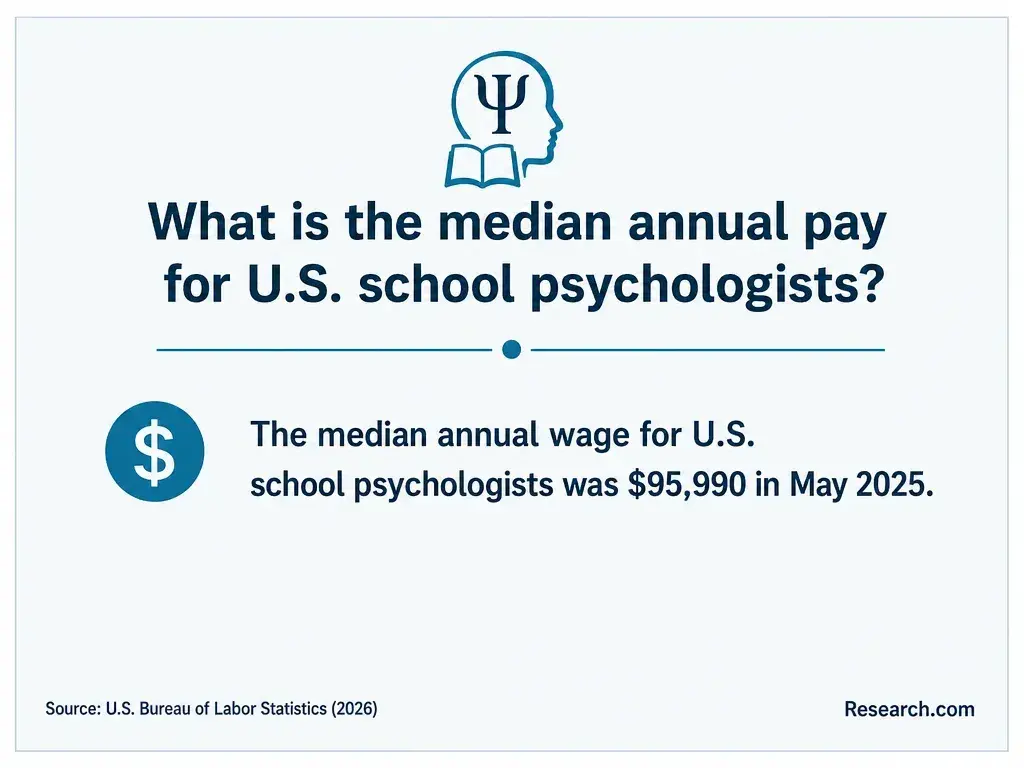
There is no single salary or growth rate for psychology BA graduates: outcomes depend on the occupation, location, experience, and required credential. As one useful boundary, the U.S. Bureau of Labor Statistics reports a $59,190 median annual wage in May 2024 for substance abuse, behavioral disorder, and mental health counselors, with 17% projected employment growth from 2024 to 2034. Those figures describe an occupation, not new BA graduates; counseling jobs commonly require additional education, supervised experience, or licensure.
For a realistic return-on-investment estimate, compare local postings for jobs you could actually pursue with the remaining cost and time of your degree. If your immediate aim is addiction-service support rather than broad psychology study, compare lower-cost addiction counseling bachelor's career preparation with the psychology BA - but verify each program's total cost and any state-specific credential implications yourself. A lower tuition figure does not establish better job eligibility.
Does a psychology bachelor's degree qualify you for counseling licensure?
No. A psychology BA, including one with an addictions concentration, does not by itself qualify you for independent counseling, psychotherapy, diagnosis, or psychological assessment. State rules for addiction-counselor credentials vary and may specify particular coursework, supervised hours, examinations, and limits on practice. Obtain the requirements for the exact credential and state you intend to pursue before committing to a program.
If your goal is licensed mental health counseling, investigate a qualifying graduate pathway and its supervised-practice requirements rather than assuming the BA's concentration completes them. A shorter clinical mental health counseling master's cost guide can help frame the later time-and-cost decision; the relevant state licensing board and graduate program must confirm eligibility. If your goal is nonclinical recovery support, a state-recognized peer-support route or targeted employer training may be more direct than another degree.
Other Things You Should Know About Psychology
Possibly, if you have a private, reliable place to work and the task does not require an uninterrupted exam session. Treat waiting-room time as a bonus, not the foundation of your study schedule.
You can ask about scheduling and leave policies without sharing private details about your child. Discuss any specific accommodation request through the school's designated process.
Usually not automatically. Academic internships require approved learning objectives, supervision, and assessment; personal caregiving is different from a supervised placement.
Ask the registrar and financial aid office how a leave would affect reentry, course sequencing, aid, and loan obligations before withdrawing. Get the applicable policy in writing.
- Rule 1301:11-7-03 | Distance education. https://codes.ohio.gov/ohio-administrative-code/rule-1301:11-7-03
- Types of Financial Aid: Grants, Work-Study, and Loans | studentaid.gov https://studentaid.gov/understand-aid/types
- Cost of Attendance (Budget) | 2025-2026 Federal Student Aid Handbook https://fsapartners.ed.gov/knowledge-center/fsa-handbook/2025-2026/vol3/ch2-cost-attendance-budget
- Evidence-Based Practices Resource Center | samhsa.gov https://www.samhsa.gov/libraries/evidence-based-practices-resource-center
- Substance use disorders and addictions series | apa.org https://www.apa.org/education-career/training/substance-use-disorders-series
- A Guide to Professions in Addiction Studies and Recovery | University of the Cumberlands https://www.ucumberlands.edu/blog/guide-to-professions-in-addiction-studies-and-recovery
- Providing Accommodations in Online Courses | fsu.edu https://odl.fsu.edu/providing-accommodations-online-courses
- What does the internship process entail, and how many are available? | University of Michigan School of Social Work https://ssw.umich.edu/faq/5470-what-does-internship-process-entail-and-how-many-are-available
- Addiction Concentration | Walden University https://www.waldenu.edu/online-bachelors-programs/concentrations/addiction
- Attendance Policy | cayuga-cc.edu https://www.cayuga-cc.edu/academics/policies/attendance-policy/