2027 Online BA in Psychology - General Psychology After Semester-System College Credits: Compare Transfer Credit and Remaining Coursework
Audited and Verified:
Our Editorial and Data Verification Process
Research.com uses government datasets, official education statistics and primary institutional information to support its career and degree guides. Our review process checks factual accuracy, occupational definitions, source dates and the requirements associated with the credentials discussed.
How This Article Was Fact-Checked
Our editorial team verifies salary estimates, employment projections, education requirements and program information against original data providers and official organizations. Salary figures are checked against the relevant occupational definitions and reporting periods. Information about licensure, accreditation and required in-person training is reviewed separately.
Fact-checked and verified on:

Co-Founder and Chief Data Scientist
Previously earned semester credits can shorten an online psychology BA, but only if they satisfy the new school's degree requirements. For transfer and returning students, the consequential number is not simply how many credits a college accepts. It is how many requirements those credits clear, including psychology prerequisites, general education, upper-level coursework, and residency.
This guide shows you how to compare degree audits, estimate the work still ahead, and identify costs or delays before choosing a program.
Key Things You Should Know
- Accepted credits and completed requirements are different. A transferred statistics course, for example, may count as an elective unless the psychology department approves it as a major equivalent.
- For an illustrative 120-credit BA, transferring 60 credits does not automatically mean exactly 60 credits remain. Unmet requirements, course sequencing, and minimum credits earned at the new school also matter.
- Compare written degree audits, not advertised transfer maximums, alongside course availability, per-credit charges, and the school's rules for completing the major online.
How Do Semester Credits Transfer to an Online BA in General Psychology?
Semester-system credits generally do not need a quarter-to-semester conversion. The receiving institution still decides whether each course is acceptable and, separately, where it fits in the BA. A general psychology course might satisfy an introductory requirement; another accepted course might count only toward open electives.
The distinction is especially important for statistics and research methods. A course with a similar title may differ in content, level, lab work, or prerequisites. Ask for a psychology-department equivalency review when the initial evaluation places relevant coursework in electives.
Supply official transcripts and, where needed, syllabi or catalog descriptions from the term you took the class. The registrar or transfer-credit office typically records credit; the department and academic advisor determine how approved equivalencies appear in the degree audit.
When comparing psychology programs that accept transfer credits, request both the number accepted and a requirement-by-requirement audit. A school with a higher transfer ceiling is not necessarily the faster option if fewer of your courses fulfill the major.
How Many Credits Remain After Transferring College Coursework?
Start with the receiving school's graduation requirements, then identify what your approved transfer work satisfies. The table shows why a credit total alone cannot establish your remaining workload.
The categories overlap in a degree audit: a course's value depends on the requirement it fulfills, not just its presence on a transcript.
| Audit category | What transferred work may accomplish | What could still remain |
| Total degree credits | Counts toward the BA's overall credit minimum | The difference between accepted credits and the total minimum |
| General education | Fulfills approved writing, mathematics, science, or other requirements | Specific unmet categories despite a substantial credit total |
| Psychology major | Replaces approved introductory, methods, or elective courses | Required core, upper-level, or capstone courses |
| Institutional residency | Usually does not replace credits the new school requires students to earn there | Courses that must be completed through the awarding institution |
Suppose an illustrative BA requires 120 credits and accepts 60 of yours. The arithmetic suggests 60 credits remain, but an audit could reveal that particular major courses must still be taken. Conversely, accepted electives can fill available space while satisfying none of those courses.
Ask the advisor for a written list of remaining requirements and a term-by-term schedule. If you are considering accelerated psychology study for returning students, check whether the required courses actually run often enough to support the advertised pace.
Is an Online BA in General Psychology Accredited?
Accreditation depends on the institution offering the degree, not on its online format or the words "general psychology." Verify the school's current institutional accreditation and that it applies to the degree-granting institution.
Then confirm that the online BA is an authorized offering of that school. Institutional accreditation can matter for transfer decisions, financial-aid eligibility, and later applications, but it does not determine how your individual courses will be applied.
Do not look for APA accreditation as a seal for a general psychology BA: APA accreditation addresses specified professional psychology training programs, not general undergraduate majors. Nor does institutional accreditation establish eligibility for a counseling or addiction credential.
If that is your eventual goal, compare the BA against the educational and supervised-training rules for your jurisdiction; academic routes into addiction counseling may have different curriculum requirements.
Requirements vary, but a general psychology BA commonly combines introductory psychology, statistics, research methods, coverage of major areas such as development or social behavior, upper-level electives, and broader general education.
Some schools require a capstone or a specified number of advanced courses. The crucial transfer question is which of these requirements your prior classes meet, not whether their titles sound related.
Check the sequence as well as the list. Statistics may precede research methods, which may precede a capstone. A student whose statistics credit transfers only as an elective could face more than one delayed course.
If you hope to pursue research-focused graduate study, preserve room for methods, advanced statistics, and supervised research where available; electives about mental health do not substitute for those skills.
General psychology offers breadth rather than a credential-specific curriculum. If your defined goal is substance-use services, compare its requirements with lower-tuition bachelor's pathways in substance use counseling. Verify any state credential rules independently before choosing on the basis of a program's name.
Admission to the university, entry into the psychology major, and approval of transfer equivalencies may be separate decisions. Schools set their own minimum prior-credit, GPA, transcript, and application rules; some distinguish applicants by how much college work they have completed. An admission offer is not a promise that a particular course will replace a psychology requirement.
Submit official transcripts from every college attended, including schools whose credits appear on another transcript. Keep course descriptions and syllabi for disputed psychology, statistics, and methods classes.
Before committing, ask admissions whether the major has a separate entry requirement, then ask the transfer office and psychology advisor for the most complete evaluation available and the procedure for appealing an equivalency.
If a later graduate program is part of your plan, retain those records. A specialized program may review the actual content of prior courses even after the BA accepts them. For example, someone exploring faster forensic psychology master's study for working professionals should check that program's own prerequisites rather than infer eligibility from undergraduate transfer approval.
Completion time depends on applicable remaining credits, how many you can take per term, prerequisite order, and when required classes run. A flexible online course may still have fixed deadlines, live meetings, group work, or a capstone offered only in certain terms. Ask for a schedule based on your audit, not a generic completion estimate based on the number of credits transferred.
Compare a manageable schedule with a faster one before enrolling: taking fewer courses may protect work and family time but extend tuition and fee exposure across terms. If your long-term aim is licensed counseling, the BA timeline is only one stage.
Faster-paced online mental health counseling master's study has separate coursework and supervised-training demands; it should not be counted as part of a psychology BA completion estimate.
Calculate cost from the courses you will actually need at each school, not from its advertised price per credit alone. Include required fees, materials, any technology or residency charges, and the possibility that a needed course adds a term.
An inexpensive program that applies your statistics and methods credits only as electives may cost more to finish than a higher-priced program that accepts them toward the major.
Request an itemized estimate tied to your degree audit and expected enrollment pace. Ask the financial-aid office how that pace affects your eligibility and whether employer assistance or previously earned credits affect your plan.
Do not assume every accepted credit reduces tuition: a course that fills an unused elective slot might leave the same required coursework ahead. Aid rules can differ across fields, so online substance use counseling bachelor's aid resources are most relevant if you are comparing that distinct degree option.
A general psychology BA can support applications for nonclinical roles such as human-services support, community-program coordination, research support, recruiting, or administrative work involving people and data.
Actual eligibility depends on the employer, your experience, and the position's duties. A research assistant may need evidence of data handling and methods; a service coordinator may need documentation, referral, and community-facing experience.
Use your remaining electives or approved experiential opportunities to address a specific gap rather than assuming the degree alone will open a job category. If the intended role is psychotherapy or licensed counseling, investigate the qualifying graduate pathway instead. Clinical counseling degree formats and completion estimates concern a different credential route, with requirements beyond a general psychology BA.
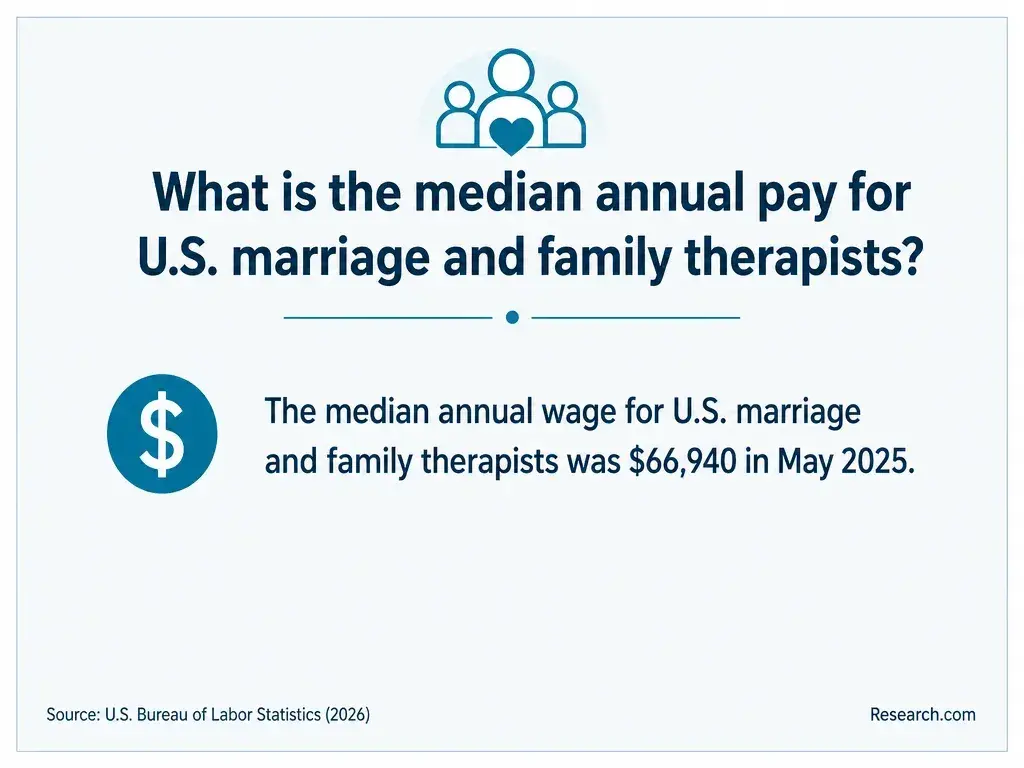
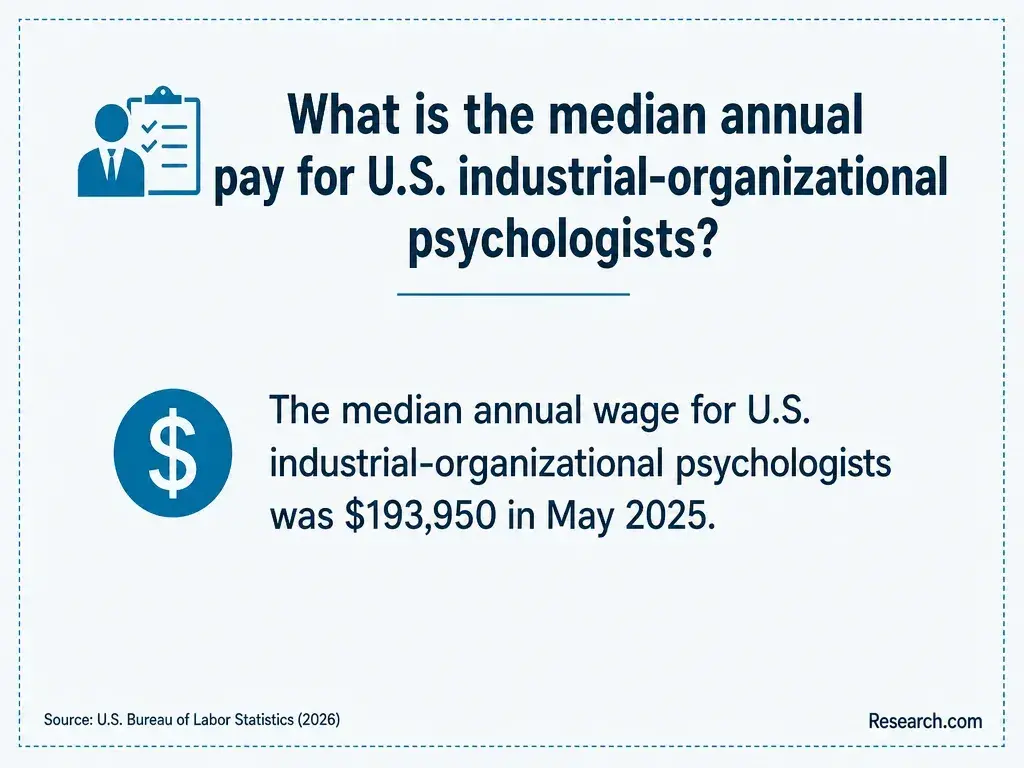
There is no single dependable salary for "psychology BA graduates." Earnings vary by occupation, location, experience, and whether a position requires qualifications beyond the BA. An occupational median reported by the US Bureau of Labor Statistics describes people working in that occupation, not the expected starting pay of graduates from one online program.
For a useful return-on-investment comparison, select jobs you could plausibly seek with your current experience, check their local postings and occupation-specific wage data, then compare that opportunity with the verified cost of finishing each BA.
Do not treat a future graduate degree as an automatic earnings increase. If further nonclinical study serves a defined goal, investigate finding a lower-cost psychology master's degree only after checking whether employers or target programs value it.
Does a Psychology BA Qualify You for Licensure or Certification?
No general psychology BA, online or campus-based, independently authorizes someone to diagnose conditions, provide psychotherapy, conduct independent clinical assessments, or practice as a licensed psychologist.
Certain support jobs or certifications may accept bachelor's-level education, but their permitted duties and additional training, supervision, or examination rules depend on the credential and jurisdiction.
Identify the exact job title and state before choosing a transfer destination for credential reasons. Ask the relevant licensing board or certifying body which degree, coursework, and supervised experience count; then compare those rules with the program's written requirements.
If licensed counseling is the goal, planning the time and cost of a counseling master's is a separate decision from completing the BA. Choose the BA that preserves appropriate next-step options without assuming it fulfills them.
Other Things You Should Know About Psychology Programs
Possibly. Get written preapproval for each course first; schools may limit credits taken elsewhere after enrollment or require particular final courses to be completed in residence.
Not necessarily. Many schools record transfer credit without incorporating prior grades into the institutional GPA, while admission, honors, or graduate applications may still consider the original transcripts. Check the receiving school's policy.
Locate its official transcript custodian through the relevant state higher-education agency or the school's records instructions. The receiving institution will specify what documentation it accepts.
It depends on the receiving school's minimum-grade and pass/fail rules. Request an equivalency decision for each course, especially statistics and research methods, before relying on it to satisfy the major.
- Federal Pell Grants | studentaid.gov https://studentaid.gov/understand-aid/types/grants/pell
- Pell Grant Enrollment Intensity and Cost of Attendance | ed.gov https://fsapartners.ed.gov/knowledge-center/fsa-handbook/2025-2026/vol7/ch3-pell-grant-enrollment-intensity-and-cost-attendance
- Academic Calendar Conversion | Transfer Credit Ohio https://transfercredit.ohio.gov/wps/portal/gov/txfcr/educational-partners/educational-partner-resources/academic-calendar-conversion/overview
- .16 Graduation Requirements. | Library of Maryland Regulations https://regs.maryland.gov/us/md/exec/comar/13B.02.02.16
- Converting Credits - Tusculum University https://catalog.tusculum.edu/content.php
- Bachelor's Degree Requirements | University of Oregon Academic Catalog https://catalog.uoregon.edu/admissiontograduation/bachelorrequirements/
- Psychology (BS) - UT Dallas 2026 Undergraduate Catalog https://catalog.utdallas.edu/2026/undergraduate/programs/bbs/psychology
- Bachelor of Arts (BA) in Psychology Degree Program | California Southern University https://www.calsouthern.edu/online-degree-programs/behavioral-sciences/bachelors-psychology-ba/
- Transfer of Credit | Department of Psychology https://as.tufts.edu/psychology/academics/courses/transfer-credit
- Special regulations for courses in specific subject areas | UCOP https://www.ucop.edu/transfer-articulation/transfer-course-agreements/tca-policy/regulations-by-subject-area.html