
2027 Online BA in Psychology - General Psychology for Work in Community Engagement Departments: Compare Degree Fit and Hiring Requirements
Audited and Verified:
Our Editorial and Data Verification Process
Research.com uses government datasets, official education statistics and primary institutional information to support its career and degree guides. Our review process checks factual accuracy, occupational definitions, source dates and the requirements associated with the credentials discussed.
How This Article Was Fact-Checked
Our editorial team verifies salary estimates, employment projections, education requirements and program information against original data providers and official organizations. Salary figures are checked against the relevant occupational definitions and reporting periods. Information about licensure, accreditation and required in-person training is reviewed separately.
Fact-checked and verified on:

Co-Founder and Chief Data Scientist
Community engagement departments hire people to build partnerships, reach residents, coordinate services, and learn whether programs meet community needs. An online BA in general psychology can prepare you for parts of that work, but employers may value outreach experience, local knowledge, and communication skills just as much as the major.
This guide is for prospective students and community-serving professionals deciding whether the degree is worth pursuing. It compares realistic roles, hiring evidence, online learning trade-offs, and alternatives so you can choose a path that matches the work you want to do.
Key Things You Should Know
- A general psychology BA can fit nonclinical outreach, program support, and evaluation work; it does not independently qualify you to provide therapy or hold a licensed psychology role.
- Hiring decisions often turn on evidence beyond the degree: community partnerships, accessible communication, reliable documentation, and experience with the population served.
- Compare the degree's remaining credits and full cost with a relevant placement, employer training, or a different major before enrolling; an online format does not guarantee flexible fieldwork.
What is an online bachelor's degree in general psychology for community engagement work?
An online BA in general psychology is a broad undergraduate study of behavior, development, social interaction, and psychological research. It is not usually a credential specifically designed for community engagement departments. Its value depends on whether students can apply that foundation to outreach, partnership-building, and program improvement.
In practice, community engagement may mean helping a public agency hear residents' priorities, supporting a nonprofit's referral network, or documenting participation in a health outreach initiative. Psychology can help a graduate interpret survey findings, communicate without stigmatizing people, and recognize why a message that works for one group may not work for another. It does not replace knowledge of local communities or experience earning their trust.
For someone already working in a community organization, the degree may strengthen research and advancement opportunities. If you already have a bachelor's degree, compare targeted coursework or employer-supported development before starting another undergraduate program. A finding a lower-cost psychology master's degree guide can help frame a graduate option, but a general psychology master's is not automatically necessary for engagement work or qualifying clinical training.
What jobs can you get in community engagement with a psychology bachelor's degree?
Relevant titles include outreach coordinator, community engagement assistant, volunteer coordinator, program assistant, and evaluation assistant. A psychology BA may satisfy a bachelor's-degree preference, but the title alone does not establish eligibility: duties and requirements vary by employer. The comparison below connects typical tasks with evidence an applicant can show.
| Role direction | Typical nonclinical work | Evidence that strengthens an application |
| Outreach or engagement coordinator | Organize meetings, maintain partner relationships, and adapt communications for residents | Facilitated events, accessible materials, language skills, and documented follow-up |
| Program or service coordinator | Schedule activities, explain available services, and connect people with appropriate staff | Referral knowledge, accurate records, and experience respecting confidentiality |
| Evaluation or research assistant | Help administer approved surveys, clean data, and summarize participation or feedback | Statistics, research methods, spreadsheet skills, and a privacy-conscious work sample |
Some jobs combine these functions; others emphasize fundraising, communications, or public administration more than psychology. A graduate interested in recovery outreach can also explore exploring work in addiction recovery services, while checking each position's training and credential rules. Recovery support, service coordination, and substance use counseling are not interchangeable jobs.
What hiring requirements do community engagement departments expect from psychology graduates?
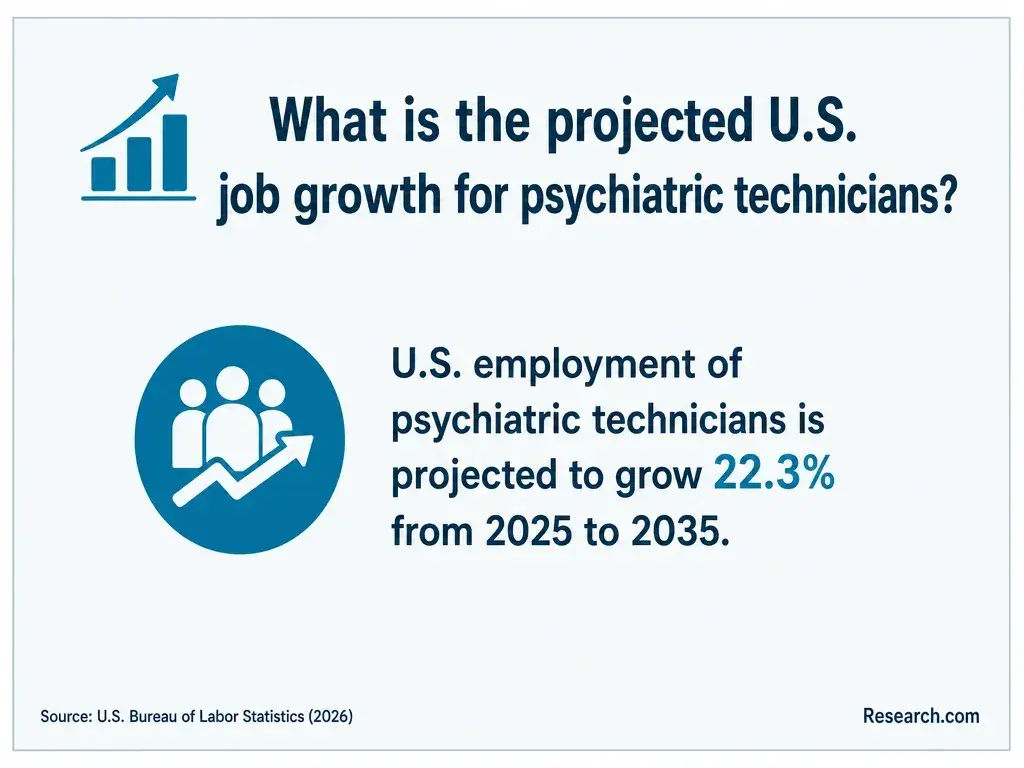
Start with the vacancy's duties, not its title. A department may accept several majors yet require experience with a particular community, public meetings, grant reporting, bilingual communication, or evening events. Government and school-based jobs may also impose background checks or other position-specific conditions.
To compare a degree with actual hiring needs, collect several local postings and separate their requirements into mandatory credentials, demonstrated work skills, and preferences. Then match each requirement to a course, job task, supervised project, or work sample. A psychology course can support your understanding of behavior; it is weaker evidence of partnership-building than a documented project completed with a community organization.
Pay particular attention to scope. An engagement employee might share approved resources and make referrals, but a posting that requires substance use counseling credentials calls for a different pathway. Compare bachelor's-level substance use counseling tuition and career value only if that regulated or credentialed work is your actual goal, and confirm the state's rules before treating any degree as qualifying.
An online BA can be awarded by an institution with recognized institutional accreditation, but you must verify the particular school and degree rather than assume that every online program is accredited. Check the institution's current accreditation status, confirm that the online BA is an authorized offering, and ask whether its transcript identifies the same degree as the campus version.
Employers may accept an accredited online degree when a posting calls for a bachelor's degree, but they can still assess the major, institution, experience, and job-specific qualifications. APA accreditation is not the test for a general psychology BA; APA accreditation applies to specified professional psychology training programs, not every psychology degree.
If your intended job is licensed counseling rather than community engagement, research the applicable professional program recognition and state licensing requirements separately. An accredited mental health counseling program cost guide concerns that distinct educational decision, not accreditation of an undergraduate psychology major.
Online study can make coursework accessible without a daily commute. Campus study may make in-person faculty contact and nearby student organizations easier. Neither format automatically provides community partnerships, research supervision, or an approved placement where you live.
For engagement work, compare the practical experience you can complete. Ask each program whether applied projects can involve your current employer, who approves outside sites, whether internships are optional, and how students get feedback on outreach or evaluation work. A current job should not be assumed to count for academic credit without program approval.
Check the weekly schedule, too: asynchronous lectures may coexist with live group meetings, fixed deadlines, or daytime site hours. Even online forensic psychology master's options with compressed schedules illustrate why "online" and "fast" are separate claims. Neither an accelerated graduate format nor forensic subject matter is necessary for most community engagement roles.
Prioritize courses that help you understand people and evaluate whether outreach is working. Social psychology can inform group dynamics and communication; developmental and cultural psychology can improve the fit of materials for different audiences. Statistics and research methods help you assess survey limitations, participation patterns, and claims about program results.
Useful electives, where available, may include community psychology, public health, program evaluation, qualitative methods, or nonprofit management. Course titles vary, so inspect assignments: designing an accessible questionnaire or writing a careful evidence brief may be more relevant than an elective's appealing name. Student projects involving community members require appropriate site permission, privacy safeguards, and any institutional review required for the work.
Choose more specialized study only when a target job calls for it. For example, a recovery-services position may benefit from substance use coursework and supervised support experience. If your longer-term aim is graduate study, compare the methods and prerequisite requirements of the intended program rather than assuming any psychology elective will count; a finding a lower-cost psychology master's degree comparison is relevant only after you establish that a master's serves your career goal.
Requirements depend on whether you apply as a first-time student or a transfer student. Schools commonly request prior academic records and may have separate rules for admission to the institution and declaration of the psychology major. Ask admissions for the requirements that apply to your entry term, including any prerequisites or minimum academic standing.
If you have prior college credit, request a degree audit showing where each accepted course applies. Credit that transfers as an elective may not satisfy statistics, research methods, general education, or residency requirements. The receiving institution has the final authority to evaluate equivalencies and approve substitutions. Use psychology transfer eligibility and degree planning to prepare questions, then obtain the school's evaluation before relying on a projected completion date.
Time to completion depends on accepted credits, the courses still required for graduation, enrollment pace, and when required classes are offered. A student with substantial transferable coursework may finish sooner than a first-time student, but a capstone, course sequence, or residency rule can limit how much time prior credit saves.
Compare schools using a written estimate of remaining credits multiplied by your applicable tuition rate, then add mandatory fees, materials, technology, and any travel or unpaid placement costs. Request a term-by-term plan; an advertised per-credit price is not the full cost of a degree. Aid eligibility and employer tuition assistance can change the personal cost, but both require verification.
Lower-tuition undergraduate psychology options offer a starting point for comparing prices. For this career goal, weigh the estimate against a less expensive route - such as using an existing degree plus supervised outreach work - rather than assuming another bachelor's will improve hiring prospects enough to repay its cost.
There is no single salary or employment projection for "psychology graduates in community engagement." Pay depends on the job's duties, employer, location, funding, and required experience. The US Bureau of Labor Statistics reports occupation-wide wages and projections for categories such as social and human service assistants and social and community service managers; neither category is a salary forecast for a new psychology BA graduate. Management figures are particularly unsuitable for estimating entry-level outreach pay.
Use the closest occupational category to understand the broader market, then compare posted pay ranges for roles you could qualify for now. Public agencies may use fixed pay grades, while nonprofit hiring can depend on grant funding. If you are considering planning a shorter undergraduate forensic psychology degree to improve earnings, check whether your target engagement employers actually request that specialization; a faster or more specialized degree does not establish a higher wage.
Do community engagement careers require psychology licensure or certification?
Most nonclinical engagement tasks - organizing outreach, coordinating partners, communicating approved resources, and supporting program evaluation - do not require a psychology license. Employers may nevertheless require training or credentials tied to a particular position, such as a state-recognized peer-support credential, language proficiency, or training for work with vulnerable populations. Verify requirements in the posting and with the responsible state or employer.
A general psychology BA does not authorize psychotherapy, diagnosis, independent psychological assessment, or use of a protected professional title. If you want to move from outreach into licensed mental health counseling, you will need to investigate a qualifying graduate program and the jurisdiction's supervised-practice and examination rules. Shorter accredited clinical mental health counseling study plans are a separate comparison; do not mistake a short advertised timeline for completion of every licensure requirement.
Other Things You Should Know About Psychology
Often, if your employer permits it. Describe your responsibilities and methods, but obtain permission before sharing materials and remove confidential or identifiable information. Do not present an internal report as a public work sample without approval.
It can be valuable when a role serves residents who use those languages. Employers may assess professional-level speaking or writing separately, so describe your actual proficiency rather than assuming coursework demonstrates it.
Some planning, communication, and data tasks may be remote. Public meetings, site visits, and relationship-building can require local or evening work, regardless of how you earned the degree.
Volunteering can help you test the work and build relevant examples, but it is not a universal hiring requirement. Choose a defined responsibility - such as event coordination or approved outreach support - so you can explain what you contributed.
- Community Hiring and Engagement Coordinator - NYC Jobs https://cityjobs.nyc.gov/job/community-hiring-and-engagement-coordinator-in-manhattan-jid-30527
- Impact of language preference and health literacy on... - PMC https://pmc.ncbi.nlm.nih.gov/articles/PMC9205365/
- 10 Careers You Can Pursue With a Bachelor's in Social Work | UMass Global https://www.umassglobal.edu/blog-news/careers-for-social-work-majors
- What Do Community Engagement Specialists Do | Franklin University https://www.franklin.edu/career-guide/public-relations-managers/what-do-community-engagement-specialists-do
- Is an Online Degree Respected by Employers? (2025 Research) | Newlane University https://newlane.edu/is-online-degree-respected-by-employers/
- BSW vs BA Psychology: Jobs, Salary & More - AU https://online.aurora.edu/program-resources/social-work-vs-psychology-degree/
- Can a Psychology Degree Lead to Social Work? | NMU https://online.nmu.edu/psychology-and-social-work/
- Psychology careers guide | apa.org https://www.apa.org/education-career/guide/careers
- General Community Outreach & Services - Field Study https://fieldstudy.soceco.uci.edu/pages/traditional-field-study-catalog-general-community-outreach-services
- Online Psychology B.A. or B.S. Degree Completion Program | gsu.edu https://online.gsu.edu/program/psychology-ba-or-bs-completion-program/


