2027 Online MS in Psychology - Forensic Psychology for Psychology of Cybercrime Victimization: Which Courses Should You Look For?
Audited and Verified:
Our Editorial and Data Verification Process
Research.com uses government datasets, official education statistics and primary institutional information to support its career and degree guides. Our review process checks factual accuracy, occupational definitions, source dates and the requirements associated with the credentials discussed.
How This Article Was Fact-Checked
Our editorial team verifies salary estimates, employment projections, education requirements and program information against original data providers and official organizations. Salary figures are checked against the relevant occupational definitions and reporting periods. Information about licensure, accreditation and required in-person training is reviewed separately.
Fact-checked and verified on:

Co-Founder and Chief Data Scientist
A forensic psychology master's can sound like a direct route into helping people harmed by online crime, but the course titles alone may not tell you what you will learn to do. Cyberstalking, scams, sextortion, and other technology-facilitated harms call for knowledge of psychological responses, victim services, research methods, and digital contexts—not necessarily clinical or investigative training.
This guide is for prospective online MS students comparing curricula. It identifies the courses and applied experiences worth prioritizing, then shows how to check whether a program fits your intended role.
Key Things You Should Know
- Prioritize three curricular areas: cybercrime and victimization, trauma-informed victim services, and research methods capable of evaluating online harm.
- Check actual syllabi and course schedules: an elective listed in a catalog may not be available during your enrollment, and online classes may still require live meetings or approved fieldwork.
- A forensic psychology MS does not itself authorize therapy, forensic evaluation, criminal investigation, or use of a licensed psychologist's title.
What Is an Online Forensic Psychology Program for Cybercrime Victimization?
It is typically a forensic psychology master's whose coursework or student projects can be directed toward people affected by technology-facilitated crime. Cybercrime victimization can include financial fraud, cyberstalking, account compromise, image-based abuse, and online threats. The psychological questions concern harm, coping, disclosure, reporting, and access to support; they are distinct from identifying a suspect or recovering digital evidence.
Do not assume "cybercrime victimization" is an official concentration. A program might offer a relevant elective, permit a tailored capstone, or have no sustained coverage at all. Compare the degree's published requisites with its forensic psychology degree formats and academic requirements, then ask for recent syllabi and confirmation that the courses you need will run during your enrollment.
Which Courses Should You Look For in Cybercrime Victimization?
The strongest curriculum combines victim-focused psychology with methods and a working understanding of digital environments. The course name matters less than its assignments: a broad forensic survey may mention scams briefly, while a victimology or trauma course might support substantial work on online abuse.
Use these course areas as a priority list when reading syllabi. Not every program will offer them under these exact names.
- Victimology and technology-facilitated harm: Examine coercion, repeated contact, financial loss, image-based abuse, barriers to reporting, and how online and offline harms can overlap.
- Trauma, social psychology, and culturally responsive support: Study stress responses, shame, social judgment, and help-seeking without treating a survivor's behavior as a credibility test or implying every victim has a disorder.
- Research design, statistics, and measurement: Learn to define victimization and outcomes, assess survey limitations, and distinguish associations from causal effects. Underreporting and samples recruited through online communities can distort conclusions.
- Research ethics and privacy: Address consent, participant safety, identifiable digital traces, data storage, and the permissions needed before using agency records or recruiting survivors.
- Justice systems and victim services: Understand referral pathways, documentation, confidentiality, and the different responsibilities of advocates, investigators, attorneys, and clinicians.
For a student without prior psychology coursework, foundations in psychological science and research methods may need to come first; psychology degree options for distance learners can help clarify what broad undergraduate preparation covers.
If you already work in cybersecurity, prioritize victimology and ethical research over another introductory technical survey. If you work in victim services, prioritize methods and digital-context coursework. Ask whether a capstone can evaluate a referral process or synthesize published evidence without requiring access to confidential survivor records.
How Does an Online Master's in Forensic Psychology Prepare You for Careers?
The degree can strengthen research interpretation, written analysis, and understanding of victim experiences in legal and service settings. Preparation becomes more credible when a student can show a supervised, nonclinical deliverable—such as a literature review, anonymized training resource, or approved program evaluation plan—rather than relying on a course title alone.
Match assignments to your target function. An aspiring victim-services coordinator might assess how an agency makes referrals after online abuse; a research-oriented student might compare how studies measure cyberstalking. Neither assignment grants access to case files or qualifies the student to provide therapy. If psychotherapy is the goal, compare a qualifying counseling pathway and its supervised practice requirements instead; short-duration counseling master's return on investment is a different decision from choosing nonclinical forensic coursework.
Yes. Confirm the institution's recognized accreditation and that it applies to the school awarding the online degree. Then check the program's status separately: institutional accreditation establishes an important baseline, but it does not prove that cybercrime electives are offered or that the MS meets a licensing board's educational rules.
Do not require APA accreditation of a nonclinical forensic psychology MS as though it were a professional psychology doctorate. If you are comparing the degree with a counseling program, relevant professional accreditation and state-specific educational criteria become separate questions; clinical mental health counseling course pace and accreditation illustrate why a similar online format does not imply the same credential pathway. Request written clarification from the program and, for a regulated career goal, the applicable state board.
Requirements vary. Programs commonly review prior degree work, transcripts, an application statement, and evidence of readiness for graduate study; some specify psychology, statistics, or research-methods preparation, while others admit applicants from criminal justice, computing, social services, or other fields. Separate a required prerequisite from coursework the school merely recommends.
If your bachelor's background is outside psychology, ask admissions to review your transcript against the current prerequisite list before paying to repeat a course. Explain how your prior work connects to a feasible victimization question—for example, service referrals or survey analysis—without claiming investigative or clinical experience you do not have. Applicants coming from an online substance use counseling bachelor's should also keep education funding stages distinct: online substance use counseling bachelor's aid resources do not establish eligibility for the same aid in graduate study.
Completion time depends on required credits, course rotation, enrollment pace, and whether a thesis, capstone, or approved placement is required. An accelerated calendar is useful only if its cybercrime-relevant electives are available when you need them. Compare the advertised timeline with the sequence for methods, electives, and the final project; accelerated forensic psychology master's costs and outcomes provide a useful starting point for examining that trade-off.
Before enrolling, request a term-by-term plan for your intended pace. If you work full time or have caregiving duties, ask about live class meetings, group-project deadlines, placement hours, breaks, and the consequences of skipping a term. "Online" does not mean every academic or fieldwork obligation is asynchronous.
There is no reliable single price for this specialization: schools set different credit requirements, tuition rates, and fees. Compare total required credits multiplied by the applicable tuition rate, then add mandatory fees and any technology, travel, placement, or continuation costs. If an employer offers tuition assistance, confirm which courses and terms qualify before treating it as savings.
A less expensive general psychology MS may be the better purchase if it offers relevant methods training and an approved victimization capstone. Conversely, a forensic label is worth paying more for only if its accessible courses and supervision materially improve your preparation. Use affordable online psychology master's programs to identify comparison candidates, then obtain each school's current written cost estimate and course schedule.
Not by itself. A typical nonclinical forensic psychology MS does not qualify its holder for independent psychological assessment, diagnosis, psychotherapy, or the protected title of licensed psychologist. State requirements for psychologists generally involve an eligible doctoral education and additional supervised and examination requirements; other regulated professions have their own qualifying degrees and rules.
If you want to treat survivors, first identify the license and state where you intend to practice. A qualifying counseling or social-work program may be more direct than a nonclinical forensic MS. Even comparing fast-track mental health counseling master's formats requires checking state eligibility, supervised training, and any in-person obligations—not just speed.
Possible nonclinical targets include victim advocate, victim-services coordinator, community-program specialist, research assistant, and program-evaluation support staff. Their duties may involve explaining service options, coordinating referrals, preparing accessible educational materials, or analyzing approved data. Hiring depends on the employer's qualifications and your experience; some roles do not require a master's, while investigation and clinical roles have separate entry rules.
Search job postings for the tasks you want to perform, then look for gaps your coursework and supervised work can address. For advocacy, that may mean referral knowledge and careful documentation; for research support, it may mean survey design and reproducible analysis. If speed is important, compare graduate psychology degrees with accelerated schedules only after checking that they allow the project or experience your target job values. An existing position in victim services or cybersecurity, paired with targeted training, may be more useful than another degree.
How Much Do Forensic Psychology and Victim Advocacy Jobs Pay?
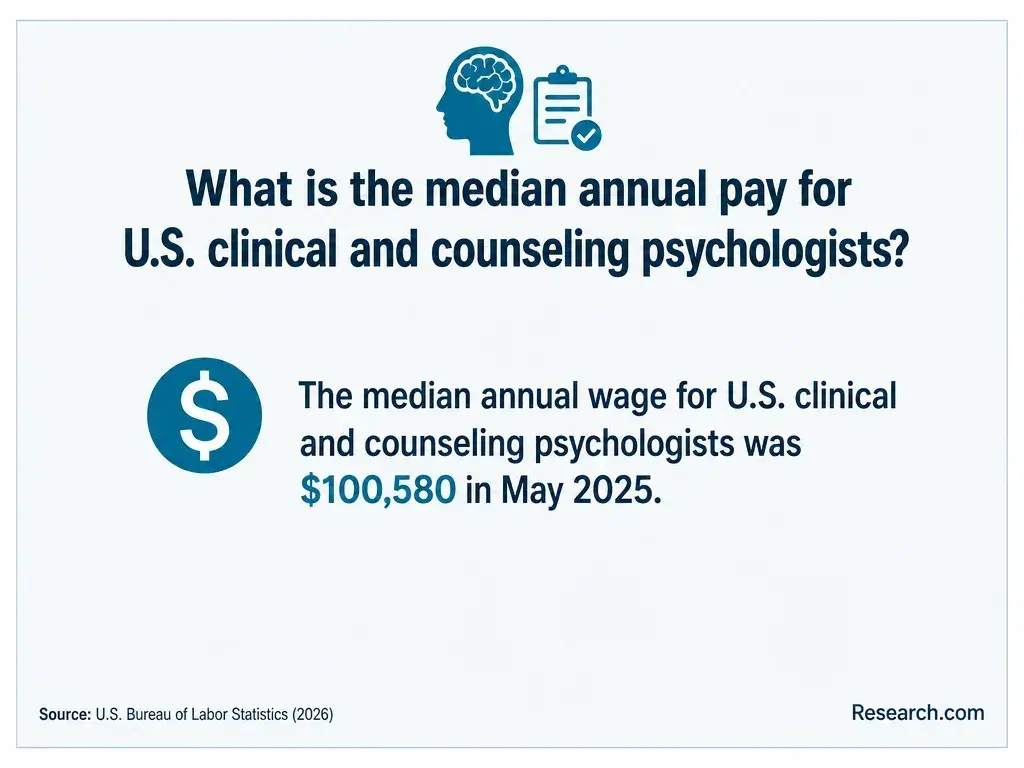
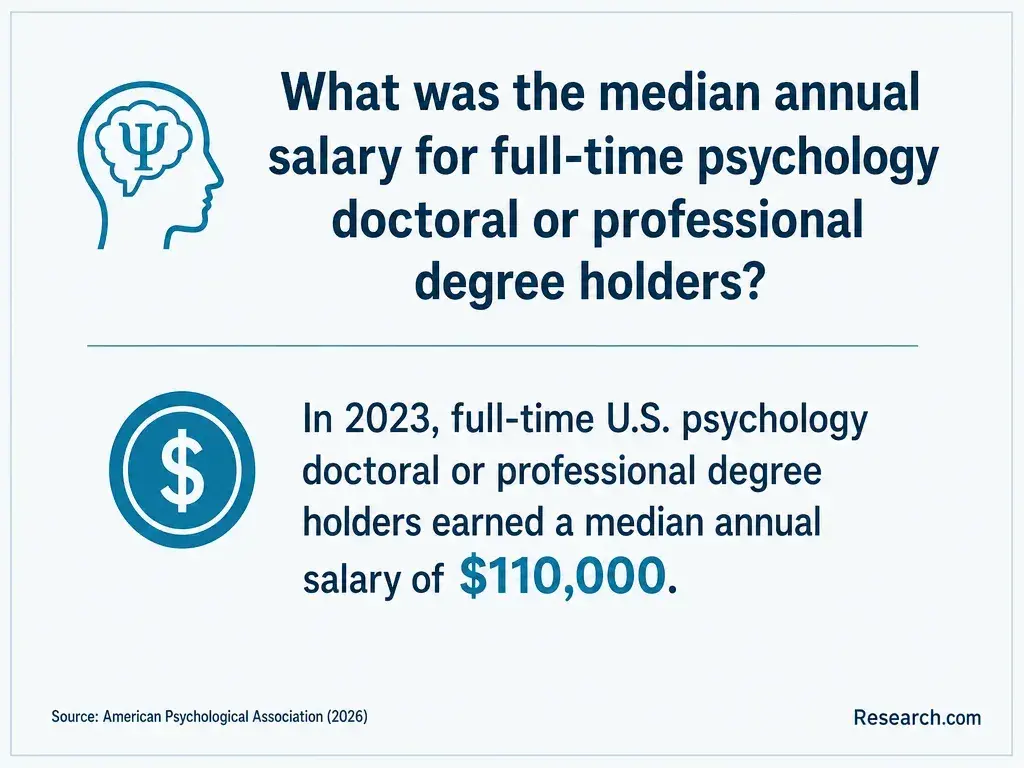
Do not use a psychologist's occupational wage as the expected pay for a forensic psychology MS graduate. The U.S. Bureau of Labor Statistics reports psychologist pay for an occupation with distinct qualification requirements; it does not publish a salary for "cybercrime victimization MS graduates." Victim advocacy pay also varies by employer, location, funding, duties, and whether the position is classified under a broader social-service occupation.
For a realistic comparison, collect posted pay ranges for jobs you could qualify for now and after the proposed degree. Weigh any likely change against the full program cost and time away from paid work. If your target is licensed counseling rather than advocacy, comparing tuition assistance for mental health counseling study belongs in that separate financial calculation; it is not evidence of forensic MS earnings.
Other Things You Should Know About Psychology
Usually not for victim-focused coursework. Basic spreadsheet or statistics skills may matter more for research, while coding becomes useful if a specific project analyzes large digital datasets.
Public visibility does not settle consent, privacy, platform rules, or institutional review questions. Obtain your instructor's approval before collecting posts, especially when people describe abuse or can be identified.
Not necessarily. Psychological study of harm and reporting differs from preserving devices, tracing accounts, or handling evidence. Check the syllabus if technical investigation is your goal.
Describe the offender's tactics, the circumstances that made contact possible, and barriers to seeking help. Avoid presenting a victim's choices or emotional response as proof of fault or credibility.
- ethical standards - Office for Victims of Crime (OVC) https://ovc.ojp.gov/sites/ovc/files/model-standards/6/ethical_standards_4.html
- License Requirements for Psychology - Office of the Professions https://www.op.nysed.gov/professions/psychology/license-requirements
- Trauma-Informed Approaches and Programs | samhsa.gov https://www.samhsa.gov/mental-health/trauma-violence/trauma-informed-approaches-programs
- Technology-Facilitated Abuse in Intimate Relationships - PMC https://pmc.ncbi.nlm.nih.gov/articles/PMC10486147/
- Behavioral analysis of cybercrime: Paving the way for effective policing strategies - ScienceDirect https://www.sciencedirect.com/science/article/pii/S2949791423000349