2027 Online BA in Psychology - Mental Health: How to Compare a Formal Concentration and a Custom Elective Plan
Audited and Verified:
Our Editorial and Data Verification Process
Research.com uses government datasets, official education statistics and primary institutional information to support its career and degree guides. Our review process checks factual accuracy, occupational definitions, source dates and the requirements associated with the credentials discussed.
How This Article Was Fact-Checked
Our editorial team verifies salary estimates, employment projections, education requirements and program information against original data providers and official organizations. Salary figures are checked against the relevant occupational definitions and reporting periods. Information about licensure, accreditation and required in-person training is reviewed separately.
Fact-checked and verified on:

Co-Founder and Chief Data Scientist
An online BA in psychology may offer a named mental health concentration—or enough elective choices to build your own focus. The difference matters if you need particular graduate-school prerequisites, want experience in community services, or are trying to finish without extra courses.
This guide compares what each route actually provides, what neither qualifies you to do, and which program details to check before enrolling. You will leave with a way to choose based on your intended work rather than the appeal of a concentration label.
Key Things You Should Know
- Choose a formal concentration when its required courses and applied opportunities fit your goal and do not displace essential methods courses or graduate-school prerequisites.
- Choose custom electives when you need flexibility across mental health, statistics, development, and other subjects—but confirm that the courses will be offered and count toward your degree.
- Neither route licenses you to diagnose or provide psychotherapy; compare remaining credits, total cost, supervised opportunities, and the requirements of your intended next step.
What Is an Online BA in Psychology With a Mental Health Focus?
It is a psychology bachelor's degree whose coursework emphasizes topics such as psychological disorders, substance use, development, prevention, and behavioral health services. The focus may be an official concentration with specified requirements, or an informal elective plan assembled within a general psychology major. Only the institution can say whether a concentration appears on a transcript or other official record.
In either case, students still complete the degree's general education and psychology core. Studying mental health is not the same as training to deliver treatment. When reviewing online psychology education pathways, compare the actual course catalog and degree requirements rather than assuming similarly named programs teach the same skills.
How Do Formal Mental Health Concentrations Compare With Custom Electives?
The better choice depends on the work or further study you want to pursue. A concentration supplies a defined sequence; a custom plan gives you control, provided the electives exist, fit your schedule, and satisfy graduation rules.
This comparison highlights the differences most likely to change your decision. Confirm each feature in the catalog for your entry term.
| Decision factor | Formal concentration | Custom elective plan |
| Curriculum | Required set of courses; depth depends on the program | Student-selected courses, subject to prerequisites and degree limits |
| Official recognition | May be recorded formally; verify how | Usually reflected through individual course titles, not a named credential |
| Flexibility | Less room to replace required courses | More room to combine mental health with methods or another interest |
| Scheduling risk | A required course can delay completion if offered infrequently | A preferred elective may be unavailable or fill quickly |
| Best fit | A defined sequence closely matches the student's goal | The student needs specific prerequisites or an interdisciplinary mix |
A concentration is valuable when its requirements build on one another and leave room for statistics, research methods, and relevant experience. If it mainly repackages electives you could otherwise choose, its name alone may not justify additional time or cost. For students specifically interested in substance use, addiction psychology degree options for undergraduate students offer a further comparison—but addiction coursework also does not confer a counseling credential.
Can a Psychology Bachelor's Degree Lead to Mental Health Careers?
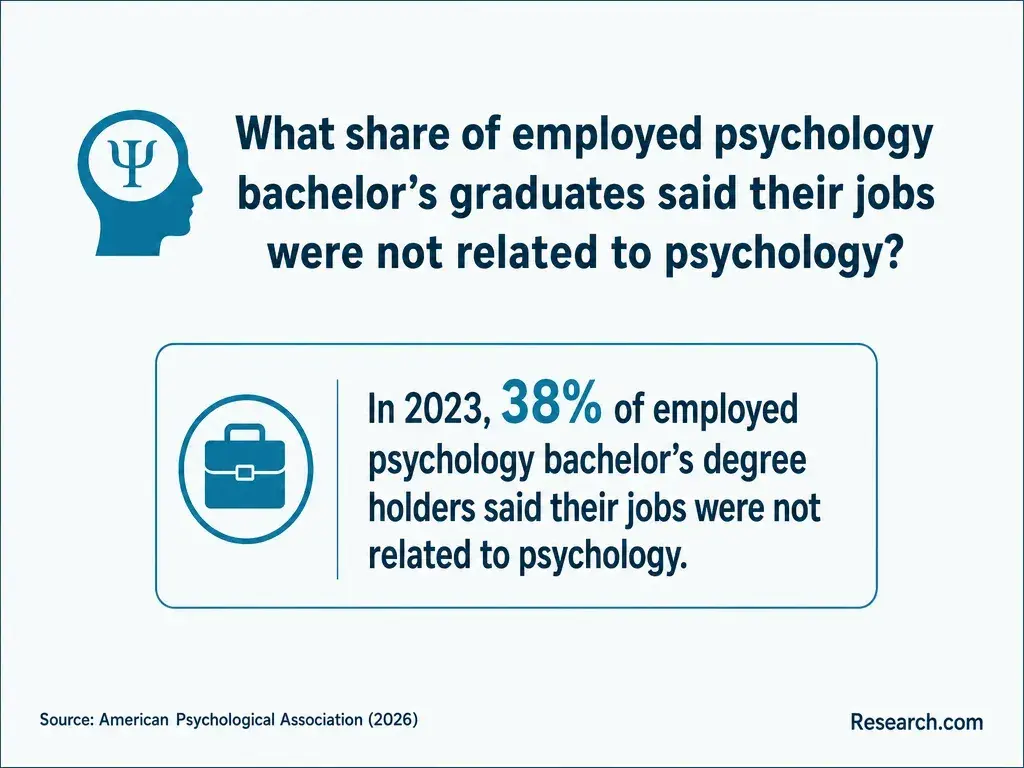
Yes, a BA can support applications for nonclinical work, particularly when paired with relevant experience. Depending on the employer and state, possibilities include program support, intake administration, referrals, community outreach, research assistance, and some case-coordination or recovery support roles. Duties may involve documentation and connecting people with services, not independently assessing conditions or providing therapy.
Job titles alone are unreliable guides: an employer may require a separate credential, experience, background check, or specific degree. Before choosing courses, read local postings for your target role and note the tasks and qualifications they repeat. If your interest is in roles in community recovery organizations, distinguish peer or service-support work from regulated substance-use counseling. A supervised nonclinical placement can help demonstrate readiness, but it is not a clinical practicum.
Start with the psychology core: research methods and statistics help you evaluate evidence; developmental, social, biological, and cognitive psychology provide context for behavior across settings. A mental-health-focused study can then add psychopathology, health psychology, substance use, trauma, or community mental health where offered. Course titles vary, and a class about assessment or counseling does not authorize students to conduct either professionally.
Build the plan backward from your next step. A future research applicant may benefit more from advanced methods and a faculty-supervised project than from another survey elective. Someone seeking community-service work may prioritize cultural responsiveness, ethics, accessibility, and an approved support-services placement. If the actual objective is licensed substance-use treatment, compare the relevant state requirements and degrees in addiction counseling before assuming that psychology electives meet them.
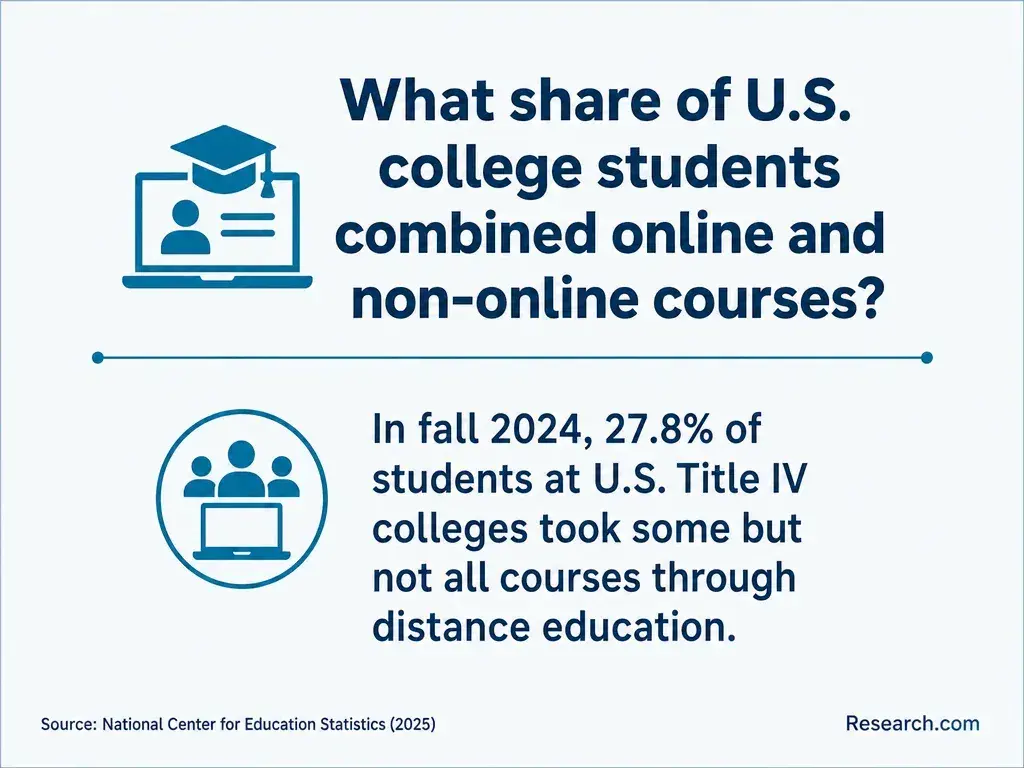
Online delivery can remove a commute, but it does not guarantee self-paced study. Ask whether courses have live meetings, fixed weekly deadlines, group work, exams at set times, or campus visits. Also ask how online students obtain faculty research supervision and whether any placement must be completed at an approved local site. Campus programs may make in-person activities easier to access, while an online program may better fit a student whose work or caregiving schedule permits consistent remote study.
Do not confuse delivery format with speed. Even accelerated bachelor's program choices in forensic psychology should be checked for actual term loads, course availability, and experiential requirements; the same test applies to a mental-health-focused BA. Choose the format in which you can complete the required work and gain useful experience, not simply the one advertised as flexible.
Verify that the institution holds recognized accreditation and that the accreditation covers the institution offering the degree. Check the school's current status directly with the accreditor or the U.S. Department of Education's recognized-accreditor information. This matters for academic recognition and can affect federal financial-aid eligibility, but it does not establish that a particular concentration meets a licensing board's requirements.
Do not reject a general psychology BA because it lacks APA program accreditation: APA accreditation applies to specified professional psychology training programs, not general bachelor's majors. Professional-program recognition becomes more relevant when evaluating a later licensure-oriented degree. For example, someone considering faster completion planning for accredited clinical counseling study should check the actual graduate program's accreditation and the intended state's rules rather than treating BA accreditation as a substitute.
Requirements vary by school and by whether you apply as a first-year or transfer student. A school may request prior transcripts and evidence of secondary-school completion or previous college study; admission to the institution does not necessarily settle admission to the major. Ask whether psychology, statistics, or research-methods courses have prerequisites that affect when you can begin upper-level work.
For transfer students, the crucial document is an official degree audit showing where accepted credits apply—general education, major, electives, or neither toward a needed requirement. Students comparing psychology programs that accept transfer credits should also request written clarification on course equivalencies, residency requirements, and any substitutions. Credit acceptance alone does not establish a graduation date or savings.
Completion time depends on remaining requirements, course sequencing, transfer evaluation, and how many courses you can take each term. A concentration may take no additional time if its courses fit existing elective space - or may delay graduation if a required class is offered infrequently. A custom plan has the same risk when a desired elective is unavailable.
For a meaningful cost comparison, obtain a school-specific estimate covering remaining tuition, mandatory online or course fees, books, and any travel or unpaid placement costs. Ask what changes if you reduce your course load or need an extra term.
If graduate study is likely, budget for that separately: accelerated psychology master's study for working adults may change the timeline, but speed alone does not show that the graduate degree meets a clinical credential requirement.
A psychology BA, with or without a mental health concentration, does not independently qualify someone to diagnose, provide psychotherapy, or practice as a licensed psychologist. Licensed counseling, clinical social work, marriage and family therapy, and psychology follow distinct education, supervised experience, examination, and state-approval pathways. Some addiction and peer-support roles have their own state-specific credential rules.
Work backward from the exact occupation and state in which you hope to practice. Check the licensing board's educational criteria before selecting undergraduate electives or a graduate program. For a prospective counselor, accelerated master's study in clinical mental health counseling is a different proposition from a general psychology master's: verify the specific program's recognition, required placements, and state eligibility rather than assuming its title or pace is sufficient.
How Can You Choose a Reputable Online Psychology Program?
Compare programs against your intended outcome, not a concentration name alone. Request the current degree map and ask an advisor to show how the mental health concentration and your proposed custom electives would each fit your record. Get written answers about course rotation, online participation, placement approval, research access, total remaining requirements, and how any concentration is officially recorded. If schools publish completion or career outcomes, check which students were counted and what the figures actually measure.
Then test whether the BA is the right first step. If your goal is nonclinical service work, relevant employment or targeted training may be more direct than a second degree. If your interests shift toward legal system research, a forensic psychology master's study with faster pacing illustrates why a later specialization must be evaluated against its actual purpose; it does not confer licensed forensic-practice authority. The strongest choice is the affordable plan that preserves your needed prerequisites and gives you a realistic way to demonstrate relevant skills.
Other Things You Should Know About Psychology
Possibly. Ask the registrar or psychology department about declaration deadlines, catalog-year rules, and whether completed electives satisfy the concentration requirements.
Not necessarily. Schools differ in whether a concentration appears on the diploma, transcript, or neither. Request confirmation of the institution's official recordkeeping policy.
Describe the relevant coursework accurately, but do not present an informal elective plan as an awarded concentration. Specific courses and projects usually communicate your preparation more clearly.
Neither label determines the better choice. Compare the actual science, statistics, research, and elective requirements against your intended work or next degree.
- Standard Diploma: Graduation Requirements | virginia.gov https://www.doe.virginia.gov/parents-students/for-students/graduation/diploma-options/standard-diploma-graduation-requirements
- Cost of Attendance (Budget) | 2025-2026 Federal Student Aid Handbook https://fsapartners.ed.gov/knowledge-center/fsa-handbook/2025-2026/vol3/ch2-cost-attendance-budget
- Distance Education Program Principles of Good Practice | nysed.gov https://www.nysed.gov/college-university-evaluation/distance-education-program-principles-good-practice
- Requirements Related to the Practice of Counseling - NCBI https://www.ncbi.nlm.nih.gov/books/NBK259170/
- NYS Mental Health Counseling: License Requirements | nysed.gov https://www.op.nysed.gov/professions/mental-health-counselors/license-requirements
- California Therapist License Requirements Explained | Notre Dame de Namur University https://www.ndnu.edu/articles/psychology/california-therapist-license-requirements-explained-proven-path.html
- Tuition and Fees | University of Illinois Chicago https://registrar.uic.edu/financial-matters/tuition-and-fees/
- Online Mental Health Concentration | SNHU https://www.snhu.edu/online-degrees/bachelors/ba-in-psychology/mental-health
- Article - Academic Program Definitions | KU https://services.ku.edu/TDClient/818/Portal/KB/Article/20936/Academic-Program-Definitions
- How to Become a Licensed Mental Health Counselor (LMHC) | Bouvé College of Health Sciences https://bouve.northeastern.edu/news/how-to-become-a-licensed-mental-health-counselor-lmhc/