2027 Paying for an Online BA in Psychology - Mental Health: An Employer Partnership Rate Versus a Public University Rate
Audited and Verified:
Our Editorial and Data Verification Process
Research.com uses government datasets, official education statistics and primary institutional information to support its career and degree guides. Our review process checks factual accuracy, occupational definitions, source dates and the requirements associated with the credentials discussed.
How This Article Was Fact-Checked
Our editorial team verifies salary estimates, employment projections, education requirements and program information against original data providers and official organizations. Salary figures are checked against the relevant occupational definitions and reporting periods. Information about licensure, accreditation and required in-person training is reviewed separately.
Fact-checked and verified on:

Co-Founder and Chief Data Scientist
An employer partnership rate can make an online psychology BA look cheaper than a public university degree - but the advertised rate is only part of the bill. If you work in behavioral health, community services, or another field and want to study mental health, you need to know which price actually applies to you, how long it applies, and how many credits you must still complete. This guide shows you how to compare the two routes on total cost, academic fit, and career value without mistaking a mental-health focus for a clinical qualification.
Key Things You Should Know
- Compare remaining credits × your applicable tuition rate, then add required fees and uncovered costs; a lower per-credit partnership rate does not necessarily produce the lower total.
- A 120-credit bachelor's degree is a common planning benchmark, but your approved degree audit - not credits accepted in general - determines what remains.
- Confirm the partnership rate's eligibility and renewal rules in writing. Neither a discounted psychology BA nor a public university BA independently qualifies you to diagnose or provide psychotherapy.
What is an online BA in psychology focused on mental health?
It is a bachelor of arts degree in psychology that emphasizes topics such as psychological disorders, health behavior, prevention, and mental-health service systems. The emphasis might be an officially named concentration, a set of electives, or simply part of a general psychology major. Ask the school which designation, if any, appears on the transcript.
"Online" describes course delivery, not necessarily a fully self-paced experience. Live classes, group work, exams, campus visits, or an optional placement may still affect your schedule. A BA can prepare you to understand research and support services, but studying mental health is different from training to provide clinical treatment.
If substance use and recovery are central to your interests, compare the curriculum with academic preparation through an addiction psychology bachelor's. Neither focus, by itself, establishes eligibility for a state-regulated counseling credential.
How do employer partnership rates compare with public university tuition?
There is no universal cheaper option. A partnership rate is a tuition arrangement tied to an employer or benefits provider; a public university rate may depend on residency, enrollment status, and whether online students have a separate schedule. Published prices can change, so obtain written quotes for the same entry term and your own eligibility category.
The comparison below separates advertised rates from the charges and credit requirements that determine your actual bill. It does not assume either school has offered you a particular price.
| Cost factor | Employer partnership option | Public university option |
| Tuition rate | Confirm the eligible employee rate, covered courses, start term, and whether the rate can change. | Confirm the online, residency, and enrollment-based rate that applies to you. |
| Credits still required | Obtain an audit showing major, general education, elective, and institutional residency requirements. | Obtain the same breakdown; broader credit acceptance may not mean fewer required courses. |
| Other charges | Ask about mandatory fees, materials, technology, and any in-person costs. | Check the same items rather than assuming the published tuition includes them. |
| Employer assistance | Separate a discounted tuition rate from reimbursement or direct payment; check caps and continued-employment rules. | Ask whether your employer's education benefit can also be used here. |
For each school, calculate remaining billable credits × applicable tuition per credit + required fees + other uncovered costs − confirmed grants and employer payments. If tuition is charged by term instead, model the terms you can realistically attend. Also compare when payment is due: reimbursement after a course ends may create a cash-flow problem even if the final net cost is low. Ask the benefits office about tax treatment and repayment obligations rather than assuming all assistance is tax-free or permanent.
If your intended route is specifically substance-use counseling, financial aid planning for a substance use counseling bachelor's offers a related aid framework. Confirm aid eligibility for the actual institution and program before subtracting any award from your comparison.
Is an online psychology degree accredited and recognized by employers?
Check the institution's current accreditation through its stated accreditor and the U.S. Department of Education's accreditation records. Then verify that the online BA is awarded by that institution. Institutional accreditation matters for academic credibility and can affect federal aid and future credit review, but it does not guarantee an employer will accept the degree for a particular job.
Do not use APA accreditation as a pass-or-fail test for a general psychology BA. APA program accreditation applies to specified professional psychology training programs, not ordinary undergraduate psychology majors. Employers may instead evaluate the degree alongside experience, relevant coursework, communication skills, and any job-specific credentials.
When reviewing online psychology programs and academic pathways, compare the precise credential awarded and its institutional status - not just whether a school describes itself as "accredited."
Expect a psychology foundation that may include introductory psychology, development, social or biological psychology, statistics, research methods, and scientific writing. Mental-health-focused options may address psychopathology, health psychology, substance use, or community services. Course titles and whether these subjects are required vary by school.
For the price comparison, identify which required courses you have not completed and how often they are offered. A lower tuition rate can lose its advantage if a missing statistics prerequisite delays access to upper-level courses. If your goal is direct substance-use counseling rather than academic study of addiction, compare the BA's content with substance use counseling program pathways and your state's credential rules. A course on treatment does not authorize a student to deliver it.
First-time and transfer applicants may face different requirements. Schools commonly request prior transcripts and evidence of secondary-school completion or previous college study; the institution sets its own admission standards, deadlines, and any separate major-entry rules. An employer partnership may additionally require verification of eligible employment, but that benefit is not the same as admission.
For a returning student, the most consequential document is an official degree audit. It should show not only which credits transfer but also which satisfy general education, psychology-major, prerequisite, elective, and institutional residency requirements. Submit transcripts from every prior institution and request written clarification of disputed equivalencies before comparing final costs. This is especially important when planning a psychology degree with previous college study.
Completion time depends on the credits your degree audit applies, how many courses you can take per term, and when required courses run. A school's accelerated schedule describes a possible pace, not a promise that your remaining requirements will fit it. Ask each program for a term-by-term plan based on your evaluated record.
If you work while studying, check whether classes are asynchronous, when live sessions occur, and whether group projects or placements require fixed hours. Compare realistic pacing - not just the shortest advertised timeline - with accelerated undergraduate psychology program choices. A manageable schedule that preserves employment and aid eligibility may be worth more than an aggressive finish date.
A BA may support applications for nonclinical work such as human-services assistance, behavioral-health program support, intake administration, outreach, or case-coordination support. Duties can include scheduling, documentation, connecting people with resources, and helping a team monitor services. Job titles and hiring rules vary; the degree alone does not establish eligibility.
If you already work for a partner employer, compare its actual job postings with the courses and experience you would gain. An internal advancement route may make the discounted degree valuable even when a different school is cheaper. For recovery services, review recovery-focused roles and qualifications and check whether a target position requires a state-recognized peer or addiction credential, supervised experience, or specific training.
It depends on the service. A bachelor's graduate may perform permitted support, outreach, administrative, or referral duties under an employer's policies. Independently diagnosing mental-health conditions or providing psychotherapy generally requires a qualifying professional pathway and the applicable state license. The degree title "psychology - mental health" does not change that boundary.
If therapy is your goal, budget beyond the BA: compare the educational and supervised-practice requirements for the specific profession and state before choosing an undergraduate program. For example, choosing an accredited accelerated clinical counseling pathway is a separate decision from selecting a psychology BA. Verify a prospective graduate program's licensure alignment with the state board rather than assuming that online delivery or a mental-health concentration qualifies you.
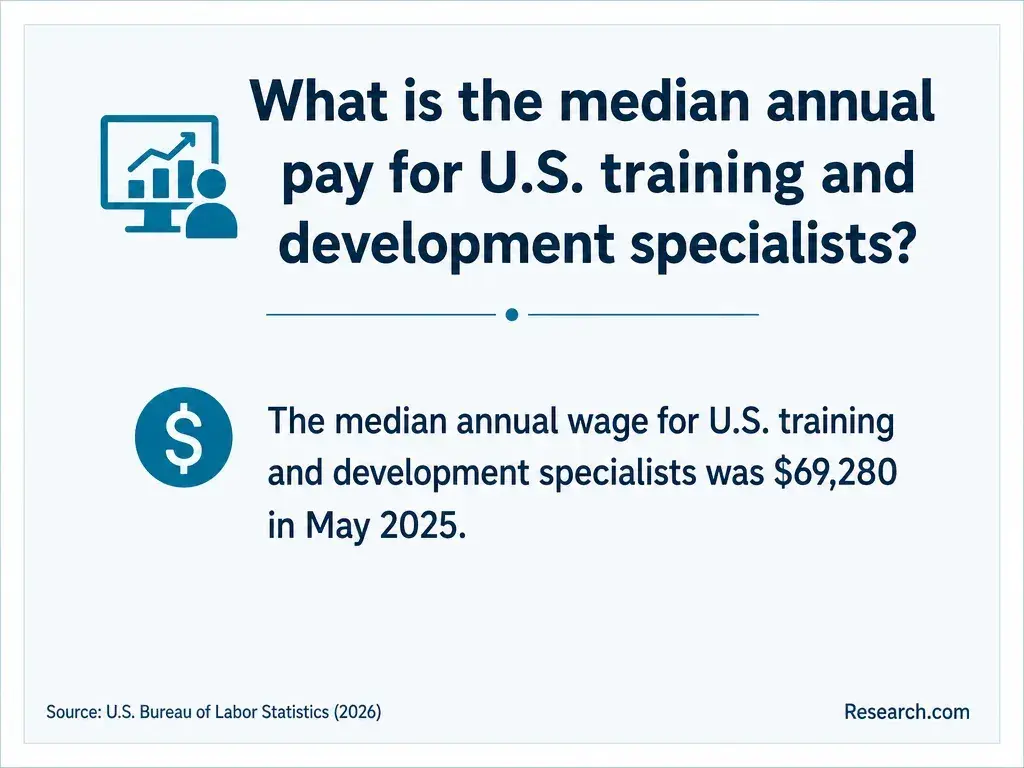
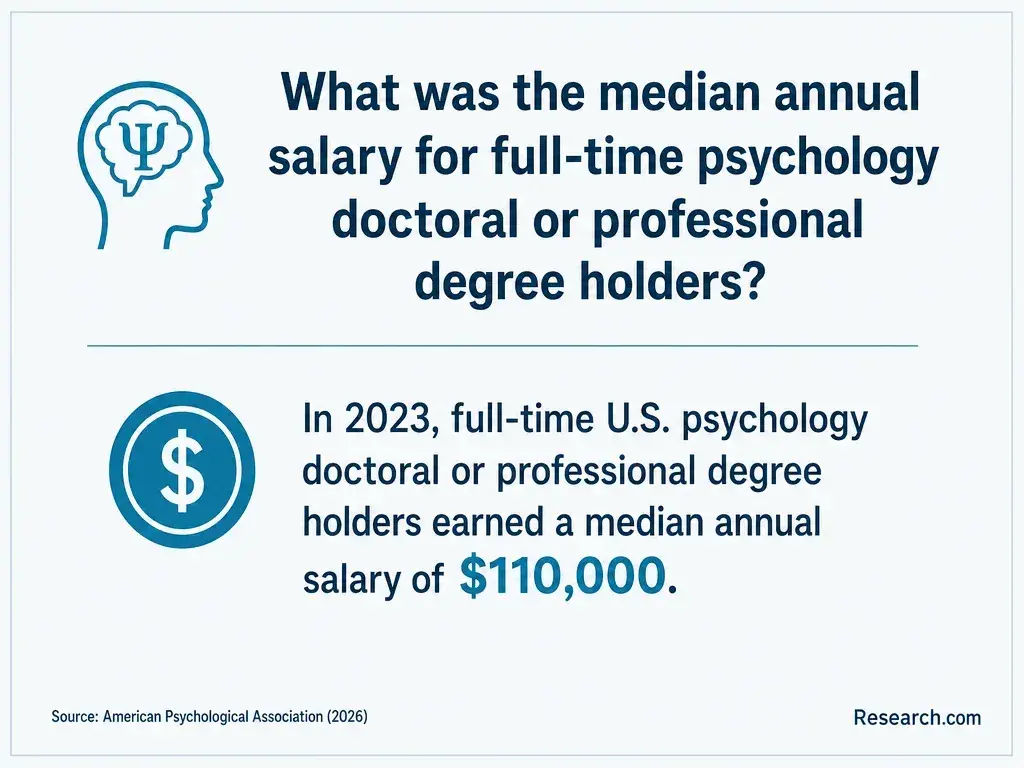
There is no reliable single salary or job-growth figure for "mental health psychology BA graduates." The U.S. Bureau of Labor Statistics reports wages and projections by occupation, not by undergraduate concentration. A social and human service assistant, for example, has different duties and entry requirements from a licensed counselor; the latter occupation's wages should not be used to estimate a new BA graduate's pay.
Before treating tuition as an investment, identify a job title you could realistically qualify for, check its latest BLS wage and outlook data, and compare local postings with your experience. If your financial plan assumes a later counseling career, include the additional education and time required; comparisons of shorter graduate counseling programs by cost and duration are more relevant to that later decision than a counselor salary applied to the BA alone.
How can you choose a reputable online psychology program and rate?
Request two comparable, written offers: one from the partnership school and one from the public university. Each should be paired with an official degree audit and a realistic course plan. Use the following checks to find out whether the apparent discount survives closer review.
- Confirm accreditation, the exact degree and any formal concentration, and whether the online program has required live or in-person components.
- Ask for the tuition schedule and mandatory fees for your entry term; get partnership eligibility, rate changes, employer-payment limits, and job-loss consequences in writing.
- Compare credits that satisfy requirements - not merely credits accepted - and ask when the remaining major courses will be offered.
- Check whether your target employer values the degree, offers relevant supervised nonclinical experience, or requires another credential instead.
Choose the lower-cost route only after comparing the cost to finish an academically suitable degree. If a different concentration is tempting because it advertises a faster finish, comparing three-year forensic psychology bachelor's routes illustrates why specialty labels and accelerated timelines still need a credit-by-credit review. A shorter route in another subject is not automatically the better preparation for mental-health support work.
Other Things You Should Know About Psychology
Do not assume so. Ask the school and benefits administrator when eligibility ends, whether enrolled courses retain their rate, and whether previously paid assistance must be repaid.
Possibly, if the program and your enrollment qualify. Tell the financial aid office about employer assistance so it can explain how your specific award package will be adjusted.
Some benefits use direct payment; others reimburse you after you meet course or grade conditions. Confirm the payment method and deadline before enrolling.
You may need admission and official transcript evaluation to receive dependable degree audits. Ask each school which estimates it can provide before applying and which decisions become official only afterward.
- What Financial Aid Offers Don't Tell You About the Cost of College | U.S. GAO https://www.gao.gov/blog/what-financial-aid-offers-dont-tell-you-about-cost-college
- Frequently asked questions about educational assistance programs | Internal Revenue Service https://www.irs.gov/newsroom/frequently-asked-questions-about-educational-assistance-programs
- Net Price Calculator Center | ed.gov https://collegecost.ed.gov/net-price
- Tuition & Fees | Portland State University https://www.pdx.edu/student-finance/tuition
- Understanding College Terms | Boise State Online https://www.boisestate.edu/concurrentenrollment/advising-bronco-navigate/understanding-college-terms/
- Tuition Rates - UCF Student Accounts Services https://studentaccounts.ucf.edu/tf-tuitionratescurrent/
- Credit for Prior Learning: Future Students | Dawson Community College https://www.dawson.edu/future-students/credit-for-prior-learning.html
- Undergraduate Student Transfer Policy Policy Number 5-03 | Commonwealth University https://www.commonwealthu.edu/documents/cu-policy-5-03-undergraduate-student-transfer-policy
- Tuition & Fees - University & Student Business Services | The University of Memphis https://www.memphis.edu/usbs/fees/
- Tuition & Fees - UW Non-Degree Enrollment https://www.nondegree.uw.edu/tuition-fees