2027 Online BA in Psychology - General Psychology: When a Broad Psychology Degree Is Better Than a Narrow Track
Audited and Verified:
Our Editorial and Data Verification Process
Research.com uses government datasets, official education statistics and primary institutional information to support its career and degree guides. Our review process checks factual accuracy, occupational definitions, source dates and the requirements associated with the credentials discussed.
How This Article Was Fact-Checked
Our editorial team verifies salary estimates, employment projections, education requirements and program information against original data providers and official organizations. Salary figures are checked against the relevant occupational definitions and reporting periods. Information about licensure, accreditation and required in-person training is reviewed separately.
Fact-checked and verified on:

Co-Founder and Chief Data Scientist
A general psychology BA can leave more room to explore than a specialized track - but only if you use that room well. For prospective and returning students weighing online programs, the choice affects electives, research preparation, career experience, and possibly the credits needed to graduate.
This guide explains when breadth is an advantage, when a focused program is more efficient, and what to verify before enrolling. You'll leave with a way to compare actual degree plans against the work or further education you want.
Key Things You Should Know
- Choose general psychology when your target is still open or spans several fields, and the degree lets you combine strong methods courses with relevant electives and experience.
- Choose a narrower track when its required courses and supervised opportunities match a defined goal without displacing prerequisites you need later.
- Compare completed-degree costs, not advertised pace. Many U.S. bachelor's degrees require about 120 semester credits, but transfer evaluations determine how many you still need.
What is an online BA in general psychology?
An online Bachelor of Arts in general psychology is an undergraduate degree built around the scientific study of behavior and mental processes. "General" usually means the major covers multiple subfields rather than requiring a concentration such as forensic psychology or addictions. A BA commonly includes substantial general education and elective space; the actual statistics, science, and research requirements depend on the school, not the BA label.
That breadth is most useful when you can turn electives into a coherent plan - for example, pairing developmental psychology with education courses, or social psychology with statistics and organizational study. It is less useful if the program offers few relevant upper-level courses or little access to research and applied experience.
If you already have a bachelor's degree and seek advanced specialization, a second general BA may repeat material unnecessarily. Consider specific prerequisites or evaluating faster-paced forensic psychology master's degrees instead, while checking whether those programs meet your academic rather than licensure goals.
Is a general psychology degree better than a specialized track?
A general BA is better when flexibility has a purpose. It can preserve room for statistics, research, internships, and courses outside psychology while you test career interests. A specialized track is better when its required coursework and available experiences align closely with a goal you have already checked against employer or graduate-program requirements.
The comparison below focuses on what each route makes easier - and what it cannot promise.
| Decision factor | General psychology BA | Specialized track |
| Best fit | Exploring several nonclinical roles or graduate options | Pursuing a defined subject area with useful required courses |
| Main advantage | More potential room to choose courses and experiences | A clearer sequence of subject-specific study |
| Main risk | Graduating without a demonstrable skill or direction | Giving up electives needed for another goal |
| Credential effect | No clinical license from the BA alone | A concentration likewise does not confer clinical authority |
Compare degree audits, not track names. If a forensic focus replaces advanced statistics you need for research-oriented graduate study, its appealing label may be a poor trade. Conversely, if it includes relevant methods, faculty projects, and approved placements, it may offer more than a loosely planned general major. Students considering that direction can use forensic psychology admissions and education planning to distinguish undergraduate preparation from later qualifications.
A third option may be more efficient: keep a general major and select a small group of goal-related electives, or pursue a different major or targeted credential if the desired occupation specifically requires one. Ask an advisor which courses would be lost or added under each plan before committing.
What careers can you pursue with a bachelor's degree in psychology?
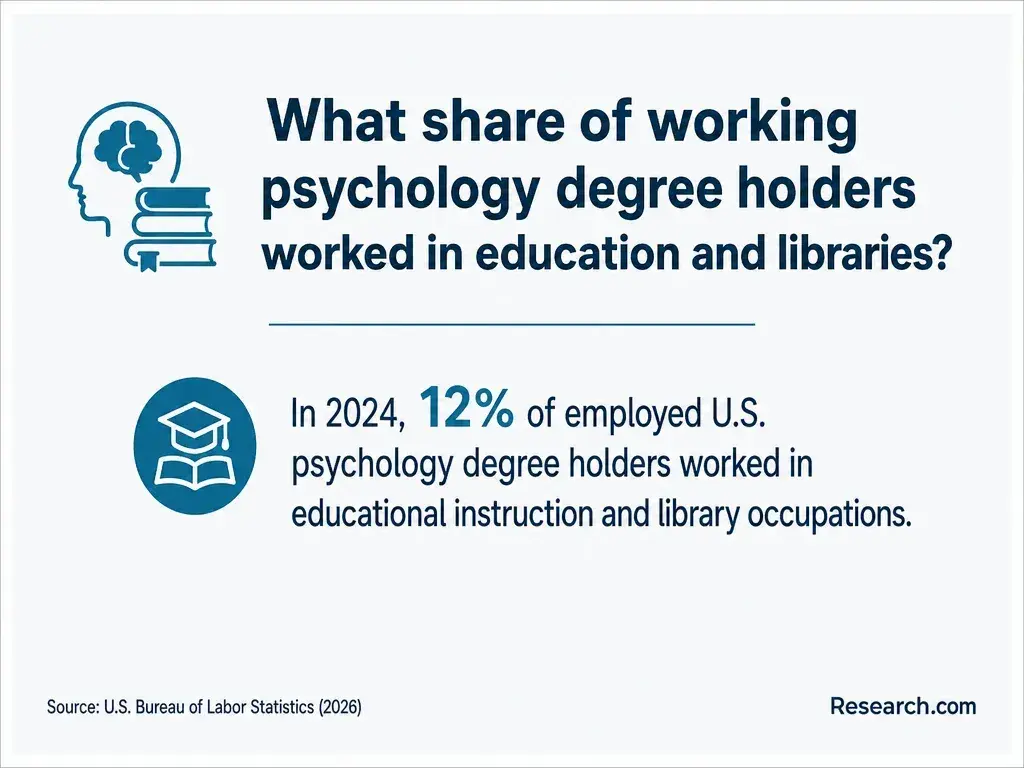
Psychology graduates may compete for nonclinical roles in human services, community programs, research support, recruiting, education support, and organizational operations. A job title alone does not establish eligibility: employers may require particular experience, background checks, technical skills, or another credential.
A general BA can be especially useful if you want to test more than one setting. For example, a community-program assistant might document referrals and help track services; a research assistant might recruit participants under an approved protocol, manage data, and check records for accuracy. Neither role authorizes independent diagnosis or therapy. Students interested in outreach and support can explore roles in community recovery organizations while checking local job postings for training and certification requirements.
Build evidence for a target role before graduation: relevant employment or volunteering, a supervised nonclinical placement if available, and a writing or data project you are permitted to share. If you already have substantial experience in the field, targeted training may close a specific skills gap more directly than another bachelor's degree.
Online study can reduce commuting and widen program choice, but delivery mode does not determine academic rigor or scheduling flexibility. An asynchronous lecture may still have fixed deadlines, live group work, scheduled research meetings, or a placement at an approved site. Campus study may make it easier to meet faculty and join a laboratory, though online students can also access meaningful research opportunities when a program deliberately provides them.
For a general major, compare access to people and projects, not just course recordings. Ask how online students obtain research mentorship, career advising, references, and help finding local experiences. If speed matters, review fast-track bachelor's study in psychology alongside the weekly workload and course sequence; shorter terms do not necessarily mean less work.
Students balancing jobs or caregiving should request the actual schedule for upper-level courses and any required in-person activities. A program that fits introductory classes into your week but offers a required methods course only at an impractical time is not flexible for your degree plan.
Programs commonly cover introductory psychology, development, social and cognitive psychology, biological or behavioral foundations, statistics, research methods, and ethics. Upper-level choices may include personality, learning, health, abnormal psychology, or applied topics. Requirements and availability vary, so read the catalog for your intended entry term rather than assuming every advertised elective will fit your schedule.
For a broad degree to outperform a narrow one, protect the courses that travel well across goals: statistics, research design, critical evaluation of evidence, and scientific writing. Then use electives to investigate a possible direction. Someone interested in recovery services, for instance, could compare general-major electives with online study options for addiction counseling - but must separately verify any state credential's educational and supervised-experience rules.
Look beyond course titles. A class on psychological assessment teaches about measurement; it does not qualify a student to administer restricted tests professionally. Likewise, a course on psychopathology provides academic knowledge, not permission to diagnose or treat.
First-year applicants generally need to meet the university's undergraduate admission rules; schools set their own requirements for transcripts and other materials. Transfer applicants also need a credit evaluation. Admission, acceptance of prior credits, and application of those credits to the psychology major are separate decisions.
Returning students should request a written degree audit showing general education, major, elective, and residency requirements. Check whether previous statistics and research-methods courses satisfy the new program's specific requirements, and who approves substitutions. A course counted as an elective may save credits without moving you closer to completing the major.
If graduate study is the eventual goal, keep that program's prerequisites in view while choosing an undergraduate plan. For example, forensic psychology degree formats and academic requirements can help frame questions about methods preparation and degree fit, but only a prospective graduate program can confirm its own admission requirements.
A bachelor's degree often requires about 120 semester credits in total, but your remaining time depends on accepted credits and where they apply, course availability, enrollment pace, and residency rules. A transfer student with many accepted electives could still need several sequenced psychology courses. An accelerated term may help only if the required courses are offered when needed.
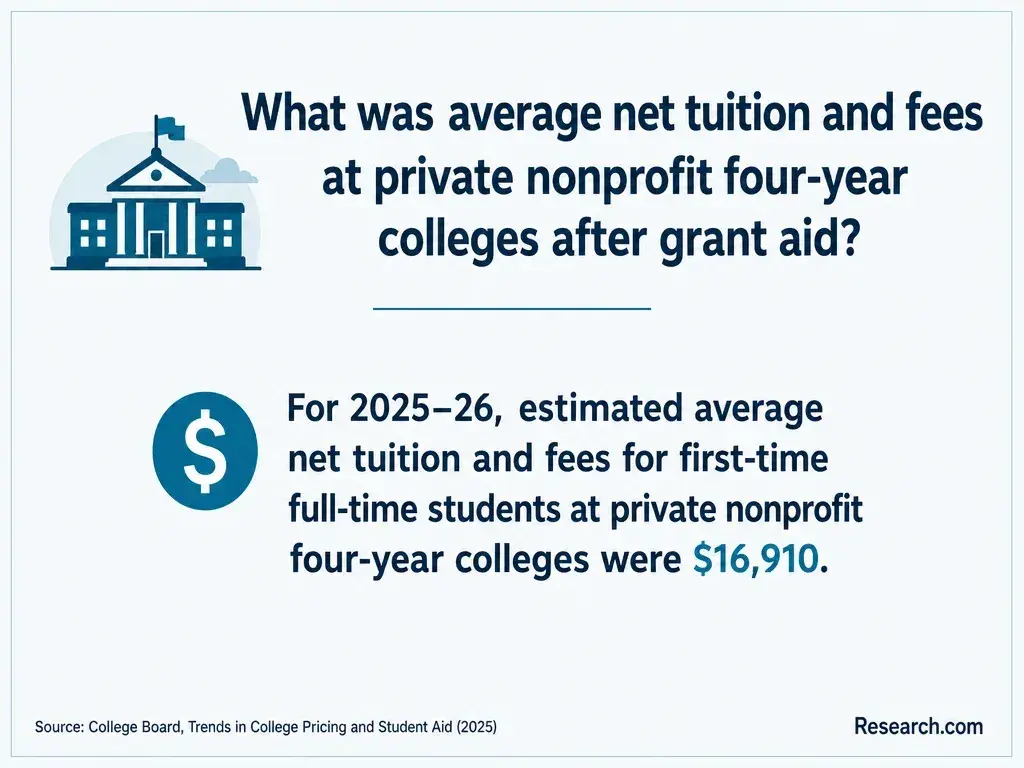
For a meaningful cost comparison, ask each school for the credits remaining after its evaluation. Then compare tuition and mandatory fees for those credits, plus books, technology, travel, and any unpaid experience you choose or must complete. Browse psychology degree options with lower tuition, but calculate your own estimated remaining-degree cost; a low per-credit price does not offset unnecessary repeated courses automatically.
Before enrolling, request a term-by-term plan and confirm when required methods and capstone courses run. Ask the financial-aid office how your planned enrollment pace affects aid eligibility and satisfactory academic progress.
Yes. Confirm that the university holds recognized institutional accreditation and that it covers the institution offering your degree. Institutional accreditation matters when evaluating academic oversight and potential eligibility for federal student aid, but it does not guarantee credit transfer, graduate admission, employment, or licensure.
Do not reject a general psychology BA because it lacks American Psychological Association program accreditation: APA accreditation applies to specified professional psychology training programs and internships, not general undergraduate psychology majors. A separate counseling or substance-use program may have different recognition or state-approval considerations tied to its intended credential.
If you are comparing a general BA with a credential-oriented program, verify both the school's accreditation and the relevant regulator's education rules. Funding research, including online substance use counseling bachelor's aid resources, should not replace confirmation of your eligibility with the school's financial-aid office.
A general psychology BA does not by itself qualify someone to practice as a licensed psychologist, diagnose conditions, or provide psychotherapy independently. Those activities require qualifications defined by the relevant profession and jurisdiction. A mental-health, addictions, or forensic concentration does not change that boundary.
Some support occupations have state-specific certifications or employer training requirements for which undergraduate study may be relevant; eligibility cannot be inferred from the major name. If your goal is counseling, investigate qualifying graduate education, supervised practice, and your state board's rules. Accelerated master's study in clinical mental health counseling is a distinct pathway to evaluate, not a clinical privilege conferred by the BA.
Before choosing a narrow undergraduate track for a regulated career, work backward from the regulator's requirements. If both undergraduate options meet the next program's prerequisites, favor the one that offers stronger preparation and manageable cost - not the one whose title sounds most clinical.
What are the salary and job outlook for psychology graduates?
There is no single salary or employment-growth rate for "general psychology graduates": they enter different occupations with different experience and credential requirements. As one relevant reference point, the U.S. Bureau of Labor Statistics reported a $45,120 median annual wage in May 2024 for social and human service assistants. That is an occupation-wide median, not a starting salary or predicted outcome for BA holders.
Use the BLS occupation matching the job you actually want, then compare its current outlook and typical entry requirements with local postings. Psychology graduates interested in forensic settings, for example, should distinguish support, research, and justice-system jobs from licensed forensic practice before exploring better-paid roles related to forensic psychology. A specialized degree title does not confer the qualifications behind a higher-paying occupation.
For return on investment, compare the remaining cost of each degree plan with jobs you could realistically pursue given your existing experience. The strongest case for a broad BA is not a promised salary; it is an affordable path to demonstrable skills and several viable next steps.
Other Things You Should Know About Psychology
Yes. Relevant electives, a supervised project, work experience, and a clear résumé can demonstrate an area of interest. Describe those experiences accurately rather than claiming a formal concentration you did not earn.
Choose one if its courses develop a skill or subject area your goal needs and fit your graduation plan. A minor that adds terms or displaces important methods courses may offer less value than selected electives.
Not necessarily. Compare required statistics, laboratory or research work, and science courses at the actual schools. Degree letters alone do not establish research depth.
Often, but the effect depends on the school's rules and when required courses are offered. Request an updated degree audit before switching tracks so you can see any added credits or delay.
- Patton Psychology Training Frequently Asked Questions (FAQ) | ca.gov https://www.dsh.ca.gov/Patton/Internships_Training/FAQ_Psychology_Training.html
- Impact of external accreditation on students' performance - PMC https://pmc.ncbi.nlm.nih.gov/articles/PMC10176056/
- Undergraduate | CSUF - Department of Psychology https://psychology.fullerton.edu/academics/undergraduate.html
- Bachelor of Arts (BA) in Psychology Degree Program | California Southern University https://www.calsouthern.edu/online-degree-programs/behavioral-sciences/bachelors-psychology-ba/
- Thinking About Careers in Psychology - Penn State https://psych.la.psu.edu/undergraduate/planning-and-career-resources/thinking-about-careers-in-psychology/
- Online Psychology Degrees - Carlow University https://online.carlow.edu/psychology-degrees/
- Online Bachelor's Degree in Psychology | Purdue Global https://www.purdueglobal.edu/degree-programs/psychology/bachelor-degree-psychology-online/
- Career Pathways in Psychological & Brain Sciences | Information Technology Services https://artsandsciences.louisville.edu/psychological-and-brain-sciences/career-pathways
- BA in Psychology | Cal State LA https://www.calstatela.edu/nss/psychology/ba-psychology
- Master's in Psychology Requirements | louisiana.edu https://psychology.louisiana.edu/programs/masters/requirements