2027 Online BA in Psychology - Addictions: Degree Options for Recovery Grant Reporting and Program Evaluation

Co-Founder and Chief Data Scientist
Recovery organizations need staff who can turn service records into accurate grant reports without confusing participation with improved outcomes. If you work in outreach, peer support, or nonprofit administration, an online psychology BA with an addictions focus may strengthen your understanding of recovery and evaluation - but it may not be the most direct way to learn reporting.
This guide shows which degree features matter, what a feasible evaluation project looks like, and when targeted training or a different credential offers a better return on your time and budget.
Key Things You Should Know
- Choose an addictions-focused psychology BA for grant reporting only if it includes usable statistics, research methods, ethical data handling, and an approved applied project - not merely addiction-themed electives.
- A conventional bachelor's degree is commonly structured around 120 semester credits; request an individual degree audit before assuming how many credits, terms, or tuition payments remain.
- For a professional who already has a bachelor's degree and needs reporting skills now, evaluation coursework, supervised workplace experience, or a targeted certificate may be more direct than another degree.
What Is an Online Bachelor's Degree in Psychology With an Addictions Focus?
It is an undergraduate psychology degree that combines the study of behavior with coursework on substance use, prevention, recovery, or service systems. Schools may label the addictions component a concentration, track, minor, or set of electives; those labels are not interchangeable. Check the transcript designation and required courses rather than relying on a program's marketing description.
For grant reporting, the strongest combination is psychological science plus applied measurement: understanding why people seek or leave services, defining outcomes, evaluating evidence, and explaining limitations to funders and community partners. A BA can support those tasks without preparing someone to diagnose or treat substance use disorders. If the intended job is counseling rather than evaluation, compare distance learning degrees in addiction counseling against your state's credential requirements instead.
What Careers Can an Addictions Psychology Bachelor's Degree Prepare You For?
Start with the work you already do. Outreach, intake, peer-support, administrative, and case-coordination experience can provide knowledge of referral pathways and recordkeeping; the degree can add research literacy and a clearer way to interpret outcomes. Potential nonclinical roles include program assistant, grant-reporting coordinator, evaluation assistant, recovery-services coordinator, and research assistant. Employers may require spreadsheet or database skills, grant-specific reporting experience, or prior community-service work in addition to a degree.
A reporting coordinator may reconcile service counts, document measure definitions, investigate missing entries, and draft a narrative explaining what the data can - and cannot - show. That differs from providing counseling. Before choosing a degree for a client-facing role, compare bachelor's-level substance use counseling tuition and career value with the actual job description and credential rules. A familiar recovery setting does not make reporting experience equivalent to supervised treatment experience.
Is an Online Addictions Psychology Degree Accredited and Professionally Relevant?
Verify that the institution holds recognized institutional accreditation, then inspect the specific BA curriculum. Institutional accreditation does not establish that its addictions focus meets a counseling license or certification requirement. APA accreditation should not be presented as a standard endorsement of a general psychology BA.
Professional relevance is more specific: Can students take statistics and evaluation courses? Will faculty supervise a nonclinical project? Can a student use an employer-based setting with written approval? Does the school disclose live meetings, campus visits, and placement obligations? These checks matter across psychology specialties; comparisons of forensic psychology degree formats and academic requirements illustrate why a specialty label alone cannot establish a program's format or professional authority. Confirm policies for your entry term with the school.
The useful test is whether coursework lets you develop a defensible reporting product, not whether classes are merely online. A realistic, nonclinical project might ask: "How consistently does our organization document referral follow-up?" The intended decision-maker could be a program director deciding whether staff need a clearer follow-up workflow. The output could be a measure dictionary, a data-quality summary, and a brief explaining limitations - not a claim that the program caused recovery.
Before proposing such work, the student and organization should agree on the question, reporting period, available records, supervisor, and permitted output. They should check grant terms for required measures and deadlines; federal, state, and private awards do not all use the same reporting rules. Agency authorization, data-use restrictions, applicable privacy law, and the school's review process must be resolved before accessing records or sharing findings. If the activity could constitute human-subjects research, seek the appropriate institutional determination rather than deciding independently that it is exempt.
Online coursework can accommodate writing and analysis, but workplace data access, supervisor meetings, and deadlines may still occur during business hours. A student interested in justice-involved recovery should also keep evaluation separate from forensic practice: twelve-month forensic psychology graduate study pathways address a different specialization and do not, by themselves, supply permission to use restricted service records.
Expect a psychology core, general education, and some combination of addictions-focused courses; requirements vary by institution. For reporting work, prioritize statistics, research design, psychological measurement, scientific writing, and courses addressing substance use in social and developmental context. Program evaluation, public health, database management, or nonprofit administration may be useful electives if available.
Course titles are less informative than assignments. Ask whether students define measures, handle missing data, compare groups responsibly, and write a limitations section. A course about addiction treatment is valuable background but does not replace those skills or confer treatment authority. If you already hold a bachelor's degree and mainly need advanced methods, compare individual courses or certificates with psychology graduate programs with compressed schedules; speed is useful only if the curriculum and workload fit your reporting objective.
Requirements depend on whether you enter as a first-year student, transfer student, or returning degree-holder. Schools commonly request prior transcripts and may have separate rules for admission to the psychology major. A transfer course's acceptance for credit does not mean it satisfies statistics, research methods, or an addictions requirement. Request a written degree audit showing remaining major, general-education, and residency requirements before committing.
If your long-term goal is licensed counseling, undergraduate admission is only the first checkpoint: graduate program prerequisites and state rules determine the later path. Compare those future requirements and mental health counseling tuition fees and financial aid before treating a psychology BA as the entire education plan. For grant evaluation alone, counseling preparation may be unnecessary.
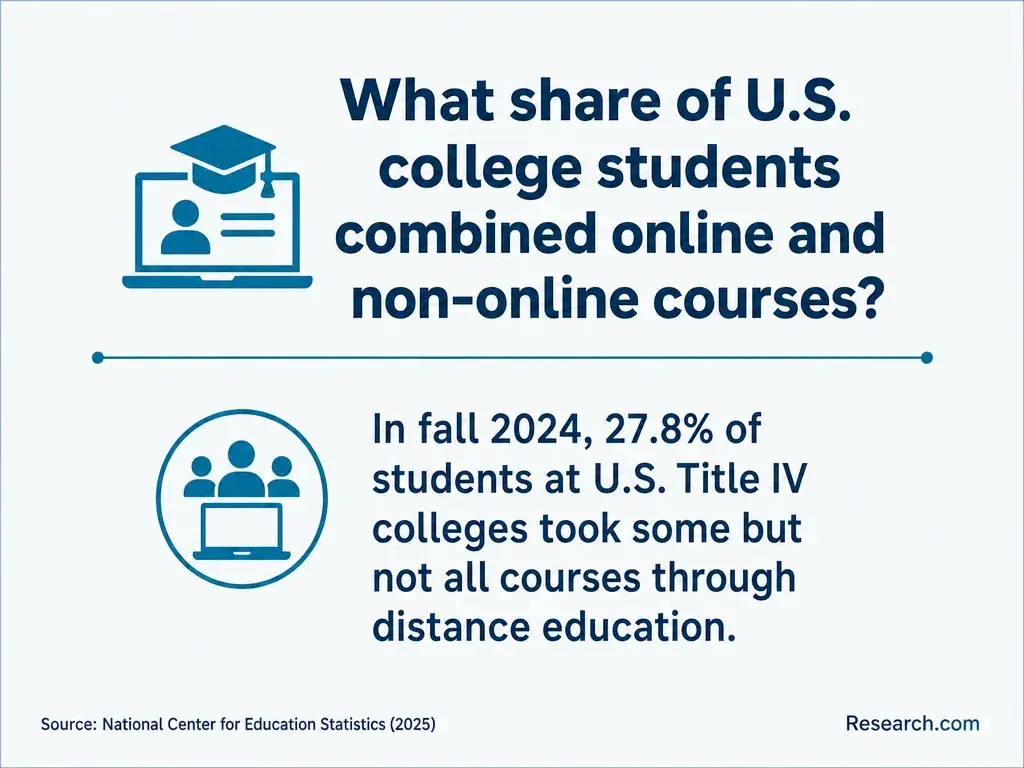
Many bachelor's degrees are designed around roughly four years of full-time study, but an individual completion estimate depends on accepted credits, how those credits apply to requirements, course rotation, and enrollment pace. An online label does not guarantee that every required class is asynchronous or available every term.
Ask an adviser to map the remaining courses term by term, including statistics prerequisites and any approved project or placement. Then compare that schedule with reporting deadlines and work hours. Planning an intensive online psychology degree can help frame the pacing trade-off, but a shorter advertised timeline is not a substitute for an individual audit and a sustainable weekly schedule.
Without a named school and approved credit evaluation, there is no reliable total price. Calculate the remaining tuition from the school's charge per credit or term, then add required fees, books, software, and any travel or unpaid project time. Confirm whether tuition differs by residency or enrollment status and whether employer assistance is available under your workplace's actual policy.
Compare costs against the smallest qualification that solves the skills gap. If you need a bachelor's degree for advancement, inexpensive distance learning psychology options are worth examining alongside transfer-credit application and course quality. If you already meet the degree requirement, paying for another full undergraduate program solely to learn reporting may be harder to justify than targeted training and supervised practice.
No single salary or growth figure describes graduates of an addictions-focused psychology BA. Grant reporting and evaluation duties appear under different job titles, with pay shaped by employer, location, technical responsibilities, and experience. For a comparison, match an actual vacancy's duties to a defined occupation in the U.S. Bureau of Labor Statistics Occupational Outlook Handbook; do not present the median for substance abuse counselors or psychologists as the expected pay for a nonprofit reporting assistant.
Licensed counseling is a separate labor-market comparison because its qualifications and duties differ. If that is your intended move, examine clinical counseling master's completion time and employment outlook alongside your state's rules. For an evaluation-focused move, recent local job postings are more useful for identifying required software, grant experience, and salary ranges than a degree-wide earnings claim.
Which Certifications or Licenses Can Addictions Psychology Graduates Pursue?
Grant reporting and nonclinical program evaluation generally do not require a psychology license. An employer may instead value training in its grant system, data management, evaluation methods, or confidentiality procedures. A BA with addictions coursework does not itself authorize diagnosis, psychotherapy, independent psychological assessment, or use of a protected clinical title.
Addiction counselor and peer-support credentials have different, jurisdiction-specific education, supervision, examination, and scope rules. Check the responsible state board or credentialing body against the exact role you want. If your goal changes to licensed mental health counseling, planning completion of accredited clinical counseling coursework belongs to a distinct graduate and supervised-practice pathway; do not assume undergraduate addictions electives will count toward it.
Other Things You Should Know About Psychology
Yes, if the organization and school permit it. A blank template or independently created example is safer than an internal report. Remove confidential information and obtain approval before sharing any organization-specific material.
Not automatically. Define "referred," "enrolled," and "served" separately, then use the definitions required by the grant. Combining them can overstate reach.
Report the small sample and its limitations. A careful description of service delivery or data quality may be more defensible than a claim about effectiveness.
Possibly, with organizational and academic approval. Disclose the dual role, avoid pressuring clients to participate, and arrange independent review where conflicts could affect the work.
- Certified Addiction Counselor (CAC) clinical training program | colorado.gov https://bha.colorado.gov/for-service-providers/learning-and-development/certified-addiction-counselor-cac-clinical-training
- Business Associates Frequently Asked Questions (FAQs) | hhs.gov https://www.hhs.gov/hipaa/for-professionals/privacy/guidance/business-associates/index.html
- Measuring Success in Substance Use Grant Programs - NCBI https://www.ncbi.nlm.nih.gov/books/NBK566490/
- eCFR:: 2 CFR Part 200 Subpart D -- Post Federal Award Requirements https://www.ecfr.gov/current/title-2/subtitle-A/chapter-II/part-200/subpart-D
- Substance Abuse Prevention & Treatment Block Grant (SABG) | SAMHSA https://www.samhsa.gov/grants/block-grants/subg
- Quantitative Methods in Evaluation | NYU SPS https://www.sps.nyu.edu/courses/GLOB1-CE9035-quantitative-methods-in-evaluation.html
- Online Master's Degree: Education (MS) | Vols Online https://volsonline.utk.edu/program/masters/evaluation-methodology-ms/
- Measurement, Evaluation, and Statistics | Columbia University https://www.tc.columbia.edu/catalog/academics/departments/human-development/measurement-evaluation-and-statistics/
- Key Responsibilities of Grant Recipients and Grantees | Graduate School USA https://www.graduateschool.edu/learn/grants-management/key-responsibilities-grantees
- Master's and PhD in Educational Research, Measurement & Evaluation -Program Evaluation | UNC Greensboro https://www.uncg.edu/degrees/educational-research-measurement-and-evaluation-m-s-ph-d-program-evaluation-concentration/