2027 Online BA in Psychology - Addictions vs. a Future Master's in Addiction Counseling: Compare Curriculum, Cost, and Career Fit
Audited and Verified:
Our Editorial and Data Verification Process
Research.com uses government datasets, official education statistics and primary institutional information to support its career and degree guides. Our review process checks factual accuracy, occupational definitions, source dates and the requirements associated with the credentials discussed.
How This Article Was Fact-Checked
Our editorial team verifies salary estimates, employment projections, education requirements and program information against original data providers and official organizations. Salary figures are checked against the relevant occupational definitions and reporting periods. Information about licensure, accreditation and required in-person training is reviewed separately.
Fact-checked and verified on:

Co-Founder and Chief Data Scientist
An online psychology BA with an addictions focus can help you study substance use and enter some support roles, but it is not interchangeable with a master's designed to prepare addiction counselors. That distinction matters if you are choosing an affordable undergraduate path now while keeping licensed practice open later. This guide compares what each degree teaches, what it may cost, and which jobs it can support. You will also learn how to check whether a future master's meets the rules in the state where you hope to work.
Key Things You Should Know
- An addictions-focused psychology BA provides broad undergraduate preparation; it does not, by itself, qualify you for independent counseling or guarantee admission to a qualifying master's.
- A future master's is worth prioritizing if your target role requires graduate-level counseling education, supervised practice, and a state credential. Verify that pathway before choosing undergraduate electives.
- The U.S. Bureau of Labor Statistics reports a May 2024 median wage of $59,190 for the combined occupation of substance abuse, behavioral disorder, and mental health counselors - not a predicted salary for BA graduates or addiction counselors alone.
What Is an Online Bachelor's in Psychology With an Addictions Focus?
It is a psychology bachelor's degree whose courses emphasize substance use, prevention, recovery, or related behavioral-health topics. The focus might be an officially named concentration, a minor, or simply a set of electives; those designations are not equivalent. Check the catalog and transcript language rather than relying on a program's marketing description.
The BA typically retains a broad psychology core alongside general education and research coursework. Online lectures do not necessarily mean every activity is remote: a school may require live meetings, a locally arranged internship, or a campus visit. If you are transferring, ask for a degree audit showing which accepted credits actually satisfy major, statistics, and research-methods requirements. For an initial comparison of psychology degree options for college transfer students, focus on credits applied to graduation - not just credits accepted.
Best fit: You want psychology breadth, a foundation for later study, and access to appropriate nonclinical support or research work. If your only goal is an entry-level recovery-support role, compare the BA's remaining cost with local credential training and supervised-work routes first.
How Does an Addictions Psychology Bachelor's Compare With a Future Master's?
The key distinction is purpose: the BA studies addiction within psychology; a qualifying counseling master's is structured around professional preparation. A master's in psychology with addiction courses is not automatically a qualifying counseling degree. The comparison below describes common patterns, not promises about any particular program or state.
| Decision factor | Psychology BA with addictions focus | Future addiction counseling master's |
| Primary emphasis | Psychological science, research literacy, and introductory addiction topics | Counseling theory, clinical skills, ethics, and supervised practice, if professionally oriented |
| Typical entry point | High school completion or eligible transfer study | Bachelor's degree, plus any program-specific prerequisites |
| Applied experience | May offer a nonclinical internship or project | May require practicum and internship under program and credential rules |
| Credential value | May support entry-level work or some state credential routes, subject to local rules | May satisfy an educational requirement for a specified license or certification, if the program and jurisdiction align |
If your goal is licensed counseling, choose a BA that lets you complete prerequisites affordably and gain relevant experience; do not assume its addictions label is essential. Then compare master's programs against your intended credential. When estimating the years still ahead, comparing clinical counseling master's completion times can help frame questions about course load and placement scheduling, but speed does not establish licensure eligibility.
What Careers Can Each Addiction Counseling Degree Prepare You For?
With a BA, plausible targets include recovery-program support, prevention outreach, intake coordination, case-support work, and research assistance. These jobs may involve referrals, documentation, community education, or supervised service coordination - not independent diagnosis or psychotherapy. Employers can require relevant experience, a separate credential, or training beyond the degree.
A professionally qualifying master's may be one step toward addiction counseling or another licensed counseling role. Graduation alone may still leave examinations and supervised post-degree experience outstanding. Conversely, a nonclinical psychology master's may deepen research or program-evaluation skills without opening a counseling license. Compare actual job postings and the state's credential rules before deciding which degree to pursue.
Specialty labels are not portable qualifications: just as understanding pay and entry requirements in forensic psychology careers requires checking each occupation separately, forensic or addictions coursework cannot substitute for the credential an addiction-counselor job requires.
A psychology BA commonly builds from introductory psychology into statistics, research methods, development, biological or social psychology, and upper-level electives. An addictions focus may add substance-use science, prevention, recovery systems, or co-occurring conditions. Look for training in evaluating evidence and communicating respectfully about substance use; a course describing treatment does not train a student to deliver it.
A professional counseling master's generally goes deeper into counseling approaches, assessment within the profession's scope, ethics, group work, cultural responsiveness, and supervised practice. Exact course and fieldwork requirements depend on the program and intended credential. A general psychology master's may instead emphasize research design, advanced statistics, and a thesis or capstone. If you are considering shorter completion routes for psychology master's students, check whether the program is research-oriented or actually designed for the counseling credential you want.
For an undergraduate planning graduate study, statistics and research methods often preserve more options than an extra narrowly titled elective. Ask prospective master's programs which prerequisites they require before finalizing your BA course plan.
Start with the college's institutional accreditation and confirm that it applies to the institution awarding the degree. Then ask a separate question: does the specific master's program hold recognition required or accepted for your intended counseling credential? State rules may refer to program content, a particular programmatic accreditor, or both.
CACREP accredits eligible counseling programs, including some addiction-counseling programs. Other recognition may matter depending on the credential and jurisdiction. APA accreditation should not be presumed for a general psychology BA or master's; its relevant professional accreditation scope is different. When comparing condensed accredited counseling study routes, verify the exact program's status and whether its curriculum meets your state's rules, rather than treating institutional accreditation or an "accredited" label as sufficient proof.
There is no single nationwide addiction-counselor license. States use different credential names, education thresholds, supervised-experience rules, examinations, and limits on permitted duties. Some have routes connected to undergraduate education; other roles require a qualifying graduate degree. A separate professional-counselor license may have different rules from a substance-use-specific credential, even when the same graduate program discusses both.
Before enrolling, identify the exact credential and state where you expect to practice. Read that board's current education, supervision, examination, and out-of-state-program requirements, then request a written program-to-requirement comparison from the school. Ask what happens if you cannot secure an approved placement near home. If you are weighing a broader counseling route, paying for an online mental health counseling degree is a separate financial decision; it does not resolve whether that degree meets substance-use-specific credential rules.
A bachelor's commonly represents four years of full-time undergraduate study from first entry, while a master's adds graduate study and potentially supervised experience after graduation. Transfer credit, enrollment pace, course availability, and placement scheduling can change your personal timeline. There is no reliable single price for either pathway without named programs, your accepted credits, and your aid eligibility.
Compare written cost estimates using the same assumptions: remaining required credits multiplied by your applicable tuition rate, plus mandatory fees, books, technology, placement travel, and any in-person visits. Separate the BA's remaining expense from the later master's expense; do not treat possible future aid as guaranteed. For undergraduate funding leads, tuition assistance routes for substance abuse counseling undergraduates can inform questions for each school's financial-aid office.
The cheapest route on paper can cost more if credits do not satisfy requirements or an unpaid placement reduces working hours. Request a degree audit and a term-by-term plan before comparing final prices.
For a BA, expect the institution to review prior schooling and, for transfer applicants, official transcripts. Entry to the psychology major or concentration may involve separate requirements. A later counseling master's generally requires a completed bachelor's, but programs differ on GPA, prerequisites, recommendations, experience, interviews, and whether a psychology major is necessary. An unrelated undergraduate major does not automatically rule you out.
If graduate study is the goal, ask prospective programs which psychology, statistics, or research courses must be completed before admission and which can be taken later. Compare that answer with your undergraduate degree audit. A lower-priced general psychology master's may be attractive for research interests; budget-friendly online psychology graduate degrees should nevertheless be screened separately from master's programs intended to meet counseling credential requirements.
Online study can reduce commuting and expand program choice, but it does not erase fixed obligations. A BA may include scheduled discussions or an optional local experience. A counseling master's may require live skills sessions, approved supervised placements, or campus residencies even when academic courses are online. Campus programs may make in-person collaboration easier, though their schedules and commute can be less workable for some students.
Compare actual weekly schedules, placement support in your location, supervisor qualifications, travel, and contingency policies - not just "online" versus "on campus." For a working student, an asynchronous lecture is little help if required fieldwork conflicts with employment. Economical online psychology program choices are useful starting points, but confirm delivery and placement requirements with each program before committing.
What Are the Salary and Job Outlook for Addiction Counseling Careers?
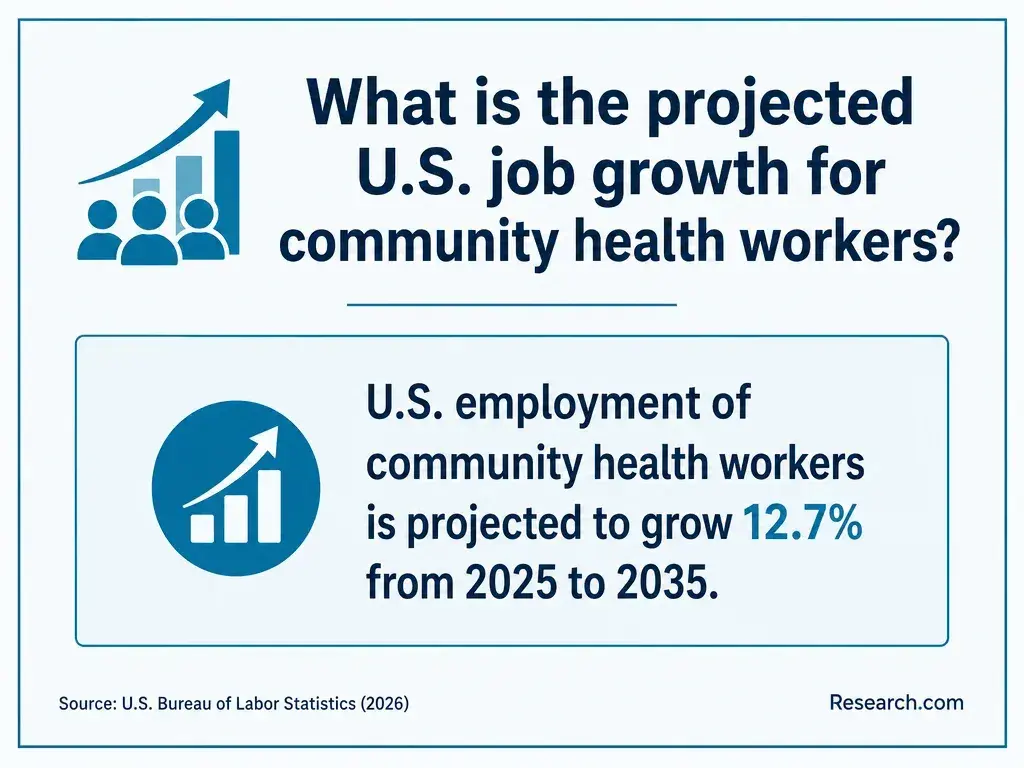
The Bureau of Labor Statistics reports a May 2024 median annual wage of $59,190 for the combined occupation of substance abuse, behavioral disorder, and mental health counselors. It projects 17% employment growth for that combined occupation from 2024 to 2034. Those figures indicate demand across a broad occupational group; they do not isolate addiction counselors, entry-level support workers, or graduates of a particular degree.
Use local postings to compare pay for the exact credential and duties you want, then weigh likely earnings against the education and supervised experience still required. When considering budget-friendly substance abuse counseling bachelor's study, do not assume an occupation-wide counselor median is what a new BA graduate will earn. If your immediate target is support work rather than licensed practice, a lower-cost credential or employer-supported training may offer a more direct next step.
Other Things You Should Know About Psychology
Yes. Relevant support, outreach, or research work can clarify your goals and strengthen an application. Keep records of duties and supervision, but do not assume employment will count toward later licensure hours.
No. A literature review or project using appropriately authorized information may be suitable. Never use identifiable client information without the required permissions, supervision, and institutional review.
No. Undergraduates and master's students can learn methods and contribute to supervised projects. Leading an independent research program may call for more advanced training, depending on the role.
Typically, the degree itself does not expire. Individual master's programs may have policies about older prerequisite courses, so check those rules if you expect a long gap.
- Virginia Board of Counseling - CSAC application info https://www.dhp.virginia.gov/Boards/Counseling/ApplicantResources/CSACapplicationinfo/
- Licensed Chemical Dependency Counselor Program | texas.gov https://www.hhs.texas.gov/business/licensing-credentialing-regulation/professional-licensing-certification-compliance/licensed-chemical-dependency-counselor-program
- GAC - Chapter 135-5 REQUIREMENTS FOR LICENSURE https://rules.sos.ga.gov/gac/135-5
- Credentialed Alcoholism and Substance Abuse Counselor (CASAC) | ny.gov https://oasas.ny.gov/credentialing/casac
- Minimum Graduate Degree Requirements | memphis.edu https://catalog.memphis.edu/content.php
- Master's Clinical Counseling - Addiction Treatment and Recovery | Online Degree | Capella University https://www.capella.edu/online-counseling-degrees/ms-clinical-mental-health-counseling-program/masters-addiction-treatment-recovery/
- Addiction Counseling Credentials: License, Certification, or Certificate? | City Vision University https://www.cityvision.edu/addiction-counseling-licensing-and-certification-understanding-your-career-path-2/
- How to Become an Addiction Counselor: 5 Key Steps (2026) | Touro University Worldwide https://www.tuw.edu/health/how-to-become-an-addiction-counselor/
- Graduate School Admission Requirements - WCU Catalog https://catalog.wcu.edu/content.php
- Online Bachelor's Degree in Psychology in Addictions | Purdue Global https://www.purdueglobal.edu/degree-programs/psychology/bachelor-psychology-addictions/