2027 Online BA in Psychology - Addictions for Work in Digital Recovery Community Organizations: Compare Degree Fit and Hiring Requirements
Audited and Verified:
Our Editorial and Data Verification Process
Research.com uses government datasets, official education statistics and primary institutional information to support its career and degree guides. Our review process checks factual accuracy, occupational definitions, source dates and the requirements associated with the credentials discussed.
How This Article Was Fact-Checked
Our editorial team verifies salary estimates, employment projections, education requirements and program information against original data providers and official organizations. Salary figures are checked against the relevant occupational definitions and reporting periods. Information about licensure, accreditation and required in-person training is reviewed separately.
Fact-checked and verified on:

Co-Founder and Chief Data Scientist
If you work in community services - or want to move into them - an online psychology BA with an addictions focus may seem like a direct route to digital recovery work. The fit depends on the job. A virtual peer-support group, an online referral service, and a telehealth treatment program need different qualifications, even when they serve the same community. This guide compares what the degree teaches with what employers hire for, where experience or a credential may matter more, and what to check before committing to tuition.
Key Things You Should Know
- An addictions-focused psychology BA can support nonclinical outreach, intake, referrals, and program work; it does not independently qualify you to diagnose or treat substance use disorders.
- Compare the job's actual duties with its degree, experience, peer-credential, and state-specific requirements before choosing a program.
- The U.S. Bureau of Labor Statistics reports a $59,190 median annual wage for substance abuse, behavioral disorder, and mental health counselors in 2024, but that occupation-wide figure is not an expected salary for a psychology BA graduate or an entry-level digital recovery worker.
What is an online bachelor's degree in psychology with an addictions focus?
It is a psychology bachelor's degree that combines broad study of behavior and research with coursework on substance use, prevention, and recovery. "Addictions focus" may mean an officially named concentration, a set of electives, or an applied track; those are not interchangeable credentials. The diploma may simply say BA in Psychology, so check the catalog and transcript designation rather than relying on a program's marketing label.
The degree can help a community organization professional understand motivation, stigma, behavior change, and the limits of recovery research. It is less direct preparation for platform administration, grant management, or licensed counseling than training designed for those functions. A BA rather than a BS is not inherently better for recovery work; compare the required methods courses and applied opportunities. Start with choosing an accredited addiction psychology bachelor's, then verify each program's current curriculum and award name with the school.
What jobs can you get with an addictions-focused psychology bachelor's degree?
Possible entry points include digital recovery outreach, service navigation, intake support, and program coordination. Existing experience matters: someone who already manages nonprofit referrals may be closer to a coordinator role than a new graduate with no client-facing work. Job titles are inconsistent, so the duties and required credentials should control your search.
The comparison below separates tasks a BA can help prepare you for from requirements that may come from the employer or state.
| Role to investigate | Typical digital-recovery work | Requirement to check |
| Outreach or engagement specialist | Explain services, follow up with participants, and connect people to approved resources | Community experience, communication skills, and required privacy training |
| Intake or care-navigation assistant | Collect permitted information, schedule services, and route requests to qualified staff | Documentation standards, escalation procedures, and limits on screening |
| Program or evaluation assistant | Maintain nonclinical service records and summarize approved program measures | Spreadsheet skills, data permissions, and grant-reporting experience |
| Peer recovery support worker | Offer recovery-oriented support within an organization's defined peer role | Any state-recognized peer credential, training, or lived-experience criteria |
A BA does not turn intake into diagnosis or peer support into psychotherapy. If your goal is specifically a substance-use counseling job, compare its credential rules and the costs of more directly aligned study; substance abuse counseling bachelor's fees and career prospects offer a starting point, not a substitute for checking your state's requirements.
What degree and hiring requirements do digital recovery organizations expect?
There is no single "digital recovery" hiring standard. A community-based app offering outreach may value a bachelor's degree, service experience, and strong written communication. A telehealth provider hiring a therapist must follow the applicable professional licensing and employer rules. A peer-led organization may prioritize an approved peer credential and lived experience over a psychology major.
Read postings in three layers: required credential, actual tasks, and digital-work skills. Look for secure documentation, accessible video or messaging practices, referral and crisis-escalation procedures, cultural responsiveness, and comfort working under supervision. Ask whether remote staff serve residents of particular states and who handles clinical decisions. Do not assume that a remote job can be performed from any location.
If your target postings consistently require licensed counseling rather than nonclinical support, a psychology BA is preparation for further study, not the qualifying endpoint. Compare the prerequisites and placement demands before planning an accelerated clinical counseling master's; a shorter academic schedule does not remove supervised training or licensure requirements.
Check that the institution holds accreditation recognized by the U.S. Department of Education or the Council for Higher Education Accreditation, and confirm that the online BA is offered by that institution. Institutional accreditation matters for degree recognition and often for aid and later study. It does not prove that an addictions concentration satisfies a counseling credential. The American Psychological Association does not accredit general undergraduate psychology majors.
Employers may accept an online degree while still preferring candidates who have handled referrals, maintained confidential records, or worked with community partners. Ask a program how students obtain supervised nonclinical experience, whether remote learners can use an approved local site, and what its career services actually provide. Use online psychology degree program comparisons to develop a shortlist, then confirm accreditation and delivery details directly with each institution.
Expect a psychology foundation that may include developmental and social psychology, statistics, research methods, and abnormal psychology, alongside available courses on addiction, health behavior, or community mental health. Exact requirements vary. For digital recovery work, methods training is useful for reading evidence about engagement and retention; addiction coursework helps explain recovery without granting authority to assess or treat a client.
Compare syllabi for practical depth: Does a course address stigma, harm reduction, ethical communication, and referral boundaries? Can you practice evaluating a program without accessing identifiable client records? An approved nonclinical project might produce an evidence brief or accessibility review, subject to faculty and site permission. A course titled "counseling" is still coursework, not clinical supervised practice. If you later consider a nonclinical psychology MS for evaluation work, examine accelerated graduate psychology course sequencing separately from the BA curriculum and from any counseling-license pathway.
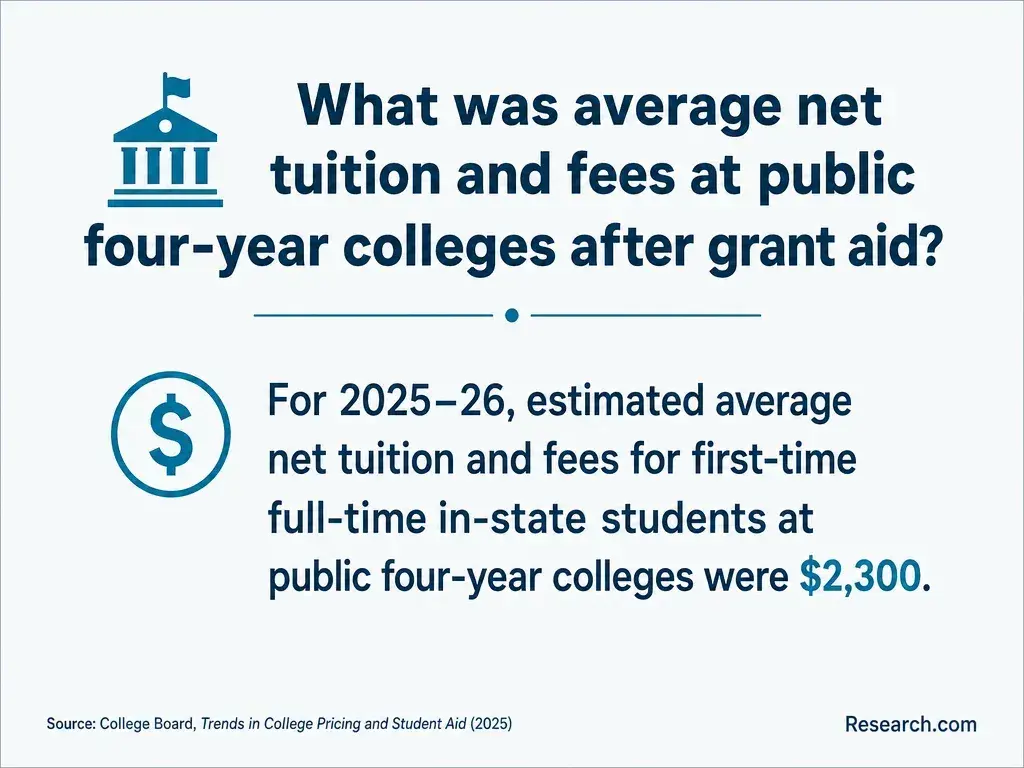
A bachelor's degree commonly requires around 120 semester credits, but the remaining time and bill depend on accepted transfer work, how those credits satisfy requirements, course availability, and enrollment pace. Compare total remaining tuition and mandatory fees - not just an advertised per-credit rate. Include books, technology, any site-related travel, and the possibility of unpaid applied work. Ask the financial aid office how your planned enrollment affects aid eligibility.
Condensed terms can reduce calendar time if required courses are available in sequence; they do not necessarily reduce credits or cost. For an employed community worker, a faster term may also collide with evening outreach or caregiving obligations. Review psychology degrees with condensed course schedules, then request a personalized degree audit and a term-by-term cost estimate before treating a projected finish date as realistic.
First-year applicants typically provide secondary-school records or an accepted equivalent; transfer applicants generally provide transcripts from prior colleges. Schools set their own GPA, application, and major-entry policies. Admission to a university does not establish that previous statistics, psychology, or general-education courses satisfy its BA requirements.
If you are returning to school, send every prior transcript and request a written evaluation showing credits accepted and requirements fulfilled. Ask who approves substitutions and whether an internship or capstone must be completed through the new institution. Guidance on psychology major credit portability can help frame those questions, but only the receiving school can determine how your work applies.
Possibly, but the degree alone does not confer certification or a license. States and certifying bodies define eligible coursework, supervised experience, examinations, and permitted job titles. Some credentials are available at the bachelor's level; other counseling roles require a qualifying graduate degree and additional supervised practice. A school's addictions concentration may cover useful subject matter without meeting every required content area.
Before enrolling, identify the exact credential and state where you intend to work. Ask the responsible board or certifying organization whether the program's named courses count, what supervised experience is required, and whether the organization recognizes online coursework. If the eventual goal is licensed clinical counseling, compare qualifying graduate options - including accredited counseling study with accelerated schedules - rather than assuming that adding a psychology MS will meet those rules.
The U.S. Bureau of Labor Statistics reports a 2024 median annual wage of $59,190 for substance abuse, behavioral disorder, and mental health counselors. That occupation includes workers with different credentials and settings; it is not a pay estimate for an entry-level outreach specialist, peer worker, or holder of this BA. BLS projects employment in the counselor occupation to grow 17% from 2024 to 2034, but that projection does not measure openings at digital community organizations specifically.
For a useful pay comparison, collect local postings for the exact nonclinical role, note whether pay is hourly or salaried, and separate credential-required positions from bachelor's-preferred ones. Do not borrow wages from another specialty: even a salary outlook for forensic psychology master's graduates describes a different education and career decision, not the returns to digital recovery support work.
How do you choose an online psychology program for digital recovery work?
Start with several real job postings and your current experience. If you already coordinate community referrals, the best educational investment may be targeted addiction coursework, data training, or a required peer credential - not a second bachelor's degree. If you need both a bachelor's credential and broader behavioral-science preparation, use the following sequence to test program fit.
- Mark each target posting's required degree, credential, experience, digital tools, and client-contact boundaries.
- Confirm the school's institutional accreditation, exact award and concentration designation, and written transfer evaluation.
- Compare required addiction and methods courses with your skill gaps, then ask about approved nonclinical projects or placements.
- Check live-session times, site supervision, accessibility support, total remaining cost, and a realistic completion schedule.
- Ask employers whether your proposed degree plus existing experience meets their entry requirements; verify regulated roles with the relevant state authority.
Choose a qualifying counseling or social-work route instead if your intended work is independent treatment, subject to the jurisdiction's rules. For program evaluation or other nonclinical advancement, a master's may be useful in some organizations but is not an automatic requirement; compare the opportunity cost before finding a lower-cost psychology master's degree. The strongest choice is the least costly path that supplies the qualifications and demonstrated skills your target role actually demands.
Other Things You Should Know About Psychology
Possibly. Employers may restrict work locations for employment, privacy, service, or credential reasons. Confirm the approved work location and service area before accepting an offer.
Not for every job. Peer roles may have lived-experience criteria, while outreach and administrative roles may not. Read the posting and ask how the employer handles disclosure and privacy.
Usually only with appropriate permission and removal of confidential information. An original evidence brief or hypothetical workflow may be safer than sharing client records or internal agency materials.
Not necessarily, but an employer may require demonstrated language proficiency for particular duties. Never imply that coursework alone qualifies you to interpret clinical information; ask about approved language-access procedures.
- Requirements Related to the Practice of Counseling - NCBI https://www.ncbi.nlm.nih.gov/books/NBK259170/
- Peer Providers - How Your Experience Makes You Right for the Job | ACL Administration for Community Living http://acl.gov/news-and-events/announcements/peer-providers-how-your-experience-makes-you-right-job
- Recruitment and Employment of People in Recovery | dol.gov https://www.dol.gov/agencies/eta/RRW-hub/Getting-started/Recruitment-employment
- Online Substance Abuse and Addictions Degree | ASU Online https://asuonline.asu.edu/online-degree-programs/undergraduate/counseling-psychological-sciences/
- Online Bachelor's Degree in Psychology in Addictions | Purdue Global https://www.purdueglobal.edu/degree-programs/psychology/bachelor-psychology-addictions/
- Addictions Counseling FAQ | U of M - CCAPS https://ccaps.umn.edu/addictions-counseling-masters-degree/faq
- The Role of Digital Therapeutics in Mental Health | Walden University https://www.waldenu.edu/programs/resource/healing-in-the-digital-age-the-role-of-digital-therapeutics-in-mental-health
- Can I Become a Counselor With a Bachelor's Degree? | George Fox University https://www.georgefox.edu/counseling-programs/articles/without-bachelors.html
- Applied Psychology: Addictions Studies, B.S. - CPS, CPSO | University of New Hampshire https://www.unh.edu/program/bachelor-science/applied-psychology-addictions-studies
- Psychology careers guide | apa.org https://www.apa.org/education-career/guide/careers